
May 23, 2025
Understanding the AI Grading Assistant
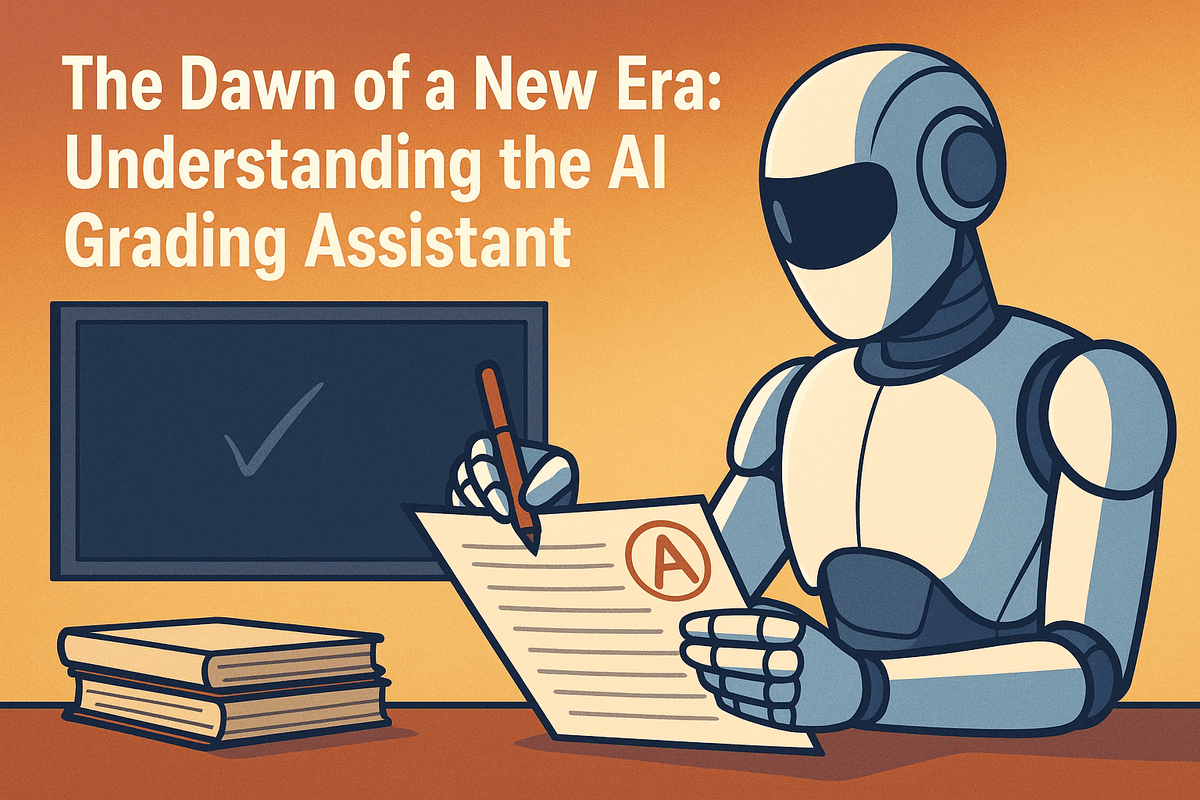
The Dawn of a New Era: Understanding the AI Grading Assistant
The relentless tick-tock of the clock, stacks of papers that seem to magically replenish, and the constant striving for fairness – these are familiar refrains in an educator's life. But what if technology could offer a powerful ally in one of the most demanding aspects of teaching? Enter the AI grading assistant, a tool poised to transform the educational landscape by streamlining assessment and empowering educators like never before. This isn't about replacing the invaluable human element in education; it's about enhancing it.
What Exactly is an AI Grading Assistant and How Does It Work?
At its core, an AI grading assistant is a sophisticated software solution designed to automate or semi-automate the evaluation of student assignments. Think of it as a highly intelligent, tireless partner that can help you work through piles of submissions with speed and consistency. But how does it actually see and understand student work?
These systems typically leverage advanced technologies like:
- Natural Language Processing (NLP): This enables the AI to comprehend and interpret human language, whether in essays, short answers, or even code. It can identify keywords, understand sentence structure, and grasp context.
- Machine Learning (ML): An AI grading assistant learns from data. This can involve training the AI on vast datasets of previously graded assignments, allowing it to recognize patterns associated with different performance levels. Alternatively, educators can often 'train' the AI by providing examples and specific rubrics.
- Pattern Recognition: The AI excels at identifying patterns, whether it's the correct application of a formula in a math problem or the consistent use of evidence in an argumentative essay.
It's crucial to understand that an AI grading assistant isn't a magical black box. It operates based on the criteria and parameters set by educators. For objective questions like multiple-choice or fill-in-the-blanks, the process is quite straightforward. For more subjective assignments, like essays, the ai grading assistant often provides initial scores or highlights areas for human review, ensuring the nuanced judgment of an educator remains central to the evaluation process.
Why Traditional Grading Needs an AI Upgrade: Time, Objectivity, and Teacher Well-being
The traditional grading process, while fundamental, carries significant burdens. An AI grading assistant directly addresses these long-standing challenges, offering a much-needed upgrade:
- The Tyranny of Time: Ask any educator, and they'll tell you grading consumes an enormous chunk of their time – hours that could be spent on lesson planning, individualized student support, or professional development. An AI grading assistant can drastically reduce this time commitment, particularly for high-volume or repetitive grading tasks. Imagine reclaiming precious hours each week, allowing for a deeper focus on instructional strategies and student engagement!
- The Quest for Unwavering Objectivity: Humans, by nature, are susceptible to unconscious biases, fatigue, or even the "halo effect" where one good answer influences the perception of subsequent ones. While educators strive for fairness, maintaining absolute consistency across dozens or hundreds of papers is a Herculean task. An AI grading assistant, when properly configured with clear rubrics, applies scoring criteria with unwavering consistency. This helps to level the playing field and ensure fairer, more equitable evaluations for all students.
- Prioritizing Teacher Well-being: The sheer volume of grading contributes significantly to teacher stress and burnout. This relentless pressure can diminish job satisfaction and, ultimately, impact the quality of education. By shouldering a portion of the grading load, an AI grading assistant can alleviate this pressure, allowing educators to focus on the more rewarding and impactful aspects of their profession, fostering a healthier work-life balance and renewed passion for teaching.
The Core Promise: How an AI Grading Assistant Can Revolutionize Your Workflow
The introduction of an AI grading assistant into your educational toolkit isn't just about incremental improvements; it promises a genuine revolution in how you manage assessments and interact with your students. The core promise is one of empowerment, efficiency, and enhanced educational impact.
Here’s how an AI grading assistant can transform your workflow:
- Accelerated Feedback Cycles: Students thrive on timely feedback. An AI grading assistant can deliver initial assessments or identify areas needing attention much faster than manual methods. This rapid turnaround enables students to learn from their mistakes and improve more quickly, making the learning process more dynamic and responsive.
- Enhanced Feedback Quality & Consistency: Many AI tools can provide targeted, pre-programmed feedback based on common errors or specific rubric criteria. This ensures every student receives consistent and constructive input, even in large classes, helping to clarify expectations and guide improvement. The AI grading assistant can be a valuable partner in delivering personalized learning support at scale.
- Data-Driven Pedagogical Insights: Beyond individual grades, an AI grading assistant can often generate valuable aggregated data. This can highlight common misconceptions across a class, identify areas where students consistently struggle, or pinpoint questions that were poorly understood. Such insights allow educators to refine their teaching strategies, tailor future lessons more effectively, and provide targeted support where it's needed most.
- Refocusing on High-Impact Activities: By automating the more mechanical aspects of grading, educators are freed to dedicate more energy to designing engaging lessons, providing one-on-one student support, fostering critical thinking, and facilitating deeper learning experiences. The AI grading assistant empowers teachers to be mentors and facilitators, rather than just graders.
Ultimately, the AI grading assistant acts as a powerful catalyst, transforming grading from a time-consuming chore into a more efficient, insightful, and supportive part of the educational journey for both teachers and students. It’s about leveraging technology to reclaim time, enhance fairness, and ultimately, enrich the learning experience for everyone involved.

Choosing Wisely: What to Look for in an AI Grading Assistant
The promise of an ai grading assistant to lighten your workload and enhance student feedback is compelling. But with a growing array of options, how do you select the right tool for your classroom? Making an informed decision means understanding the landscape, prioritizing essential features, and ensuring the chosen solution fits seamlessly into your existing educational ecosystem.
Navigating the Options: Types of AI Grading Assistant Tools Available
Not all ai grading assistant tools are created equal, nor do they serve the same purpose. Understanding the different categories can help you narrow down your search:
- Automated Multiple-Choice & Short Answer Graders: These are often the simplest form, excelling at speed and accuracy for objective assessments. They can quickly process large volumes of tests, freeing up valuable time.
- Essay & Open-Ended Response Graders: More sophisticated ai grading assistant platforms leverage Natural Language Processing (NLP) to evaluate written work. They can assess grammar, coherence, argumentation, and even specific content points based on pre-defined rubrics. These tools are becoming increasingly nuanced, moving beyond simple keyword spotting.
- Code & Technical Assignment Graders: Specifically designed for computer science and engineering, these tools can compile code, run test cases, and check for functionality, style, and efficiency, offering detailed, constructive feedback to budding programmers.
- Specialized Subject Tools: Some ai grading assistant solutions are tailored for specific disciplines like mathematics (evaluating step-by-step solutions and identifying common errors) or language learning (assessing pronunciation, fluency, and grammatical accuracy in spoken or written responses).
- AI-Powered Feedback Generators: While some tools focus solely on assigning a grade, others excel at providing rich, constructive, and often formative feedback. An ai grading assistant in this category might highlight areas for improvement or suggest resources even before a final grade is assigned.
Must-Have Features: Your AI Grading Assistant Checklist
Beyond the basic type, a truly effective ai grading assistant should offer a robust set of features. Look for these essentials to maximize its utility:
- Automated and Customizable Feedback Generation: The ability to provide specific, actionable feedback is paramount. The best systems allow educators to customize feedback comments, link to resources, and ensure the AI’s tone aligns with their teaching style.
- Rubric Integration & Customization: Your chosen ai grading assistant must allow you to import, create, or adapt detailed rubrics. The AI should grade according to your specific criteria and standards, not a generic algorithm, ensuring consistency and fairness.
- Accuracy & Reliability with Human Oversight: While AI accelerates grading, human educators must remain in control. Look for systems that provide confidence scores for AI-generated grades and offer a clear, intuitive interface for educators to review, adjust, and override AI suggestions. The goal is assistance, not complete replacement.
- Plagiarism Detection: Integrated plagiarism checking against a vast database of internet sources and academic papers is a non-negotiable feature to uphold academic integrity.
- Advanced Analytics & Reporting: An insightful ai grading assistant provides data on individual student performance, class-wide trends, common misconceptions, and even question effectiveness. This helps inform your teaching strategies and curriculum adjustments.
- Scalability & Ease of Use: The tool should be intuitive for educators to learn and use. It must also be capable of handling your current and future class sizes and assignment volumes without performance degradation.
- Data Security & Privacy: Ensure the platform complies with relevant data protection regulations (e.g., FERPA in the US, GDPR in Europe) to safeguard sensitive student information.
Tailoring Your Choice: Matching an AI Grading Assistant to Your Needs
The "best" ai grading assistant is subjective and depends heavily on your specific educational context. Consider these factors when comparing platforms:
- Educational Level: A tool designed for K-12 will have different features, user interface requirements, and complexity than one built for higher education research papers or postgraduate theses.
- Subject Matter: As mentioned, STEM subjects might require an ai grading assistant with capabilities for code evaluation, mathematical notation, or scientific diagram analysis. Humanities disciplines will benefit more from robust NLP for nuanced essay analysis and argumentation assessment.
- Assessment Types: Do you primarily use multiple-choice tests, short answers, lengthy essays, complex projects, presentations, or a mix? Ensure the ai grading assistant robustly supports your most common and critical assessment formats.
- Feedback Philosophy: Are you looking for an ai grading assistant that primarily assigns summative scores efficiently, or one that emphasizes providing rich formative feedback to guide student learning and revision throughout the process?
- Budget and Support: AI grading solutions range from free basic tools to premium enterprise platforms. Determine your budget and evaluate the level of customer support, training resources, and community forums offered.
Seamless Integration: Connecting Your AI Grading Assistant with Your LMS
For maximum efficiency and a smooth workflow, your chosen ai grading assistant must integrate flawlessly with your existing Learning Management System (LMS), such as Canvas, Blackboard, Moodle, Google Classroom, or others. Key integration benefits include:
- Single Sign-On (SSO): Eliminates the need for educators and students to remember and manage separate login credentials, streamlining access.
- Automatic Roster Syncing: Keeps class lists up-to-date within the ai grading assistant without requiring manual data entry or CSV uploads, saving time and reducing errors.
- Assignment Linking & Submission Flow: Allows assignments created or housed in the LMS to be easily sent to the ai grading assistant for evaluation, and for students to submit work through familiar LMS portals.
- Gradebook Synchronization: This is crucial. Ensures that grades generated or confirmed in the ai grading assistant are automatically and accurately transferred back to the LMS gradebook. This eliminates countless hours of manual transcription and reduces the risk of data entry errors.
A well-integrated ai grading assistant feels like a natural extension of your LMS, not an additional, cumbersome tool. Always thoroughly investigate the depth, reliability, and ease of LMS integration before committing to a platform, perhaps through a pilot program or trial.
Unlocking Peak Performance: Best Practices for Your AI Grading Assistant
An AI grading assistant can be a transformative tool in your educational toolkit, but like any powerful instrument, its effectiveness hinges on proper setup and ongoing management. By implementing best practices, you can ensure your AI grading assistant not only streamlines your workload but also enhances the learning experience for your students.
Setting Up for Success: Configuring Your AI Grading Assistant Effectively
The journey to efficient AI-assisted grading begins with a thoughtful configuration process. When first integrating an AI grading assistant, take the time to thoroughly understand its settings and capabilities. This often involves linking the assistant to your Learning Management System (LMS), defining assignment types it will handle, and setting clear parameters for its operation. Pay close attention to security protocols and data privacy settings to ensure student information is protected. Clearly define the scope of tasks for your AI grading assistant; will it pre-grade, offer suggestions, or handle specific question types? A well-configured system is the bedrock of a successful AI grading partnership, ensuring the tool aligns perfectly with your pedagogical goals and classroom needs from day one.
Training Your Digital TA: Customizing Rubrics and Feedback with an AI Grading Assistant
Think of your AI grading assistant as a new teaching assistant that needs clear guidance. The "training" phase is crucial. This involves meticulously customizing rubrics within the system. The more detailed and specific your rubrics, the more accurately the AI grading assistant can evaluate student work. Provide the AI with a diverse set of example submissions—exemplary, satisfactory, and needing improvement—to help it calibrate its understanding. Crucially, take advantage of features that allow you to customize feedback. You can often create feedback libraries or guide the AI on the tone and type of comments to provide, ensuring that the automated feedback is constructive, encouraging, and aligned with your teaching style. This iterative process of providing clear criteria and examples will significantly enhance the quality of assistance from your AI grading assistant.
The Human Touch: Balancing AI Efficiency with Educator Insight and Review
While an AI grading assistant offers remarkable efficiency, it's vital to remember its role as an assistant. The educator's insight, experience, and ability to understand nuance remain irreplaceable. Always implement a review process. Use the AI to handle the initial, more time-consuming aspects of grading, freeing you up to focus on subjective elements, complex reasoning, or providing personalized, higher-order feedback. An AI grading assistant might flag inconsistencies or common errors, but the final judgment and the deeper engagement with a student's thought process should remain under your purview. This balanced approach ensures fairness, addresses potential AI biases, and leverages the strengths of both artificial intelligence and human pedagogical expertise, making the AI grading assistant a supportive partner rather than a complete replacement.
Communicating with Stakeholders: Introducing AI-Assisted Grading to Students and Parents
Transparency is paramount when introducing an AI grading assistant into your workflow. Proactively communicate with students and parents about how this technology will be used. Explain the benefits, such as faster feedback turnaround times and potentially more consistent initial evaluations. Clearly articulate that the AI grading assistant is a tool to support your grading process, not to supplant your judgment. Address potential concerns head-on by explaining how rubrics are used to guide the AI and, most importantly, that you, the educator, will always have the final oversight and review capability. Providing a simple explanation of how the AI grading assistant works and emphasizing your continued involvement will foster trust and help stakeholders understand that the goal is to enhance, not diminish, the quality and fairness of the assessment process.
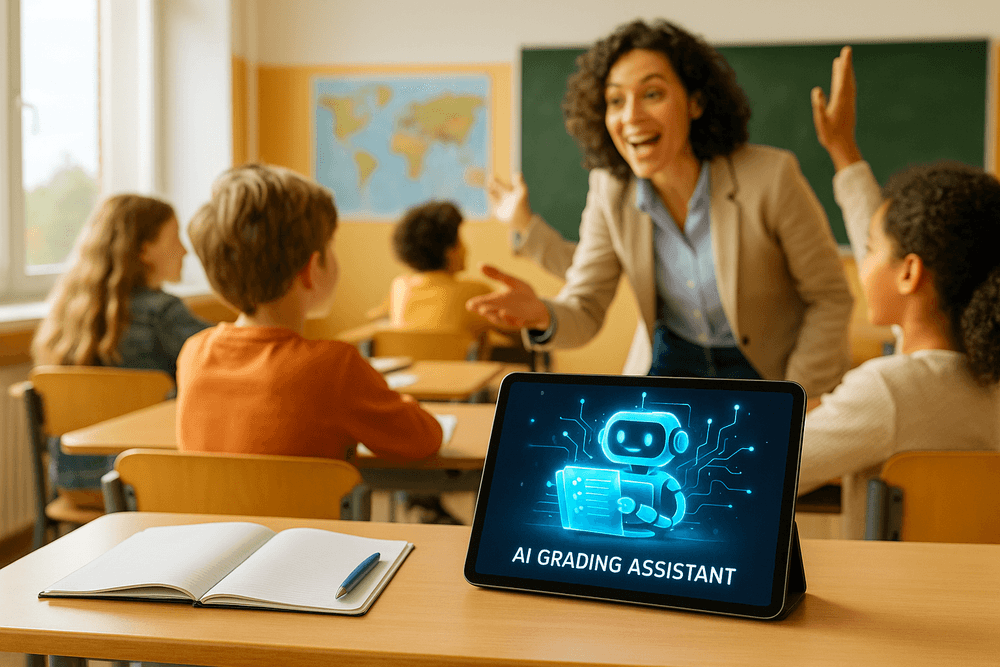
AI Grading Assistant in Action: Real-World Success Stories
The theoretical advantages of an AI grading assistant become truly compelling when viewed through the lens of real-world application. Across diverse educational landscapes, these intelligent tools are not just concepts but catalysts for tangible, positive change. From easing the burden on overworked K-12 teachers to refining the academic rigor of higher education, the success stories are mounting, painting a clear picture of an educational future enhanced by artificial intelligence.
Transforming K-12 Classrooms: How an AI Grading Assistant Lightens Teacher Load
The relentless demand of grading often overshadows the joy of teaching in K-12 education. An AI grading assistant is reshaping classroom dynamics by significantly lightening this load. Elementary school teachers, juggling multiple subjects, are reclaiming precious hours previously consumed by grading math worksheets or spelling tests. With an AI grading assistant, these routine assessments can be processed swiftly and accurately, freeing educators to focus on differentiated instruction and personalized student support. Middle school English teachers, for example, are leveraging an AI grading assistant to provide initial, constructive feedback on grammar and structure for first drafts, allowing students to engage in meaningful revision before final submission. This not only saves teachers invaluable time but also empowers students to take greater ownership of their learning journey, resulting in a more manageable workload, reduced teacher burnout, and more energy channeled into impactful teaching strategies.
Elevating Higher Education: Enhancing Feedback Quality with AI Grading Assistant Tools
In the realm of higher education, particularly within large lecture courses, providing timely and substantive feedback to every student presents a monumental challenge. Here, an AI grading assistant is proving to be an invaluable ally, moving beyond mere speed to genuinely elevate the quality and consistency of academic feedback. University professors and teaching assistants are utilizing AI grading assistant tools to offer detailed, objective evaluations on a scale previously unimaginable. These sophisticated systems can analyze complex assignments, identify common misconceptions across an entire cohort, and even suggest specific areas for improvement tailored to individual student responses. This level of granular feedback, delivered promptly, significantly helps students better understand challenging course material and refine their critical thinking and writing skills. Furthermore, an AI grading assistant can ensure unparalleled fairness by applying intricate grading rubrics with unwavering consistency across hundreds of submissions, mitigating potential unconscious bias. This allows faculty to dedicate more of their expert time to designing engaging course content, pursuing vital research, and fostering deeper, more meaningful intellectual interactions with students.
Educator Voices: Testimonials on the Impact of an AI Grading Assistant
The true measure of any educational technology lies in the experiences of those educators who integrate it into their daily practice. Across K-12 and higher education, teachers and professors are sharing compelling stories about the positive and often transformative changes brought about by the implementation of an AI grading assistant.
"Before we implemented an AI grading assistant in our department, I was consistently taking stacks of essays home, often feeling like I was drowning in papers," shares Ms. Eleanor Vance, a high school humanities teacher. "Now, the AI grading assistant handles the initial pass on many assignments, flagging key areas for my attention. I can get through grading significantly faster, which allows me to provide more targeted, qualitative feedback where it truly matters. I feel like I've rediscovered my passion for curriculum development and student interaction, not just the mechanics of grading."
Dr. Samuel Greene, a university economics professor, echoes this sentiment: "With undergraduate class sizes frequently exceeding 200 students, providing individual, thoughtful feedback was a logistical impossibility. Our AI grading assistant doesn't replace human oversight; it augments our ability to reach every student effectively. It consistently applies our established rubrics, flags common errors for class-wide clarification, and helps me identify students who might be struggling early on. The quality of student submissions has noticeably improved because they receive detailed feedback much quicker than before."
These testimonials underscore how an AI grading assistant is more than just a time-saving device; it's a powerful catalyst for more effective teaching practices and significantly enhanced student learning outcomes.
The Proof is in the Data: Measurable Benefits of AI Grading Assistant Adoption
Beyond compelling anecdotes and individual success stories, the adoption of an AI grading assistant is yielding quantifiable improvements in educational efficiency and effectiveness. Early data and institutional reports are painting an increasingly clear picture of its efficacy. For instance, several school districts that have piloted an AI grading assistant for subjects ranging from mathematics to language arts have reported an average reduction of 40-60% in the time teachers spend on grading routine assignments and formative assessments.
In higher education, universities employing advanced AI grading assistant tools have observed a marked increase in student engagement with feedback, primarily attributed to its timeliness, consistency, and specificity. One notable institutional study indicated a 15% average improvement in student scores on subsequent assignments when initial work received prompt, detailed feedback facilitated by an AI grading assistant. Furthermore, anonymous climate surveys conducted in K-12 schools and university departments that have embraced an AI grading assistant often show a significant and positive uptick in teacher job satisfaction and a measurable reduction in reported stress levels. These improvements directly impact teacher retention rates and contribute to a more positive overall school or campus climate. These diverse metrics robustly demonstrate that an AI grading assistant is not merely a futuristic concept but a practical, impactful solution delivering tangible, measurable benefits to students and educators today.
The Evolving Landscape: Future of Assessment with AI Grading Assistant Technology
The world of educational assessment is on the cusp of a profound transformation, largely driven by the rapid advancements in ai grading assistant technology. As these tools become more sophisticated, they promise to reshape not only how assignments are evaluated but also how educators teach and students learn. The future points towards a more nuanced, personalized, and efficient approach to assessment, moving far beyond traditional methods.
Beyond Scantrons: How AI Grading Assistants Tackle Complex Assignments
The days of grading being limited to multiple-choice bubbles are rapidly fading. Today's sophisticated ai grading assistant tools are venturing far beyond the Scantron, equipped to analyze nuanced and complex assignments. Leveraging advanced Natural Language Processing (NLP), machine learning, and even computer vision, these AI systems can evaluate a wide array of student work. This includes:
- Essays and written reports: Analyzing for coherence, argumentation, evidence-based reasoning, and writing style, rather than just keyword spotting.
- Open-ended questions: Understanding the context and depth of student responses in subjects ranging from history to science.
- Coding assignments: Checking for functionality, efficiency, style, and adherence to best practices in various programming languages.
- Mathematical problem-solving: Assessing not just the final answer but the steps taken and the logic applied.
- Even creative projects: In some nascent applications, AI is beginning to assist in evaluating design elements or compositional structures, always with human oversight.
This capability allows an ai grading assistant to provide richer, more qualitative feedback on assignments that were previously too time-consuming for educators to assess with such detail on a large scale.
Personalized Learning Journeys Fueled by AI Grading Assistant Insights
The power of an ai grading assistant extends beyond mere efficiency; it unlocks a treasure trove of data that can fuel truly personalized learning journeys. By providing granular feedback and identifying patterns in student performance—both at an individual and cohort level—these tools offer invaluable insights. Educators can use this data to:
- Identify specific areas of difficulty: Pinpoint concepts or skills where individual students or groups are struggling.
- Tailor instruction: Adapt teaching methods and resources to address identified learning gaps.
- Recommend supplementary materials: Suggest targeted readings, exercises, or tutorials based on a student's unique needs.
- Track progress over time: Monitor individual student improvement and the effectiveness of interventions.
This data-driven approach, facilitated by the ai grading assistant, allows for a shift from a one-size-fits-all educational model to one that is responsive and adaptive, catering to the diverse learning paces and styles within a classroom. Students receive more immediate, specific feedback, empowering them to take ownership of their learning.
Ethical Horizons: Ensuring Fairness and Addressing Bias in AI Grading
As the capabilities of any ai grading assistant expand, so too does the critical importance of addressing ethical considerations. Ensuring fairness and actively working to mitigate bias are paramount to the responsible deployment of this technology in education. Key areas of focus include:
- Algorithmic bias: AI models are trained on data, and if that data reflects existing societal biases, the AI can perpetuate or even amplify them. Continuous auditing of algorithms and diverse, representative training datasets are crucial.
- Transparency and explainability: Educators and students should have a clear understanding of how the ai grading assistant arrives at its evaluations. "Black box" algorithms can erode trust and make it difficult to identify or correct errors.
- Human oversight: While AI can automate much of the grading process, human educators must remain in the loop, particularly for complex, subjective, or high-stakes assessments. The AI should be a tool to assist, not replace, human judgment.
- Data privacy and security: Protecting sensitive student data used by and generated by the ai grading assistant is a non-negotiable ethical and legal requirement.
Proactive development of ethical guidelines, robust testing, and a commitment to continuous improvement are essential to harness the benefits of AI in grading while upholding principles of equity and fairness.
The Shifting Role of the Educator in an AI-Enhanced Grading Paradigm
The integration of an ai grading assistant into the classroom isn't about diminishing the educator's role but rather transforming and elevating it. Far from replacement, this technology acts as a powerful ally, freeing educators from some of the more repetitive and time-consuming aspects of grading. This reclaimed time and energy can be redirected towards more impactful activities:
- Deeper student engagement: More one-on-one interactions, small group work, and personalized support.
- Curriculum innovation: Designing more engaging and effective learning experiences.
- Mentorship and socio-emotional support: Focusing on the holistic development of students.
- Interpreting AI insights: Using the data provided by the ai grading assistant to inform pedagogical strategies and interventions.
- Facilitating complex discussions: Guiding students in critical thinking and collaborative problem-solving.
In this evolving paradigm, the educator becomes less of a sole grader and more of a learning facilitator, instructional designer, and data-informed practitioner, leveraging the ai grading assistant to enhance their professional practice and foster a more dynamic and responsive learning environment.

Conclusion: Step into the Future with an AI Grading Assistant
The journey through the landscape of AI-powered grading solutions reveals a transformative shift in educational technology. We've explored how these intelligent tools are not just a futuristic concept, but a present-day reality, poised to redefine efficiency and effectiveness in assessment. The integration of an AI grading assistant is more than an upgrade; it's a fundamental enhancement to the art and science of teaching. As we conclude, let's consolidate the pivotal insights and chart a course for embracing this innovative technology.
Key Takeaways: Why an AI Grading Assistant is a Game-Changer
The adoption of an AI grading assistant presents a compelling case for revolutionizing educational practices. The primary advantage, and often the most celebrated, is the significant time reclamation for educators. Tedious hours once spent on repetitive grading tasks can now be redirected towards more impactful activities like curriculum development, personalized student interaction, and professional growth.
Beyond mere time-saving, an AI grading assistant introduces a new level of consistency and objectivity to the assessment process. By adhering strictly to predefined rubrics, it minimizes human bias and ensures that all students are evaluated against the same standards, fostering a fairer learning environment. Furthermore, sophisticated AI tools can provide instantaneous, detailed feedback on a scale previously unimaginable. This immediate feedback loop is crucial for student learning, allowing them to understand their mistakes and areas for improvement promptly.
Ultimately, an AI grading assistant acts as a powerful catalyst for enhanced educational efficiency. It streamlines workflows, provides valuable data insights into student performance trends, and empowers educators to focus on the nuanced aspects of teaching that demand human expertise and empathy. This shift doesn't diminish the educator's role but rather elevates it, allowing them to become true facilitators of learning.
Your Next Move: Implementing an AI Grading Assistant in Your School or University
Embracing the future with an AI grading assistant requires a thoughtful and strategic approach. The first step is thorough research and needs assessment. Identify the specific challenges your institution or department faces in grading and explore which AI grading solutions best address these needs. Consider factors like assignment types, subject areas, scalability, and integration with existing Learning Management Systems (LMS).
Once potential tools are identified, initiating a pilot program is a prudent next move. Select a group of willing educators to test the AI grading assistant in a controlled environment. This allows for practical evaluation, feedback collection, and identification of best practices before a full-scale rollout. Crucially, comprehensive training and ongoing support for faculty are paramount. Educators need to understand how the AI grading assistant works, how to interpret its outputs, and how to use it effectively to complement their teaching.
Finally, develop a clear implementation roadmap that outlines timelines, resource allocation, and communication strategies. Successfully integrating an AI grading assistant is a collaborative effort that involves administrators, IT departments, and, most importantly, the educators who will use it daily.
Resources for Continuous Learning about AI in Educational Assessment
The field of AI in education, particularly concerning assessment and the AI grading assistant, is rapidly evolving. Staying informed is key to maximizing the benefits of these technologies. Seek out:
- Academic Journals and Publications: Publications like the "Journal of Educational Data Mining" or "Computers & Education" often feature research on AI in assessment.
- Industry Conferences and Webinars: Events hosted by organizations like ISTE, Educause, or specialized AI in education summits offer valuable insights and networking opportunities.
- Online Courses and Workshops: Platforms like Coursera, edX, or LinkedIn Learning provide courses on AI, machine learning, and their applications in education, helping you understand the technology behind an AI grading assistant.
- Professional Learning Networks (PLNs): Engage with other educators and technologists in online forums or social media groups dedicated to edtech and AI to share experiences and learn from peers.
- Vendor Resources: Reputable providers of AI grading assistant solutions often offer extensive documentation, case studies, and support materials.
Continuous learning will ensure you remain at the forefront of leveraging AI to enhance teaching and learning.
Final Call: Empower Your Teaching with an AI Grading Assistant Today!
The evidence is compelling: an AI grading assistant is not just a tool for efficiency; it's a partner in pedagogical innovation. It offers the potential to free educators from the grading grind, provide students with faster, more consistent feedback, and unlock new insights into learning patterns.
The future of education is one where technology augments human capability, allowing teachers to dedicate their invaluable time and expertise to fostering deeper understanding, critical thinking, and meaningful student-teacher relationships. Don't let the traditional burdens of grading hold you or your institution back. Take the decisive step to explore, implement, and integrate an AI grading assistant. Empower your teaching, enrich your students' learning experiences, and step confidently into the future of education. The time to act is now.