
June 12, 2025
More Than Just Talk
The AI Voice Assistant Revolution: More Than Just Talk
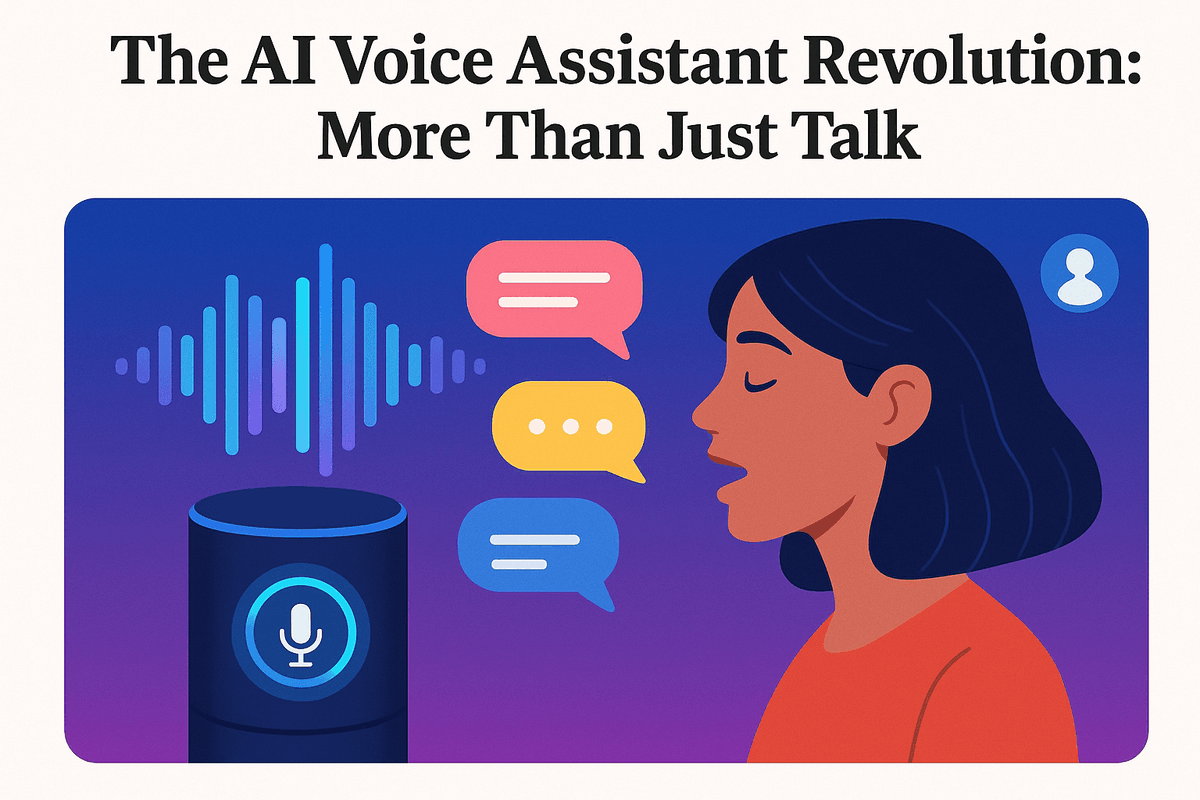
The digital landscape is buzzing, and at the heart of this transformation is a technology that’s rapidly changing how we interact with our devices and the world around us: the ai voice assistant. But what exactly is this seemingly ubiquitous presence, and why has it captured the attention of millions globally?
What is an AI Voice Assistant and Why is Everyone Listening?
At its core, an ai voice assistant is a sophisticated software program powered by artificial intelligence (AI), natural language processing (NLP), and machine learning (ML). It's designed to understand and respond to human voice commands, performing tasks, providing information, and controlling other connected devices. Think of it as your personal digital butler, always ready to lend an ear and a helping hand. From setting reminders and playing your favorite tunes to answering complex queries and managing your smart home, the capabilities of an ai voice assistant are expanding at an astonishing pace.
So, why is everyone tuning in? The appeal is multifaceted. Firstly, voice is the most natural form of human communication, making interactions with an ai voice assistant incredibly intuitive and accessible. There’s no steep learning curve; you simply speak. Secondly, these assistants offer unparalleled convenience. They enable hands-free operation, allowing users to multitask efficiently – whether you're cooking and need a recipe read aloud, driving and want to send a text, or simply have your hands full. The seamless integration of ai voice assistant technology into smartphones, smart speakers, cars, and even appliances means help is often just a "Hey Siri," "Okay Google," or "Alexa" away. This blend of intuitive interaction and practical utility is precisely why the ai voice assistant has become more than just a novelty; it's a fundamental shift in how we engage with technology.
The Evolution of AI Voice Assistant Technology: From Niche to Necessity
The journey of the ai voice assistant from a futuristic concept to an everyday tool has been a remarkable evolution. Early iterations of voice recognition software were often clunky, limited in scope, and prone to misunderstanding. They were largely confined to niche applications, far from the sophisticated conversational partners we know today. However, breakthroughs in artificial intelligence, particularly in deep learning and neural networks, have dramatically improved the accuracy and capabilities of NLP. This has allowed an ai voice assistant to not only understand the literal meaning of words but also to grasp context, intent, and even nuances in human speech.
The proliferation of cloud computing has also played a pivotal role, providing the massive processing power and data storage required for these complex AI models to learn and improve continuously. What was once a basic command-and-control system has transformed into a dynamic, learning entity. Today’s ai voice assistant can handle complex, multi-turn conversations, learn user preferences, and proactively offer assistance. This evolution has shifted its status from a cool gadget to a vital component of modern life for many, streamlining daily routines and integrating deeply into personal and professional workflows. The ai voice assistant is no longer just talking; it's understanding, adapting, and becoming an indispensable digital companion.
Understanding the Core Benefits: How an AI Voice Assistant Boosts Productivity
Beyond convenience and a futuristic appeal, a primary driver for the widespread adoption of ai voice assistant technology is its profound impact on productivity. In a world where time is a precious commodity, the ability to accomplish more with less effort is invaluable. An ai voice assistant acts as a powerful productivity enhancer in several key ways.
Firstly, hands-free operation is a game-changer. By allowing users to dictate emails, schedule appointments, or search for information using only their voice, an ai voice assistant frees up their hands and eyes for other tasks, enabling effective multitasking. Imagine drafting a report while simultaneously querying your ai voice assistant for market statistics or setting up a meeting. Secondly, speed is of the essence. Speaking a command is often much faster than typing it or navigating through multiple menus on a screen. This rapid interaction streamlines information retrieval and task execution.
Furthermore, an ai voice assistant excels at automating routine tasks. Setting reminders, creating to-do lists, managing calendars, and initiating calls can all be delegated, reducing mental clutter and allowing users to focus on more critical, high-value activities. For businesses, an ai voice assistant can streamline workflows, manage customer inquiries through voice-bots, and even assist in data entry, leading to significant efficiency gains. The ability of an ai voice assistant to integrate with a vast ecosystem of apps and services further amplifies these benefits, creating a cohesive and efficient digital experience that truly boosts productivity across various aspects of life.
Behind the Mic: Unpacking the Core Technology of Your AI Voice Assistant
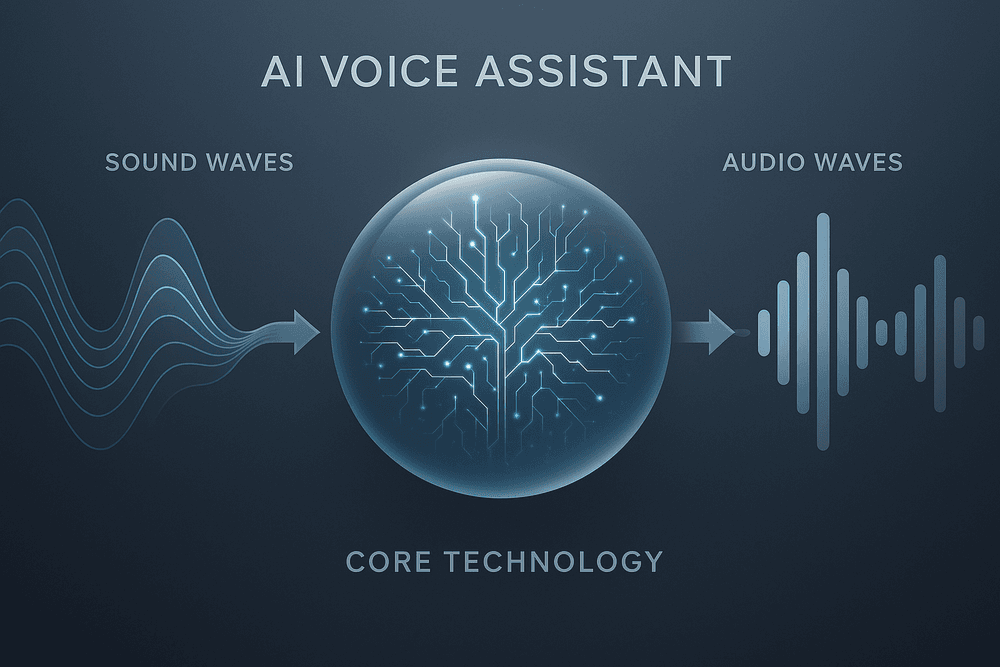
Ever wonder how your ai voice assistant seamlessly understands your spoken commands and responds so intelligently? It's not magic, but a sophisticated interplay of cutting-edge technologies working in concert. Let's lift the curtain and explore the core components that power these remarkable digital companions.
The Magic of Natural Language Processing (NLP) in AI Voice Assistants
Natural Language Processing (NLP) is the brainpower that allows your ai voice assistant to comprehend human language in all its complexity. It’s the crucial technology that translates your casual speech into actionable commands. When you ask your ai voice assistant, "What's the weather like in Paris this weekend?", NLP algorithms get to work. They parse the sentence, identifying key elements like "weather," "Paris," and "this weekend" (entities), and understand your goal is to get a forecast (intent). This involves breaking down sentences, understanding grammar, recognizing context, and even deciphering ambiguities. Without robust NLP, an ai voice assistant would be limited to rigid, pre-programmed phrases, a far cry from the conversational interactions we expect today. NLP enables your device to handle diverse phrasing and follow-up questions, making your ai voice assistant a more intuitive and helpful tool.
How AI Voice Assistants Understand You: Automatic Speech Recognition (ASR) Explained
Before NLP can work its magic, your ai voice assistant first needs to convert your spoken words into text. This is the role of Automatic Speech Recognition (ASR). Think of ASR as the digital ears of your ai voice assistant. When you speak, the device's microphone captures the sound waves. The ASR system then analyzes these sound waves, breaking them down into fundamental linguistic units called phonemes. Using sophisticated acoustic models (trained on vast amounts of speech data) and language models (which understand how words typically sequence together), the ASR system transcribes these phonemes into words and then into sentences. The accuracy of this transcription is vital; if the ASR misinterprets your words, the subsequent NLP stage will process incorrect information, leading to errors. Modern ASR systems are continuously improving, becoming better at handling different accents, speaking speeds, and noisy environments, ensuring your ai voice assistant accurately captures what you say.
Giving Your AI Voice Assistant Its Voice: Text-to-Speech (TTS) Synthesis
Once your ai voice assistant has understood your request (via ASR and NLP) and formulated a response, it needs a way to communicate that back to you audibly. This is where Text-to-Speech (TTS) synthesis comes in. TTS technology takes computer-generated text and converts it into spoken words. Early TTS systems often sounded robotic and monotonous. However, contemporary TTS, especially for an advanced ai voice assistant, utilizes deep learning and neural networks to produce voices that are remarkably natural, expressive, and human-like. These systems can now incorporate appropriate intonation, pitch, and rhythm, making conversations with your ai voice assistant feel more engaging and less artificial. Whether it's reading out a news summary, confirming a task, or telling a story, a high-quality TTS voice significantly enhances the user experience.
Machine Learning: The Secret to an Ever-Smarter AI Voice Assistant
The remarkable ability of an ai voice assistant to improve and adapt over time is largely thanks to Machine Learning (ML). ML algorithms enable these systems to learn from new data without being explicitly reprogrammed for every possible scenario. Every time you interact with your ai voice assistant, you're providing valuable data. This data is used to:
- Refine ASR models, making them better at understanding your specific voice, accent, and common phrases.
- Enhance NLP capabilities, allowing the system to learn new ways people express intent and understand a wider range of queries.
- Improve TTS output, making the voice sound even more natural and context-appropriate.
- Personalize the experience, learning your preferences, habits, and common requests to offer more relevant and proactive assistance.
This continuous learning cycle is what makes your ai voice assistant "smarter" with each interaction. It’s the driving force behind the ongoing evolution of these devices from simple command-takers to increasingly intelligent and indispensable digital assistants, ensuring your ai voice assistant becomes more helpful and attuned to your needs.
Unlocking Peak Efficiency: Key Features of an AI Voice Assistant
An AI voice assistant is more than just a novelty; it's a powerful tool designed to streamline your daily tasks and boost your productivity. By understanding and responding to your voice commands, these intelligent companions offer a suite of features that can transform how you manage your day, access information, control your environment, and communicate. Let's delve into the key capabilities that make an AI voice assistant an indispensable part of modern life.
Master Your Schedule: Seamless Calendar Management with Your AI Voice Assistant
Imagine effortlessly juggling your appointments, deadlines, and social engagements without ever needing to type or tap. With an AI voice assistant, this becomes your reality. Seamless calendar management is a cornerstone feature, allowing you to take full command of your time. Simply speak your commands: "Hey AI, add a doctor's appointment for Tuesday at 10 AM," or "What does my afternoon look like?" Your AI voice assistant can instantly create new events, set reminders so you never miss an important task, and provide an overview of your day, week, or month. This hands-free approach not only saves time but also allows you to manage your schedule while multitasking, whether you're commuting, cooking, or working out. The ability of an AI voice assistant to integrate with popular calendar applications ensures all your commitments are synchronized and accessible, making it your ultimate organizational partner.
Information on Demand: Getting Instant Answers and Insights from Your AI Voice Assistant
Curiosity piqued? Need a quick fact, a weather update, or the latest news headlines? Your AI voice assistant acts as an instant gateway to a world of information. No more sifting through search engine results; simply ask your question, and your AI voice assistant will provide a concise, relevant answer. "AI, what's the capital of Australia?" or "AI, how many cups are in a liter?" This feature extends beyond simple trivia. You can get real-time updates on stock prices, sports scores, flight statuses, or even complex explanations of scientific concepts. For professionals and students alike, the ability of an AI voice assistant to retrieve information swiftly can be a game-changer, facilitating learning, decision-making, and keeping you informed about the world around you, all through simple voice interaction.
Automate Your World: Smart Home and Device Control via AI Voice Assistant
Step into the future of home living with an AI voice assistant at the helm of your smart devices. This powerful feature allows you to control a wide array of compatible smart home products using just your voice. Imagine saying, "AI, dim the living room lights and play my evening playlist," and watching your environment transform. From adjusting thermostats and locking doors to controlling smart plugs, televisions, and even kitchen appliances, your AI voice assistant becomes the central hub for home automation. This not only adds a layer of unparalleled convenience but also enhances energy efficiency and home security. Setting up routines, like a "good morning" scene that turns on lights, starts the coffee maker, and gives you a weather report, is made simple with an AI voice assistant, truly automating your world for comfort and control.
Communicate Hands-Free: Leveraging Your AI Voice Assistant for Calls and Messages
In our hyper-connected world, staying in touch is crucial, but it's not always convenient or safe to use your hands. An AI voice assistant revolutionizes communication by enabling completely hands-free calling and messaging. Whether you're driving, cooking, or your hands are otherwise occupied, you can simply instruct your AI voice assistant to "Call Mom" or "Send a text to John saying I'm on my way." The assistant can read out incoming messages and allow you to dictate replies, ensuring you remain connected without compromising safety or interrupting your current activity. This feature is particularly beneficial for accessibility, providing an easier way for individuals with mobility challenges to communicate. By leveraging your AI voice assistant for these tasks, you can multitask effectively and maintain seamless communication effortlessly.
AI Voice Assistant in Action: Real-World Use Cases Transforming Industries
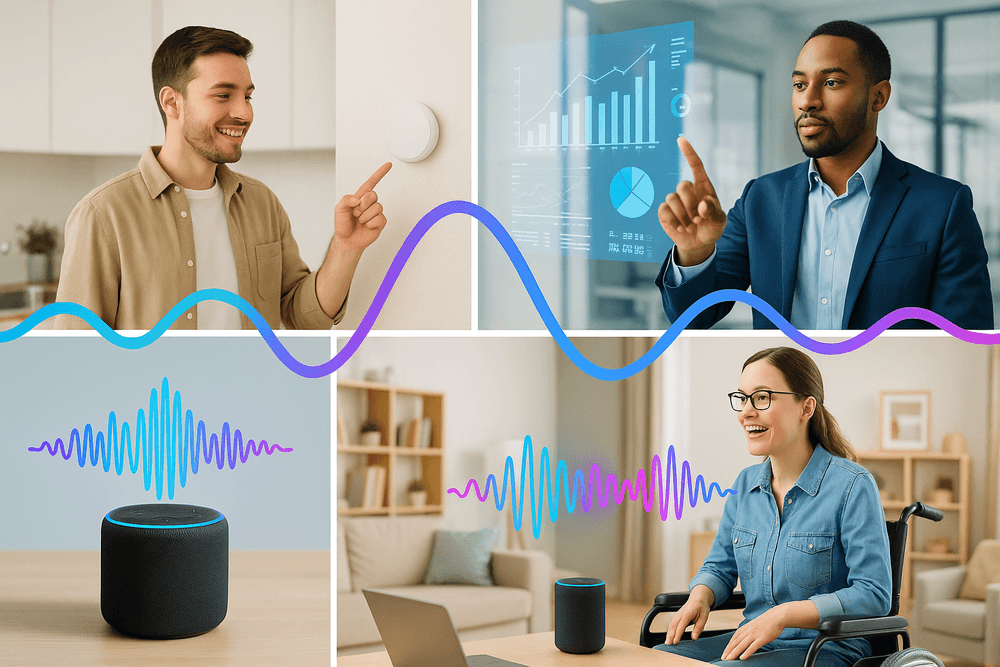
The true power of AI voice assistant technology comes alive when we see it in action. Beyond simple commands, these intelligent systems are revolutionizing how we live, work, and interact with the world. From streamlining our personal lives to reshaping entire industries, the applications of an AI voice assistant are as diverse as they are impactful.
Boosting Personal Productivity: Your Daily AI Voice Assistant Ally
For individuals, an AI voice assistant has rapidly become an indispensable tool for maximizing personal productivity. Imagine starting your day by simply asking your AI voice assistant for your schedule, the weather forecast, and the latest news headlines – all while you prepare breakfast. Throughout the day, it can manage your to-do lists, set reminders for important appointments, and draft emails or text messages using only your voice. Need to make a quick calculation, translate a phrase, or find a recipe? Your AI voice assistant is ready to help, freeing up your hands and mind for more complex tasks. Smart home integration further enhances this, allowing voice control over lighting, thermostats, and other appliances, making daily routines smoother and more efficient.
Enhancing Business Operations: AI Voice Assistant in Customer Service and Workflow Automation
Businesses are increasingly leveraging the capabilities of an AI voice assistant to enhance operations and gain a competitive edge. In customer service, an AI voice assistant can handle frequently asked questions, route calls to the appropriate department, and even manage initial stages of customer interaction, providing 24/7 support and reducing wait times. This frees up human agents to focus on more complex or sensitive issues. Internally, an AI voice assistant streamlines workflows by enabling voice-activated data entry, scheduling meetings, transcribing notes, and retrieving information from company databases. This automation of routine tasks not only boosts efficiency but also reduces the likelihood of human error, allowing employees to concentrate on strategic initiatives.
Accessibility Amplified: How AI Voice Assistant Technology Empowers Diverse Users
One of the most profound impacts of AI voice assistant technology lies in its ability to amplify accessibility for individuals with diverse needs. For people with visual impairments, an AI voice assistant offers a hands-free, voice-first interface to access information, control devices, and communicate with others. Similarly, those with motor disabilities can benefit significantly from voice commands, enabling them to operate technology and manage their environment without physical interaction. Older adults, who may find complex digital interfaces challenging, can use an AI voice assistant for simplified communication, accessing services, and staying connected. This technology is breaking down barriers and fostering greater independence and inclusion for many.
Innovative AI Voice Assistant Frontiers: Healthcare, Education, and Entertainment Reimagined
The transformative potential of an AI voice assistant extends into specialized sectors, pioneering new ways of operating. In healthcare, doctors and nurses can use an AI voice assistant for hands-free access to patient records, dictating notes during examinations, and even assisting in preliminary diagnostic queries. For patients, it can provide medication reminders and support. Education is also being revolutionized, with an AI voice assistant offering interactive learning tools, language practice modules, and research assistance for students. Teachers can utilize it for administrative tasks, freeing up more time for instruction. The entertainment industry uses an AI voice assistant to create more immersive experiences, from voice-controlled gaming and interactive storytelling to seamlessly managing media playback across devices. These innovative applications demonstrate that the reach of AI voice assistant technology is continually expanding, promising even more exciting developments in the future.
Choosing and Mastering Your AI Voice Assistant: Best Practices
Selecting the right AI voice assistant and learning how to interact with it effectively can significantly enhance your daily productivity and convenience. This guide will walk you through choosing a platform, mastering communication, personalizing your experience, and navigating privacy concerns.
Comparing Top AI Voice Assistant Platforms: Which One is Right for You?
The market for AI voice assistant technology is dominated by a few key players, each with its strengths and ecosystem. When choosing, consider your existing devices, preferred services, and primary use cases.
- Amazon Alexa: Widely known for its integration with Echo smart speakers, Alexa excels in smart home control, boasting a vast library of "Skills" (third-party app integrations) and seamless Amazon shopping. If you're building an extensive smart home or are a frequent Amazon user, Alexa is a strong contender.
- Google Assistant: Leveraging Google's powerful search capabilities, Google Assistant provides excellent contextual awareness and often delivers more nuanced answers to queries. It integrates deeply with Android devices, Google services (like Calendar and Maps), and offers robust smart home compatibility through Google Home/Nest devices. If information retrieval and Android integration are priorities, this AI voice assistant is a top choice.
- Apple Siri: If you're embedded in the Apple ecosystem (iPhone, iPad, Mac, Apple Watch, HomePod), Siri offers seamless integration and a strong focus on privacy. While its third-party integrations historically lagged, Apple continues to expand Siri's capabilities, particularly for controlling Apple services and HomeKit-compatible smart devices.
Ultimately, the best AI voice assistant for you depends on your personal tech landscape and what you want your assistant to do. Many users even find themselves using multiple assistants across different devices.
Effective Prompting: How to Talk to Your AI Voice Assistant for Best Results
Communicating clearly with your AI voice assistant is crucial for getting the desired outcomes. While these systems are designed for natural language, precision can make a big difference.
- Be Specific: Instead of saying, "Play some music," try "Play my 'Chill Vibes' playlist on Spotify." The more details you provide, the better your AI voice assistant can understand and execute your request.
- Speak Clearly and Naturally: You don't need to speak like a robot, but enunciate clearly and maintain a natural pace. Avoid mumbling or speaking too quickly.
- Use Wake Words Correctly: Ensure you say the wake word (e.g., "Alexa," "Hey Google," "Hey Siri") clearly before your command. Pause briefly after the wake word to give the AI voice assistant time to start listening.
- Experiment with Phrasing: If your first command doesn't work, try rephrasing it. For instance, if "Turn off the living room light" fails, try "Switch the living room lamp off."
- Break Down Complex Requests: For multi-step tasks, it's often better to issue separate commands rather than one long, complicated instruction, unless your AI voice assistant specifically supports chained commands.
Mastering these prompting techniques will make your interactions with your AI voice assistant smoother and more efficient.
Customizing Your Experience: Personalizing Your AI Voice Assistant with Skills and Routines
To truly unlock the power of your AI voice assistant, delve into its customization options. Most platforms offer "Skills" (Alexa) or "Actions" (Google Assistant), which are like apps that add new functionalities.
- Explore Skills/Actions: Browse the skill store for your AI voice assistant to find integrations for news updates, games, meditation guides, recipe finders, smart home device controls, and much more. Enabling these can tailor your assistant to your specific interests and needs.
- Create Routines: Routines allow you to trigger a sequence of actions with a single custom voice command. For example, a "Good Morning" routine could have your AI voice assistant tell you the weather, read your calendar appointments, turn on smart lights, and start playing your favorite morning playlist. Similarly, a "Good Night" routine could turn off all lights, lock doors, and set an alarm.
- Personalize Responses and Services: Link your preferred music streaming services, calendar apps, and news sources. Some assistants also allow you to teach them voice profiles for different users in a household, enabling personalized responses and access to individual content.
By customizing your AI voice assistant, you transform it from a generic tool into a truly personal and indispensable helper.
Navigating Privacy and Security with Your AI Voice Assistant: What You Need to Know
While the convenience of an AI voice assistant is undeniable, it's natural to have questions about privacy and security. Understanding how these devices work and what controls you have is essential.
- "Always Listening?" Debunked: Your AI voice assistant is technically always listening, but only for its "wake word." Once it detects the wake word, it begins recording your command and sends it to the cloud for processing. Reputable manufacturers provide clear indicators (like a light) when the device is actively recording or streaming.
- Review and Manage Voice Recordings: Major AI voice assistant providers allow you to review and delete your voice recording history through their respective apps or web portals. Regularly reviewing this can give you peace of mind and control over your data.
- Microphone Mute: Most smart speakers equipped with an AI voice assistant feature a physical microphone mute button. When activated, this electronically disconnects the microphone, preventing the device from listening for the wake word or recording anything.
- Secure Your Accounts: Your AI voice assistant often links to other accounts (email, shopping, music). Ensure these accounts are protected with strong, unique passwords and enable two-factor authentication where available.
- Stay Informed: Manufacturers regularly update their privacy policies and features. Stay informed about these changes to make the most of the privacy controls available for your AI voice assistant.
By taking these steps, you can confidently use your AI voice assistant while safeguarding your privacy and security.

The Future is Vocal: Embrace the Power of AI Voice Assistant Technology
The AI voice assistant is no longer a futuristic novelty; it's a rapidly evolving technology poised to become even more integral to our daily lives. As capabilities expand and integration deepens, understanding what’s next and how to harness this power is key. Let's explore the exciting future of the AI voice assistant and how you can make it a part of your world.
Emerging Trends: What’s Next for AI Voice Assistant Capabilities?
The AI voice assistant of tomorrow will be far more intuitive, proactive, and personalized. We're on the cusp of several groundbreaking advancements:
- Hyper-Personalization and Contextual Awareness: Expect your AI voice assistant to understand you better than ever. Future systems will learn your habits, preferences, and even emotional states to provide truly tailored assistance. They'll grasp context across multiple interactions, making conversations more natural and less repetitive.
- Proactive Intelligence: Instead of just reacting to your commands, the AI voice assistant will begin to anticipate your needs. Imagine your assistant suggesting a quicker route due to unexpected traffic before you even ask, or reminding you to pack an umbrella based on the forecast and your calendar appointments.
- Enhanced Natural Language Understanding (NLU): Conversations with your AI voice assistant will feel increasingly human-like. Advancements in NLU will enable assistants to understand more complex queries, nuanced language, and even decipher ambiguous requests with greater accuracy. This means less "Sorry, I didn't get that" and more seamless interaction.
- Emotional AI and Empathetic Responses: The next generation of AI voice assistant technology is being developed with emotional intelligence. This could involve recognizing frustration, excitement, or sadness in your voice and adapting its tone and responses accordingly, leading to more empathetic and supportive interactions.
- Seamless Cross-Platform Integration: Your AI voice assistant will become a truly unified interface, effortlessly transitioning between your phone, smart speaker, car, and even workplace devices. This omnipresence will make managing your digital world more fluid and efficient.
- Sophisticated AI for Specialized Tasks: Beyond general assistance, AI voice assistant capabilities will become more specialized for professional environments, offering advanced support in fields like healthcare, customer service, and collaborative work.
Integrating an AI Voice Assistant into Your Digital Life: A Step-by-Step Guide
Ready to welcome an AI voice assistant into your routine? Here’s a simple guide to get you started:
- Choose Your Ecosystem: Select an AI voice assistant that aligns with your existing devices and preferences. Major players include Google Assistant (Android, Google Home), Amazon Alexa (Echo devices, Fire TV), and Apple's Siri (iOS, HomePod).
- Initial Setup: Activate and configure your AI voice assistant on your primary device, typically your smartphone or a new smart speaker. This usually involves connecting to Wi-Fi and signing in with an account.
- Personalize Settings: Dive into the settings menu. Customize the language, voice, and wake word (if applicable). Crucially, review and adjust privacy settings to your comfort level.
- Link Your Services: Enhance your AI voice assistant by connecting it to your favorite apps and services – music streaming (Spotify, Apple Music), calendars (Google Calendar, Outlook), smart home platforms, and more.
- Start with Basic Commands: Get comfortable by asking your AI voice assistant simple things: "What's the weather?" "Set a timer for 10 minutes." "Play some jazz music."
- Explore Skills and Actions: Discover the extended capabilities offered through third-party "skills" (Alexa) or "actions" (Google Assistant). These are like apps for your voice assistant, unlocking thousands of new functionalities.
- Create Routines: Automate multi-step tasks with a single voice command. For example, a "Good Morning" routine could have your AI voice assistant turn on the lights, tell you the weather, read your first calendar event, and start your news briefing.
- Iterate and Discover: The more you use your AI voice assistant, the more you'll discover its potential. Don't be afraid to experiment with different commands and features.
Start Your Journey: Resources to Explore AI Voice Assistant Technology Further
The world of AI voice assistant technology is constantly evolving. To stay informed and deepen your understanding, here are some valuable resources:
- Official Tech Blogs: Keep an eye on the official blogs from major AI voice assistant developers like the Google AI Blog, Amazon Science (for Alexa insights), and Apple Machine Learning Journal for cutting-edge research and updates.
- Leading Tech Publications: Websites like The Verge, TechCrunch, Wired, and CNET frequently cover new AI voice assistant features, devices, and industry trends. Look for sections dedicated to AI or smart home technology.
- Online Learning Platforms: For structured learning, platforms such as Coursera, Udemy, and edX offer courses on artificial intelligence, machine learning, and even specific AI voice assistant development. YouTube also hosts countless tutorials and review channels.
- Developer Portals: If you're technically inclined or interested in building your own voice applications, explore developer portals like the Alexa Skills Kit (ASK) for Amazon Alexa or Actions on Google for the Google Assistant.
- Community Forums: Engage with other users and enthusiasts on platforms like Reddit (e.g., r/amazonecho, r/googlehome) or official product forums. These are great places to ask questions, share tips, and learn about real-world AI voice assistant usage.
By exploring these avenues, you can continue to learn about the incredible potential of AI voice assistant technology and how it's shaping our interaction with the digital world.