July 4, 2026
Build the Launch Event Message House Before Anyone Writes Copy
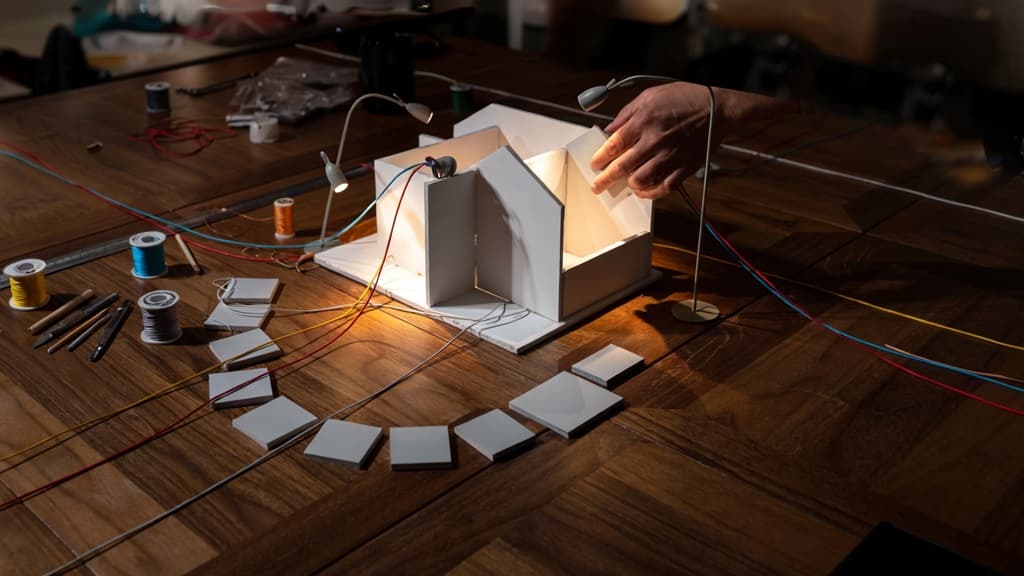
A launch falls apart when every asset sounds like it came from a different strategy meeting. Before writers, designers, producers, and media buyers start generating copy, the agency needs one message house that turns the client’s product story into a repeatable system.
What is the core message for a SaaS launch event?
The core message is the one sentence every piece of launch content should reinforce: who the product is for, what urgent problem it solves, and why now is the moment to pay attention.
For a SaaS launch, that message should not be a feature list. “We added AI reporting, workflow automation, and new dashboards” is not a launch story. A stronger core message sounds like:
“For RevOps teams drowning in disconnected pipeline data, [Product] turns every revenue signal into one trusted forecast before the quarter slips away.”
That sentence gives your team a center of gravity. It tells the copywriter what tension to lead with, the designer what mood to create, the strategist what audience pain matters most, and the client what not to dilute.
For small agencies, this is where margin is won. Without a clear core message, every deliverable becomes a fresh debate. With one, AI-assisted drafts, landing pages, email sequences, speaker notes, and social copy can move faster without drifting off-brand.
Define the audience, promise, proof, and CTA
A practical message house does not need to be a 30-slide strategy deck. It needs four decisions that remove ambiguity.
Audience: Be more specific than a job title. “Marketing leaders” is too broad. “VPs of Marketing at B2B SaaS companies trying to prove campaign influence before budget planning” gives your content emotional and commercial precision.
Promise: State the transformation, not just the capability. If the feature is “automated client reporting,” the promise might be “turn reporting from a monthly fire drill into a client-retention advantage.”
Proof: Pick the evidence that makes the promise believable. That might be customer results, product screenshots, workflow comparisons, analyst quotes, beta-user feedback, or a sharp before-and-after scenario. The point is to give the launch claim weight before the audience asks, “Says who?”
CTA: Decide the one action the content should make feel natural. For a high-ticket SaaS product, the CTA may not be “buy now.” It could be “book a workflow assessment,” “join the waitlist,” or “request the launch offer.” The CTA should match the audience’s buying stage and the client’s sales motion.
Together, these four elements prevent the common agency trap: beautiful launch creative built around a vague argument.
Turn brand voice into usable launch guardrails
Brand voice cannot live only in a PDF no one opens. For a launch, it needs to become working rules your team can apply under deadline.
Create guardrails that answer:
- What words should we use repeatedly because they belong to the brand?
- What claims, phrases, or hype should we avoid?
- Should the tone feel visionary, practical, provocative, reassuring, premium, playful, or technical?
- How does the brand talk about customer pain without sounding negative or fear-based?
- How direct should CTAs be?
For example, one SaaS client may say “cut manual work” while another says “remove operational drag.” Both can describe the same product benefit, but they create very different brands.
This is where Aethera gives agencies leverage: ingest the client’s brand once, then use those guardrails across every AI-generated draft so the launch event does not sound stitched together from five tools and six freelancers. The result is faster production, fewer client rewrites, and a launch story that stays consistent from first touch to final CTA.
Create the Product Launch Event Asset Map
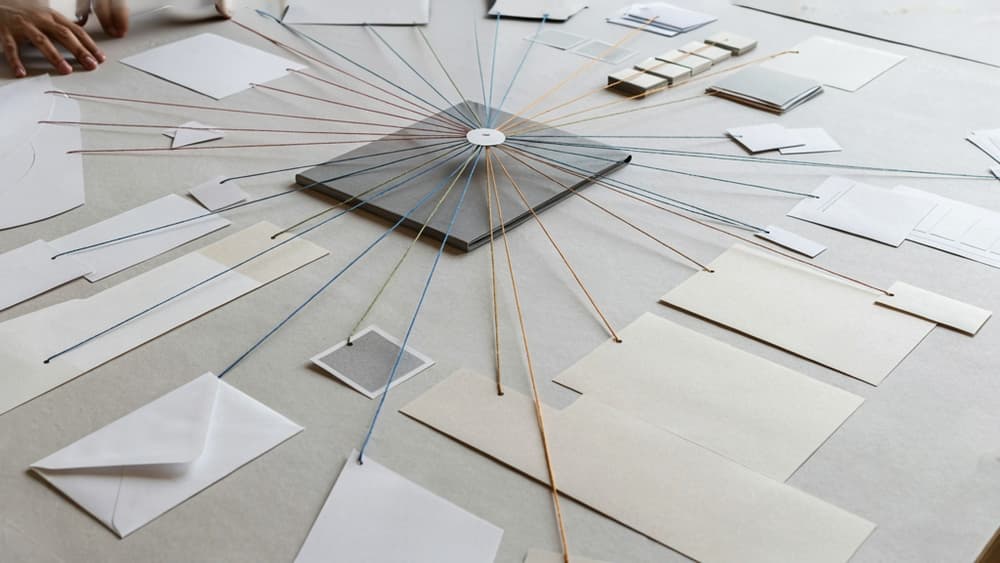
Once the message house is approved, the next agency risk is fragmentation: one writer drafts ads, another builds the deck, a designer pulls social copy from Slack, and suddenly the same launch sounds slightly different everywhere.
An asset map prevents that. It shows what needs to be created, why it exists, where it will be used, and which part of the buyer journey it supports.
What content assets do you need for a launch event?
For a SaaS product launch, the core asset set usually includes:
- Registration page copy: headline, value proposition, speaker/product details, agenda snapshot, CTA.
- Email sequence: invite, reminder, “last chance,” confirmation, calendar hold, post-event follow-up.
- Paid and organic social posts: audience-specific hooks, short-form variants, founder/team posts, partner posts.
- Ad creative copy: primary text, headlines, descriptions, display copy, LinkedIn variants.
- Sales enablement copy: rep invite templates, one-to-one outreach snippets, objection-handling language.
- Event deck: narrative slides, product framing, demo setup, proof points, closing CTA.
- Demo script or talk track: what to show, what to say, what pain point each feature resolves.
- Landing page FAQs: who should attend, what they will learn, whether a recording will be sent.
- Post-event assets: replay page, recap email, sales follow-up, highlight clips, blog or LinkedIn recap.
For agencies, the goal is not simply “make all the things.” It is to stop every asset from becoming its own mini-strategy project.
Match each asset to the buyer journey
A launch event asset map should make intent obvious. Someone seeing a LinkedIn teaser for the first time needs a different message than a warm lead who attended the demo and clicked the pricing CTA.
Buyer stage | Audience intent | Best-fit assets | Content job |
|---|---|---|---|
Awareness | “Is this relevant to me?” | Social teasers, paid ads, partner posts, short email invites | Surface the pain and make the event feel worth noticing |
Consideration | “Should I spend time on this?” | Registration page, agenda copy, FAQ, reminder emails | Clarify the promise, credibility, and practical value |
Evaluation | “Can this solve my problem?” | Event deck, demo script, proof slides, use-case examples | Connect product capabilities to business outcomes |
Conversion | “What should I do next?” | Post-event email, sales sequences, replay page, CTA copy | Move engaged attendees toward a call, trial, or internal share |
Expansion | “Who else should see this?” | Recap content, clips, internal enablement snippets | Help champions circulate the story inside their team |
This mapping also helps agency teams prioritize. If budget or timing gets tight, you can see which missing asset creates the biggest gap in the journey.
Use one master brief to scale production without adding headcount
The asset map only works if every deliverable is generated from the same source of truth. That source should be a master launch brief.
At minimum, include:
- Approved message house
- Target audience segments
- Primary and secondary CTAs
- Product positioning
- Feature-to-benefit translations
- Proof points and customer examples
- Required terminology
- Words or claims to avoid
- Channel list and asset specs
- Brand voice rules for this client
For a small agency, this is where AI can either reduce workload or multiply cleanup. If each team member prompts a different tool with a different interpretation of the client’s brand, you get speed without consistency.
Aethera solves that by letting your team ingest the client’s brand once, then generate launch assets from the same approved guardrails. Registration copy, email variants, ad hooks, and sales follow-ups can all start from one aligned brief instead of scattered docs and guesswork.
That means fewer revision loops, less partner-level copy policing, and more capacity to deliver polished launch campaigns without adding another strategist or writer to the project.
Design a Run-of-Show That Makes the Product Feel Inevitable
With the brief and asset map in place, the run-of-show is where the launch stops feeling like “a webinar about a feature” and starts feeling like the obvious answer to the audience’s problem.
A simple SaaS launch event agenda template
For most small agency teams, 35–45 minutes is enough. Long enough to build conviction, short enough to keep production lean.
Time | Segment | Purpose | Owner |
|---|---|---|---|
0:00–0:03 | Welcome and framing | Set expectations and name the problem the audience already feels | Host |
0:03–0:08 | Market/problem setup | Show why the old way is breaking or no longer enough | Founder, PM, or strategist |
0:08–0:18 | Product reveal and guided demo | Connect the product to the problem in a clear sequence | Product lead or demo owner |
0:18–0:25 | Use case walkthrough | Make the value concrete through one realistic customer scenario | Customer-facing lead |
0:25–0:32 | Proof segment | Add credibility through results, customer quotes, beta learnings, or data | Founder, customer, or partner |
0:32–0:38 | Q&A | Remove buying friction and surface objections | Host + subject matter expert |
0:38–0:42 | Next step | Direct the audience to one clear action | Host or sales lead |
The key is sequencing. Do not open with a screen share of the product. Start with the tension your audience recognizes, then make the product feel like the natural resolution.
Balance story, demo, proof, and next steps
A strong SaaS launch event is not a feature tour with slides around it. It needs four beats:
- Story: What changed? Why does this product need to exist now?
- Demo: How does the product solve the problem in practice?
- Proof: Why should the audience believe it works?
- Next step: What should a qualified viewer do immediately after?
For agency teams producing on behalf of clients, this balance protects the event from internal stakeholder drift. Sales will want more objection handling. Product will want more features. Leadership will want more vision. The run-of-show gives each priority a defined place, so the final experience feels cohesive instead of committee-built.
A useful rule: every demo moment should answer a story point. If the story says teams lose time switching between disconnected workflows, the demo should show that exact friction disappearing. If the story says reporting is unclear, the demo should show the before-and-after of decision-making, not just a dashboard tour.
Assign roles, timing, and backup plans
Do not leave ownership implied. A launch run-of-show should name the person responsible for every handoff, slide, demo click, speaker transition, and contingency.
At minimum, assign:
- Host: Keeps energy up, manages transitions, protects timing.
- Demo owner: Runs the product walkthrough and has a fallback recording ready.
- Producer: Handles platform controls, speaker cues, chat, and technical issues.
- SME: Answers detailed product or implementation questions.
- Decision owner: Makes real-time calls if something runs long or breaks.
Build a “cut list” before the event. If the opening runs five minutes over, what gets shortened? If the live demo fails, where does the recording begin? If a speaker drops, who covers their section?
For agencies juggling multiple client launches, this level of specificity is what keeps quality from depending on heroics. The run-of-show becomes the operating system for the room: everyone knows the story, the sequence, and the moment they are responsible for making land.
Promote the Launch Event and Keep the Audience Engaged
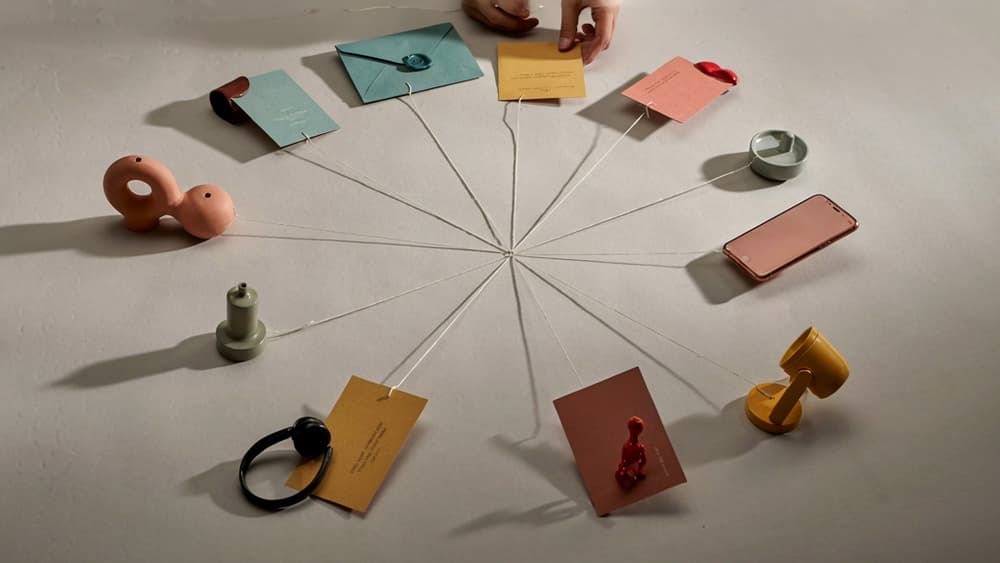
With the story, asset plan, and show flow locked, promotion becomes less about “getting the word out” and more about getting the right people to care enough to show up.
How do you promote a product launch event?
Start with the channels your client already has permission to use, then adapt the hook by context:
- Email: Best for existing customers, active opportunities, partners, and newsletter subscribers. Keep the copy outcome-led: what they’ll learn, why it matters now, and why attending live is worth their time.
- LinkedIn: Best for category education, founder-led posts, customer proof, and employee advocacy. Give sales, leadership, and subject-matter experts short post variants so they are not all sharing the same robotic announcement.
- Paid social or retargeting: Best for warming up known website visitors, content engagers, or lookalike audiences around the launch theme.
- Sales outreach: Best for open opportunities and target accounts. The invite should feel like a useful reason to re-engage, not a mass webinar blast.
- Partner and customer channels: Best when the launch connects to an integration, customer story, or shared use case.
For agencies, the risk is that every channel gets rewritten by a different person or AI tool until the campaign sounds fragmented. Keep one approved angle per audience, then generate channel-specific versions from that source. A sales email can be direct. A founder LinkedIn post can be more opinionated. A paid ad can be tighter. But the promise, proof, and tone should still feel like the same client.
Segment promotion by audience and intent
Not everyone needs the same reason to attend. Segment the invite strategy by what the audience already knows and what they are likely trying to solve.
Audience segment | What they care about | Strongest invite angle |
|---|---|---|
Existing customers | “How does this make my current setup better?” | Show what changes, what improves, and why they should adopt early |
Open pipeline | “Does this solve the problem we’ve been discussing?” | Connect the launch to their active pain point or buying trigger |
Target accounts | “Why should I pay attention now?” | Lead with the market shift, cost of inaction, or competitive edge |
Partners | “Can this help us create more value together?” | Emphasize shared use cases, integrations, or co-selling potential |
Press or analysts | “Is there a clear story here?” | Focus on category relevance, differentiation, and proof points |
This is where small agencies can punch above their size. Instead of producing more, produce sharper. Five tailored invite angles will usually outperform one generic announcement sent everywhere.
Use interactive moments to increase attention and conversion
Promotion should not stop once someone registers. Build light interaction before and during the session so attendees feel involved, not broadcast at.
Before the event, ask one simple question in the confirmation email or reminder: “What are you hoping this helps you solve?” Use the answers to shape examples, prioritize demo moments, or brief the host on likely objections.
During the session, add moments that create participation without derailing the flow:
- A quick poll that frames the problem before the reveal
- A chat prompt tied to a specific use case
- A short choose-your-path demo moment
- A live Q&A block with pre-seeded questions
- A clear hand-raise moment for people who want a deeper walkthrough
For agency teams managing multiple client launches, document these interaction patterns as reusable prompts and formats. The goal is not gimmicks; it is attention with intent. If the audience clicks, answers, comments, or chooses a path, they are telling you what matters — and the launch becomes easier to convert in the room.
Turn the Launch Event Into Follow-Up, Sales Momentum, and Reusable Content
The event is only the peak moment. The real value comes from how quickly your team turns attention into action while the message is still fresh.
What should happen after a launch event?
Within 24 hours, package the event into three streams: sales follow-up, audience nurture, and content repurposing.
For agency teams, the mistake is treating post-event work as “send the recording and move on.” Instead, build a short post-launch workflow before the event happens:
- Send behavior-based follow-up: attendees, no-shows, high-intent viewers, customers, partners, and internal sales teams should not receive the same message.
- Hand sales a clean priority list: include who attended, how long they stayed, what they clicked, which questions they asked, and whether they requested a demo.
- Repurpose the strongest moments: turn demo clips, customer quotes, founder soundbites, and Q&A answers into short-form posts, emails, sales snippets, blog sections, and landing page proof.
- Update the source brief: capture what changed during the launch, including new objections, clearer positioning, stronger proof points, and audience language.
This is where small agencies can create outsized value for clients. You are not just delivering a launch event; you are turning one live moment into weeks of sales and marketing momentum.
Segment follow-up by attendee behavior
Post-event segmentation should be simple enough for a small team to execute but specific enough to feel personal.
Audience behavior | What it likely means | Best follow-up |
|---|---|---|
Attended live and stayed to the end | Strong interest or active evaluation | Send recording, recap, CTA, and direct sales handoff |
Attended but left early | Mild interest or poor fit/timing | Send “what you missed” highlights with one clear next step |
Asked a question | Active consideration or objection | Send a tailored answer, relevant proof, and meeting link |
Clicked offer/demo CTA | High buying intent | Route to sales within 24 hours with context |
Registered but did not attend | Interest exists, timing failed | Send replay plus a short reason to watch now |
Existing customer attended | Expansion, retention, or enablement opportunity | Send product education, upgrade path, or internal rollout assets |
For creative and digital agencies managing multiple client launches, the key is keeping every follow-up aligned to the client’s brand voice and offer. Aethera helps by giving your team one approved brand source, so every recap email, sales note, social post, and replay description sounds like the client—not like five different writers and three AI tools stitched it together.
Measure what to improve for the next launch
Do not limit reporting to registration and attendance. Those numbers matter, but they rarely explain whether the launch created pipeline, clarified the story, or produced reusable content.
Track three categories:
- Audience quality: registration source, attendee fit, live attendance rate, average watch time, drop-off points.
- Sales momentum: demo requests, CTA clicks, influenced opportunities, follow-up reply rate, meeting conversion.
- Content value: top-performing clips, most-used sales snippets, strongest audience questions, posts or emails generated from the event.
Then translate the data into decisions. If people dropped during the technical demo, tighten the next one. If Q&A produced the clearest objections, turn those into nurture content. If one customer quote drove replies, move it higher in the next launch sequence.
That post-event intelligence becomes the foundation for a sharper next launch—and a stronger ongoing client relationship.