
January 3, 2026
The Rise of the AI-Powered Research Assistant in Modern
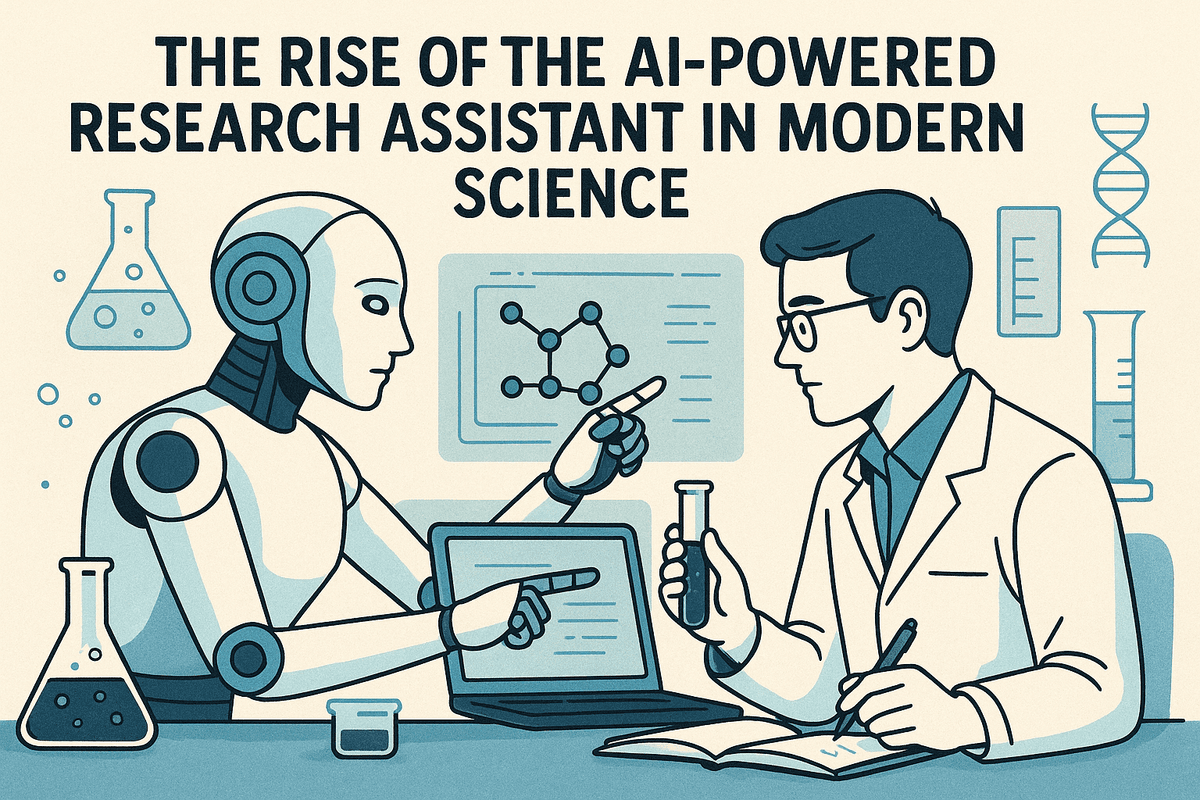
The Rise of the AI-Powered Research Assistant in Modern Science
In the fast-paced world of academia and professional R&D, we are currently witnessing a paradox: we have more access to knowledge than ever before, yet finding relevant answers has never been harder. With millions of academic papers published annually, the sheer volume of data has transformed from a resource into a barrier. Researchers are no longer struggling to find information; they are struggling to filter it. This crisis of information overload has paved the way for a fundamental shift in how we interact with knowledge, marking the dawn of the ai-powered research assistant.
Why Traditional Search is Failing the Modern Scholar
For decades, the research workflow has relied heavily on traditional search engines and academic databases. While tools like Google Scholar or PubMed are invaluable, they operate on a rigid framework that is becoming increasingly insufficient for complex inquiry. Traditional search relies almost exclusively on keyword matching. If a researcher types in a specific query, the engine looks for those exact words within titles, abstracts, or metadata.
The limitation here is human fallibility. If you do not know the precise terminology used by a specific sub-field, or if an author uses a synonym you didn't predict, you will likely miss critical papers. Furthermore, traditional search engines act as gatekeepers that provide lists of links, leaving the cognitive load of reading, sorting, and synthesizing entirely on the human user. In an era where a comprehensive literature review can involve hundreds of sources, this manual "sifting" process is a bottleneck that stifles innovation.
Beyond the Search Bar: What is an AI-Powered Research Assistant?
An ai-powered research assistant is not merely a better search engine; it is a collaborative partner. Unlike a standard search engine, which retrieves documents based on metadata, an AI assistant utilizes Large Language Models (LLMs) to process and "read" the content of the documents.
Think of a search engine as a librarian who points you toward the right shelf and leaves you to it. In contrast, an AI research assistant acts as a dedicated peer who pulls the books, reads them, and summarizes the specific arguments relevant to your hypothesis. It bridges the gap between retrieval and comprehension. These tools can extract key findings, identify methodologies, highlight contradictions between papers, and even suggest connections that a human researcher might miss due to fatigue or volume bias.
Moving from Keywords to Semantic Understanding
The true power of this technology lies in the shift from keyword matching to semantic understanding. An ai-powered research assistant utilizes vector search and natural language processing to understand the intent behind a query, not just the literal string of characters.
For example, in a traditional system, searching for "impact of remote work on productivity" might miss a seminal paper titled "Distributed Teams and Efficiency Output" simply because the keywords don't overlap. An AI assistant, however, understands that "remote work" and "distributed teams" are semantically related concepts in this context. It connects ideas across disciplines, allowing researchers to ask natural language questions—such as "What are the consensus limitations of CRISPR in agricultural applications?"—and receive a synthesized answer backed by citations, rather than a raw list of hyperlinks. This move toward semantic processing automates the initial stages of synthesis, allowing scientists to focus less on hunting for data and more on generating deep, actionable insights.

Core Capabilities of a Top-Tier AI-Powered Research Assistant
In the traditional academic or professional landscape, the depth of an investigation was often limited by the sheer number of hours a researcher could physically spend reading, sorting, and filing documents. Today, however, the challenge is rarely a lack of information; it is the overwhelming volume of it. This is where a robust ai-powered research assistant becomes an indispensable asset. By shifting the heavy cognitive lifting of sorting and initial processing from human to algorithm, these tools are not merely speeding up work—they are redefining the scope of what is possible.
To truly transform a workflow, a research assistant must go beyond simple chatbots. It requires specialized capabilities designed to handle the rigor of academic and professional inquiry.
Automating Literature Reviews and Discovery
The most immediate impact of an ai-powered research assistant is felt during the discovery phase. Traditional keyword searches often yield thousands of results, forcing researchers to sift through irrelevant abstracts to find the proverbial needle in the haystack.
AI-driven tools utilize semantic search and natural language processing (NLP) to understand the intent behind a query, not just the specific words used. This allows the assistant to:
- Map Concepts: Identify papers that discuss the same concept using different terminology, bridging gaps between disciplines.
- Filter by Methodology: Instantly sort results to find specific study types, such as meta-analyses or randomized control trials.
- Contextualize Relevance: Highlight exactly why a paper is relevant to your specific research question, allowing you to curate a highly targeted reading list in minutes rather than weeks.
Synthesizing Complex Data and Summaries
Once the relevant literature is identified, the bottleneck shifts to consumption. Reading complex technical papers requires significant mental energy. A top-tier AI assistant functions as a highly competent analyst, capable of ingesting massive datasets and lengthy PDFs to extract the core value.
Instead of reading an entire paper to determine if it supports a hypothesis, researchers can leverage AI to generate concise, accurate summaries. These tools can extract key findings, methodologies, sample sizes, and limitations, presenting them in a standardized format for easy comparison. This synthesis capability extends to identifying consensus and conflict within the field, effectively generating a "state of the art" overview that allows the human researcher to focus on higher-level critical thinking and hypothesis generation rather than rote summarization.
Streamlining Citation Management and Accuracy
Perhaps the most tedious aspect of research is maintaining bibliographic integrity. A disorganized reference library can lead to lost sources and hours of frustration during the writing phase.
Modern AI assistants integrate directly with reference management workflows to ensure accuracy and consistency. Unlike generic generative AI models which may "hallucinate" sources, a dedicated ai-powered research assistant is grounded in real-world data. It can:
- Verify Sources: Cross-reference claims against actual DOIs and databases to ensure citations are genuine.
- Auto-Format Bibliographies: Instantly convert citations between APA, MLA, Chicago, and other styles without manual errors.
- Track Genealogy: Visualizing the citation graph to show who cited whom, helping researchers identify foundational papers and emerging trends.
By automating the mechanical aspects of referencing, AI ensures that the final output is not only insightful but also academically rigorous and compliant with publishing standards.
Who Benefits Most from an AI Research Assistant?
The modern information landscape is expanding at an exponential rate, creating a paradox where professionals have access to more knowledge than ever before but less time to process it. This is where the integration of an ai-powered research assistant shifts from a luxury to a necessity. By leveraging natural language processing and machine learning, these tools do not merely retrieve documents; they understand context, synthesize findings, and accelerate the path from raw data to actionable insight.
While almost any knowledge worker can gain efficiency, three specific sectors stand to gain the most transformative advantages from this technology.
Accelerating Academic Discovery for PhD Candidates and Professors
In the high-pressure environment of academia, the mantra "publish or perish" prevails. PhD candidates and tenured professors alike face the daunting task of navigating millions of papers to ensure their work is novel and grounded in existing literature. An ai-powered research assistant acts as a force multiplier in this domain.
Instead of spending months on a manual literature review, academics can use these tools to map out semantic connections between papers instantly. These assistants can digest hundreds of PDFs to summarize methodologies, identify conflicting theories, and highlight gaps in current research that are ripe for exploration. For professors managing large labs, AI tools streamline the grant writing process by quickly synthesizing preliminary data and relevant citations, allowing the researcher to focus on the intellectual merit of the proposal rather than the administrative burden of bibliography management.
Enhancing Market Intelligence for Business Professionals
For corporate strategists, product managers, and business analysts, speed is often the differentiator between market leadership and obsolescence. Traditional market research involves scouring industry reports, news articles, and competitor filings—a process that is often too slow to match the pace of agile business environments.
By utilizing an ai-powered research assistant, business professionals can automate competitive analysis. These tools can monitor real-time data streams to flag competitor movements, shifts in consumer sentiment, or emerging regulatory changes. More importantly, they can synthesize complex data sets into executive summaries, SWOT analyses, or trend reports. This capability allows teams to pivot strategies based on data-driven intelligence rather than intuition, ensuring that decision-making is both rapid and robust.
Improving Legal Research Efficiency and Case Law Analysis
The legal profession is built on the bedrock of precedent, requiring exhaustive research to ensure no relevant case law is overlooked. However, the sheer volume of legal decisions makes manual research time-consuming and prone to human error. Legal professionals use AI assistants to transform how they approach due diligence and case preparation.
An AI assistant can parse through vast repositories of legal texts to find specific precedents that match the fact pattern of a current case, often finding obscure connections that a keyword search might miss. Beyond simple retrieval, these tools can analyze the reasoning of specific judges or the success rates of certain legal arguments. This improves the efficiency of legal research, reducing non-billable hours spent on drudgery and allowing attorneys to dedicate more time to high-level strategy and client advocacy.
Ultimately, whether dissecting complex biological data or analyzing corporate mergers, the ai-powered research assistant serves as a critical bridge between information overload and intellectual clarity.

Selecting the Right AI-Powered Research Assistant for Your Workflow
Adopting artificial intelligence in academia or professional analysis is not a one-size-fits-all endeavor. The effectiveness of your digital transformation depends entirely on selecting the tool that aligns with your specific discipline and output requirements. While the market is flooded with chatbots, a true ai-powered research assistant functions less like a conversational partner and more like a rigorous laboratory technician or a tireless librarian.
General LLMs vs. Specialized Research Tools
The first crossroads every researcher faces is choosing between general Large Language Models (LLMs) and purpose-built research platforms.
General LLMs (e.g., ChatGPT, Claude, Gemini): These models are exceptional generalists. They excel at brainstorming hypotheses, refining prose, and summarizing text you paste into the chat window. However, they suffer from a "black box" limitation regarding their training data. When asked to cite sources, a general LLM may fabricate citations—a phenomenon known as hallucination—making them risky for rigorous literature reviews without heavy human supervision.
Specialized Tools (e.g., Elicit, Consensus, Scite): These platforms are built specifically for the research community.
- Consensus acts as a search engine for scientific consensus, aggregating findings from millions of peer-reviewed papers to answer "Yes/No/Maybe" questions with statistical backing.
- Elicit uses language models to automate the literature review process. It does not generate text from a void; instead, it searches a semantic database of papers and extracts specific variables (like sample size or methodology) directly from the text.
For high-stakes academic work, a specialized ai-powered research assistant is almost always preferable to a generalist model for the data discovery phase.
Key Features to Evaluate
When auditing potential tools, focus on three critical performance metrics that differentiate a novelty toy from a professional asset:
- Hallucination Rates and Grounding: The most dangerous risk in AI research is plausible falsehoods. Look for tools that practice "grounding." This means the AI provides an answer only if it is supported by a specific segment of text in an uploaded document or a verified database entry. If the tool cannot find the answer, it should say "I don't know" rather than inventing a fact.
- Source Transparency: A robust research assistant provides traceable lineage for every claim. When the AI synthesizes a summary, it should include clickable citations that lead directly to the abstract or full-text PDF. If you cannot verify the source of a claim instantly, the tool is adding friction rather than removing it.
- PDF Parsing Capabilities: Academic research often lives inside complex, dual-column PDFs with charts and footnotes. Many general LLMs struggle to read these formats correctly. Specialized assistants use advanced optical character recognition (OCR) and layout analysis to distinguish between the main body text, figure captions, and references, ensuring no data is misinterpreted.
Integration Capabilities
Finally, an ai-powered research assistant must fit seamlessly into your existing ecosystem. A tool that requires you to manually copy and paste citations is ultimately a bottleneck.
Prioritize platforms that offer direct integration with reference management software like Zotero or Mendeley. For example, tools like Elicit allow you to export a matrix of research papers directly into a BibTeX file, which can be imported into Zotero with a single click. This interoperability ensures that as you discover new literature, your bibliography is automatically updated, keeping your workflow fluid and your citations organized for final publication.
Best Practices for Collaborating with an AI Research Assistant
Integrating an ai-powered research assistant into your workflow is less about replacing human intellect and more about augmenting it. However, the quality of the output is inextricably linked to the quality of the input and the oversight provided. To truly accelerate discovery and synthesize complex data, researchers must move from passive users to active collaborators, mastering the art of direction, verification, and ethical stewardship.
Mastering Prompt Engineering for Precise Queries
The most common pitfall in AI-driven research is the "garbage in, garbage out" phenomenon. To extract nuanced insights from an ai-powered research assistant, you must treat prompt engineering as a precise methodological step, similar to calibrating a laboratory instrument.
Generic requests like "summarize this paper" often yield generic results. Instead, employ the R-C-O framework (Role, Context, Output) to structure your prompts:
- Role: Assign a persona to the AI. For example, "Act as a senior data analyst specializing in epidemiological studies." This primes the model to use appropriate terminology and analytical depth.
- Context: Provide background. Explain why you need the information and what the constraints are. "I am conducting a comparative literature review on vaccine efficacy rates in tropical climates."
- Output: Define the exact format. "List the top five arguments from the text, followed by a critique of their statistical methodology, formatted as a markdown table."
By refining your prompts iteratively, you transform the AI from a basic search tool into a high-level synthesizer capable of spotting patterns that might otherwise go unnoticed.
The 'Human-in-the-Loop': Verifying AI-Generated Claims
While large language models have become impressively articulate, they are prone to "hallucinations"—generating confident-sounding but factually incorrect information. In academic and professional research, a fabricated citation or a misinterpretation of data is not just an error; it is a liability.
maintaining a "Human-in-the-Loop" workflow is non-negotiable. The AI should serve as the architect's drafter, not the architect itself. When using an ai-powered research assistant to automate literature reviews, adopt a trust-but-verify approach:
- Citation Auditing: Never accept a citation at face value. Always cross-reference generated references with DOI databases (like Crossref or PubMed) to ensure the paper exists and the authors are correctly attributed.
- Nuance Checking: AI often struggles with the subtle "hedging" language scientists use (e.g., "suggests that" vs. "proves that"). Ensure the AI hasn't overstated the certainty of a study's conclusion.
- Logical Consistency: Use your domain expertise to review the synthesis. Does the connection between two data points make logical sense, or is the AI forcing a correlation where none exists?
Navigating Data Privacy and Ethical Considerations
As research workflows become increasingly digital, data privacy emerges as a critical concern. Many public AI models utilize user inputs to train future versions, meaning that uploading unpublished data, sensitive patient records, or proprietary intellectual property into a standard chat interface constitutes a security breach.
Before engaging an ai-powered research assistant, verify the platform's data retention policies. Look for enterprise-grade solutions that offer "zero-day retention" or local hosting options where your data is not used for model training.
Furthermore, researchers must remain vigilant regarding algorithmic bias. AI models are trained on existing datasets which may contain historical biases regarding gender, race, or geography. When synthesizing sociological or medical data, explicitly ask the AI to identify potential gaps in the literature or biases in the source material to ensure a balanced and ethical research outcome.

The Future of Discovery: Embracing Your AI-Powered Research Assistant
As we stand on the precipice of a new era in academia and professional R&D, the role of technology is shifting from passive storage to active participation. The ai-powered research assistant is no longer a luxury for the tech-savvy elite; it is rapidly becoming the central engine of modern discovery. While current tools excel at summarization and organization, the next generation of algorithms promises to fundamentally alter how we conceive new ideas.
Beyond Synthesis: The Rise of Predictive Discovery
The immediate future of research workflows lies in moving beyond simple data processing toward predictive analytics. Until now, researchers have used software primarily to manage what has already been written. However, the next wave of ai-powered research assistant tools is designed to look forward.
By analyzing vast datasets across disparate fields, these advanced systems can identify emerging trends before they become mainstream. Imagine an assistant that doesn't just retrieve papers on climate science and economics but actively identifies a correlation between specific policy changes and carbon metrics that no human researcher has yet connected. This is the era of automated discovery, where AI agents highlight "white space" in current literature—gaps where data is missing or where methodologies are outdated—suggesting viable hypotheses for your next project.
Furthermore, predictive modeling will allow researchers to simulate the potential impact of their work. Instead of waiting for peer review to uncover methodological flaws, your assistant could run thousands of simulations against your dataset, stress-testing your conclusions before you even draft the manuscript.
Redefining the Standard: Speed Meets Rigor
Throughout this guide, we have explored how integrating an ai-powered research assistant transforms the daily grind of the researcher. Historically, there has always been a painful trade-off: you could either do thorough, deep work slowly, or you could produce shallow work quickly. AI removes this binary choice.
By automating the labor-intensive aspects of the workflow—such as conducting initial literature reviews, formatting citations, and synthesizing complex data sets—AI liberates the human mind for what it does best: critical thinking and creative problem-solving. We have seen how these tools can condense weeks of reading into hours of insight, ensuring that no critical study is overlooked due to sheer volume. The result is a workflow where speed does not compromise quality; rather, it enhances rigor by allowing more time for analysis and interpretation.
Start Optimizing Your Research Workflow Today
The gap between researchers who leverage AI and those who rely solely on manual methods is widening. In a "publish or perish" environment, or a competitive corporate R&D landscape, efficiency is the ultimate competitive advantage.
Waiting for the technology to "settle" is no longer a viable strategy. The algorithms are learning exponentially, and the researchers who learn to collaborate with them today will define the breakthroughs of tomorrow. Start by auditing your current bottlenecks. Is it finding sources? Is it synthesizing data? Select an AI tool that addresses that specific pain point and integrate it into your daily routine.
The future of discovery isn't about replacing the researcher; it is about augmenting human curiosity with machine intelligence. Embrace your ai-powered research assistant today, and turn the daunting mountain of global information into a stepping stone for your next great innovation.