
July 28, 2025
An Introduction to the AI Training Module
The Revolution in Corporate Learning: An Introduction to the AI Training Module
For decades, corporate learning has followed a familiar, one-size-fits-all script. Employees click through static slides, watch pre-recorded videos, and take standardized quizzes. While traditional e-learning digitized the training manual, it rarely addressed the core challenge: every employee learns differently and has unique skill gaps. Enter the AI training module, a paradigm shift in professional development. So, what is it? An AI training module is a dynamic, intelligent, and personalized learning experience. Unlike static e-learning courses that follow a rigid path, an AI-powered system adapts in real-time. It analyzes a learner’s performance, identifies knowledge gaps, and customizes the content, difficulty, and format to create the most effective path to mastery for that specific individual.
A Tale of Training Transformation
Consider the story of a global tech firm we’ll call "InnovateCorp." With teams spread across continents, they faced a massive scalability problem. Their universal e-learning library was expensive to maintain, quickly became outdated, and suffered from dismal engagement rates. New hires in Singapore had vastly different training needs than veteran engineers in Berlin, yet they all received the same content. The result was a widening skills gap and a frustrated L&D team drowning in content requests.
The turning point came when they implemented a platform to create their first AI training module, initially for their customer support team. The AI ingested their entire knowledge base, support tickets, and call transcripts. It then automatically generated interactive, scenario-based micro-lessons. When a new agent struggled with a specific product issue, the module didn't just make them re-read a manual; it generated a simulated customer chat to let them practice in a safe environment. The AI provided instant feedback, pinpointing a conversational misstep and suggesting better phrasing. The results were staggering: time-to-proficiency for new agents was reduced by 40%, and veteran employees used the tool to stay sharp on new features, dramatically improving customer satisfaction scores.
From Futuristic Concept to Business Imperative
The experience of InnovateCorp is no longer a futuristic tale; it's a reflection of a new business reality. Relying on outdated training methods in an age of rapid innovation is a direct threat to a company's competitive edge. An AI training module is no longer a "nice-to-have" but a strategic necessity for three key reasons:
- Personalization at Scale: AI is the only feasible way to deliver truly bespoke training to an entire workforce, ensuring each employee receives the precise support they need to excel.
- Unmatched Agility: When market conditions shift or a new product launches, an AI system can update training content across the entire organization almost instantly, ensuring your team is always aligned and prepared.
- Actionable Data Insights: AI provides L&D leaders with a granular, real-time dashboard of organizational skills. It moves beyond simple completion rates to reveal specific competency gaps, allowing for predictive and strategic workforce planning.
In today’s economy, the most successful companies will be the fastest-learning ones. Embracing AI in corporate training isn't just about improving efficiency; it's about building a more capable, resilient, and competitive workforce for the future.
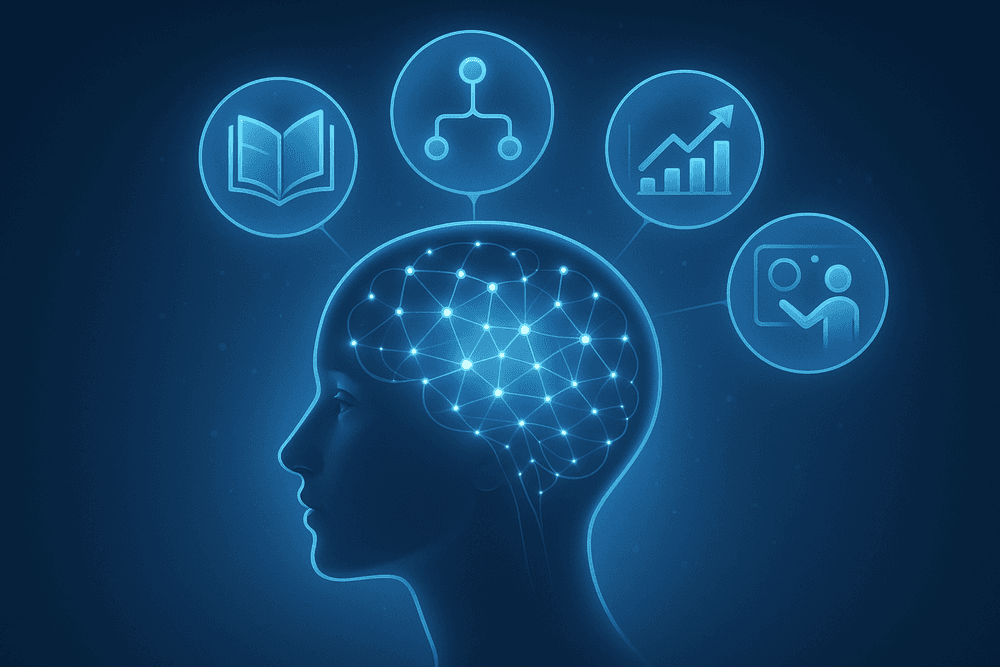
Core Features That Define a Powerful AI Training Module
Not all AI platforms are created equal. A truly transformative AI training module is more than just a content repository; it's a dynamic learning ecosystem. It integrates a specific set of intelligent features that work together to deliver training that is not only efficient but also deeply personalized and measurably effective. When evaluating solutions, look for these four defining pillars that separate a basic tool from a strategic powerhouse.
Automated Content Creation: Your 24/7 Instructional Designer
Imagine converting your dense company handbooks, lengthy policy documents, and raw video recordings into structured, engaging course materials in minutes, not weeks. This is the power of AI-driven content automation. A sophisticated AI training module acts as an expert instructional designer, instantly parsing your existing resources to generate complete courses. It can draft lesson text, create relevant quiz questions, write video scripts, and even produce summary one-pagers. This capability dramatically reduces the time and cost associated with content development, freeing your Learning & Development (L&D) team to focus on high-level strategy and learner support rather than getting bogged down in manual creation.
Adaptive Learning Paths: The End of One-Size-Fits-All Training
The most significant leap forward in corporate training is personalization at scale. A powerful AI training module delivers on this promise through adaptive learning paths. Instead of forcing every employee through the same linear, one-size-fits-all program, the AI first assesses each individual’s existing knowledge and confidence levels. Based on this initial data, it constructs a unique journey for every learner. Employees can bypass topics they’ve already mastered and receive reinforced instruction and targeted practice in areas where they are weakest. This tailored approach not only respects the employee's time and expertise but also significantly boosts engagement and knowledge retention by keeping the content relevant and challenging.
Predictive Analytics: Measuring What Truly Matters
How do you prove your training is working? A premier AI training module moves far beyond simple metrics like course completion rates. It leverages predictive analytics to provide deep, actionable insights into training effectiveness and ROI. The system analyzes learning patterns, engagement data, and assessment results to identify which employees are excelling and who might be at risk of falling behind. More importantly, it can correlate training performance with on-the-job business metrics—such as sales figures, customer satisfaction scores, or production efficiency. This allows you to forecast the impact of your training programs and provide leadership with concrete data demonstrating a clear return on investment.
Interactive Simulations & Real-Time Feedback Loops
Knowledge is one thing; application is another. The most advanced AI training modules bridge this gap with interactive simulations and real-time feedback. This feature allows employees to practice complex skills in a safe, virtual environment. A sales representative can role-play handling client objections with an AI-powered coach, or a new manager can navigate a difficult performance review conversation. The AI provides immediate, objective feedback on their performance, analyzing everything from word choice to decision-making. This continuous feedback loop allows for rapid skill acquisition and builds the confidence needed to apply new learning in the real world.
How to Create an AI Training Module: A Step-by-Step Guide
Transitioning from traditional content creation to an AI-assisted workflow can feel daunting, but it's a structured process that puts you in the driver's seat. By following these steps, you can harness the power of AI to build a highly effective ai training module that saves time and scales your efforts.
Step 1: Defining Your Learning Objectives and Target Audience
Before you write a single prompt, you must establish a solid foundation. AI tools are powerful, but they need clear direction. Start by defining what success looks like.
- Set SMART Learning Objectives: What should learners be able to do after completing the module? Use the SMART framework (Specific, Measurable, Achievable, Relevant, Time-bound) to create precise goals. For example, instead of "understand the new software," a better objective is, "After completing this 30-minute module, the user will be able to successfully process a customer return using the new X-Software in under three minutes."
- Profile Your Target Audience: Who are you training? A module for new hires will differ greatly from one for senior engineers. Create simple learner personas. Consider their existing knowledge, technical skills, job roles, and potential learning barriers. This context is crucial for the AI to tailor the content's tone, complexity, and examples.
Step 2: Choosing the Right AI Platform for Content Development
The market for AI content development tools is expanding rapidly. The right platform depends on your technical needs, budget, and existing systems. Look for a solution that aligns with your goals for creating an ai training module.
Key features to consider include:
- Integration: Does it integrate with your current Learning Management System (LMS) or can it export content in a compatible format (like SCORM)?
- Content Formats: Can the platform generate a variety of content types, such as text-based lessons, quiz questions, video scripts, and interactive scenarios?
- Customization: How much control do you have over the output? Look for platforms that allow you to upload style guides, define tone of voice, and fine-tune the generated content.
- Source Material Ingestion: Can the tool analyze different types of source documents, from PDFs and Word documents to web pages and video transcripts?
Step 3: Feeding the AI: Providing Source Materials and Style Guides
This is where you provide the AI with the raw knowledge it needs to construct your module. Think of yourself as a subject matter expert curating a library for your AI assistant. The quality of your input directly determines the quality of the output.
Upload a comprehensive set of source materials, such as:
- Standard Operating Procedures (SOPs)
- Product specification sheets
- Internal wikis or knowledge bases
- Existing presentation slides or webinar recordings
- Technical manuals
Equally important is providing a style guide. Instruct the AI on your company’s tone of voice (e.g., formal, conversational, technical), preferred terminology, and branding guidelines. This ensures the final ai training module is not just accurate but also sounds authentically like your organization.
Step 4: Reviewing, Refining, and Deploying Your First Module
AI is your co-pilot, not the pilot. The draft it produces is a powerful starting point, not the final product. The human-in-the-loop stage is non-negotiable for ensuring quality and accuracy.
- Review for Accuracy: Have a subject matter expert (SME) meticulously review the AI-generated content. Check all facts, figures, and procedural steps for correctness.
- Refine for Clarity and Engagement: Read through the module from a learner's perspective. Is the language clear? Is the flow logical? Add human touches, such as relatable anecdotes, real-world case studies, or more nuanced examples to enhance engagement.
- Deploy and Gather Feedback: Once your ai training module is polished and approved, deploy it to your learners through your LMS or chosen platform. Implement a feedback mechanism, like a short survey at the end of the module, to gather insights for future iterations.

Best Practices for Maximizing the Impact of Your AI Training Module
Deploying an AI training module isn't just a technical upgrade; it's a strategic initiative that can redefine your organization's approach to learning and development. To move beyond novelty and achieve tangible results, you need a thoughtful implementation plan. By following these best practices, you can ensure your AI-powered training delivers a powerful return on investment, fostering a more skilled, engaged, and adaptive workforce.
Start Small with a Pilot Program
Before a full-scale rollout, launch your AI training module with a pilot program. This "test and learn" approach is crucial for mitigating risks and fine-tuning your strategy. Identify a small but representative group of employees—perhaps a single team or department—to be your initial users. The goal is to gather critical data and firsthand feedback in a controlled environment.
Monitor key metrics like completion rates, time-to-competency, and knowledge retention scores. More importantly, solicit qualitative feedback through surveys and interviews. Ask participants about the user experience, the relevance of the content, and the effectiveness of the AI's personalization. This initial data is invaluable. It allows you to identify any technical glitches, refine the learning pathways, and tailor the content of the AI training module before deploying it to the entire organization, ensuring a much smoother and more impactful launch.
Integrate Seamlessly with Your Existing LMS
For an AI training module to be effective, it must fit into your employees' existing workflow. A disjointed user experience where learners must navigate a separate, unfamiliar platform creates friction and hinders adoption. The solution is to ensure deep integration with your current Learning Management System (LMS).
A well-integrated module allows for a single sign-on experience, making access effortless. It enables centralized tracking and reporting, giving L&D managers a unified view of all learning activities. This connection ensures that data from the AI training module—such as skill mastery and personalized learning paths—enriches the overall employee profile within the LMS. This seamless fusion transforms the AI module from a standalone tool into a powerful, organic component of your established learning ecosystem.
Champion a Culture of Continuous, Data-Driven Iteration
The most significant advantage of an AI-powered system is its ability to learn and adapt. To capitalize on this, you must foster a culture that embraces continuous improvement. An AI training module should not be a static, one-and-done course. Instead, view it as a living resource that evolves based on user interaction and performance data.
Leverage the module's analytics to understand where learners are succeeding and where they are struggling. Use these insights to iterate on the content, adding new resources, clarifying complex topics, or adjusting learning paths. Encourage managers to use this data in one-on-one meetings to support their team's development. By championing this cycle of feedback, analysis, and iteration, you create a dynamic learning environment that constantly refines itself to become more effective over time.
Ensure Content Remains Aligned with Needs and Goals
Finally, the most sophisticated AI training module will fail if its content isn't relevant. Its success hinges on a dual alignment: with overarching business goals and with individual employee needs. Every training initiative should be tied to a specific, measurable business objective, whether it's improving sales figures, reducing compliance risks, or increasing operational efficiency.
Simultaneously, the content must address the real-world challenges and career aspirations of your employees. Use performance reviews, skill gap analyses, and feedback from the AI module itself to understand what your team wants and needs to learn. When employees see that training directly helps them perform better in their role and advance their careers, their motivation soars. This dual focus ensures your training investment drives both organizational success and personal growth.
Real-World Use Cases: AI Training Modules in Action
Theory is one thing, but the true power of an AI training module is revealed in its practical application. These intelligent systems are not futuristic concepts; they are actively solving complex business challenges today. By moving beyond static presentations and one-size-fits-all content, organizations are unlocking new levels of efficiency, engagement, and effectiveness in their learning and development programs. Let’s explore three distinct scenarios where AI-powered training is making a tangible impact.
Case Study 1: Onboarding Remote Employees with a Consistent, AI-Driven Experience
The Challenge: A rapidly growing multinational corporation struggled with inconsistent onboarding for its remote workforce. New hires in different regions and time zones received disparate information, leading to gaps in knowledge, a diluted sense of company culture, and a longer ramp-up period. HR and managers were overwhelmed with repetitive questions.
The Solution: The company deployed a centralized AI training module as the cornerstone of its global onboarding program. This module serves as an interactive, 24/7 onboarding concierge for every new employee. The AI-driven platform personalizes the learning path based on the individual's role, department, and location. It answers questions in natural language, guides them through complex compliance paperwork, and uses interactive scenarios to immerse them in the company’s values and communication styles. The module tracks progress and flags areas where a new hire might need human intervention, allowing managers to provide targeted support.
The Result: The AI-powered approach created a standardized, high-quality onboarding experience for everyone, regardless of location. Time-to-productivity for new hires was reduced by 40%, and employee feedback showed a marked increase in feelings of preparedness and inclusion.
Case Study 2: Upskilling a Sales Team on New Products with Dynamic Scenarios
The Challenge: A medical device company needed to upskill its veteran sales team on a new, technologically complex product line. Traditional training methods like webinars and PDF guides failed to prepare them for nuanced conversations with knowledgeable and skeptical physicians.
The Solution: Instead of passive learning, the L&D team developed an AI training module focused on dynamic role-playing. The AI generates realistic conversation scenarios, acting as different customer personas—from the time-pressed surgeon to the skeptical hospital administrator. Sales representatives practice their pitches and objection-handling in a safe, simulated environment. The AI provides instant, detailed feedback on their performance, analyzing word choice, clarity of explanation, and confidence in addressing tough questions.
The Result: The sales team entered the field with significantly higher confidence and product fluency. The ability to practice against a challenging but responsive AI built practical skills far more effectively than memorizing feature lists. The company saw a 25% faster adoption rate of the new product in the market, directly attributed to the team's improved readiness.
Case Study 3: Ensuring Compliance and Safety Training at Scale Across an Enterprise
The Challenge: A large manufacturing enterprise with facilities across the country faced the monumental task of delivering, tracking, and verifying mandatory safety and compliance training for thousands of employees with diverse roles. The risk of accidents and non-compliance was high, and traditional e-learning had low engagement and questionable knowledge retention.
The Solution: The organization implemented a scalable AI training module to manage its entire compliance curriculum. The platform automatically assigns role-specific training, from office-based ergonomics to heavy machinery safety protocols on the factory floor. The AI uses an adaptive learning engine; if an employee struggles with a specific concept in a quiz, the module presents the information in a new way and re-tests them until mastery is demonstrated. This ensures true comprehension, not just "click-through" completion.
The Result: The enterprise achieved a 100% completion and verification rate for all mandatory training. The system generated automated, audit-ready reports, drastically reducing administrative overhead. Most importantly, the company recorded a 15% year-over-year decrease in workplace safety incidents, proving the direct link between effective, AI-enhanced training and a safer, more compliant work environment.
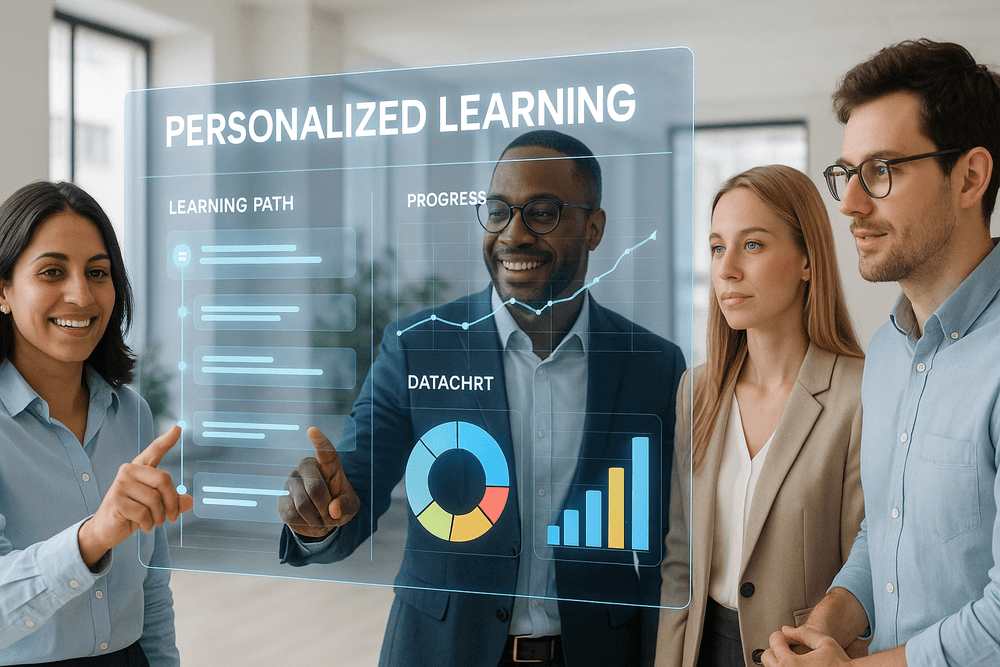
Conclusion: Launch Your AI Training Module and Future-Proof Your Workforce
The landscape of corporate learning and development is undergoing a seismic shift, and the engine of this transformation is artificial intelligence. Moving beyond theoretical concepts, the AI training module has emerged as a powerful, practical tool for businesses aiming to stay ahead of the curve. It’s no longer a question of if your organization should adopt AI in its training strategy, but how quickly you can implement it to unlock a more agile, skilled, and competitive workforce. The journey from traditional, one-size-fits-all training to dynamic, personalized learning experiences begins now.
The Unmistakable ROI of AI in Corporate Training
Throughout this guide, we've explored the clear and compelling advantages of integrating AI into your L&D initiatives. Let's recap the transformative value:
- Hyper-Personalization at Scale: An AI training module dismantles the limitations of generic coursework. It tailors content to each employee's unique role, knowledge gaps, and learning pace, dramatically increasing engagement, knowledge retention, and overall effectiveness.
- Unprecedented Efficiency: Say goodbye to month-long development cycles. AI-powered platforms can generate comprehensive, high-quality training materials—from scripts and videos to interactive quizzes—in a fraction of the time, freeing your L&D team to focus on strategic initiatives.
- Actionable, Data-Driven Insights: Move beyond simple completion rates. AI provides deep analytics on learner performance, identifying specific skill gaps across teams and the entire organization. This allows you to proactively address deficiencies and measure the true impact of your training investment.
Selecting Your Ideal AI Training Platform
Choosing the right technology is the cornerstone of a successful implementation. Your ideal platform is one that aligns seamlessly with your unique ecosystem and strategic goals. As you evaluate your options, prioritize these key factors:
- Integration Capabilities: Ensure the platform can connect smoothly with your existing Learning Management System (LMS), HRIS, and other critical business software to create a unified data flow.
- Content & Customization: Look for a robust feature set that allows for easy content generation while still offering deep customization to reflect your company’s brand, tone, and specific training needs.
- Security & Compliance: In an age of data sensitivity, non-negotiable enterprise-grade security and adherence to compliance standards are paramount to protect your company and employee information.
Your Next Step: Building the Business Case for a Pilot Program
The most effective way to demonstrate the power of an AI training module is to prove its value with a focused, low-risk pilot program. This approach allows you to gather concrete data and build momentum for a full-scale rollout. Here’s your action plan:
- Identify a High-Impact Use Case: Target a specific, measurable training challenge. This could be improving the onboarding process for new hires, upskilling your sales team on a new product, or streamlining mandatory compliance training.
- Define Clear Success Metrics: Establish the KPIs you will track. Examples include a reduction in time-to-competency, higher assessment scores, or improved employee feedback on the training experience.
- Launch a Controlled Pilot: Select a small, representative group of employees to participate. Deploy the AI training module and meticulously track your predefined metrics against a control group using traditional methods.
- Present the ROI: Armed with compelling data, build a business case that showcases the cost savings, efficiency gains, and improved learning outcomes. This evidence-based approach is your key to securing executive buy-in for wider adoption.
The future of work belongs to organizations that learn and adapt the fastest. By embracing an AI training module, you are not just modernizing a business function; you are investing in your most valuable asset—your people—and building a resilient, future-proof workforce ready for any challenge ahead.