
July 16, 2026
Build the Newsletter Strategy Before You Write a Word

Before anyone opens a doc, the client needs a clear reason for sending. Otherwise, the agency ends up manufacturing “updates” every month, chasing approvals, and defending work that was never tied to a business outcome.
Define the Newsletter’s Job for the Client
Start by naming the primary job of the newsletter. Not five jobs. One.
For most clients, that job will fall into one of a few categories:
- Stay top-of-mind with prospects during a long buying cycle
- Drive repeat purchases from existing customers
- Build authority in a niche or category
- Increase attendance for events, webinars, or launches
- Support retention by keeping customers educated and engaged
- Nurture leads who are not ready for sales outreach
This decision shapes everything that follows. A newsletter built to nurture enterprise leads should not feel like a weekly promo blast. A newsletter built to increase repeat purchases should not read like a founder’s thought-leadership essay.
For agencies, this also protects scope. When a client asks to “add a quick announcement,” you can bring the conversation back to the newsletter’s job: does this support the agreed objective, or does it belong somewhere else?
A simple positioning line helps:
“This newsletter exists to help [audience] achieve [specific outcome], so they are more likely to [business action].”
Example:
“This newsletter exists to help in-house marketing managers spot practical ways to improve campaign performance, so they are more likely to trust the client as a strategic partner.”
That one sentence gives your team a filter for every future content decision.
Set the Audience, Promise, and Cadence
Next, define three operating rules: who it is for, what they get, and how often they get it.
The audience should be specific enough that writers can make real choices. “Customers and prospects” is too broad. “Operations leaders at 50–200 person ecommerce brands” gives the newsletter content a clear point of view.
The promise should describe the value readers can expect repeatedly. It is not a tagline; it is the editorial contract.
For example:
- “A monthly briefing on retail trends affecting independent brands”
- “Weekly practical advice for improving paid media efficiency”
- “A quarterly digest of product updates and customer use cases”
Cadence should match both audience appetite and client capacity. A weekly newsletter may sound impressive, but if approvals take ten days and the client has limited subject-matter input, it will create production drag. For many small agency clients, monthly or biweekly is often more sustainable than an ambitious schedule that collapses after three sends.
The goal is consistency the client can maintain, not volume the agency has to rescue.
Create a Simple Success Scorecard
Finally, agree on what success looks like before the first issue goes out. Keep the scorecard short enough that the client will actually use it.
A practical scorecard might include:
Goal | Metric to watch | Why it matters |
|---|---|---|
Reach the right people | Subscriber growth or list quality | Shows whether the audience base is improving |
Maintain interest | Open rate or read rate | Indicates whether the promise is resonating |
Drive action | Clicks, replies, bookings, purchases, or event signups | Connects the newsletter to business value |
Protect production efficiency | Draft-to-approval time | Helps the agency spot review bottlenecks early |
For agency teams, that last metric is easy to overlook but critical. A newsletter that performs well but takes three rounds of avoidable rewrites every time will erode margin fast.
Define the baseline, set a realistic target, and agree on the reporting rhythm with the client. Now the newsletter has a job, an audience, a promise, a cadence, and a way to judge whether it is working. Only then is it time to start creating.

Create a Repeatable Newsletter Content Idea System
Once the strategy is set, the next bottleneck is usually the same: the team needs good ideas every month without turning every send into a blank-page exercise. A repeatable idea system gives your agency a way to generate newsletter content quickly while keeping each client’s voice, offers, and expertise intact.
Choose 3–5 Content Pillars That Fit the Brand
Content pillars keep the newsletter from becoming a random mix of updates, tips, and promotions. For each client, choose a small set of recurring themes that reflect what the brand wants to be known for and what subscribers actually care about.
For example:
Client type | Possible content pillars |
|---|---|
Interior design studio | Project reveals, material trends, behind-the-scenes process, maintenance tips |
SaaS company | Product education, customer use cases, industry insights, workflow tips |
Financial advisor | Market context, planning reminders, client questions, life-stage guidance |
Fitness brand | Training advice, member stories, nutrition basics, upcoming programs |
The key is restraint. Ten pillars create clutter. Three to five give writers enough range without diluting the brand.
A useful agency test: if a new writer joined the account tomorrow, could they look at the pillars and immediately understand what belongs in the newsletter and what doesn’t? If not, the pillars are too vague. “Education” is weak. “Practical tax planning tips for self-employed creatives” is usable.
Turn Existing Client Activity Into Email Ideas
Most clients already have more raw material than they realize. The agency’s job is to turn that activity into useful angles.
Look for idea sources in places like:
- Recent client projects or launches
- Sales calls and customer questions
- Support tickets or FAQs
- Social posts with strong engagement
- Case studies, testimonials, and reviews
- Webinars, podcasts, events, or workshops
- Seasonal moments in the client’s industry
- Product updates or service improvements
A client saying, “We have nothing to say this month,” often means, “We haven’t translated business activity into subscriber value yet.”
For instance, a completed client project can become “3 decisions that made this redesign work.” A common sales objection can become “What to know before choosing a new CRM.” A customer review can become a short story about the problem, the decision, and the outcome.
This also helps your agency protect margins. Instead of scheduling another long discovery call for every send, your team can pull from a structured idea bank tied to the client’s actual business activity.
Use Recurring Formats to Fill the Calendar Faster
Recurring formats make planning faster and reduce review friction. Clients know what to expect, writers know the shape of the piece, and account managers can build calendars without reinventing the newsletter every cycle.
Strong recurring formats include:
- “One Question We Hear Often”
- “Before and After”
- “3 Things to Know This Month”
- “Client Spotlight”
- “Mistake to Avoid”
- “Tool, Tip, or Trend”
- “From the Founder”
- “What We’re Watching”
Formats are not the same as copy templates. They are idea containers. They create consistency without making every email feel identical.
For a small agency managing newsletters across several clients, this is where production starts to scale. Each client can have a distinct set of pillars and formats, but the internal process stays consistent: pick the pillar, choose the format, pull from client activity, then draft. That rhythm keeps the calendar full and the brand voice focused.
Write Newsletter Content With a Modular Email Structure
Once the calendar is fed, the fastest way to protect quality is to stop treating every send like a blank page. A modular structure gives your team a repeatable build system: familiar enough to produce quickly, flexible enough to fit different client voices, offers, and campaigns.
Use a Reliable Newsletter Content Template
A good template is not a rigid layout. It is a set of decision points your team can reuse across clients and sends.
For most agency-run newsletters, a simple structure works best:
- Subject line and preheader — the reason to open.
- Opening hook — the immediate “why this matters.”
- Primary story or insight — the main value of the email.
- Supporting section — a tip, example, link, product note, or client update.
- Call to action — the next step you want the reader to take.
- Sign-off — a consistent close that reinforces the brand voice.
The advantage is operational. A strategist can brief into the same fields every time. A copywriter can draft faster. A designer knows what blocks are coming. An account lead can review for missing pieces instead of rewriting the whole email.
For clients with multiple newsletter types, create two or three variants instead of one master template. For example:
- Insight-led: hook, point of view, example, soft CTA.
- Promotion-led: problem, offer, proof, direct CTA.
- Roundup: short intro, curated links, short commentary, CTA.
That keeps production consistent without making every send feel identical.
Write Strong Subject Lines, Preheaders, and Opening Hooks
The subject line earns the open. The preheader adds context. The opening hook confirms the reader made the right choice.
Agencies often weaken this sequence by repeating the same idea three times. Instead, make each element do a different job:
- Subject line: create curiosity, urgency, relevance, or specificity.
- Preheader: clarify the payoff or angle.
- Opening hook: connect the topic to the reader’s problem, desire, or moment.
For example:
- Subject: Your homepage may be leaking leads
- Preheader: Three small fixes that make the next click easier
- Hook: If visitors understand what you do but still do not enquire, the issue is often not traffic. It is friction.
That sequence is tighter than “3 website tips for better conversions” repeated across all three fields.
For client approvals, give two or three subject line options with a short rationale. This reduces vague feedback and helps partners, marketers, or founders choose based on intent rather than personal taste.
Make the Body Copy Skimmable and Action-Oriented
Most readers scan before they commit. Strong newsletter content should make the value obvious even at a glance.
Use short sections, clear subheads, and one idea per paragraph. Break dense explanations into bullets only when the list helps the reader decide, compare, or act. Avoid stacking multiple announcements, insights, and offers with equal weight; one primary message should lead.
A practical editing pass:
- Cut any intro that delays the point.
- Move the strongest sentence into the first three lines.
- Replace vague transitions with useful subheads.
- Turn passive copy into direct recommendations.
- End each section with a clear takeaway or next step.
For agency teams, this also makes review easier. Clients can see the shape of the message quickly, designers can build clean layouts, and writers can preserve the brand’s tone without burying the point.
Personalize and Optimize Newsletter Content After the Draft
Once the draft is structurally sound, the next lift is making it feel more relevant without turning one client newsletter into five separate production jobs.
Segment Readers Without Overcomplicating Production
For small agency teams, segmentation should start with the lowest-effort splits that change what a reader sees or clicks — not a full CRM overhaul.
Use segments that are easy to maintain and meaningful for the client’s business, such as:
- Prospects vs. customers: Prospects may need proof and education; customers may need usage ideas, renewals, or upsell paths.
- New subscribers vs. long-time readers: New readers may need context; loyal readers can handle deeper updates or stronger asks.
- Interest-based groups: If someone clicked content about one service, product line, location, or topic, future newsletter content can reflect that.
- Engagement level: Active readers can receive more direct offers; inactive readers may need a lighter re-engagement angle.
The key is to personalize the parts that matter most: the intro line, featured section, CTA, or offer. You do not need to rewrite the entire newsletter for every segment.
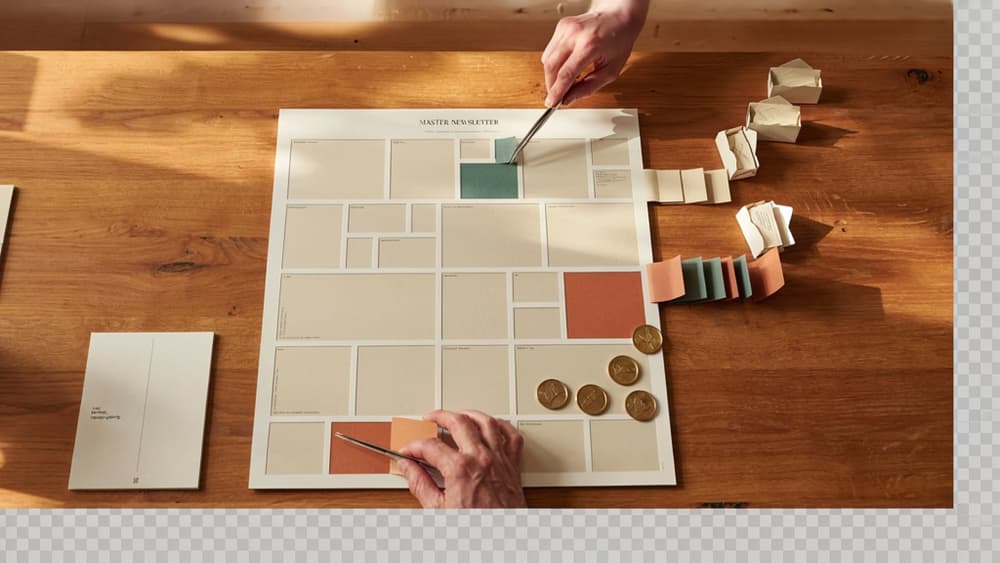
A practical agency workflow: create one master version, then add two or three conditional swaps. For example, a client’s monthly newsletter might keep the same opening story and resource, but show different CTAs to leads, current customers, and past customers.
Match Calls to Action to Reader Intent
A strong newsletter can underperform if every reader gets the same ask. Someone who just subscribed is rarely ready for the same CTA as someone who has clicked three case studies.
Map CTAs to the reader’s likely intent:
Reader intent | Better CTA | Avoid |
|---|---|---|
Learning | “Read the guide” or “See the checklist” | “Book a call” too early |
Comparing options | “View the case study” or “See how it works” | Generic blog links |
Ready to act | “Request a quote” or “Schedule a consult” | Soft educational CTAs |
Existing customer | “Try this feature” or “Explore the add-on” | Treating them like a new lead |
This is where agencies can create more value without more volume. The newsletter does not need more content; it needs a clearer next step for each reader type.
For clients with longer sales cycles, include one primary CTA and one softer secondary CTA. For ecommerce, events, or promotions, keep the path tighter: one offer, one landing page, one action.
Measure Engagement and Improve the Next Send
Optimization should be simple enough to repeat after every send. Do not bury the team in dashboards; choose a few signals that connect to the newsletter’s role.
Review:
- Open rate trends to spot topic and audience fit over time.
- Click-through rate to see whether the content created action.
- Top-clicked sections to identify themes worth repeating.
- Unsubscribes or spam complaints to catch mismatch, fatigue, or over-promotion.
- Conversions after click when the client has tracking in place.
Turn those findings into one production decision for the next issue. If the practical tips section gets most clicks, make it a recurring feature. If the product update gets ignored, reposition it around customer pain. If one segment clicks but another does not, adjust the CTA rather than rewriting the whole email.
For agencies, this keeps optimization commercially useful. Each send produces a small creative brief for the next one, helping the team improve performance while keeping production lean across multiple client accounts.
Use AI to Scale On-Brand Newsletter Content Without Adding Headcount
Once the strategy, idea flow, structure, and optimization loop are in place, the bottleneck becomes production: getting every send drafted, adapted, reviewed, and approved without turning your team into a newsletter factory.
AI can help—but only if it understands the client’s brand before it starts writing.
Ingest the Client Brand Once, Then Reuse It Across Sends
Most agencies lose time because every AI-assisted draft starts from scratch: paste the brief, paste the tone notes, paste the audience, paste examples, remind the tool what the client would never say.
That doesn’t scale across five, ten, or twenty retained clients.
Instead, create a reusable brand layer for each client that AI can draw from every time you produce newsletter content. At minimum, that brand layer should include:
- Voice and tone guidelines
- Approved messaging and positioning
- Audience descriptions
- Product or service explanations
- “Say this / don’t say this” language
- Past high-performing emails
- Website copy, sales decks, or campaign assets
- Compliance, legal, or category-specific constraints
For a small agency, this turns AI from a generic drafting tool into a client-specific production assistant. The difference is huge: fewer off-brand first drafts, fewer internal rewrites, fewer “this doesn’t sound like us” comments from the client.
This is the wedge Aethera is built around: ingest the client brand once, then reuse that intelligence across future outputs so each send starts closer to approval.
Standardize Briefs, Drafts, and Review Checks
AI helps most when your workflow is consistent. If every strategist, copywriter, or account manager prompts differently, you get uneven output—and more QA work.
Build a simple AI production workflow your team can repeat:
- Brief input: client, audience, send purpose, source material, offer, required links, exclusions.
- Draft generation: create the first version using the client’s stored brand context.
- Brand check: compare the draft against voice, claims, terminology, and banned language.
- Edit pass: tighten, cut repetition, sharpen transitions, and align with the approved structure.
- Client-ready version: package the draft with notes, rationale, or alternate options if needed.
The goal is not to make every email identical. It’s to make the process dependable enough that a junior team member can produce a solid first pass without needing a senior writer to rebuild it.
That matters when retainers grow. One client newsletter is manageable manually. Ten newsletters across different brands, tones, offers, and approval chains becomes operational drag unless the workflow is standardized.
Keep Final Approval Human but Make Production Faster
AI should compress the messy middle of production, not remove judgment from the process.
Your team still owns the final read: whether the message is strategically sound, whether the offer fits the moment, whether the nuance is right, and whether the client would proudly send it. But AI can handle the repetitive lift around first drafts, variations, summaries, repurposing, and brand consistency checks.
A practical agency workflow might look like this:
- Account lead uploads the approved brief and source material.
- AI drafts the email using the client’s brand profile.
- Copywriter edits for clarity, persuasion, and flow.
- Strategist reviews for fit against the campaign or retainer goals.
- Client receives a cleaner draft with fewer rounds needed.
That means faster turnaround without hiring another writer for every new newsletter retainer.
For agencies, the win is not “more AI content.” It’s more on-brand client work shipped with the same team, less tool sprawl, and fewer hours lost re-teaching every platform how each client sounds.