
May 21, 2025
How AI Regulatory Compliance is Changing the Game
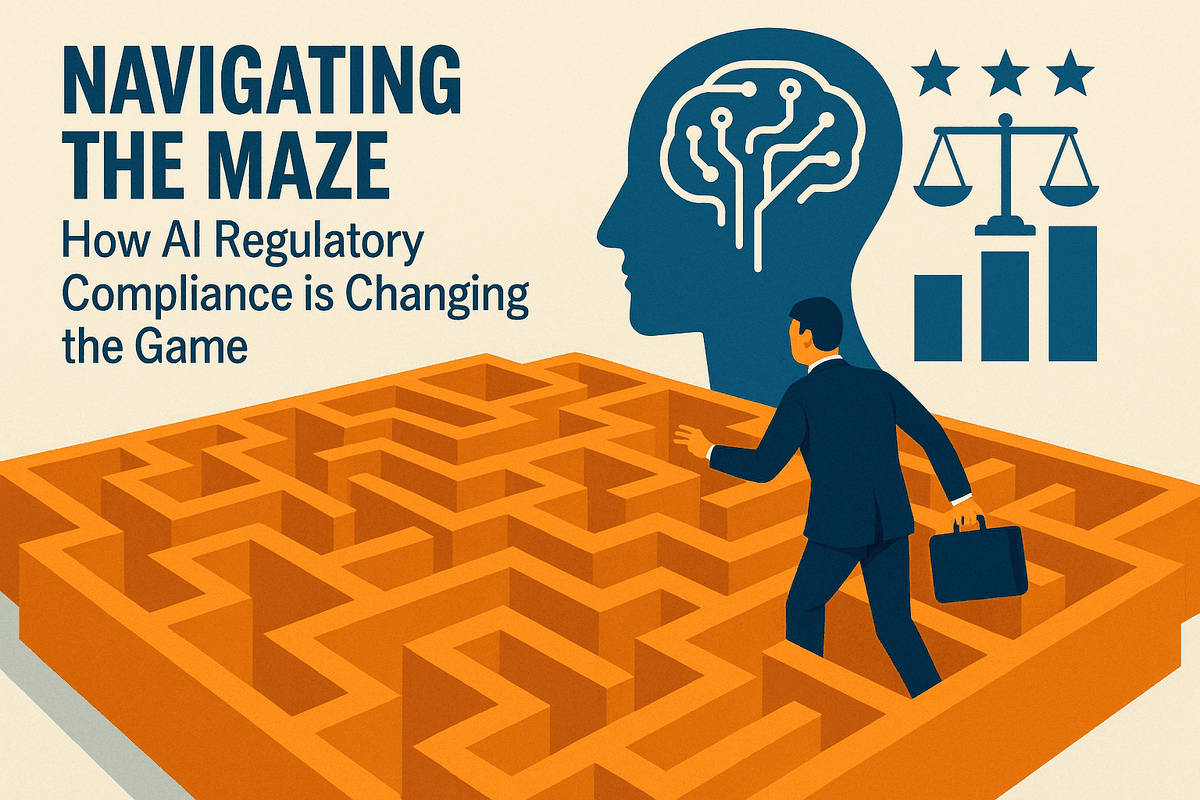
Navigating the Maze: How AI Regulatory Compliance is Changing the Game
The business landscape is evolving at breakneck speed, and with it, the complexity and volume of regulatory requirements. Staying ahead of the curve is no longer just good practice; it's essential for survival and growth. This section unpacks the growing challenges in the regulatory sphere and introduces how ai regulatory compliance is emerging as a transformative solution.
The Mounting Challenge: Are Your Compliance Strategies Keeping Pace?
In today's globalized and digitized world, organizations face an unprecedented barrage of regulatory demands. From sweeping data privacy laws like GDPR and CCPA to stringent financial reporting standards and industry-specific mandates, the compliance net is wider and more intricate than ever before. Regulations are not static; they are constantly being updated, amended, or newly introduced, creating a dynamic and often bewildering environment for businesses to navigate. Keeping track of these changes, interpreting their impact, and implementing the necessary controls manually is a Herculean task. Traditional approaches to compliance, often reliant on spreadsheets, manual checks, and siloed information, are increasingly falling short. They are not only resource-intensive and prone to human error but also struggle to provide the agility needed to respond to rapid regulatory shifts. The consequences of non-compliance are severe, ranging from substantial financial penalties and legal action to irreparable reputational damage and loss of customer trust. This begs the critical question for every organization: Are your current compliance strategies truly equipped to handle the mounting pressure of modern regulatory demands, or is it time to explore a more intelligent, adaptive approach? The pursuit of effective ai regulatory compliance is fast becoming a necessity, not a luxury.
AI to the Rescue: Simplifying the Complex World of Regulatory Compliance
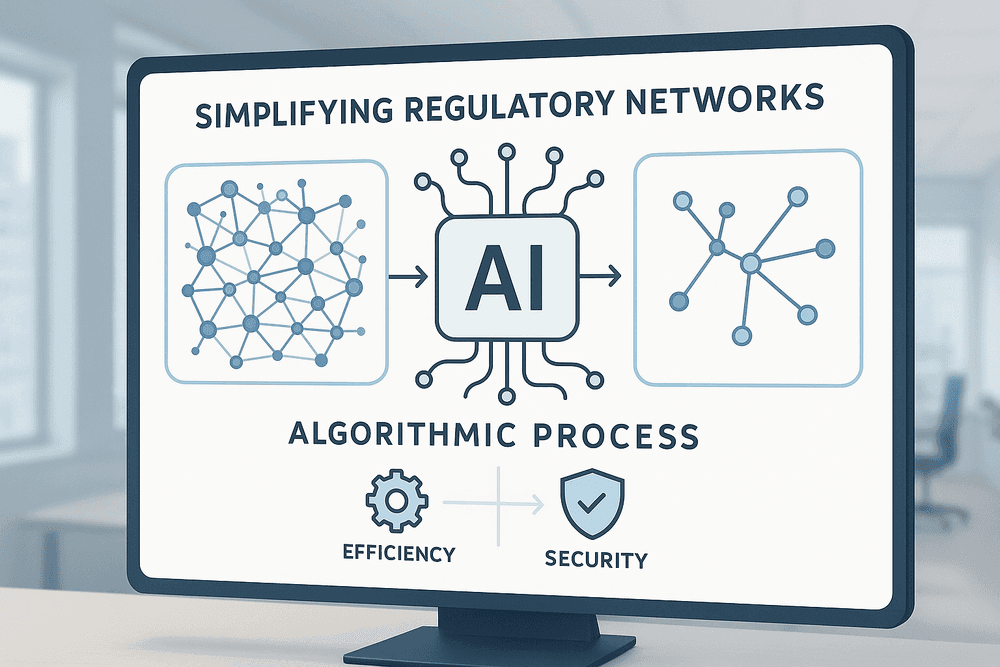
Amidst these escalating challenges, Artificial Intelligence (AI) emerges as a powerful ally, offering innovative ways to simplify and strengthen ai regulatory compliance efforts. AI technologies, encompassing machine learning (ML), natural language processing (NLP), and robotic process automation (RPA), are uniquely capable of tackling the scale and complexity that overwhelm manual systems. Imagine AI algorithms that can automatically scan, interpret, and categorize vast volumes of regulatory documents, flagging relevant obligations and changes in real-time. Consider ML models that can analyze historical data to identify patterns indicative of potential compliance risks, enabling proactive intervention rather than reactive damage control. NLP can power chatbots to answer compliance-related queries, providing instant support to employees. RPA can automate routine, high-volume compliance tasks such as data gathering for audits, Know Your Customer (KYC) checks, and transaction monitoring, freeing up human compliance professionals to focus on more strategic, high-value activities. AI doesn't just automate; it augments human capabilities, providing deeper insights, enhancing accuracy, and significantly improving the efficiency of compliance processes. This intelligent automation is at the heart of modern ai regulatory compliance, transforming it from a reactive, burdensome cost center into a proactive, data-driven function that supports sustainable business growth.
What This Guide Covers: Your Path to Mastering AI for Regulatory Compliance
This comprehensive guide is meticulously crafted to serve as your definitive roadmap to understanding and implementing AI for effective ai regulatory compliance. We recognize that the prospect of integrating advanced technologies like AI can seem complex, so our goal is to demystify the process, offering clear, actionable insights and practical guidance every step of the way. Throughout this exploration, we will dive deep into the diverse applications of AI in the compliance domain, showcasing real-world use cases across various industries. You will gain a thorough understanding of the substantial benefits that AI-driven automation offers, including significant cost reductions, enhanced operational efficiencies, minimized error rates, and a more robust approach to risk management. Furthermore, we will examine the pivotal role of AI-powered Software-as-a-Service (SaaS) solutions, illustrating how these accessible and scalable platforms can empower businesses of all sizes to meet sophisticated regulatory demands without the need for extensive in-house AI expertise or infrastructure. Our ultimate aim is to equip you with the knowledge and confidence to not only navigate the current regulatory maze but also to anticipate and adapt to future changes, effectively mastering ai regulatory compliance and transforming it into a strategic enabler for your organization.
Why AI Regulatory Compliance is No Longer a Luxury, But a Necessity
The landscape of regulatory demands is evolving at an unprecedented pace, becoming increasingly complex and stringent. For businesses striving to navigate this challenging environment, keeping up through traditional, manual processes is no longer just difficult – it's becoming a significant operational risk and a competitive disadvantage. Embracing ai regulatory compliance solutions has therefore shifted from a forward-thinking option to an essential strategic imperative. The inherent capabilities of Artificial Intelligence offer a transformative approach to managing compliance, ensuring not just adherence to rules, but also fostering enhanced operational efficiency, robust risk mitigation, and a stronger overall governance framework.
Slashing Costs and Hours: The Power of AI Automation in Compliance Tasks
Traditional compliance processes are notoriously resource-intensive. Consider the countless hours your skilled teams dedicate to manual data collection, exhaustive document reviews, meticulous transaction monitoring, and the painstaking generation of compliance reports. These tasks are not only overwhelmingly time-consuming but also incredibly costly when factoring in labor, the potential for human error, and the opportunity cost of diverting talent from strategic activities. AI-driven automation fundamentally changes this equation. By deploying sophisticated algorithms, ai regulatory compliance systems can execute these repetitive, high-volume tasks in a fraction of the time and at a significantly lower operational cost. For instance, AI can rapidly sift through thousands of legal documents to identify pertinent clauses or continuously monitor millions of transactions for suspicious activity—tasks that would take human teams weeks or even months. This intelligent automation frees up significant budget and human capital, allowing valuable resources to be reallocated to more strategic, value-added initiatives within your organization.
From Reactive to Proactive: How AI Minimizes Risks in Regulatory Compliance
Historically, many compliance efforts have been reactive in nature: addressing issues and violations only after a breach has occurred. This approach often leads to hefty fines, lasting reputational damage, and frantic, costly remediation efforts. The integration of ai regulatory compliance tools facilitates a crucial and powerful shift towards a proactive stance. AI algorithms excel at analyzing vast and diverse datasets to identify subtle patterns, anomalies, and potential red flags that might indicate non-compliance before it escalates into a significant problem. Predictive analytics can forecast emerging risks based on historical data and evolving regulatory trends, while anomaly detection systems can instantly flag unusual activities that deviate from established norms or policies. This foresight allows organizations to investigate potential issues and implement corrective actions preemptively, significantly minimizing the likelihood of breaches and their associated penalties. This proactive risk management is a cornerstone of maintaining robust ai regulatory compliance in today's dynamic and demanding regulatory environment.
Achieving Unprecedented Accuracy and Consistency with AI-Driven Processes
Human error is an unavoidable factor in manual compliance tasks, especially when dealing with large volumes of complex information and intricate regulatory requirements. A misplaced decimal, an overlooked clause in a contract, or inconsistent application of internal rules can all lead to serious compliance failures with significant consequences. AI-driven processes, however, introduce a level of accuracy and consistency that human efforts alone simply cannot match. Once programmed with the relevant regulations, industry standards, and internal policies, AI systems execute tasks with unwavering precision, 24/7, without fatigue. They can cross-reference data from multiple disparate sources, validate information against predefined rule sets, and ensure the consistent application of compliance checks across the entire organization. This unparalleled reliability is paramount for maintaining a strong and defensible ai regulatory compliance posture, providing auditable, verifiable results that satisfy regulators and build stakeholder trust.
Boosting Your Team's Efficiency: Letting AI Handle the Heavy Lifting in Compliance
The strategic goal of implementing ai regulatory compliance solutions is not to replace invaluable human compliance professionals, but to augment and empower them. By automating the mundane, repetitive, and data-intensive aspects of compliance work, Artificial Intelligence effectively liberates your skilled personnel from the drudgery of "heavy lifting." This allows your compliance team to redirect their focus and expertise towards higher-value activities such as strategic risk analysis, interpreting complex regulatory nuances, developing and refining compliance policies, managing exceptions requiring human judgment, and engaging more effectively with regulatory bodies. When AI handles tasks like initial data screening, continuous monitoring, or first-pass document review, compliance officers can dedicate their critical thinking and decision-making skills to areas where human insight is irreplaceable. This symbiotic relationship between human expertise and AI capability is the future of efficient and effective ai regulatory compliance, ultimately boosting team productivity, enhancing job satisfaction, and elevating the overall strategic impact of your compliance function.
Key AI Technologies Transforming Regulatory Compliance Today
The landscape of regulatory compliance is rapidly evolving, and Artificial Intelligence (AI) is at forefront, offering powerful tools to navigate complexity, enhance efficiency, and mitigate risks. Several key AI technologies are making a significant impact on how organizations approach ai regulatory compliance.
Natural Language Processing (NLP): Deciphering Documents and Shaping Policies
Natural Language Processing (NLP) empowers computers to understand and process human language, a game-changer for ai regulatory compliance. Faced with vast quantities of regulatory texts, legal documents, and internal policies, NLP-driven automated document analysis is invaluable. These algorithms swiftly scan materials, extract key obligations, identify changes between document versions, and flag potential compliance gaps with remarkable speed. In policy management, NLP helps ensure internal guidelines are consistently updated and aligned with the ever-evolving regulatory landscape. This significantly reduces manual review time, boosts accuracy in interpreting complex legal jargon, and strengthens the overall framework for ai regulatory compliance by ensuring policies are current and effectively disseminated.
Machine Learning (ML): Predicting Risks and Uncovering Anomalies in AI Regulatory Compliance
Machine Learning (ML) models are the analytical engines driving a more proactive stance in ai regulatory compliance. By learning from extensive datasets—including historical compliance data, transaction records, and even external feeds—ML algorithms excel at predictive risk scoring. This allows organizations to pinpoint customers, transactions, or processes that present a higher compliance risk, enabling targeted resource allocation. Furthermore, ML is highly effective for anomaly detection within ai regulatory compliance processes. It can identify unusual patterns or deviations from established norms that might signal fraudulent activity, misconduct, or emerging compliance threats, providing crucial early warnings to mitigate risks before they escalate into significant regulatory breaches.
Robotic Process Automation (RPA): Automating the Mundane in Compliance
Robotic Process Automation (RPA) acts as the tireless workhorse for streamlining the repetitive, rule-based tasks endemic to ai regulatory compliance. Consider routine activities like Know Your Customer (KYC) data collection, onboarding verifications, compiling data for regulatory reports, or managing evidence for audits. RPA bots can execute these workflows 24/7 with superior speed and accuracy compared to manual efforts, drastically reducing errors and operational costs. While powerful on its own, RPA's utility in ai regulatory compliance is further enhanced when combined with AI, such as using NLP for data extraction or ML for decision support, freeing up human experts for strategic, high-value compliance work.
AI-Powered SaaS Platforms: Your All-in-One Compliance Command Center
The true synergy of these AI technologies is often best realized through integrated AI-powered Software-as-a-Service (SaaS) platforms. These solutions offer a unified approach to ai regulatory compliance management, consolidating NLP, ML, and often RPA capabilities into a single command center. When selecting a platform, key considerations include its adaptability to various regulatory frameworks, robust audit trail generation, intuitive real-time monitoring dashboards, and seamless integration with existing enterprise systems. The right AI-powered SaaS platform can significantly accelerate an organization's journey towards more efficient and proactive ai regulatory compliance, transforming a complex burden into a more manageable, data-driven, and strategically advantageous process.

Successfully Implementing AI for Robust Regulatory Compliance: A Practical Guide
Embarking on an AI journey to bolster your regulatory compliance efforts can seem daunting, but a structured, practical approach can pave the way for significant improvements in efficiency and risk reduction. Successfully implementing AI for robust ai regulatory compliance requires careful planning, execution, and ongoing management. Here’s how to navigate this transformative process:
Starting Small: Identifying the Right Pilot Projects for AI in Compliance
The key to a successful AI implementation is often to start small and scale strategically. Instead of attempting a complete overhaul of your compliance systems at once, identify specific, manageable pilot projects. Look for areas within your compliance workflow that are highly repetitive, data-intensive, and where human error poses a tangible risk. Excellent candidates for initial AI adoption include automated document review for specific clauses in contracts, anomaly detection in transaction monitoring for well-defined suspicious patterns, or initial Know Your Customer (KYC) data verification. These pilot projects serve as invaluable learning grounds, helping your team build confidence in AI capabilities and demonstrating tangible ROI. A successful pilot can then provide the momentum and insights needed to iteratively expand your ai regulatory compliance initiatives across other functions, ensuring a more controlled and effective rollout.
Ensuring Data Quality and Security for Effective AI Regulatory Compliance
Artificial intelligence systems are only as good as the data they are fed. For ai regulatory compliance to be effective, an unwavering focus on data quality and security is non-negotiable. The adage "garbage in, garbage out" is a stark reality in the world of AI. Therefore, establishing robust data governance frameworks is paramount. This includes clearly defined processes for data sourcing, cleansing, validation, and lifecycle management to ensure accuracy and completeness. Equally critical is prioritizing data security and privacy, especially when dealing with sensitive regulatory information. Implement stringent measures such as end-to-end encryption, granular access controls, and data anonymization or pseudonymization techniques where appropriate. Adherence to data protection regulations like GDPR, CCPA, or HIPAA is not just a best practice but a legal necessity when leveraging AI for ai regulatory compliance. Poor data integrity or security breaches can lead to biased AI outputs, flawed insights, and ultimately, severe compliance failures, hefty fines, and significant reputational damage.
Change Management: Preparing Your Team for AI-Assisted Compliance Processes
Introducing AI into compliance workflows inevitably brings about change, and managing this transition effectively is crucial for adoption and success. It's vital to address employee concerns, particularly fears of job displacement, head-on and with transparency. Emphasize that AI is designed to augment human capabilities, automating tedious and time-consuming tasks, thereby freeing up compliance professionals to focus on more complex, strategic aspects of ai regulatory compliance. These higher-value activities include nuanced investigations, interpreting ambiguous regulatory text, and developing proactive compliance strategies. Invest in comprehensive training programs to upskill and reskill your team, enabling them to work effectively alongside AI systems. New roles, such as AI compliance specialists, data analysts focusing on regulatory data patterns, and AI system auditors, may emerge. Communicate a clear vision for how AI will enhance the compliance function and involve the team in the selection and implementation process to foster a sense of ownership and collaboration. This proactive approach to change management is fundamental to realizing the full benefits of your ai regulatory compliance strategy.
Choosing the Right AI Vendor and Solutions for Your Specific Needs
The market for AI solutions is burgeoning, but not all offerings are suitable for every organization or every compliance challenge. Selecting the right AI vendor and solutions requires thorough due diligence and a clear understanding of your specific requirements. Evaluate potential partners based on their deep understanding of the specific regulatory landscape relevant to your industry—be it finance, healthcare, or manufacturing—and their proven expertise in addressing complex ai regulatory compliance challenges with demonstrable success stories. Key considerations include the solution's scalability to meet future growth and evolving regulatory demands, its ability to integrate seamlessly with your existing IT infrastructure and compliance systems, and its inherent security features, including data encryption and access protocols. Scrutinize the vendor's track record, seek client testimonials and case studies, and inquire about their commitment to ongoing model maintenance, updates to reflect new regulations, and responsive technical support. Crucially, ensure the chosen AI solution offers sufficient explainability and auditability. The ability to understand and articulate how an AI system arrives at its conclusions is vital for demonstrating due diligence to regulators and building internal trust in your ai regulatory compliance framework.
Continuously Monitoring and Refining Your AI Regulatory Compliance Framework
Implementing AI in your compliance functions is not a "set it and forget it" endeavor; it marks the beginning of an ongoing journey of adaptation and improvement. The regulatory landscape is constantly evolving, with new rules and interpretations emerging frequently. Simultaneously, AI models themselves can experience "drift" over time as underlying data patterns change or new types of risks emerge, potentially reducing their accuracy or relevance. Therefore, establishing a robust framework for continuous monitoring and refinement is essential for maintaining the long-term effectiveness and integrity of your ai regulatory compliance program. Define clear key performance indicators (KPIs) to systematically track the accuracy, efficiency, and overall impact of your AI compliance tools. Regularly audit the outputs of your AI systems, comparing them against human expert reviews or established ground truths to identify any performance degradation or emerging biases. Be prepared to retrain your AI models periodically with updated data and adjust algorithms as necessary to ensure they remain aligned with current regulatory requirements and business realities. This iterative process of monitoring, evaluating, and refining ensures that your ai regulatory compliance framework remains dynamic, resilient, and capable of effectively meeting the challenges of a complex and ever-changing regulatory environment.
Real-World Wins: How Businesses are Leveraging AI for Regulatory Compliance
The true power of AI regulatory compliance isn't just theoretical; it's actively transforming how businesses navigate complex legal landscapes. Forward-thinking organizations across various sectors are already reaping tangible benefits by integrating AI into their compliance strategies. Let's explore some compelling real-world examples:
Case Study: Financial Services Firm Enhances AML Detection with AI
A prominent financial services firm was grappling with the ever-increasing sophistication of financial crime and the immense volume of transactions requiring Anti-Money Laundering (AML) checks. Traditional, rule-based systems generated a high number of false positives, overwhelming compliance teams and increasing the risk of missing genuine illicit activities.
By implementing an AI-powered AML solution, the firm revolutionized its approach. Machine learning algorithms were trained to analyze vast datasets, identifying subtle, complex patterns indicative of money laundering that human analysts might overlook. This AI regulatory compliance tool significantly reduced false positives, allowing investigators to focus their expertise on high-risk alerts. The result? Faster, more accurate detection of suspicious activities, a strengthened defense against financial crime, and more efficient allocation of compliance resources, ultimately enhancing their overall AI regulatory compliance posture.
Case Study: Healthcare Provider Streamlines HIPAA Compliance Using AI Tools
For a large healthcare provider, ensuring consistent adherence to the Health Insurance Portability and Accountability Act (HIPAA) was a constant challenge. Managing and protecting vast quantities of electronic Protected Health Information (ePHI) across numerous systems, while ensuring authorized access, demanded significant manual effort and was prone to human error.
The provider deployed AI-driven tools specifically designed for healthcare data governance. These tools automated the discovery and classification of ePHI across their network, providing a clear inventory of sensitive data. Furthermore, AI algorithms monitored data access patterns in real-time, flagging anomalous activities or potential unauthorized access attempts. This proactive approach to AI regulatory compliance not only streamlined audit preparations but also significantly enhanced data security, reducing the risk of costly breaches and ensuring robust HIPAA compliance.
Case Study: Manufacturing Company Reduces Reporting Errors through AI Regulatory Compliance Automation
A global manufacturing company faced a daunting array of reporting obligations spanning environmental regulations, safety standards, and product compliance. Compiling accurate and timely reports from disparate data sources was a labor-intensive process, frequently leading to errors, missed deadlines, and the risk of substantial penalties.
To address this, the company adopted an AI regulatory compliance automation platform. This solution leveraged AI for intelligent data aggregation from various internal systems, automated data validation against specific regulatory templates, and even utilized Natural Language Processing (NLP) to interpret updates in regulatory texts. The AI system flags inconsistencies and potential errors before submission, drastically reducing inaccuracies. This automation led to a significant decrease in reporting errors, improved on-time submission rates, and substantial cost savings by avoiding non-compliance penalties, cementing a more reliable AI regulatory compliance framework.
Lessons Learned: Key Takeaways from Successful AI Compliance Implementations
These success stories highlight several crucial lessons for businesses considering or implementing AI regulatory compliance solutions:
- Strategic Phased Implementation: Begin with a specific, high-impact compliance area to demonstrate value. Successful pilot projects build momentum and provide valuable learnings for broader AI adoption.
- Prioritize Data Quality: The efficacy of AI in compliance heavily relies on the quality, accuracy, and relevance of the data it processes. Invest in data governance and preparation.
- Maintain Human Oversight: AI is a powerful augmentation tool, not a complete replacement for human expertise. Compliance professionals are vital for validating AI outputs, managing exceptions, and making nuanced judgment calls.
- Select Purpose-Built Solutions: Opt for AI tools and platforms specifically designed for AI regulatory compliance tasks. Ensure they can integrate seamlessly with existing IT infrastructure and data sources.
- Embrace Explainability and Transparency: In regulated environments, understanding how an AI system arrives at a decision is crucial for audits, validation, and building trust. Prioritize solutions that offer transparent and interpretable models.
- Invest in Change Management: Successfully integrating AI into compliance workflows requires clear communication, training, and stakeholder buy-in to adapt to new processes and technologies.

Staying Ahead: The Evolving Landscape of AI Regulatory Compliance and Your Next Move
The world of ai regulatory compliance is not static; it's a dynamic field constantly reshaped by technological advancements and new regulatory frameworks. Staying ahead requires vigilance and a proactive approach. Let's explore what's on the horizon for ai regulatory compliance and how your organization can prepare.
Emerging Trends in AI for Regulatory Compliance: What to Watch For
The pace of AI innovation is relentless, bringing new opportunities and challenges to ai regulatory compliance. Keep these key trends on your radar:
- Generative AI's Expanding Role: Beyond simple automation, Generative AI is poised to assist in drafting initial policy documents, summarizing complex regulatory texts, and even simulating compliance scenarios. Its application in ai regulatory compliance promises significant efficiency gains and deeper insights.
- Explainable AI (XAI) Becomes Non-Negotiable: As AI systems make more critical compliance decisions, the demand for transparency will intensify. XAI techniques, which make AI decision-making processes understandable to humans, are becoming essential for auditability and building trust in ai regulatory compliance tools. This is crucial for demonstrating due diligence.
- Predictive Compliance Analytics: Moving from reactive to proactive, AI will increasingly be used to identify potential compliance risks before they materialize. By analyzing vast datasets for patterns and anomalies, AI can flag high-risk areas, allowing for timely intervention and a more robust ai regulatory compliance posture.
- Heightened Focus on AI Ethics and Bias Mitigation: Regulators and the public are increasingly concerned about fairness, bias, and ethical considerations in AI. Future ai regulatory compliance solutions will need robust, integrated mechanisms for detecting and mitigating bias in algorithms and data to ensure equitable outcomes.
How to Future-Proof Your AI Regulatory Compliance Strategy
Adapting to the evolving landscape of ai regulatory compliance isn't just about adopting new tools; it's about building resilience and foresight into your strategy. Consider these pivotal steps:
- Invest in Scalable and Adaptable AI Solutions: Choose AI platforms, particularly cloud-based SaaS options, that can grow with your business and swiftly adapt to changing regulatory requirements for ai regulatory compliance.
- Cultivate a Data-Centric Compliance Culture & Upskill Teams: Foster an environment where data insights drive compliance decisions. Simultaneously, invest in training your compliance professionals on AI tools, data analytics, and the ethical dimensions of AI to effectively manage ai regulatory compliance.
- Establish Robust Data Governance for AI: AI thrives on data. Implement strong data governance frameworks to ensure data quality, privacy, and security, especially when AI handles sensitive compliance information. This is foundational for trustworthy ai regulatory compliance.
- Develop Agile Frameworks & Monitor AI-Specific Regulations: Your compliance processes must be flexible to incorporate new AI capabilities. Also, stay vigilant about the burgeoning field of AI-specific regulations (like the EU AI Act), as these will directly impact your ai regulatory compliance efforts.
Take the Next Step: Resources and Tools for Your AI Regulatory Compliance Journey
Embarking on or enhancing your ai regulatory compliance journey can seem complex, but numerous resources and tools can guide you:
- Knowledge & Regulatory Guidance: Seek out industry reports, white papers, and webinars on ai regulatory compliance best practices. Pay close attention to publications from regulatory bodies (e.g., NIST AI Risk Management Framework) regarding AI governance.
- AI-Powered SaaS Platforms & Pilot Programs: Explore comprehensive AI-driven RegTech solutions for tasks like transaction monitoring, KYC/AML, and regulatory change management. Start with a pilot program on a specific compliance pain point to test efficacy before broader ai regulatory compliance adoption.
- Expert Consultation: Don't hesitate to engage with consultants specializing in ai regulatory compliance. They can help assess your needs, select appropriate tools, and navigate the complexities of implementation.
Ready to Transform Your Compliance? Let's Talk
The evolution of ai regulatory compliance presents a remarkable opportunity to transform your compliance function from a cost center into a strategic business enabler. By embracing emerging AI trends and future-proofing your strategy, you can significantly enhance efficiency, reduce risk, and gain a distinct competitive edge in ai regulatory compliance.
If you're ready to explore how AI can revolutionize your approach to regulatory demands and ensure your business stays ahead of the curve, we're here to help. Let's discuss your unique challenges and how tailored AI solutions can pave the way for a more robust and intelligent compliance future.