
May 22, 2025
How AI Can Help
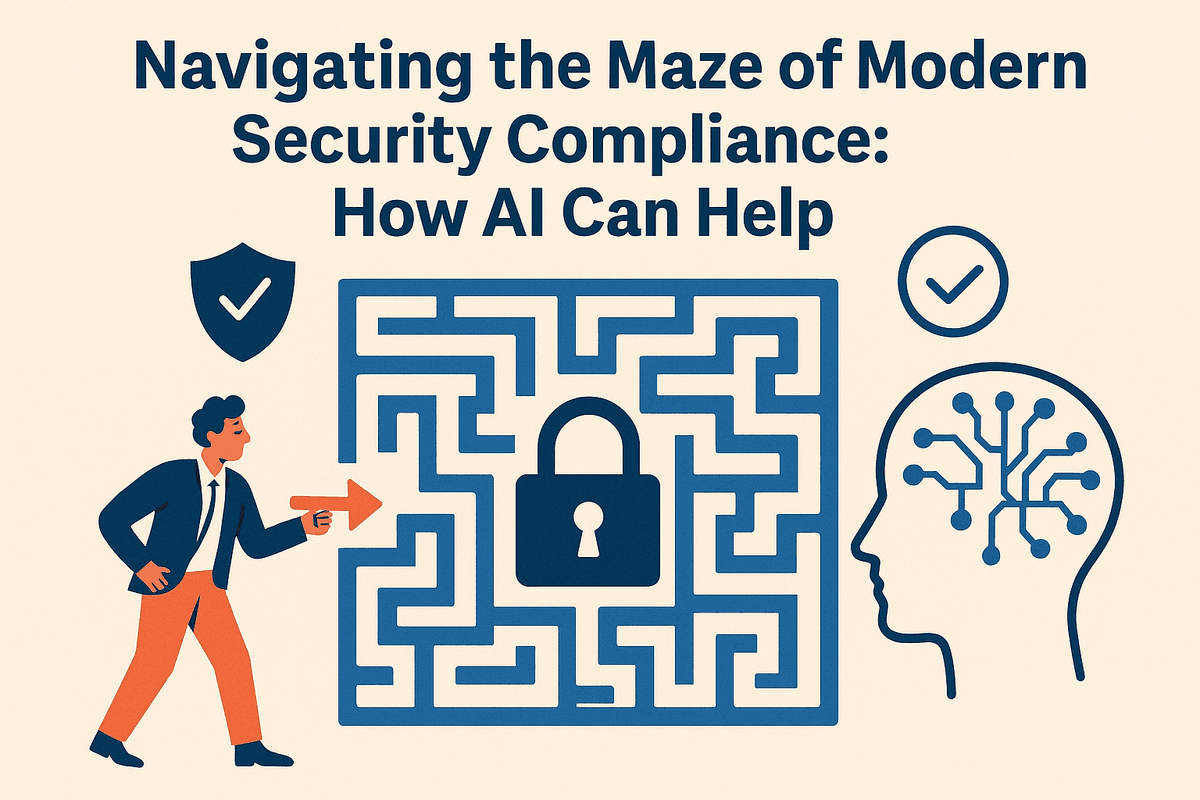
Navigating the Maze of Modern Security Compliance: How AI Can Help
The world of security compliance often feels like an ever-expanding, intricate maze. New regulations emerge, existing ones evolve, and the sheer volume of data and potential threats can be overwhelming. For organizations striving to protect sensitive information and maintain trust, navigating this landscape is no longer just a best practice—it's a critical necessity. But what if there was a smarter way to chart a course through this complexity? Enter Artificial Intelligence.
What is AI-Powered Security Compliance and Why is it Crucial Today?
AI-powered security compliance refers to the application of artificial intelligence technologies, such as machine learning (ML), natural language processing (NLP), and advanced analytics, to automate, streamline, and enhance the processes involved in meeting security standards and regulatory requirements. Think of it as equipping your compliance team with a super-intelligent assistant capable of processing vast amounts of information, identifying subtle patterns, and flagging potential issues with unprecedented speed and accuracy.
In today's digital-first environment, the importance of robust security compliance cannot be overstated, and AI's role is becoming increasingly pivotal. Here's why:
- Exploding Data Volumes: Organizations are generating and storing more data than ever before. Manually sifting through this data for compliance checks is simply unfeasible, making AI indispensable for effective security compliance.
- Sophisticated Cyber Threats: Attackers are constantly devising new ways to breach defenses. AI can help identify and respond to these evolving threats in real-time, a crucial aspect of maintaining security compliance and protecting sensitive assets.
- Dynamic Regulatory Landscape: Laws like GDPR, HIPAA, PCI DSS, and CCPA are frequently updated, and new ones are regularly introduced globally. AI can help organizations stay abreast of these changes and adapt their security compliance strategies accordingly, reducing the risk of non-compliance.
- The Need for Continuous Vigilance: Security compliance isn't a one-time project; it's an ongoing commitment. AI enables continuous monitoring and automated assessments, ensuring that compliance postures remain strong and adaptive over time.
The Growing Complexity of Regulations and the Call for Smarter Solutions
The regulatory environment for security compliance is not just growing; it's becoming a tangled web of local, national, and international mandates. From data privacy laws like GDPR in Europe and CCPA in California to industry-specific standards like HIPAA for healthcare or PCI DSS for payment card processing, organizations face a daunting task. Each regulation comes with its own set of intricate requirements, reporting obligations, and, critically, stiff penalties for non-compliance—ranging from hefty fines to severe reputational damage.
Traditional approaches to security compliance, often reliant on manual checklists, periodic audits, and human oversight, are buckling under this pressure. They are typically:
- Time-consuming and resource-intensive.
- Prone to human error and inconsistency.
- Often reactive, addressing issues only after they've occurred.
- Struggling to scale with the growth of data and the increasing complexity of **security compliance demands.**
This is where the demand for smarter solutions intensifies. Organizations urgently need proactive, intelligent, and adaptive systems to manage their security compliance obligations effectively. AI offers a path forward, transforming compliance from a reactive burden into a more strategic, automated, and data-driven function, essential for modern security compliance.
Understanding the Core Challenges AI Addresses in Achieving Robust Security Compliance
Achieving and maintaining robust security compliance is fraught with challenges. AI-powered solutions are specifically designed to tackle these head-on, offering a significant advantage in the pursuit of comprehensive security compliance:
- Taming Data Overload and Enhancing Interpretation: Modern IT environments generate a deluge of security logs, user activity data, and system alerts. Manually analyzing this ocean of information for security compliance relevance is a Herculean task. AI, particularly machine learning, excels at processing vast datasets, identifying anomalies, correlating events, and distinguishing genuine compliance risks from benign noise, thus providing actionable insights crucial for effective security compliance.
- Automating Manual and Repetitive Tasks: A significant portion of security compliance work involves repetitive tasks: evidence collection for audits, control testing, policy enforcement checks, and report generation. AI can automate many of these labor-intensive processes. This not only frees up skilled security professionals to focus on more strategic initiatives but also ensures consistency and reduces the risk of oversight in crucial security compliance activities.
- Adapting to the Evolving Threat Landscape and Regulatory Changes: The digital world is in constant flux. New cyber threats emerge daily, and regulatory frameworks for security compliance are frequently updated or newly introduced. AI systems can be trained to learn from new threat intelligence and adapt to changes in compliance requirements. Predictive analytics can help anticipate potential vulnerabilities, while NLP can assist in interpreting new regulatory texts, ensuring that security compliance efforts remain current and effective.
- Overcoming Resource Constraints: Many organizations, especially small to medium-sized enterprises, operate with limited budgets, personnel, and specialized security compliance expertise. AI-driven platforms can act as a force multiplier, automating tasks that would otherwise require significant human effort. This optimizes resource allocation, reduces the overall cost of compliance, and makes robust security compliance more attainable across the board.
- Improving Accuracy and Reducing Human Error: To err is human, but in the context of security compliance, errors can lead to significant vulnerabilities, data breaches, and substantial penalties. AI algorithms perform tasks with a high degree of precision and consistency, significantly reducing the likelihood of human error in critical compliance checks, configuration management, and data analysis, leading to a more reliable and defensible security compliance posture.
By directly addressing these fundamental challenges, AI empowers organizations to move beyond a reactive, checkbox approach to security compliance, fostering a more proactive, intelligent, and resilient security posture fit for the modern age.

Beyond Automation: Unlocking Key Benefits with AI in Security Compliance
Artificial intelligence isn't just about automating existing tasks; it’s a transformative force that unlocks a new echelon of efficiency, accuracy, and foresight in achieving and maintaining robust security compliance. By moving beyond simple task execution, AI offers profound advantages that empower organizations to navigate the complex regulatory landscape with greater confidence and agility.
Achieving Continuous Security Compliance Monitoring with AI-Driven Insights
Traditional security compliance often relies on periodic snapshots – point-in-time assessments that can quickly become outdated in today's dynamic threat environment. But what if your security compliance posture could be monitored dynamically, adapting in real-time? AI makes this a reality. By leveraging machine learning algorithms, AI-driven systems continuously analyze vast streams of data from across your IT environment – logs, network traffic, user activity, and system configurations. This isn't just about collecting data; it's about generating actionable insights. AI can detect subtle anomalies, deviations from established security compliance baselines, and potential policy violations as they happen, not weeks or months later. This continuous vigilance significantly strengthens your security compliance framework, ensuring you're always aware of your status and can respond swiftly to maintain adherence to complex regulations. This constant oversight is paramount for modern security compliance.
Reducing Human Error and Fatigue in Complex Security Compliance Tasks
The sheer volume and intricacy of security compliance tasks can be overwhelming for even the most dedicated human teams. Manually sifting through gigabytes of logs, verifying configurations against intricate policy documents, and cross-referencing controls across multiple standards are processes ripe for human error and burnout. AI steps in as a tireless, meticulous assistant for these critical security compliance functions. It excels at these repetitive, data-intensive aspects of security compliance, performing them with a speed and accuracy that humans simply cannot match consistently over long periods. By automating tasks like evidence collection for security compliance, control testing, and policy enforcement checks, AI significantly reduces the risk of errors stemming from oversight or fatigue. This, in turn, frees up your valuable security professionals from mundane chores, allowing them to focus on strategic security compliance initiatives, threat intelligence analysis, and complex incident response – tasks where human intellect and intuition truly shine. The result is a more robust, reliable, and efficient security compliance program.
Proactively Identifying and Mitigating Risks for Better Security Compliance Outcomes
Why wait for a security compliance breach or a failed audit to reveal vulnerabilities? Traditional approaches are often reactive, addressing issues only after they've caused non-compliance or a security incident. AI fundamentally flips this script, enabling a proactive stance towards security compliance risk management. By analyzing historical data, current threat intelligence feeds, and real-time system behaviors, AI's predictive analytics can identify patterns and indicators of potential future risks. Imagine AI flagging a series of seemingly minor configuration drifts that, when combined, could lead to a major security compliance failure, or identifying an emerging attack vector before it's widely exploited and impacts your adherence to security compliance mandates. This foresight allows organizations to proactively mitigate risks, implement corrective actions, and adjust controls before they escalate into costly non-compliance penalties or damaging security breaches. This shift towards proactive risk management is crucial for achieving and maintaining superior security compliance outcomes and a stronger overall security posture.
Streamlining Audit Processes and Reporting for Security Compliance with AI
Security compliance audits are a critical, yet often dreaded, component of maintaining regulatory adherence and trust. The traditional audit process can be incredibly time-consuming, resource-intensive, and disruptive, typically involving extensive manual evidence gathering, navigating endless spreadsheets, and painstaking report generation. AI radically transforms this arduous task into a far more streamlined and efficient process. AI-powered security compliance platforms can automatically collect, correlate, and organize audit evidence in real-time, mapping it directly to specific regulatory controls and security compliance requirements. They can generate comprehensive, customizable security compliance reports on demand, providing auditors with clear, concise, and verifiable information almost instantaneously. This not only drastically reduces the preparation time and human effort required for audits but also provides a continuous, transparent view of your organization's security compliance status. With AI, organizations can confidently move towards a state of continuous audit readiness, making the entire security compliance lifecycle smoother, less burdensome, and far more effective.
Key Features to Demand in AI Solutions for Security Compliance
When selecting an AI solution to bolster your security compliance framework, it's not just about adopting AI – it's about adopting the right AI. The effectiveness of these systems hinges on specific capabilities designed to tackle the multifaceted challenges of modern security compliance. Demanding the following key features will ensure your investment translates into robust, adaptive, and truly comprehensive security compliance.
Automated Data Discovery and Classification: The Foundation of Security Compliance
In today's data-driven world, understanding your data – what it is, where it resides, and its sensitivity – is the bedrock of security compliance. Manually tracking and classifying vast, expanding datasets is error-prone and can lead to severe security compliance failures. AI solutions with automated data discovery and classification are essential. They tirelessly scan your entire data landscape, identifying sensitive information like PII or financial records. Advanced AI then intelligently classifies this data according to security compliance policies (e.g., GDPR, HIPAA) or custom rules, ensuring no critical data is missed. This automation provides comprehensive visibility, crucial for applying appropriate controls and meeting security compliance requirements effectively.
Intelligent Threat Detection and Anomaly Identification: For Proactive Security Compliance
The threat landscape evolves rapidly, with sophisticated tactics often bypassing traditional security. A reactive approach is insufficient for maintaining robust security compliance. AI's intelligent threat detection and anomaly identification are invaluable here. AI solutions analyze vast real-time data streams, establishing a baseline of normal behavior. Machine learning algorithms then pinpoint subtle deviations signifying potential incidents – from malware to insider threats. This proactive capability allows early detection and rapid response, preventing significant damage or security compliance violations. For serious security compliance, this shift to proactive defense significantly strengthens overall security.
AI-Driven Policy Management and Enforcement: Ensuring Consistent Security Compliance
Maintaining consistent security compliance across complex organizations is challenging. Manually translating regulations into actionable policies and ensuring uniform enforcement is often inefficient. AI-driven policy management and enforcement tools address this. These solutions automate creating, deploying, and monitoring security policies tailored to specific security compliance frameworks. AI can interpret complex regulations, suggest controls, and continuously monitor for adherence. If violations occur, AI can trigger alerts or initiate automated remediation. This ensures security compliance is an operational reality, consistently applied and easily auditable, vital for demonstrating ongoing adherence.
Predictive Analytics: Anticipating Future Security Compliance Risks
Mature security compliance involves addressing current threats and anticipating future risks. AI-powered predictive analytics provide the foresight for the evolving security compliance landscape. By analyzing historical data, threat intelligence, regulatory trends, and internal changes, AI models predict future vulnerabilities or potential security compliance challenges. This could involve forecasting attack vectors, identifying emerging security compliance gaps from new regulations, or pinpointing high-risk internal systems. With these insights, organizations can proactively adjust strategies, allocate resources, and implement preemptive measures, future-proofing their security compliance and minimizing unforeseen challenges.
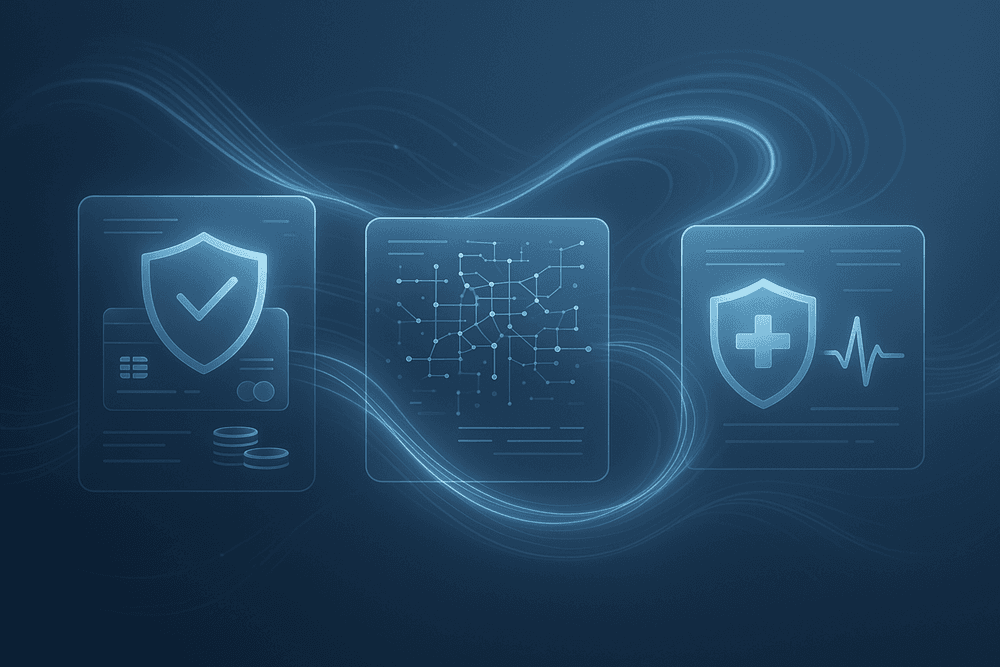
From Theory to Practice: Real-World Applications of AI in Achieving Security Compliance
The abstract promise of Artificial Intelligence transforms into tangible results when applied to the intricate world of security compliance. Organizations across various sectors are now leveraging AI to not only meet complex regulatory demands but also to build more resilient and proactive security postures. Let's explore how AI is making a real-world impact.
Financial Fortresses: AI's Role in PCI DSS Security Compliance
The financial services industry, a prime target for cyberattacks, faces immense pressure to maintain stringent security compliance. Regulations like the Payment Card Industry Data Security Standard (PCI DSS) are non-negotiable, governing how organizations handle sensitive cardholder data. Here, AI is not just an ancillary tool but a crucial ally. AI-powered systems tirelessly monitor transaction data, network logs, and user access patterns in real-time, automatically identifying anomalous activities that could signify a breach or a deviation from security compliance protocols.
For instance, AI algorithms can detect unusual access attempts to cardholder data environments, flag policy violations instantly, and automate sophisticated vulnerability assessments, ensuring continuous PCI DSS security compliance. AI can also significantly enhance fraud detection capabilities, a core component of protecting payment card information. This proactive stance helps financial institutions prevent costly data breaches, avoid hefty fines, and crucially, maintain the trust of their customers, transforming their security compliance from a reactive, often manual chore into a dynamic, intelligent defense mechanism.
Case Study: Illuminating Data Labyrinths for GDPR Security Compliance with AI-Powered Data Mapping
Navigating the complexities of the General Data Protection Regulation (GDPR) presents a significant security compliance challenge, particularly concerning data visibility, individual rights, and control over personal information. Consider "Veridian Solutions," a multinational e-commerce company that was struggling with GDPR's stringent data mapping and Data Subject Access Request (DSAR) requirements. They faced an overwhelming task: accurately locating, classifying, and managing personal data scattered across countless databases, cloud storage instances, and legacy systems – a common hurdle in achieving GDPR security compliance.
Implementing an AI-powered data mapping and discovery solution revolutionized Veridian Solutions' approach. The AI system autonomously scanned the company's entire data landscape, identifying personal data elements (like names, emails, IP addresses, and even inferred sensitive PII within unstructured text) across disparate sources. It then created a dynamic, visual data map, illustrating precisely where personal data resided, how it flowed between systems, and who had access to it.
This AI-driven clarity was pivotal. When DSARs came in, Veridian Solutions could quickly and accurately locate and retrieve specific user data, meeting tight GDPR deadlines with confidence. The system also helped identify redundant, obsolete, or trivial (ROT) data, as well as data that lacked proper consent for processing, enabling proactive data minimization and risk reduction. The result for Veridian Solutions was a vastly improved GDPR security compliance posture, a reduction in manual effort for data discovery by over 70%, and a significantly stronger, auditable data governance framework. AI turned a daunting security compliance hurdle into a manageable, data-driven process.
AI in the ER: Streamlining HIPAA Security Compliance Audits in Healthcare
In the healthcare sector, protecting Electronic Protected Health Information (ePHI) is paramount, making Health Insurance Portability and Accountability Act (HIPAA) security compliance a critical, yet often burdensome, responsibility. Traditional audit preparations are notoriously time-consuming, manual, and susceptible to human error, creating significant stress for healthcare providers. AI is now stepping in as a powerful assistant, transforming how healthcare organizations approach and maintain HIPAA security compliance, especially during audits.
AI-driven platforms can automate the continuous collection, correlation, and organization of evidence required to demonstrate adherence to HIPAA's various security controls. Imagine systems that intelligently monitor access logs to ePHI repositories, automatically flagging suspicious activity or unauthorized access attempts that could indicate a breach of security compliance or internal policy. AI algorithms can perform automated, ongoing risk assessments, identifying potential vulnerabilities in security configurations or user behaviors before an official audit, allowing organizations to remediate issues proactively.
Furthermore, AI can analyze vast amounts of audit trail data from diverse systems, highlighting subtle patterns and anomalies that might otherwise go unnoticed by human auditors. This not only significantly reduces the manual labor and time involved in preparing for an audit but also enhances the accuracy and thoroughness of the entire security compliance review process. By leveraging AI, healthcare providers can ensure a more robust defense of patient data, streamline their audit processes, reduce compliance costs, and maintain a stronger, more consistent HIPAA security compliance posture, ultimately fostering greater patient trust.
Best Practices for Integrating AI into Your Security Compliance Framework
Successfully weaving Artificial Intelligence into your security compliance fabric isn't just about acquiring new technology; it's about strategic implementation. Adopting AI requires a thoughtful approach to maximize its benefits while mitigating potential risks. By following best practices, your organization can transform its security compliance posture, making it more efficient, proactive, and resilient.
Pinpoint Prime Opportunities: Identifying Key Areas for Security Compliance Automation
Embarking on your AI journey for security compliance begins with identifying where AI can deliver the most significant impact. Not all compliance tasks are equally suited for automation. Focus on areas characterized by high-volume, repetitive processes, or those requiring analysis of vast datasets, where human efforts are often error-prone or time-consuming.
Key areas ripe for AI-driven security compliance automation include:
- Continuous Controls Monitoring: AI can tirelessly monitor compliance controls in real-time, instantly flagging deviations from established security compliance baselines (e.g., for ISO 27001, SOC 2).
- Log Analysis and Threat Detection: AI algorithms excel at sifting through terabytes of log data to identify anomalous activities or patterns indicative of potential compliance breaches or security threats.
- Automated Evidence Collection: Streamline audit preparation by using AI to automatically gather, categorize, and correlate evidence required to demonstrate security compliance.
- Risk Assessment and Prioritization: AI can analyze diverse data sources to provide more accurate and dynamic risk assessments, helping you prioritize security compliance efforts effectively.
- Policy Management and Enforcement: AI tools can assist in ensuring policies are consistently applied and can even automate checks for adherence to internal and external security compliance mandates.
Start by selecting one or two high-impact areas to pilot AI integration, learn from the experience, and then gradually expand its application across your security compliance framework.
Smart Selection: Choosing the Right AI Tools and Vendors for Your Security Compliance Needs
The market for AI-powered security compliance solutions is burgeoning. Choosing the right tools and vendors is critical for success. A one-size-fits-all approach rarely works; your selection should be tailored to your organization's specific security compliance requirements, existing infrastructure, and risk appetite.
Consider these factors when evaluating AI tools and vendors:
- Specificity and Relevance: Does the solution directly address your key security compliance challenges (e.g., GDPR data discovery, PCI DSS vulnerability management, HIPAA access controls)?
- Integration Capabilities: How seamlessly can the AI tool integrate with your current security stack (SIEM, SOAR, GRC platforms) and data sources? Poor integration can negate many AI benefits.
- Accuracy and Explainability: Scrutinize the AI's accuracy, including false positive and false negative rates. Increasingly important for security compliance is "Explainable AI" (XAI), which provides insight into how the AI reached its conclusions.
- Scalability and Performance: Ensure the tool can scale with your organization's data volume and evolving security compliance demands without performance degradation.
- Vendor Reputation and Support: Look for vendors with a proven track record in security compliance, strong customer testimonials, robust technical support, and a clear roadmap for addressing future compliance landscapes.
- Data Security and Privacy: How does the vendor handle your sensitive data? Ensure their practices align with your security compliance obligations.
Conduct thorough due diligence, including proof-of-concept (PoC) projects and peer reviews, before committing to a solution.
Upholding Trust: Ensuring Data Privacy and Ethical Considerations in AI for Security Compliance
Integrating AI into security compliance introduces powerful capabilities, but it also brings significant responsibilities concerning data privacy and ethical use. AI systems learn from data, and if that data is sensitive or personal, its handling must comply with stringent privacy regulations like GDPR, CCPA, and others.
Key considerations include:
- Data Governance for AI: Implement robust data governance frameworks specifically for AI. This includes data minimization (using only necessary data), anonymization, or pseudonymization techniques to protect sensitive information used in training or operating AI models for security compliance.
- Bias Mitigation: AI models can inadvertently learn and perpetuate biases present in their training data. This can lead to unfair or discriminatory outcomes in security compliance enforcement. Actively work to identify and mitigate bias through diverse datasets, fairness-aware algorithms, and regular audits.
- Transparency and Accountability: For security compliance, it's vital to understand AI-driven decisions. Maintain transparency in how AI models operate and establish clear lines of accountability for AI system outputs and their impact on compliance status.
- Ethical Oversight: Establish an ethical review process for AI applications in security compliance, ensuring they align with your organization's values and societal norms.
Prioritizing data privacy and ethical AI use is fundamental to building trust with stakeholders and ensuring your AI-enhanced security compliance program is both effective and responsible.
Empower Your People: Training Your Team to Leverage AI for Enhanced Security Compliance
AI tools are powerful enablers, but their ultimate success in strengthening security compliance hinges on the skills and understanding of your team. Human oversight remains crucial. Therefore, investing in training and change management is as important as investing in the technology itself.
Focus on these areas:
- Upskilling and Reskilling: Your security and compliance teams need to understand the capabilities and limitations of the AI tools being implemented. Training should cover how to operate these tools, interpret their outputs, identify potential AI errors, and when to override AI-driven decisions.
- Augmenting Human Expertise: Emphasize that AI is designed to augment human intelligence, not replace it. AI can handle mundane tasks, allowing security compliance professionals to focus on more strategic activities, complex investigations, and decision-making.
- Fostering an AI-Ready Culture: Encourage a mindset of continuous learning and adaptation. Address any apprehension or resistance to change by clearly communicating the benefits of AI for security compliance and individual roles.
- Cross-Functional Collaboration: Effective AI integration often requires collaboration between security, IT, legal, data science, and business units. Facilitate communication and shared understanding to ensure AI initiatives align with broader organizational security compliance goals.
By equipping your team with the necessary knowledge and skills, you transform AI from a mere tool into a strategic partner for achieving and maintaining robust security compliance.
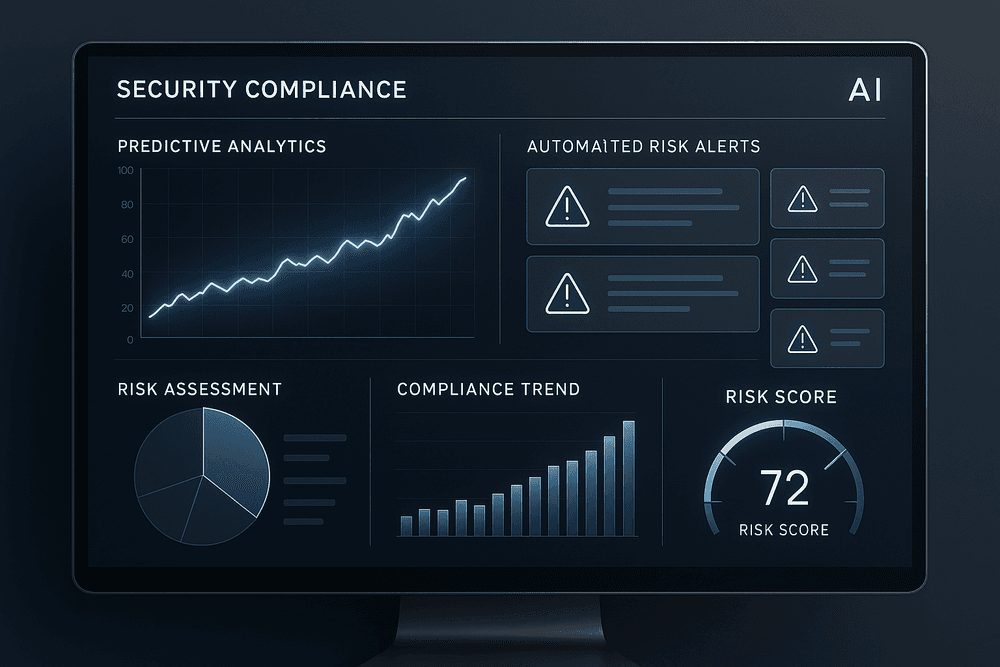
Embracing the Future: Advancing Your Security Compliance with AI
The landscape of security compliance is perpetually shifting, driven by evolving threats, new regulations, and technological advancements. Artificial Intelligence (AI) is no longer a futuristic concept but a present-day catalyst, poised to revolutionize how organizations approach and maintain their security compliance posture. Understanding the trajectory of AI in this domain and knowing how to integrate it strategically is key to staying ahead.
Emerging Trends in AI for Security Compliance: What to Expect
The integration of AI into security compliance is rapidly maturing, moving beyond basic automation to offer more sophisticated capabilities. Here’s a glimpse of what the future holds:
- Predictive Compliance Analytics: Expect AI to increasingly forecast potential security compliance breaches. By analyzing vast datasets of historical incidents, system logs, and user behavior, AI can identify subtle patterns that indicate a high risk of non-compliance, allowing for proactive intervention.
- Hyperautomation of Compliance Processes: AI will drive deeper automation across the entire security compliance lifecycle. This includes AI-generated policy recommendations, automated evidence collection for audits, and intelligent remediation of identified compliance gaps, significantly reducing manual toil.
- AI-Powered Continuous Auditing: The era of periodic, manual audits is waning. AI offers the ability to conduct continuous, real-time security compliance assessments, flagging deviations from established policies or regulatory requirements instantaneously. This provides a dynamic and accurate view of your compliance status.
- Explainable AI (XAI) for Transparency: As AI takes on more critical security compliance tasks, the demand for transparency will grow. XAI aims to make AI decision-making processes understandable to humans, which is crucial for auditability, building trust, and meeting regulatory demands for accountability.
- Generative AI in Policy and Awareness: Generative AI tools are emerging to assist in drafting customized security compliance policies, creating targeted security awareness training materials, and even simulating realistic social engineering attacks to test employee vigilance.
- Specialized AI for Data Privacy Compliance: With the proliferation of data privacy laws like GDPR and CCPA, AI tools specifically designed to manage consent, track data lineage, and automate Data Subject Access Requests (DSARs) will become indispensable for maintaining security compliance in data handling.
Continuously Improving Your Security Compliance Posture with Evolving AI
AI is not a set-it-and-forget-it solution; it's a dynamic partner in your security compliance journey. To maximize its benefits, a continuous improvement mindset is essential:
- Foster Adaptive Learning Systems: Implement AI solutions that can learn and adapt. Your AI should evolve based on new threat intelligence, changes in regulations, and the unique nuances of your organization’s security compliance landscape.
- Establish Robust Feedback Loops: Human oversight remains critical. Create mechanisms for your security and compliance teams to review AI-driven decisions and provide feedback, enabling the AI models to refine their accuracy and effectiveness over time.
- Leverage AI for Proactive Threat Intelligence: Integrate your AI compliance tools with global threat intelligence feeds. This allows the AI to anticipate how emerging threats might impact your security compliance posture and suggest preemptive adjustments to controls.
- Commit to Regular Model Retraining and Validation: The digital world is constantly changing. Regularly retrain and validate your AI models with fresh data to ensure they remain effective against new attack vectors and aligned with the latest security compliance requirements.
- Adopt an Iterative Implementation Approach: Don’t try to overhaul your entire security compliance framework with AI overnight. Start with specific, high-impact use cases, demonstrate value, and then gradually expand AI’s role as your team gains experience and confidence.
Take the Leap: Resources and Guidance for Adopting AI in Your Security Compliance Strategy
Embarking on your AI journey for enhanced security compliance requires careful planning and a strategic approach. Here’s how to get started:
- Define a Clear AI Strategy for Compliance: Begin by identifying your most pressing security compliance challenges. What specific problems can AI realistically solve for your organization? Avoid adopting AI simply for novelty; ensure it aligns with tangible business and compliance objectives.
- Identify High-Impact Use Cases: Pinpoint areas where AI can deliver the most significant improvements to your security compliance. Common starting points include automated log analysis, intelligent access reviews, risk assessment, and continuous controls monitoring.
- Initiate Pilot Programs: Before a full-scale deployment, run pilot projects. Test AI solutions in a controlled environment focusing on a specific security compliance task. Measure the outcomes rigorously to build a business case and refine your approach.
- Vet Vendors Diligently: Choose AI vendors with proven expertise in both AI technology and security compliance. Key considerations include data security practices, model transparency, integration capabilities with your existing security stack, and ongoing support.
- Invest in Skills and Training: Equip your teams with the necessary knowledge to manage and leverage AI tools effectively for security compliance. This may involve upskilling existing staff or hiring specialists.
- Prioritize Ethical AI and Data Governance: Establish strong data governance frameworks and ethical guidelines for AI use. Ensure your AI applications respect privacy, avoid bias, and maintain the integrity of your security compliance program.
- Consult Industry Frameworks: Leverage resources like the NIST AI Risk Management Framework (RMF) to guide your adoption, ensuring a responsible and structured approach to implementing AI for security compliance.
- Engage with Communities: Join professional communities, attend webinars, and participate in industry events focused on AI in cybersecurity and compliance to stay informed about best practices and emerging solutions.
By thoughtfully embracing AI, organizations can transform their security compliance from a reactive burden into a proactive, intelligent, and continuous discipline, fortifying their defenses for the future.