
August 18, 2026
Start Every Description With a One-Page Agency Brief
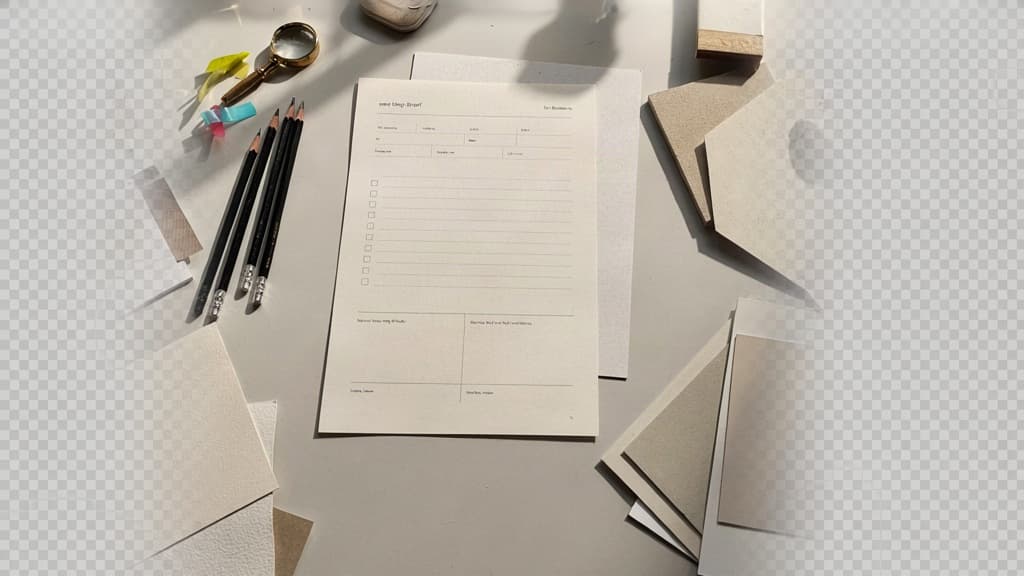
Before your team drafts anything, align on the brief. Not a long strategy deck, not a scattered Slack thread — one page that gives the writer or AI tool enough context to make the description specific, persuasive, and on-brand from the first pass.
For agencies, this matters because “description” can mean a hiring post, a service page blurb, a proposal section, a case study summary, or a productized offer. Without a shared brief, every version starts to sound like whichever template, competitor page, or AI model the team touched last.
What a description brief should capture
A useful agency brief should answer five questions before anyone starts writing:
- What is being described?
Name the role, service, offer, project, campaign, deliverable, or asset clearly. Include any internal shorthand your team uses, then translate it into client-facing language.
- Who is it for?
Define the reader by role, mindset, and familiarity. A founder hiring their first marketer needs different language than a CMO comparing agency retainers.
- Why does this matter now?
Capture the trigger: growth, churn, a launch, a rebrand, recruitment pressure, missed revenue, inconsistent execution, or client demand.
- What must the reader understand or believe?
This is the strategic center of the description. For example: “This role owns client momentum, not just task management,” or “This service reduces content bottlenecks without adding headcount.”
- What should happen next?
The next step could be applying, booking a call, approving a scope, reading a case study, or choosing a package. The description should lead there intentionally.
This is especially important when adapting job description examples. The example gives you structure; the brief gives you relevance.
How to define the reader, decision, and success criteria
The fastest way to sharpen a description is to separate three things that often get blurred together:
Brief element | What to define | Agency example |
|---|---|---|
Reader | Who is consuming the description | Senior designer candidate, SaaS founder, ecommerce marketing lead |
Decision | What they are deciding | Apply, shortlist the agency, approve the package, request pricing |
Success criteria | What “good” looks like after reading | They understand fit, value, expectations, and next step |
For a hiring description, success may be a smaller but stronger applicant pool. For a service description, it may be fewer unqualified discovery calls. For a project blurb, it may be helping a prospect see themselves in the result.
This keeps the writing from drifting into polished vagueness. “We need a strategic storyteller” sounds fine. “We need a content strategist who can turn founder expertise into sales-ready thought leadership for B2B clients” attracts a different, better-fit reader.
Brand inputs that prevent generic AI output
If your team uses AI to draft descriptions, the brief needs brand constraints, not just subject matter. Otherwise, every client starts sounding like the same confident-but-bland SaaS homepage.
Include these brand inputs in the one-page brief:
- Voice traits: e.g. direct, warm, expert, irreverent, editorial, premium, pragmatic.
- Words to use and avoid: especially industry clichés, banned claims, preferred terms, and client-specific phrasing.
- Positioning notes: what the brand wants to be known for and what it refuses to compete on.
- Audience sophistication: beginner-friendly, expert-level, founder-to-founder, technical buyer, creative peer.
- Proof points: metrics, client types, recognizable outcomes, proprietary methods, awards, or testimonials.
- Tone boundaries: how bold, playful, formal, or sales-led the description can be.
The goal is not to make every description sound identical. It is to make every description sound like it came from the right brand, for the right reader, with a clear reason to keep reading.

Use a Reusable Description Template Before Looking at Examples
With the brief in place, resist the urge to jump straight into job description examples. Examples are useful for reference, but templates are what keep your team from reinventing structure every time a client needs a role, service, offer, or opportunity described.
The universal description structure: hook, context, details, proof, next step
Most strong descriptions follow the same five-part shape:
- Hook: Lead with the reader’s motivation, not the organization’s need.
Instead of “We’re hiring a designer,” try “Help shape campaign visuals for brands that need to move fast without looking generic.”
- Context: Explain where this description sits.
For a role, that might mean the team, client type, workflow, or business stage. This gives the reader enough situational awareness to self-select.
- Details: Cover the practical information clearly.
Responsibilities, requirements, deliverables, timelines, tools, compensation range, engagement type, or scope should be easy to scan.
- Proof: Show why the opportunity is credible.
This could be client traction, team culture, portfolio standards, specialist expertise, process maturity, or a clear reason the role exists now.
- Next step: Tell the reader exactly what to do.
Apply, book a call, request a quote, send a portfolio, answer screening questions, or review the package options.
This structure is flexible enough for hiring pages, service pages, project briefs, and campaign blurbs. More importantly, it gives account managers, strategists, and writers the same starting point, so quality does not depend on who opened the blank doc first.
A fill-in-the-blank template for agency teams
Use this as your internal working draft before polishing for voice:
[Hook: one sentence that speaks to the reader’s goal, pain point, or ambition.]
About the opportunity / offer / description: [Explain what this is, who it is for, and why it matters now.]
You’ll be involved in / This includes:
- [Primary responsibility, deliverable, or feature]
- [Secondary responsibility, deliverable, or feature]
- [Important collaboration, workflow, or expectation]
- [Outcome the reader can expect or contribute to]
What makes this a good fit:
- [Relevant skill, need, or qualification]
- [Experience level or context]
- [Working style, values, or preference]
- [Any must-have requirement]
Why this is worth considering: [Add proof: team credibility, client type, measurable result, clear process, growth potential, or differentiator.]
Next step: [Specific action, deadline if relevant, and what happens after they respond.]
For agencies, the power is not the wording itself. It is the repeatable decision-making. Everyone knows what information belongs where, which reduces back-and-forth with clients and keeps descriptions from drifting into vague “dynamic team” language.
How to keep descriptions scannable without losing nuance
Scannable does not mean thin. It means the reader can find the right information quickly while still feeling the brand’s point of view.
A few practical rules help:
- Use short sections with specific labels. “What you’ll work on” is clearer than “Responsibilities” when the brand is more conversational.
- Keep bullets concrete. Replace “support marketing initiatives” with “draft paid social copy, landing page variants, and email subject lines for campaign launches.”
- Limit stacked adjectives. “Fast-growing, innovative, collaborative, passionate” says less than one precise sentence about the actual work.
- Add one layer of context after key bullets. If a requirement says “agency experience preferred,” explain why: “You’ll move between multiple client voices in the same week.”
- Make the final action unmistakable. A strong description loses momentum if the reader has to guess what to send or where to click.
Templates give your team control before examples influence the draft. That matters when you are scaling output across clients, roles, and channels without letting every description sound like it came from the same generic source.
Job Description Examples Agencies Can Adapt
With your brief and structure in place, examples become raw material—not copy-paste shortcuts. Use these job description examples as starting points, then swap in the client’s voice, priorities, and proof points.
Job description example for a creative role
Role: Senior Brand Designer
We’re looking for a Senior Brand Designer who can turn strategy into distinctive visual systems for growing B2B and consumer brands.
In this role, you’ll shape identity work from concept through rollout: logos, typography, color systems, campaign visuals, pitch decks, social templates, and brand guidelines. You’ll collaborate with strategists, copywriters, and client leads to make sure every design choice supports a clear position—not just a polished look.
You’ll be a strong fit if you can present ideas confidently, explain the thinking behind your work, and adapt designs across channels without losing the core brand idea.
What you’ll do
- Develop brand identity concepts and visual directions
- Build flexible design systems for digital, social, and sales use
- Translate creative strategy into client-ready presentation work
- Collaborate with writers, strategists, and account leads
- Refine work based on client feedback while protecting the creative concept
What we’re looking for
- 4+ years of brand, identity, or agency design experience
- Strong portfolio showing concept-led design systems
- Confidence working in Figma, Adobe Creative Suite, or similar tools
- Ability to explain design decisions in simple, client-friendly language
- Attention to detail across layouts, typography, and production files
Why this role matters
Our clients come to us when they need a brand that feels sharper, clearer, and easier to scale. Your work will help make that happen.
Job description example for a digital marketing role
Role: Performance Marketing Manager
We’re hiring a Performance Marketing Manager to plan, launch, and optimize paid campaigns that turn client budgets into measurable growth.
You’ll manage campaigns across channels such as Google Ads, Meta, LinkedIn, and retargeting platforms. The role blends strategy, testing, reporting, and client communication. You won’t just pull numbers—you’ll explain what they mean and what should happen next.
This is a good fit for someone who likes structured experimentation, clear reporting, and working across multiple client accounts without letting details slip.
What you’ll do
- Build and manage paid media campaigns across client accounts
- Research audiences, keywords, offers, and competitor activity
- Monitor performance and adjust budgets, targeting, and creative inputs
- Create clear reports that connect activity to business outcomes
- Work with creative and strategy teams to improve landing pages and ad assets
What we’re looking for
- 3+ years of paid media or growth marketing experience
- Hands-on experience with Google Ads and paid social platforms
- Strong grasp of CAC, ROAS, CPL, conversion rate, and funnel metrics
- Ability to manage multiple campaigns without losing account-level nuance
- Clear communication style for internal teams and client updates
Why this role matters
Clients trust us to make smart decisions with limited budgets. You’ll help them see what’s working, what isn’t, and where to invest next.
Job description example for an account or client services role
Role: Account Manager
We’re looking for an Account Manager who can keep client relationships strong, projects moving, and teams aligned.
You’ll be the day-to-day contact for a portfolio of agency clients, translating client needs into clear internal direction and making sure nothing gets lost between kickoff and delivery. The best person for this role is organized, calm under pressure, and comfortable asking sharper questions when a brief is unclear.
What you’ll do
- Manage client communication across active projects and retainers
- Turn client requests into clear tasks, timelines, and next steps
- Coordinate with creative, strategy, and production teams
- Prepare agendas, recaps, status updates, and meeting notes
- Spot risks early and help resolve scope, timing, or feedback issues
What we’re looking for
- 2+ years in account management, client services, or project coordination
- Experience working in an agency, studio, or marketing environment
- Strong written communication and follow-through
- Comfort managing multiple stakeholders and deadlines
- Ability to protect both the client relationship and the team’s focus
Why this role matters
Great work depends on clear communication. You’ll help clients feel heard while giving the team what they need to deliver consistently.

Adapt the Same Framework for Product, Service, and Project Descriptions
Once your team has a reliable structure for job description examples, the same logic can carry into the descriptions agencies write every week: service pages, package blurbs, productized offers, proposals, project summaries, and case study snippets.
Turning features into client-facing benefits
Agency descriptions often get stuck at the “what we do” level:
- “Includes brand strategy workshop”
- “Three rounds of design revisions”
- “Monthly analytics reporting”
- “SEO audit and keyword mapping”
Those are useful details, but clients buy outcomes. Translate each feature into a benefit by asking: “So the client can do what?”
Feature | Client-facing benefit |
|---|---|
Brand strategy workshop | Align stakeholders before design starts, reducing late-stage feedback loops |
Three rounds of revisions | Refine the work without slowing launch timelines |
Monthly analytics reporting | See what is working, what needs budget, and what should be cut |
SEO audit and keyword mapping | Prioritize content that can attract qualified traffic, not just impressions |
A stronger description blends both:
Our SEO content sprint includes a technical audit, keyword mapping, and four optimized landing page briefs, giving your marketing team a clear path from search opportunity to publish-ready content.
The feature proves substance. The benefit makes the value obvious.
Description template for agency services and packages
Use this when describing retainers, sprints, audits, workshops, or productized offers.
Template:
[Service/package name] helps [ideal client/team] achieve [primary outcome] without [common pain or tradeoff]. It includes [core deliverable 1], [core deliverable 2], and [core deliverable 3], designed to [strategic purpose]. This is best for [client situation], especially when [trigger event or urgency]. By the end, you’ll have [tangible output] and [business benefit], so your team can [next action].
Example:
The Brand Messaging Sprint helps B2B startups clarify their positioning before investing in a website, campaign, or sales collateral. It includes stakeholder interviews, competitor messaging review, and a messaging framework covering audience pain points, value propositions, proof points, and tone of voice. This is best for teams preparing for a launch, repositioning, or funding round where inconsistent messaging is slowing sales and marketing execution. By the end, you’ll have a practical messaging system your internal team and external partners can use to create sharper, more consistent content.
Description template for project summaries and case study blurbs
Project descriptions need a tighter arc: problem, response, result. Keep them short enough for proposals, portfolios, and social proof sections.
Template:
[Client/type of client] needed [problem or goal] because [business context]. We developed [solution or deliverables], with a focus on [strategic priority]. The result was [outcome, metric, or qualitative improvement], helping the client [larger business impact].
Example:
A regional healthcare group needed a clearer service-line campaign to support patient acquisition across three locations. We developed campaign messaging, landing page copy, and paid social creative, with a focus on reducing clinical jargon and making next steps easier for patients to understand. The result was a campaign system the internal marketing team could reuse across locations, helping them launch faster while keeping messaging consistent.
Scale Description Writing Without Losing the Client’s Brand Voice
Once the brief, template, and examples are in place, the next challenge is operational: getting three strategists, two writers, and a freelancer to produce descriptions that sound like the same client—not five different interpretations of the brand.
Build a Description QA Checklist for Your Team
A lightweight checklist gives your team a shared definition of “ready to send.” Keep it short enough to use on every description, whether it’s for a hiring page, service page, proposal, or case study.
Use checks like:
- Audience fit: Does the description speak to the intended reader’s priorities, objections, and level of knowledge?
- Brand voice: Does it match the client’s approved tone—e.g., plainspoken, expert, playful, premium, challenger?
- Specificity: Are claims backed by concrete details, examples, outcomes, or constraints?
- Message hierarchy: Is the most important point visible early, not buried in the middle?
- Scannability: Can someone understand the offer, role, or project from the first line, subheads, and key details?
- Differentiation: Could this description only belong to this client, or would it work for any competitor?
- Next step: Is the desired action clear without sounding bolted on?
For agencies, the real value is consistency. A QA checklist lets junior writers, contractors, and account managers review work against the same standard before it reaches the client.
Create Reusable AI Prompts Tied to Brand Rules
Generic prompts produce generic descriptions. Instead of asking AI to “write a job description” or “make this sound better,” build reusable prompts that include the client’s brand rules every time.
A strong agency prompt should include:
- The description type
- The audience
- The decision the reader needs to make
- Required details from the brief
- Voice traits to use
- Voice traits to avoid
- Approved terminology
- Words, phrases, or claims the client never uses
- Formatting expectations
For example:
Write a concise description for [DESCRIPTION TYPE] using the following client brand rules: Voice: [VOICE TRAITS] Avoid: [BANNED TONE/PHRASES] Audience: [READER] Reader decision: [DECISION] Must include: [DETAILS] Proof points: [PROOF] Structure: [HOOK / CONTEXT / DETAILS / PROOF / NEXT STEP] Keep it scannable, specific, and consistent with these approved examples: [PASTE EXAMPLES]
Once your team has approved service blurbs, project summaries, and job description examples, turn them into prompt inputs—not one-off references buried in old docs.
When to Standardize, Personalize, or Rewrite
Not every description needs the same level of effort. The trick is knowing where speed helps and where it creates bland work.
Situation | Best approach | Why |
|---|---|---|
Repeated formats, like role posts or package descriptions | Standardize | Keeps structure consistent and reduces production time |
Same format, different audience or channel | Personalize | Preserves the framework while adjusting emphasis and tone |
High-stakes pages, pitches, or flagship case studies | Rewrite | These need sharper positioning, stronger proof, and more strategic judgment |
Standardize the skeleton. Personalize the angle. Rewrite when the description has to carry real commercial weight. That’s how agencies scale output without turning every client’s voice into the same AI-polished blur.