May 31, 2025
The Imperative of an AI Ethics Framework in Today's World
The Imperative of an AI Ethics Framework in Today's World
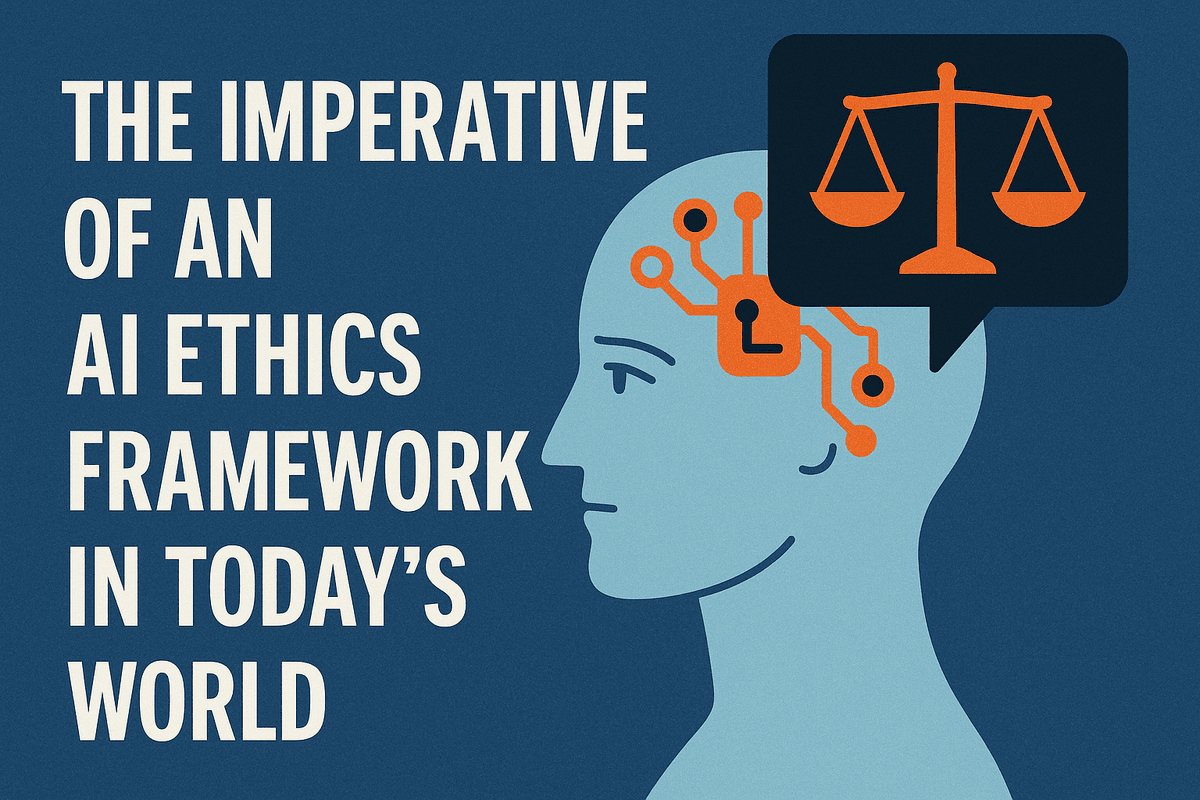
As artificial intelligence weaves itself ever more deeply into the fabric of our daily lives and business operations, the call for responsible development and deployment has never been louder. An AI ethics framework is no longer a niche concern for academics or a "nice-to-have" for forward-thinking tech giants; it's a fundamental necessity for any organization leveraging AI.
Defining an AI Ethics Framework: More Than Just Rules
So, what exactly is an AI ethics framework? It's far more than a dusty rulebook or a simple checklist. Think of it as a living compass: a dynamic set of principles, values, and governance mechanisms designed to guide the entire lifecycle of AI systems—from concept and data collection to development, deployment, and ongoing monitoring. An effective AI ethics framework provides a structured approach for identifying, assessing, and mitigating ethical risks. It fosters a culture of ethical consideration, encouraging teams to ask critical questions about fairness, transparency, accountability, and societal benefit. It’s about embedding ethical thinking into the very DNA of your AI initiatives, ensuring they align with human values, rather than merely meeting minimal legal requirements. This comprehensive approach ensures your AI ethics framework is robust and adaptable.
Why Every Organization Needs a Guiding AI Ethics Framework Now
The urgency for implementing a robust AI ethics framework cannot be overstated. In a world increasingly powered by algorithms, organizations that proactively address AI ethics gain a significant competitive advantage and build crucial resilience. Firstly, a clear AI ethics framework is foundational to building trust. Customers, employees, and partners are more likely to engage with organizations transparent about their AI practices. Secondly, it fosters responsible innovation. By providing ethical guardrails, an AI ethics framework empowers teams to explore AI's potential confidently, mitigating harm and maximizing benefit. Thirdly, it addresses the critical principles of fairness, accountability, and transparency (FAT/FATE), which are becoming non-negotiable. Furthermore, a well-defined AI ethics framework helps organizations navigate the complex regulatory landscape, reducing legal and reputational risks. It also attracts talent, as individuals seek ethical employers. Essentially, an AI ethics framework is not a barrier but an enabler of sustainable and trustworthy AI.
The Risks of Neglecting Ethical AI: A Stark Reality
Ignoring the need for an AI ethics framework is a high-stakes gamble. The reality is stark: deploying AI without ethical oversight can lead to significant harm. A prominent risk is algorithmic bias, where flawed AI perpetuates societal inequalities, leading to discriminatory outcomes in hiring, loans, and even justice. This causes real harm and exposes organizations to severe reputational damage and legal challenges. Lack of transparency in AI systems erodes public trust, leading to user disengagement. Imagine deploying a "black box" AI whose decisions are unexplainable – the potential for mistrust is immense. Neglecting an AI ethics framework can also result in privacy violations and security vulnerabilities. The financial costs of an ethical misstep—from regulatory fines to customer boycotts—can be crippling. Without a guiding AI ethics framework, organizations risk their bottom line and social license. The question isn't whether you can afford an AI ethics framework, but whether you can afford to operate without one.
Deconstructing a Robust AI Ethics Framework: Core Pillars
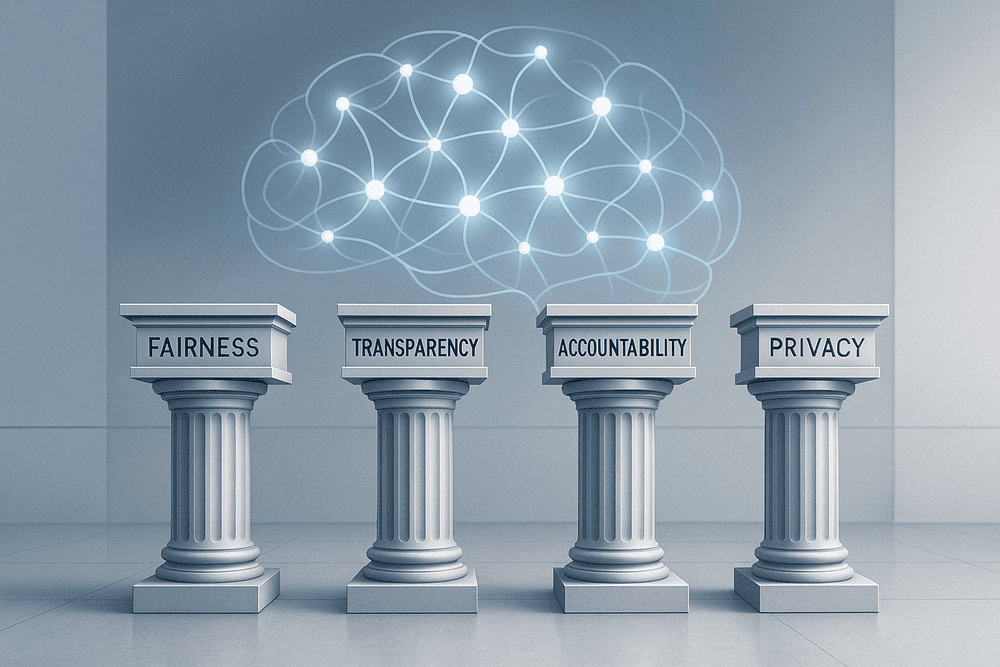
An ai ethics framework isn't just a document; it's a blueprint for responsible innovation. To truly guide the development and deployment of ethical AI, this framework must be built upon a set of unshakeable core pillars. These pillars provide the structural integrity needed to navigate the complex ethical terrain of artificial intelligence, ensuring that technology serves humanity's best interests. Let's deconstruct these essential components that form the bedrock of a robust ai ethics framework.
Ensuring Fairness and Non-Discrimination in Your AI Ethics Framework
At the heart of any trustworthy AI system lies the commitment to fairness and non-discrimination. An effective ai ethics framework must actively work to dismantle bias, not perpetuate it. This means scrutinizing datasets for hidden prejudices, ensuring algorithms don't disproportionately impact vulnerable groups, and continuously testing for equitable outcomes. Imagine an AI used for loan applications; without a strong fairness component in its ai ethics framework, it could inadvertently deny qualified applicants from certain demographics based on historical biases in the data. True fairness demands diverse development teams, inclusive design principles, and a commitment to regular audits and impact assessments to ensure your AI serves everyone justly and avoids discriminatory practices. This pillar of your ai ethics framework is fundamental to building public trust and ensuring AI benefits all segments of society.
Building Transparency and Explainability into Your AI Systems
The "black box" nature of some AI can be a significant barrier to trust and accountability. That's why transparency and explainability are critical pillars within a comprehensive ai ethics framework. Users, developers, and stakeholders deserve to understand, at an appropriate level, how an AI system arrives at its decisions. Explainability (XAI) techniques aim to demystify complex models, making their inner workings more accessible and interpretable. Transparency goes further, involving clear communication about the AI’s purpose, capabilities, limitations, data sources, and the logic behind its operations. An ai ethics framework should mandate the documentation of these aspects and provide clear avenues for users to comprehend AI-driven outcomes. This fosters confidence, enables informed scrutiny, and is crucial for debugging and improving AI systems responsibly.
Prioritizing Accountability and Human Oversight with an AI Ethics Framework
AI, no matter how advanced, should remain a tool that serves humanity, not an autonomous force beyond our control. A robust ai ethics framework champions accountability by clearly defining who is responsible for the development, deployment, and outcomes of AI systems, especially when they err or cause harm. It's not just about assigning blame; it's about establishing clear pathways for redress, learning from failures, and continuous improvement. Crucially, this pillar emphasizes the indispensable role of human oversight. This can manifest as "human-in-the-loop" systems where humans validate critical AI decisions, or "human-on-the-loop" systems where humans monitor AI operations and can intervene if necessary. An ai ethics framework ensures that ultimate responsibility and decision-making authority in high-stakes scenarios rest with humans, safeguarding against unintended consequences and maintaining ethical control.
How to Embed Privacy and Security in Your AI Ethics Framework Design
AI systems often thrive on vast amounts of data, making privacy protection and system security non-negotiable components of any ai ethics framework. Protecting individuals' personal information and ensuring the integrity of AI models against unauthorized access or malicious attacks are paramount. This involves more than just compliance with data protection regulations like GDPR or CCPA; it’s about proactively building privacy-enhancing technologies (PETs) directly into the AI design, such as differential privacy, homomorphic encryption, or federated learning. A strong ai ethics framework will mandate robust cybersecurity measures, regular vulnerability assessments, and incident response plans to protect against data breaches and malicious attacks that could compromise the AI or manipulate its outputs. Principles like data minimization – collecting only what’s strictly necessary for the task – and clear, transparent policies on data governance, usage, storage, and retention are fundamental to embedding privacy and security by design, building a crucial foundation of trust with users and stakeholders.
Leading Examples: How to Implement an AI Ethics Framework Effectively
Understanding how leading organizations approach AI ethics can provide invaluable insights for developing your own robust ai ethics framework. By examining their successes, challenges, and operational strategies, businesses of all sizes can learn to implement ethical AI principles effectively.
Learning from Google's AI Principles: A Case Study in AI Ethics Frameworks
Google's AI Principles, launched in 2018, serve as a foundational case study for any organization developing an ai ethics framework. These seven principles guide their AI development and deployment, emphasizing objectives like being socially beneficial, avoiding the creation or reinforcement of unfair bias, ensuring safety and accountability, and incorporating privacy design principles. A key aspect of Google's approach is not just stating these principles but attempting to operationalize them. They established internal review structures and processes to evaluate AI projects against this ai ethics framework. For instance, their principle "Be made available for uses that accord with these principles" has led to public stances on not pursuing certain AI applications, such as general-purpose facial recognition or technologies that contravene international law and human rights. While Google's implementation has faced public scrutiny and debate regarding consistent application, its journey offers valuable lessons in the necessity of clearly defined red lines and the ongoing, complex effort required to embed an ai ethics framework into a large technology organization. The transparency of publishing these principles also sets a benchmark for accountability, encouraging a wider discussion on ethical AI.
Microsoft's Responsible AI Standard: Key Takeaways for Your AI Ethics Framework
Microsoft's Responsible AI Standard offers another robust example of a comprehensive ai ethics framework in action. This framework is built upon six core principles: Fairness, Reliability & Safety, Privacy & Security, Inclusiveness, Transparency, and Accountability. What sets Microsoft apart is its structured approach to operationalizing these principles. They've established an Office of Responsible AI and an internal advisory committee (AETHER – AI and Ethics in Engineering and Research) to guide policy, governance, and best practices. Microsoft also provides practical tools and resources, like the Fairlearn toolkit for assessing and mitigating fairness issues and Responsible AI dashboards, to help developers build AI systems aligned with their ai ethics framework. Key takeaways for organizations building their own ai ethics framework include the importance of a multi-faceted governance structure involving diverse stakeholders, the development of practical tools and engineering requirements to support ethical AI development, and a commitment to continuous learning and iteration based on new research and societal feedback. Microsoft's emphasis on turning principles into practice through concrete engineering requirements offers a valuable blueprint for how an ai ethics framework can become an integral, actionable part of the development lifecycle, rather than a purely aspirational document.
Lessons from Smaller Innovators: Tailoring an AI Ethics Framework to Your Scale
While tech giants like Google and Microsoft provide high-profile examples, an effective ai ethics framework isn't exclusive to large corporations with vast resources. Smaller innovators, startups, and medium-sized enterprises can, and indeed must, tailor ethical considerations to their scale and specific context. The key is agility, a focus on core values, and practical integration. For a smaller company, an ai ethics framework might begin with a concise set of guiding principles directly linked to their mission, the specific risks posed by their AI solutions, and their stakeholder expectations. Instead of complex governance bodies, ethical oversight can be integrated into existing team meetings, product development cycles (e.g., Agile or Scrum sprints), or through designated "ethics champions" within teams. This encourages regular discussion of potential biases, fairness implications, data privacy, and transparency. Smaller innovators can leverage open-source tools for fairness assessment or privacy-preserving techniques, adapting them to their needs without significant upfront investment. A crucial lesson is proportionality: the complexity of the ai ethics framework should match the company's size, the risk profile of its AI applications, and its available resources. A startup developing a low-risk AI-powered recommendation engine will have different needs than one working on AI for sensitive applications in healthcare or finance. The focus should be on creating a living document – an ai ethics framework that evolves with the company and its products, fostering a culture where ethical considerations are a natural part of innovation, not an afterthought. This proactive, scalable approach ensures even the smallest players contribute to a responsible AI ecosystem.

Crafting Your Own AI Ethics Framework: A Step-by-Step Guide
Embarking on the journey to responsible AI requires a clear roadmap. Developing a bespoke ai ethics framework is a critical undertaking that ensures your AI initiatives align with your values and societal expectations. Here’s a practical, step-by-step guide to help you build one from the ground up.
Step 1: Assembling Your AI Ethics Task Force
Building a robust ai ethics framework begins with the right people. Assemble a dedicated AI Ethics Task Force, a cross-functional team committed to championing responsible AI. This group must bring diverse perspectives; aim to include representatives from:
- Legal and Compliance: To navigate regulatory landscapes.
- Technical Teams: AI/ML engineers and data scientists who understand the technology.
- Product Management: To integrate ethics into development lifecycles.
- Business Leadership: For strategic alignment and resource allocation.
- Ethics/HR: To guide on ethical principles and employee impact.
- Customer-Facing Roles: To bring insights into user impact. Their collective expertise is crucial for developing, implementing, and continuously refining your ai ethics framework, ensuring it's both comprehensive and practical.
Step 2: Identifying Key Ethical Risks and Principles for Your AI Ethics Framework
With your task force assembled, identify specific ethical risks your AI initiatives might pose and define core principles to guide your approach. This proactive step moves beyond abstract fears to concrete risk mitigation. Key ethical risks to consider for your ai ethics framework include:
- Bias and Fairness: Preventing AI systems from perpetuating societal biases or discriminating against groups.
- Privacy: Protecting sensitive personal and organizational data used and generated by AI.
- Transparency and Explainability: Ensuring AI decision-making processes are understandable and auditable.
- Accountability: Defining clear lines of responsibility for AI system design, deployment, and outcomes.
- Security and Safety: Safeguarding AI systems from malicious attacks and unintended harmful behavior.
- Societal Impact: Considering broader effects on employment, human autonomy, and the environment. Brainstorm these risks within your industry context and specific AI applications. From this analysis, distill clear, actionable ethical principles (e.g., Human-Centricity, Justice, Non-Maleficence, Responsibility, Sustainability). These principles form the backbone of your ai ethics framework, tailored to your organization's values and the unique challenges you face.
Step 3: How to Draft and Iterate on Your AI Ethics Framework Document
Now, translate your insights into a formal ai ethics framework document – your organization's constitution for responsible AI. This document should be clear, concise, and actionable. A strong ai ethics framework document typically includes:
- Introduction and Purpose: State why the framework exists and its goals.
- Guiding Principles: Clearly define each principle, its rationale, and high-level implications.
- Scope: Specify which AI systems, projects, departments, and teams the framework applies to.
- Roles and Responsibilities: Detail who is accountable for implementing and overseeing different aspects of the framework.
- Ethical Review Processes: Describe procedures for assessing AI projects against your principles (e.g., AI impact assessments, ethics-by-design checklists).
- Reporting and Escalation Mechanisms: Outline clear, confidential channels for raising ethical concerns or violations.
- Commitment to Review and Iteration: State how often and by whom the framework will be revisited and updated. Drafting your ai ethics framework is iterative. Create an initial version, gather feedback from the task force and wider stakeholders (including diverse employee groups), then refine. Use clear, accessible language, avoiding overly technical jargon. This ai ethics framework must be a living document, evolving with your AI journey, technological advancements, and the ethical landscape.
Step 4: Implementing and Operationalizing Your AI Ethics Framework Across Teams
An ai ethics framework is only effective when implemented and operationalized across your organization. This step translates principles into daily practice, embedding ethical thinking into your company culture. Key strategies for operationalizing your ai ethics framework include:
- Communication and Training: Educate all relevant employees on the ai ethics framework, its principles, and their specific roles and responsibilities in upholding it. Tailor training to different teams and functions.
- Workflow Integration: Embed ethical checkpoints, reviews, and considerations into existing processes, such as the product development lifecycle (SDLC/MLOps), data governance protocols, procurement procedures, and risk management.
- Practical Tools and Resources: Develop checklists, impact assessment templates, best practice guides, and case studies derived from your ai ethics framework to assist teams in their day-to-day work.
- Accountability and Oversight Structures: Clearly assign responsibility for adherence to the framework and establish mechanisms for ongoing monitoring, auditing, and reporting on compliance.
- Feedback Channels and Continuous Improvement: Create safe and accessible channels for employees to ask questions, share dilemmas, and raise ethical concerns or report potential violations without fear of reprisal. Use this feedback to refine your framework. Leadership buy-in and visible commitment are critical. When leaders champion your ai ethics framework and model ethical behavior, it fosters a culture where responsible AI development becomes ingrained. This consistent reinforcement ensures your framework guides real-world decisions and actions.
The Evolving Landscape: Future-Proofing Your AI Ethics Framework
The world of artificial intelligence is a relentless current of innovation, and your ai ethics framework must be designed to navigate its ever-changing waters. Standing still is not an option; future-proofing is essential. This means looking beyond today's challenges to anticipate tomorrow's, understanding the regulatory tides, and building in the agility to adapt.
Anticipating Future Ethical Challenges in AI
The AI of tomorrow will present ethical quandaries we can only begin to imagine today. As AI capabilities expand, from increasingly sophisticated generative models to the potential dawn of Artificial General Intelligence (AGI), the ethical terrain shifts. Consider the profound implications:
- Advanced Autonomy: How will your ai ethics framework address systems making high-stakes decisions with minimal human oversight?
- Neuro-AI Interfaces: What ethical safeguards are needed as technology begins to merge with human cognition?
- Sophisticated Disinformation: How will your principles combat AI-generated content designed to deceive or manipulate at an unprecedented scale?
- Novel Forms of Bias: As AI models become more complex, how will you detect and mitigate biases that are deeply embedded or emerge in unexpected ways?
- Existential Risks: While perhaps distant, a truly future-proof ai ethics framework should at least acknowledge long-term considerations.
Future-proofing your ai ethics framework requires proactive foresight. This involves engaging in scenario planning, stress-testing your current ethical principles against hypothetical future AI capabilities, and fostering a culture that encourages questioning and ethical exploration. Don't wait for a novel ethical crisis to expose a gap in your preparedness; actively anticipate and plan for the unknown.
The Role of Regulation and Standards in Shaping AI Ethics Frameworks
The rapid advancement of AI has not gone unnoticed by policymakers. Around the globe, governments and standards bodies are working to establish rules of the road for AI development and deployment. Landmark initiatives like the EU AI Act, the NIST AI Risk Management Framework, and various national AI strategies are creating a complex but crucial tapestry of guidelines.
These external regulations and standards are not just compliance burdens; they are vital inputs for your internal ai ethics framework. They often provide:
- A Baseline for Responsible AI: Defining minimum acceptable practices for transparency, accountability, and safety.
- Common Language and Benchmarks: Facilitating clearer communication about AI risks and ethical considerations across industries and borders.
- Incentives for Robust Governance: Driving the need for auditable processes and demonstrable adherence to ethical principles.
Your ai ethics framework must be designed to be responsive to this evolving regulatory environment. This means establishing processes to monitor legislative developments, interpret their impact on your operations, and adapt your framework accordingly. Engaging with industry-specific standards can also provide more granular guidance, helping to translate broad ethical principles into concrete actions relevant to your sector. A proactive approach to regulation ensures your ai ethics framework remains not only compliant but also aligned with global best practices in responsible AI.
How to Continuously Adapt and Refine Your AI Ethics Framework
An ai ethics framework is not a monument to be carved in stone; it's a living document that must evolve in lockstep with AI technology and societal understanding. To ensure its continued relevance and effectiveness, embedding mechanisms for continuous adaptation and refinement is crucial.
Consider these strategies for keeping your ai ethics framework dynamic:
- Scheduled Reviews: Implement regular review cycles (e.g., annually, bi-annually, or triggered by major technological breakthroughs or significant ethical incidents).
- Feedback Loops: Create channels for ongoing feedback from all stakeholders – developers, users, ethicists, legal teams, and even the public. Lessons learned from deployments, near-misses, and successes should inform framework revisions.
- Monitoring and Research: Stay actively informed about advancements in AI, emerging ethical discourse, new research findings, and shifts in societal norms regarding technology.
- Cross-Functional Ethics Committees: Establish or empower an AI ethics board or committee with diverse representation to oversee the framework's evolution, interpret new challenges, and recommend updates.
- Agile Iteration: Apply agile principles to your framework's development. Make incremental improvements based on new information and experiences, rather than waiting for large, infrequent overhauls.
- Training and Socialization: As the framework evolves, ensure these changes are communicated effectively and integrated into ongoing training programs.
By treating your ai ethics framework as an iterative, adaptable guide, you foster an organizational culture that is prepared to navigate the ethical complexities of AI, both today and in the unpredictable future. This continuous improvement cycle is fundamental to maintaining a truly effective and responsible ai ethics framework.
Conclusion: Championing Responsible AI with Your Ethics Framework
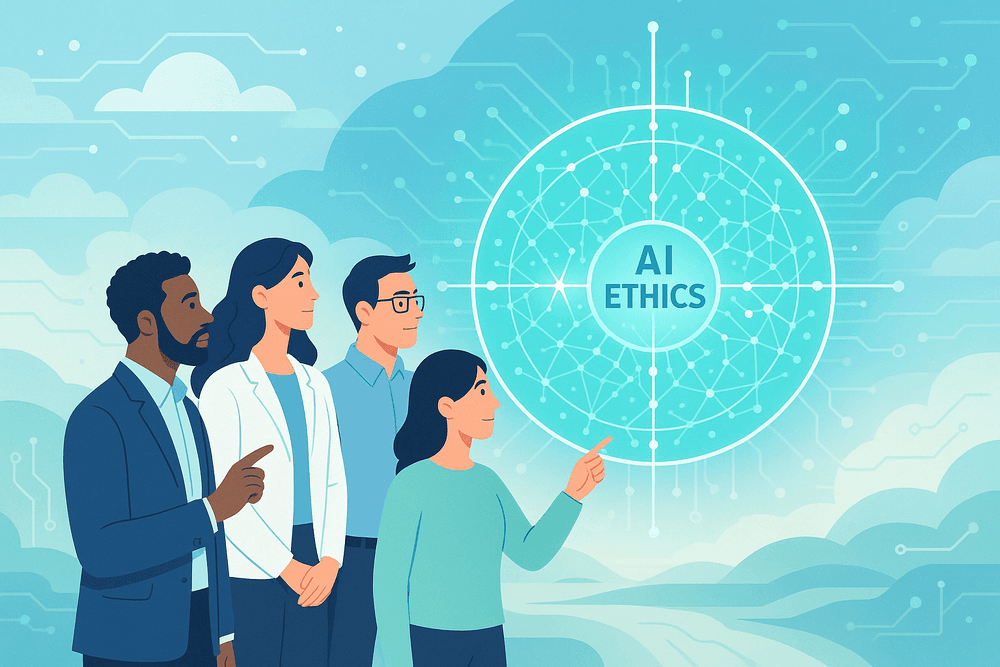
As we've seen, an AI ethics framework isn't just a corporate policy or a theoretical exercise; it's the essential foundation for trustworthy, responsible, and successful artificial intelligence. In an era defined by AI's growing influence, overlooking its ethical implications courts potential harm, erodes public trust, and hinders true innovation. Your AI ethics framework acts as your organization's moral compass, navigating every phase of the AI lifecycle—from initial concept to ongoing operation. It embodies your commitment to AI systems that are fair, transparent, accountable, secure, and aligned with human values. This proactive approach does more than just manage risks; it unlocks AI's vast potential to deliver solutions that genuinely benefit us all. The necessity of a robust and actively utilized AI ethics framework is undeniable for any organization serious about its technological future.
Take the First Step: Resources for Building Your AI Ethics Framework
Embarking on the journey to create or refine your AI ethics framework is a pivotal step towards responsible innovation, and you don't have to start in a vacuum. Numerous resources can help you build a framework attuned to your organization's unique needs:
- Official Guidance: Explore principles and regulations from governments and international bodies (e.g., EU AI Act, NIST AI Risk Management Framework) to ground your AI ethics framework.
- Industry Insights: Leverage best practices, whitepapers, and case studies from sector-specific organizations and tech leaders for practical ethical AI strategies.
- Academic Contributions: Tap into research, assessment tools, and methodologies from universities at the forefront of AI ethics to inform your framework.
- Community Knowledge: Engage with AI ethics forums for shared learnings and diverse perspectives.
Building your AI ethics framework is an ongoing, iterative process. Begin by defining core principles, involve diverse internal stakeholders, and stay adaptable as AI technology and societal norms evolve. Even a small first step makes a significant impact on embedding ethics into your AI.
Join the Conversation: Advocating for Ethical AI Development
Developing your AI ethics framework is crucial, but the quest for responsible AI transcends individual organizations. AI's global impact demands a collective effort to ensure it serves humanity equitably. Your voice matters in this vital conversation. Advocate by:
- Sharing Experiences: Discuss your AI ethics framework journey—successes and lessons—at events or within networks to guide others.
- Contributing to Standards: Participate in developing industry-wide ethical AI standards to elevate best practices for all.
- Educating Others: Promote AI ethics awareness in your professional and personal communities, fostering informed demand for responsible AI.
- Supporting Initiatives: Back organizations and research dedicated to ethical AI advancement and risk mitigation.
- Engaging in Discourse: Add your perspective to public discussions on AI governance, policy, and its societal role.
By advocating for ethical AI, you join a global movement. We collectively shape AI's future, and championing responsible practices, anchored by a strong AI ethics framework, ensures it's a future we can all confidently embrace.