
June 12, 2026
What a Research Proposal Must Prove Before a Client Says Yes

A strong proposal does more than describe a study. It reduces perceived risk for the client: risk that the work will drift, cost too much, take too long, or produce insights nobody can act on.
What is a research proposal?
A research proposal is a client-facing case for why a specific piece of research should happen, what it will uncover, and how the agency will run it.
For a small agency, it has two jobs:
- Win approval by showing the client that the research is worth the investment.
- Create alignment before work begins, so strategy, creative, UX, media, or content decisions are based on agreed evidence rather than assumptions.
That makes it different from a pitch deck. A pitch often sells the agency. A research proposal sells the thinking: the business question, the investigation, and the value of the answers.
If you are learning how to write a research proposal for client work, the key shift is this: do not treat it like an academic document. Your client is not looking for a dissertation. They want confidence that your team can turn uncertainty into useful direction.
The 5 questions every proposal must answer
Before a client says yes, your proposal needs to answer five practical questions.
- What decision will this research help us make?
Tie the work to a real business or marketing decision: repositioning a brand, validating a new audience, improving conversion, testing messaging, or prioritizing product features. Research without a decision behind it feels optional.
- Why is this worth doing now?
Show the cost of not knowing. Maybe the client is about to invest in a campaign, redesign a website, enter a new market, or brief a creative team. Timing gives the proposal urgency.
- What exactly are we trying to learn?
Keep the focus tight. “Understand customers” is too broad. “Identify which barriers stop first-time buyers from requesting a demo” is specific enough to guide useful work.
- How will we get credible answers?
The client needs to trust the approach. That does not mean overloading them with technical detail. It means showing that the method fits the question and that the outputs will be dependable enough to inform decisions.
- What will the client receive at the end?
Make the value tangible. Not “insights,” but the kind of clarity they can use: audience themes, messaging implications, journey friction, decision criteria, positioning inputs, or prioritized recommendations.
Why agency proposals need both rigor and brand fit
Agency research proposals sit in a tricky middle ground. They need enough rigor to satisfy senior stakeholders, but they also need to feel like they belong to the client’s world.
Rigor builds trust. It shows that your agency is not guessing, decorating opinions with data, or selling a preferred answer. The client should feel that the work will be structured, fair, and useful.
Brand fit builds confidence. A healthcare SaaS client, a luxury hospitality brand, and a challenger ecommerce company should not receive proposals that sound identical. The language, emphasis, examples, and level of formality should reflect how that client communicates and makes decisions.
This is where many small agencies lose time. They either start from scratch for every proposal, which slows growth, or reuse generic copy, which makes the work feel less tailored than it is. The goal is a repeatable proposal approach that still sounds specific to the client, their category, and the decision they need to make.
The Core Research Proposal Structure Agencies Can Reuse
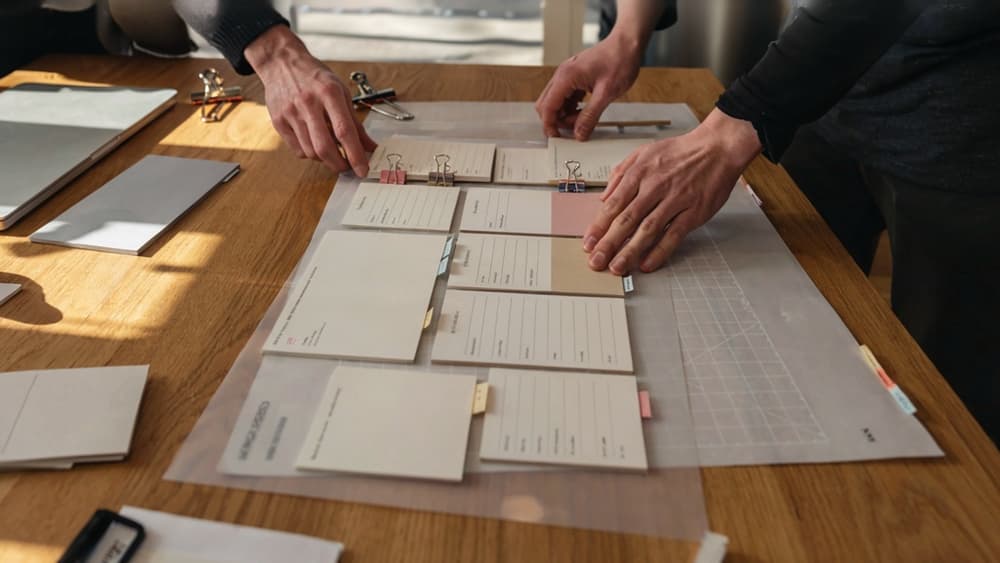
Once the proposal has a clear job to do, the next win is repeatability. A reusable structure keeps your team from rebuilding the deck every time while still giving each client enough specificity to feel understood.
Research proposal format: the essential sections
A strong agency research proposal usually needs these sections, in this order of substance:
- Cover page
Client name, project title, agency name, date, and proposal version.
- Executive summary
A short snapshot of the opportunity, the proposed research direction, and the value of the work.
- Background or context
The business, market, customer, or campaign context that explains why the research matters now.
- Research aim and scope
The focus of the project, including what the research will and will not cover.
- Objectives and research questions
The outcomes the research is designed to support.
- Methodology overview
The proposed research approach, such as interviews, surveys, audits, workshops, usability testing, or desk research.
- Participants, data sources, or sample
Who or what the research will involve.
- Timeline and milestones
Key phases, review points, and delivery dates.
- Deliverables
What the client will receive at the end: report, insight deck, journey map, recommendations, presentation, raw data, or workshop.
- Budget and assumptions
Cost, payment terms, and any assumptions that affect scope.
- Team and roles
Who is involved on the agency side and what each person owns.
- Next steps
Approval route, kickoff requirements, and decision deadline.
That is the practical backbone for agencies learning how to write a research proposal without turning every opportunity into a custom operations project.
Recommended order for client-ready proposals
The working order and the client-facing order are not always the same.
Internally, build the proposal from the middle out: confirm scope, approach, deliverables, timeline, and budget before polishing the summary. This prevents a persuasive opening from promising work the team cannot deliver profitably.
Client-facing, lead with clarity and confidence:
- Executive summary
- Context
- Aim and scope
- Objectives and research questions
- Methodology overview
- Timeline
- Deliverables
- Budget
- Team
- Next steps
For smaller opportunities, this can be a 4–6 page document. For larger retainers or procurement-led pitches, it may become a more formal deck or PDF. The structure stays the same; the depth changes.
What to include—and what to leave out
Use the proposal to reduce buying friction, not to document every internal thought.
Section area | Include | Leave out |
|---|---|---|
Context | Relevant business, audience, brand, or campaign background | A long history of the client’s company |
Scope | Clear boundaries and assumptions | Vague “additional research as needed” language |
Method | The approach and why it fits this project | Academic explanations of every possible method |
Timeline | Milestones, review points, and dependencies | Over-detailed task lists better suited to a project plan |
Deliverables | Specific outputs the client can expect | Broad promises like “actionable insights” without a tangible format |
Budget | Fees, terms, and what affects cost | Hidden extras or unclear optional items |
Team | Relevant roles and decision contacts | Full agency bios unless they strengthen the sale |
A good reusable format should make proposals faster, not flatter. Keep the structure consistent, then adapt the language, emphasis, examples, and proof points to the client’s brand and buying context. That balance is what helps small agency teams scale proposal quality without adding another layer of admin.
How to Write Each Key Section Clearly and Persuasively
Once the structure is in place, the quality of the proposal comes down to how sharply each section translates client uncertainty into a credible plan.
Problem statement, objectives, and research questions
Start the problem statement with the business decision the client needs to make, not the research activity you want to sell.
Weak: “We will conduct customer interviews to understand brand perception.”
Stronger: “The client needs to decide whether its current positioning still resonates with mid-market buyers before investing in a website and campaign refresh.”
That framing makes the research feel tied to revenue, retention, conversion, or brand risk. For agency proposals, keep it tight: one or two paragraphs that name the tension, the audience affected, and the cost of not knowing.
Then turn that problem into objectives. Objectives should describe what the research will clarify, not what tasks your team will perform.
Examples:
- Identify which purchase drivers matter most to the target audience.
- Understand where the current messaging creates confusion or hesitation.
- Compare perceptions of the client’s brand against two key competitors.
- Determine what proof points should shape the next campaign concept.
Research questions should be more specific than objectives. They are the questions your methodology must answer.
For example:
- What language do buyers use when describing the problem?
- Which objections appear before they request a demo or proposal?
- What messages feel credible, differentiated, or generic?
- Which audience segments respond differently, and why?
This is where many agency teams lose clarity. If the objectives are broad and the research questions are vague, the rest of the proposal feels padded. When learning how to write a research proposal that clients approve, make this section the anchor: every method, deliverable, and budget line should trace back to these questions.
Methodology, timeline, and deliverables
The methodology section should explain why your approach is the right fit for the decision at hand. Avoid listing methods without rationale.
Instead of: “We will run a survey and interviews.”
Write: “We’ll use stakeholder interviews to surface internal assumptions, customer interviews to validate buyer language, and a short survey to quantify which themes are most common across the broader audience.”
For each method, include:
- Who is involved
- Sample size or scope
- What the method will reveal
- How findings will inform the client’s next move
The timeline should show momentum without pretending research happens instantly. Break it into clear phases: kickoff, recruitment or data gathering, fieldwork, synthesis, and presentation. Small agencies benefit from showing this because it reassures the client that the work will not drift or consume endless stakeholder time.
Deliverables should be framed as decision tools, not documents. A “research report” sounds passive. A “messaging opportunity map” or “audience insight summary for campaign planning” feels directly useful.
Good deliverables might include:
- Executive summary with key findings and recommendations
- Audience themes and language patterns
- Competitor perception snapshot
- Prioritized messaging opportunities
- Presentation workshop for the client team
Budget, evaluation criteria, and risk controls
Your budget section should connect cost to scope. Clients are more likely to accept the number when they can see what drives it: participant recruitment, number of interviews, survey size, analysis depth, stakeholder workshops, or reporting complexity.
If you offer options, keep them meaningfully different.
Option | Best for | Scope |
|---|---|---|
Lean | Fast directional insight | Fewer interviews, lighter synthesis, concise readout |
Standard | Campaign or positioning decisions | Balanced qualitative and quantitative input, full recommendations |
Expanded | Higher-stakes strategic decisions | Larger sample, deeper segmentation, stakeholder workshop |
Evaluation criteria define what a successful project will produce. Tie them to usefulness, not vanity metrics. For example: “The client team can identify the top three audience objections and agree on which messages to test in campaign development.”
Risk controls show professionalism without sounding defensive. Name likely constraints and how you’ll manage them: slow recruitment, limited client availability, unclear stakeholder alignment, or sample bias. This gives clients confidence that your team has run this kind of engagement before—and knows how to keep it moving.

Research Proposal Example and Template for Small Agency Teams
Once the structure is set, the fastest way to use it is as a repeatable proposal shell your team can customize per client, sector, and decision-maker.
A simple research proposal example outline
Here’s a lightweight example for a small agency pitching brand and audience research before a website redesign:
- Title
Audience Research for [Client] Website Redesign
- Client context
[Client] is preparing to reposition its website for [audience], with a need to clarify messaging, content priorities, and conversion barriers.
- Research purpose
The research will identify what target buyers need to understand, trust, and act before engaging with [Client].
- Objectives
- Understand how priority audiences currently perceive [Client]
- Identify gaps between current messaging and buyer expectations
- Inform website strategy, content hierarchy, and conversion paths
- Research questions
- What information do prospects look for before contacting [Client]?
- Which messages build credibility fastest?
- What objections or points of confusion slow down conversion?
- Methodology
Stakeholder interviews, customer interviews, competitor review, website analytics review, and synthesis workshop.
- Timeline
Three weeks from kickoff to findings presentation.
- Deliverables
Research summary, audience insights, messaging recommendations, and website strategy inputs.
- Investment
Fixed project fee with assumptions for number of interviews, review rounds, and presentation format.
- Next step
Approval, kickoff scheduling, and access to stakeholders or source materials.
Copy-ready template prompts for each section
Use these prompts when building your own reusable proposal template:
- Title: “Create a clear project title that names the research focus and the client outcome.”
- Client context: “Summarize what is changing in the client’s business, market, or audience that makes this research necessary now.”
- Research purpose: “State the core decision this research will help the client make.”
- Objectives: “List three to five concrete outcomes the research must support.”
- Research questions: “Turn the client’s uncertainty into focused questions the study will answer.”
- Methodology: “Describe the research activities in plain language, avoiding unnecessary academic detail.”
- Timeline: “Break the work into simple phases with dates, durations, or milestones.”
- Deliverables: “Name the tangible outputs the client will receive and how they will be used.”
- Budget: “Present the fee, scope assumptions, and any optional add-ons clearly.”
- Approval step: “End with the exact action the client needs to take to move forward.”
This is the practical layer of how to write a research proposal when your agency needs speed without making every document feel copy-pasted.
How to adapt the template for different clients
For a startup, emphasize speed, market learning, investor-readiness, and decisions that unblock growth.
For an enterprise client, add more detail around stakeholders, approvals, governance, and how findings will be shared across teams.
For a nonprofit, connect the research to audience trust, donor behavior, community needs, or program impact.
For an ecommerce brand, focus on conversion barriers, customer motivation, product positioning, and purchase friction.
For a B2B service firm, highlight buyer confidence, sales enablement, differentiation, and long-cycle decision-making.
The core template can stay the same. What changes is the framing: the client’s business pressure, the language they use internally, and the type of decision the research is meant to support.
Using AI to Draft Research Proposals Without Losing the Client’s Brand Voice
Once your team has a reusable proposal flow, AI can help you move faster—but only if it starts from the client’s actual brand, not a generic “professional services” voice.
Where AI helps most in proposal writing
For small agency teams, the biggest win is not asking AI to “write the proposal.” It is using AI to remove the slow, repetitive parts between strategy and send-ready copy.
Use it to:
- Turn messy discovery notes into a clean first draft. Feed in call transcripts, client emails, past briefs, stakeholder quotes, and your chosen template prompts. AI can quickly surface recurring language, concerns, and priorities.
- Create section variants for different decision-makers. A founder may need commercial clarity; a marketing lead may care more about audience insight and activation. AI can tailor emphasis without rebuilding the whole proposal.
- Condense long inputs into usable proposal language. Research objectives, context, and rationale often come from scattered source material. AI can help compress that into sharper, client-facing prose.
- Repurpose approved phrasing across proposals. If your agency has a strong way of describing research sprints, stakeholder interviews, audience validation, or reporting, AI can adapt that language for the next client without starting from scratch.
- Speed up versioning. Need a lighter version for a retained client or a more formal version for procurement? AI can reframe the same substance for the situation.
The key is to treat AI as a drafting layer, not the strategist. Your team still owns the recommendation, the commercial logic, and the client relationship.
How to keep AI-generated sections on-brand
Most AI proposal drafts sound plausible but interchangeable. That is a problem when your agency is trying to prove it understands a client’s market, tone, and internal language.
Before generating proposal copy, give the AI a clear brand base:
- The client’s tone of voice guidelines
- Website and campaign copy
- Past approved proposals, decks, or strategy docs
- Audience personas or customer research
- Words the client uses—and words they avoid
- Examples of messaging that already feels “right”
Then ask for output against that context, not just against the proposal topic. For example: “Draft this section in the client’s voice: direct, commercially sharp, optimistic, and light on jargon. Use their preferred term ‘members’ instead of ‘users.’”
This is where agency AI tool sprawl can become expensive. If every strategist, account lead, and copywriter is prompting from a different tool with different context, proposal quality drifts. A system like Aethera helps by ingesting the client’s brand once, then keeping every AI-assisted draft aligned to that voice across the team.
That matters when you are scaling proposal volume without adding headcount. The goal is not just faster drafting; it is faster drafting that still sounds like your agency understands the client deeply.
Final human review checklist before sending
Before a proposal leaves the agency, run one final review for brand, accuracy, and decision-readiness:
- Does the proposal sound like the client’s world, not a generic agency template?
- Are client-specific terms, product names, audience labels, and priorities used consistently?
- Does every AI-assisted section support the recommended approach rather than adding filler?
- Are claims, timelines, budgets, and deliverables accurate?
- Is the tone right for the buyer: founder, marketing lead, procurement team, or board?
- Does the proposal feel cohesive if different team members drafted different sections?
- Are there any phrases that sound over-polished, vague, or obviously AI-generated?
That last pass is what turns AI-assisted speed into client-ready confidence. It also protects the real skill behind how to write a research proposal: making the client feel that the work was built for their brand, their market, and their decision.