
August 28, 2025
How AI Cost Optimization Is Reshaping Business
The Bottom Line: How AI Cost Optimization Is Reshaping Business Profitability
In the C-suite and on the factory floor, the term "AI" is often surrounded by a cloud of hype. But when we strip away the jargon, what is AI cost optimization, really? At its core, it is the strategic application of intelligent technologies—like machine learning and predictive analytics—to systematically identify, predict, and eliminate financial waste across your entire organization.
It’s not about replacing human insight but augmenting it. AI acts as a powerful lens, analyzing vast datasets to uncover hidden patterns and inefficiencies that are impossible for humans to spot. Think of it less as a blunt cost-cutting tool and more as a precision instrument, designed to fine-tune your operations, streamline workflows, and ensure every dollar spent delivers maximum value. This is the new frontier of financial stewardship, moving beyond guesswork and into the realm of data-driven certainty.
Why Ignoring AI-Driven Savings Is No Longer an Option
In today's hyper-competitive landscape, operational efficiency is a key battleground. While you contemplate the ROI of artificial intelligence, your competitors are already deploying it to gain a decisive advantage. They are leveraging AI cost optimization to reduce their overhead, allowing them to offer more competitive pricing, reinvest savings into research and development, or simply enjoy healthier profit margins.
Choosing to ignore AI is no longer a passive decision; it's an active choice to operate with a handicap. It means accepting higher operational expenses, slower response times, and a diminished capacity for innovation. The conversation has fundamentally shifted from "if" businesses should adopt AI to "how quickly" they can integrate it to protect their market position and drive sustainable growth. In short, AI cost optimization has become a strategic imperative for survival and success.
A Glimpse into AI's Impact on Your Operational Expenses
The power of AI isn't theoretical; it translates into tangible, measurable reductions in your operational expenses. Here’s a quick look at how this technology makes a real-world difference:
- Intelligent Supply Chain Management: AI algorithms analyze historical sales data, market trends, and even geopolitical events to forecast demand with stunning accuracy. This prevents the costly pitfalls of overstocking (tying up capital) and understocking (losing sales), directly optimizing your inventory costs.
- Predictive Asset Maintenance: Instead of waiting for critical equipment to fail—triggering expensive downtime and emergency repairs—AI-powered sensors can predict mechanical failures before they occur. This shift from a reactive to a proactive maintenance schedule is a cornerstone of AI cost optimization, saving companies millions.
- Dynamic Resource Allocation: Whether it’s managing cloud computing spend, deploying a fleet of delivery vehicles, or staffing a customer support center, AI can analyze real-time demand to allocate resources with unparalleled efficiency. It eliminates waste, reduces idle time, and ensures you’re extracting maximum productivity from every operational asset.
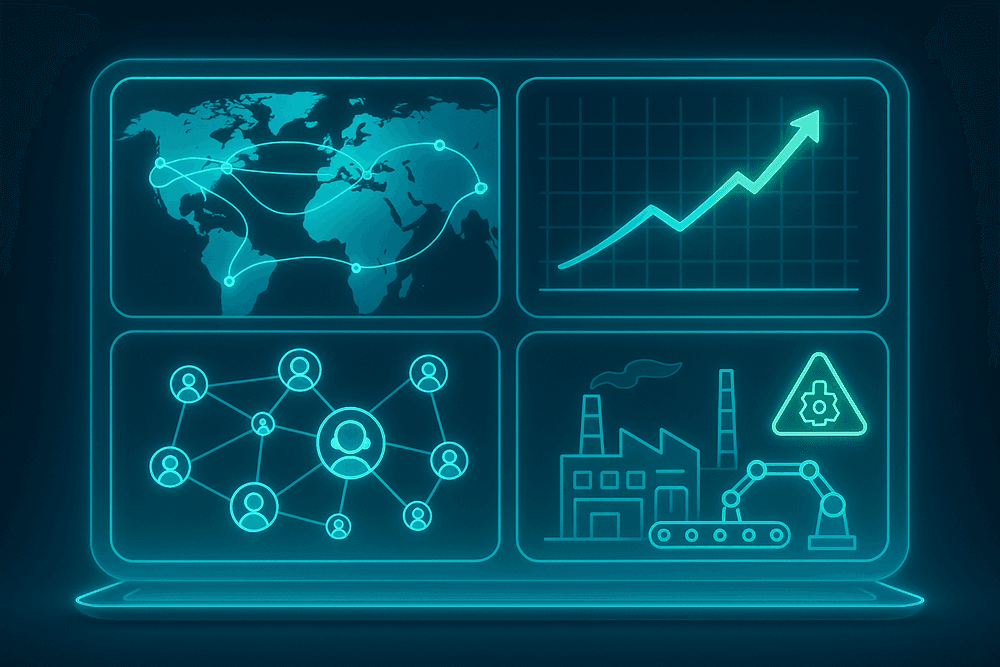
Uncovering Savings: Top Areas for AI Cost Optimization
While the concept of "cost savings" can feel abstract, the application of artificial intelligence is anything but. True AI cost optimization happens when the technology is applied to specific, high-impact business functions where inefficiencies traditionally drain resources. By targeting these core areas, organizations can unlock substantial savings and create a leaner, more agile operation. Let's explore four of the most profitable domains for AI-driven cost reduction.
Streamlining Supply Chains with Predictive Analytics
The supply chain is often a labyrinth of hidden costs, from excess inventory and spoilage to expedited shipping fees caused by stockouts. AI-powered predictive analytics cuts through this complexity. By analyzing historical sales data, market trends, weather patterns, and even social media sentiment, AI algorithms can forecast demand with remarkable accuracy. This allows businesses to maintain optimal inventory levels, reducing carrying costs and waste. Furthermore, AI can optimize logistics by identifying the most efficient shipping routes in real-time, consolidating shipments, and predicting potential delays, turning a reactive supply chain into a proactive, cost-efficient engine.
Reducing Marketing Spend with AI-powered Campaign Management
Wasted ad spend is a chronic pain point for marketers. AI tackles this by replacing guesswork with data-driven precision. AI-powered platforms analyze customer behavior, purchase history, and demographic data to identify high-potential audience segments. They then automate ad bidding processes to ensure you’re paying the optimal price for placements and personalize ad creative at scale to boost engagement. This hyper-targeting means your marketing budget is spent reaching consumers who are most likely to convert, dramatically improving return on ad spend (ROAS) and lowering the customer acquisition cost (CAC). This is a clear-cut example of how AI cost optimization directly enhances profitability.
Automating Customer Support to Lower Service Costs
Scaling a human-led customer service team is expensive. AI offers a powerful solution through intelligent automation. AI-driven chatbots and virtual assistants can handle a vast majority of routine customer inquiries—such as order status checks, password resets, and frequently asked questions—24/7, without human intervention. This frees up your skilled agents to focus on complex, high-value customer issues that require a human touch. By resolving more queries faster and at a fraction of the cost per interaction, businesses can significantly reduce their service overhead while simultaneously improving customer satisfaction and response times.
Optimizing Resource Allocation in Manufacturing and Operations
In manufacturing, operational efficiency is paramount. AI excels at optimizing the use of critical resources. AI-powered predictive maintenance systems monitor equipment health, scheduling repairs before a catastrophic and costly failure occurs, which minimizes downtime. AI algorithms can also optimize production schedules to reduce energy consumption during peak hours, manage raw material usage to limit waste, and dynamically allocate labor based on real-time production needs. By fine-tuning these variables, businesses can lower energy bills, improve overall equipment effectiveness (OEE), and maximize output without increasing operational costs.
Your Roadmap: A Strategic Approach to AI Cost Optimization
Embarking on an AI journey without a clear plan is like setting sail without a compass. True ai cost optimization isn’t about randomly adopting new tech; it's a deliberate, strategic process. This four-step roadmap will guide you from initial consideration to successful, scalable implementation, ensuring every AI investment delivers maximum value and contributes directly to your bottom line.
Step 1: Identify High-Impact, Low-Risk Opportunities
Before you even think about specific tools, you must identify where AI can make the biggest difference with the least amount of friction. Start by auditing your current operations to find the "low-hanging fruit"—processes that are repetitive, time-consuming, and data-intensive.
- Analyze Workflows: Map out key business processes in departments like customer service, marketing, HR, and finance. Where are the bottlenecks? Where do human errors most frequently occur?
- Target Repetitive Tasks: Look for tasks that employees perform daily, such as data entry, scheduling, generating standard reports, or answering frequently asked questions. These are prime candidates for automation.
- Prioritize Quick Wins: A perfect starting point is an area where a small change can yield significant time or cost savings. For example, implementing an AI chatbot to handle the top 20% of customer queries can free up your support team for more complex issues, providing a clear and immediate return.
Step 2: Choose the Right AI Tools and Platforms for Your Budget
The AI market is vast, with solutions ranging from free, browser-based tools to enterprise-level custom platforms. The key is to select tools that align with your specific needs and budget, avoiding the trap of paying for features you don't need.
- Start with SaaS: For most businesses, starting with Software-as-a-Service (SaaS) platforms is the most cost-effective approach. These subscription-based tools (e.g., AI-powered CRMs, marketing automation software, or content creation assistants) require no in-house development and offer predictable monthly costs.
- Evaluate Total Cost of Ownership (TCO): Look beyond the subscription fee. Consider costs for implementation, employee training, and integration with your existing software stack.
- Prioritize Scalability: Choose a platform that can grow with you. A tool that works for a small pilot project should have a clear path to supporting a larger-scale deployment as your ai cost optimization strategy matures.
Step 3: Integrate AI into Existing Workflows Seamlessly
The most powerful AI tool is useless if your team doesn't use it. Successful implementation is less about technology and more about people. The goal is to make AI a natural and helpful part of your team's daily routine, not a disruptive burden.
- Focus on Augmentation: Initially, position AI as a "co-pilot" that augments human capabilities, not a replacement. Show your team how it can eliminate tedious tasks, allowing them to focus on more strategic, creative, and fulfilling work.
- Invest in Training: Provide comprehensive training that goes beyond the "how-to" and explains the "why"—how this tool will make their jobs easier and the company more efficient.
- Launch a Pilot Program: Roll out the AI solution to a small, controlled group first. This allows you to gather feedback, work out any kinks, and build a case study of success before a company-wide launch.
Step 4: Measure ROI and Scale Your Initiatives
To ensure your efforts are paying off, you must track their impact. Defining and monitoring Key Performance Indicators (KPIs) is non-negotiable for justifying current and future AI investments.
- Establish Clear Metrics: Before implementation, define what success looks like. KPIs could include hours saved per week, reduction in operational costs, decreased error rates, or increased customer satisfaction scores.
- Continuously Monitor and Report: Use dashboards to track your KPIs in real time. Regularly review this data to understand what’s working and what isn’t.
- Scale Intelligently: Use the positive ROI from your initial projects to build a business case for expanding AI adoption. Apply the lessons learned from your pilot to deploy AI in other departments, creating a cycle of continuous improvement and cost savings across the organization.
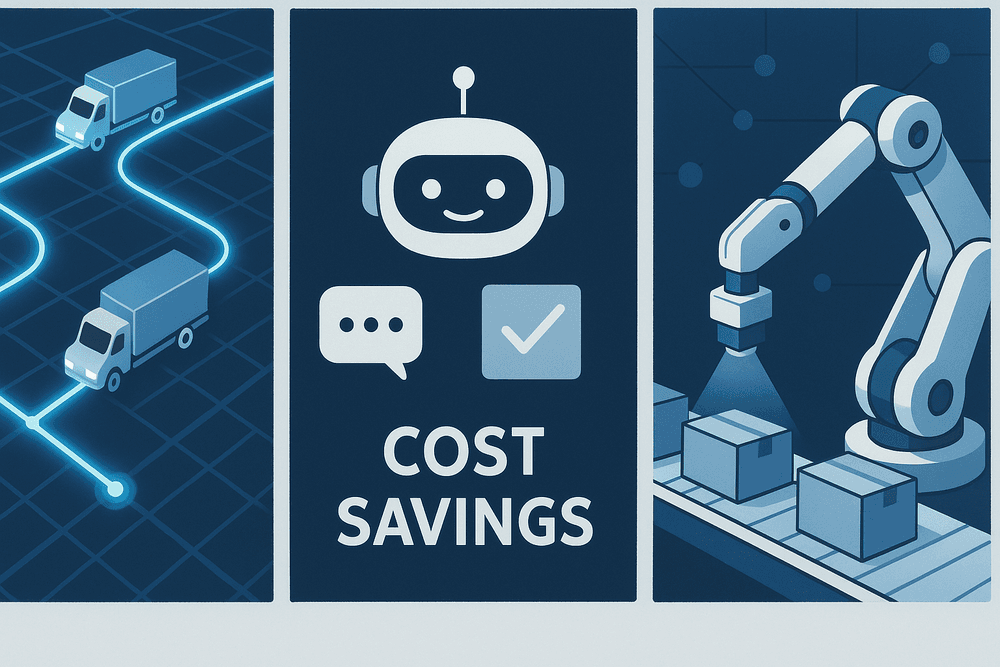
AI Cost Optimization in Action: Real-World Success Stories
Theory and strategy are crucial, but seeing the tangible results of AI cost optimization is what truly demonstrates its power. Across industries, businesses are moving beyond pilot programs and implementing AI to achieve significant, measurable reductions in their operational expenses. These real-world examples showcase how targeted AI solutions can transform core business functions, turning cost centers into engines of efficiency and growth. Let's explore how three different organizations achieved remarkable financial outcomes.
How a Retail Giant Cut Logistics Costs by 20% with AI Route Planning
A leading multinational retailer was grappling with escalating logistics expenses. Their vast delivery fleet faced daily challenges, including unpredictable traffic, rising fuel prices, and inefficient scheduling, which led to delayed deliveries and costly driver overtime. Their static, pre-planned routes couldn't adapt to the dynamic nature of real-world conditions.
By implementing an AI-powered dynamic route planning system, they revolutionized their entire delivery network. The platform integrated real-time data from GPS, traffic reports, weather forecasts, and even vehicle load capacity. Machine learning algorithms continuously analyzed this information to calculate and recalculate the most efficient routes for thousands of vehicles simultaneously. If an accident caused a traffic jam, the system would automatically reroute affected drivers in real-time. The results were staggering: a 20% reduction in overall logistics costs, primarily driven by lower fuel consumption and optimized driver hours. This is a perfect illustration of how AI cost optimization directly impacts the bottom line in complex operational environments.
The SaaS Startup That Automated 75% of Inbound Queries
For a rapidly scaling SaaS startup, customer support was becoming a major bottleneck and expense. Their support team was inundated with repetitive inbound queries related to billing, password resets, and basic feature usage. Hiring more support agents to keep up with user growth was unsustainable and would eat into their profit margins.
Their solution was to deploy a sophisticated AI chatbot integrated with their knowledge base. Using Natural Language Processing (NLP), the chatbot could understand the intent behind a customer's question and provide an instant, accurate answer by pulling from approved documentation. It could also guide users through troubleshooting steps. For the small fraction of queries that required human intervention, the AI seamlessly escalated the ticket to a live agent, complete with a full transcript of the conversation. This strategic automation handled 75% of all inbound support requests, allowing the company to scale its user base without proportionally increasing support headcount and delivering a powerful lesson in AI cost optimization.
From Waste to Profit: A Manufacturer's Story of AI-driven Efficiency
A mid-sized manufacturing company was struggling with profitability due to high material waste and frequent, unscheduled equipment downtime on their production line. Product defects were often only discovered during final quality control, meaning entire batches had to be scrapped. Their maintenance schedule was reactive, leading to costly emergency repairs and lost production hours.
The company turned to AI by installing computer vision cameras and IoT sensors across its assembly line. The AI-powered cameras inspected products in real-time, identifying microscopic flaws and material inconsistencies far faster and more accurately than the human eye. Simultaneously, sensors on the machinery fed performance data into a predictive maintenance model. This AI system could predict when a component was likely to fail, allowing the team to schedule maintenance during planned downtime. This two-pronged approach led to a 30% reduction in material waste and a 50% decrease in unplanned downtime, proving that AI cost optimization can fundamentally transform physical operations and improve product quality.
Maximizing ROI: Best Practices for Sustainable AI Cost Optimization
Implementing AI is more than a technical upgrade; it's a strategic business transformation. To ensure your investment yields long-term dividends, a holistic approach is essential. True ai cost optimization isn't just about the initial deployment; it's about building a sustainable framework that navigates challenges, empowers your team, and evolves over time. By focusing on best practices, you can maximize your return on investment and avoid costly missteps that can derail your progress.
Avoiding Common Pitfalls: Data Privacy and Implementation Hurdles
The path to AI-driven efficiency is often littered with predictable, yet frequently overlooked, obstacles. Two of the most significant are data privacy and implementation complexities. Ignoring these can turn a promising cost-saving initiative into a financial and reputational liability.
- Data Privacy Compliance: In an era of GDPR and CCPA, mishandling data isn't just unethical—it's expensive. Fines for non-compliance can be staggering, instantly wiping out any savings your AI model generates. A robust ai cost optimization strategy must include a "privacy by design" approach. Ensure your data handling, from collection to processing, is fully compliant. The cost of building in security and compliance from day one is fractional compared to the cost of a data breach.
- Implementation Hurdles: Don't underestimate the challenge of integrating sophisticated AI with legacy systems. The "rip and replace" approach is rarely feasible. Instead, plan for phased integration, starting with pilot projects to prove value and identify potential bottlenecks. Furthermore, be wary of "scope creep," where an initial project's objectives expand uncontrollably, inflating budgets and timelines. A clear, well-defined scope is crucial for keeping your implementation on track and on budget.
Fostering an AI-Ready Culture within Your Team
The most advanced algorithm is useless without a team that understands, trusts, and effectively utilizes it. Fostering an AI-ready culture is a critical component of sustainable ai cost optimization. Resistance to change, fear of job displacement, and a lack of skills can cripple adoption.
To build this culture, focus on communication and education. Be transparent about why AI is being implemented and how it will augment, not replace, human roles. Frame AI as a tool that handles repetitive tasks, freeing up employees to focus on higher-value strategic work. Invest in upskilling and reskilling programs to bridge the knowledge gap, empowering your team to work alongside AI effectively. When your employees become AI champions rather than skeptics, you unlock its full potential for efficiency and innovation.
The Importance of Continuous Monitoring and Model Retraining
An AI model is not a one-time purchase; it's a dynamic asset that requires ongoing maintenance to perform optimally. The world changes, and so does the data that feeds your model. This phenomenon, known as "model drift," can degrade performance over time, leading to inaccurate predictions and poor business decisions.
- Continuous Monitoring: Actively monitor your AI's performance against key business metrics. Are the cost savings you projected being realized? Has the model's accuracy slipped? Setting up automated alerts for performance degradation allows you to intervene before minor issues become major problems.
- Scheduled Retraining: Proactive model retraining is the antidote to model drift. This involves regularly feeding the model with new, relevant data to keep it sharp and aligned with current business realities. While retraining has a cost, it's a necessary operational expense. The cost of making critical decisions based on an outdated, inaccurate model is exponentially higher, undermining the very foundation of your ai cost optimization strategy.
Conclusion: Your Next Step in AI-Powered Cost Optimization
The journey from understanding artificial intelligence to implementing it as a core business function is one of the most significant strategic moves you can make in today's competitive landscape. We've explored how AI is no longer a futuristic concept but a practical, powerful tool for tangible financial gains. By automating processes, predicting outcomes, and revealing hidden inefficiencies, AI directly targets your bottom line. The path to effective ai cost optimization isn't about replacing human ingenuity but augmenting it, allowing your team to focus on high-value strategic work while intelligent systems handle the rest. Embracing this technology is your next step toward building a more resilient, efficient, and profitable enterprise.
Recap: Key Takeaways for Immediate Action
To translate insight into action, let's distill our comprehensive guide into a few core principles. These are the pillars of a successful AI-driven cost reduction strategy:
- Automate to Elevate: Identify high-volume, repetitive tasks within your operations—from data entry and invoice processing to first-line customer support. Implementing AI-powered automation in these areas delivers immediate returns by reducing labor costs, minimizing human error, and freeing up your skilled employees for complex problem-solving and innovation.
- Predict to Perfect: Leverage AI's predictive analytics to transform your supply chain and resource management. From forecasting customer demand to prevent costly overstocking to optimizing delivery routes for fuel and time savings, predictive AI turns historical data into a roadmap for future efficiency.
- Analyze to Optimize: Your business generates vast amounts of operational data. AI can analyze this information to pinpoint inefficiencies that are invisible to the naked eye. This includes optimizing energy consumption in real-time, scheduling predictive maintenance to prevent expensive equipment failures, and ensuring optimal resource allocation across all departments.
Is Your Business Ready for AI? A Final Checklist
Embarking on your ai cost optimization journey requires a solid foundation. Before you take the leap, ask yourself these crucial questions to gauge your organization's readiness:
- Do you have quality, accessible data? AI models are only as good as the data they are trained on. Is your data clean, organized, and readily available for analysis, or do you need to establish a more robust data management strategy first?
- Have you identified a clear business problem? Don't adopt AI for its own sake. Pinpoint a specific, high-impact pain point. Is it excessive customer service overhead? Inefficient inventory turnover? High operational expenses in a particular department? A clear objective will guide your AI strategy.
- Is your culture prepared for change? Successful AI implementation requires buy-in from the top down. Is your leadership team championing this shift, and is your staff prepared to adapt to new, AI-enhanced workflows?
- What resources can you commit? Whether you plan to leverage user-friendly SaaS AI tools or build a custom solution, you need to assess your budget, technical talent, and timeline. Starting with a small, well-defined pilot project is often the most effective approach.
Let's Talk Strategy: Book a Consultation to Start Saving
Navigating the complexities of AI implementation can feel overwhelming, but you don't have to do it alone. The gap between understanding the potential of ai cost optimization and realizing its benefits is where a tailored strategy makes all the difference.
Our experts are ready to help you chart a clear path forward. In a no-obligation consultation, we will help you identify the highest-impact opportunities for cost savings within your unique business operations, assess your readiness, and outline a practical, step-by-step implementation plan. Stop wondering and start saving.
[Book Your Free AI Cost Optimization Consultation Today]