
August 19, 2026
Build the Google Business Profile for Local SEO Foundation
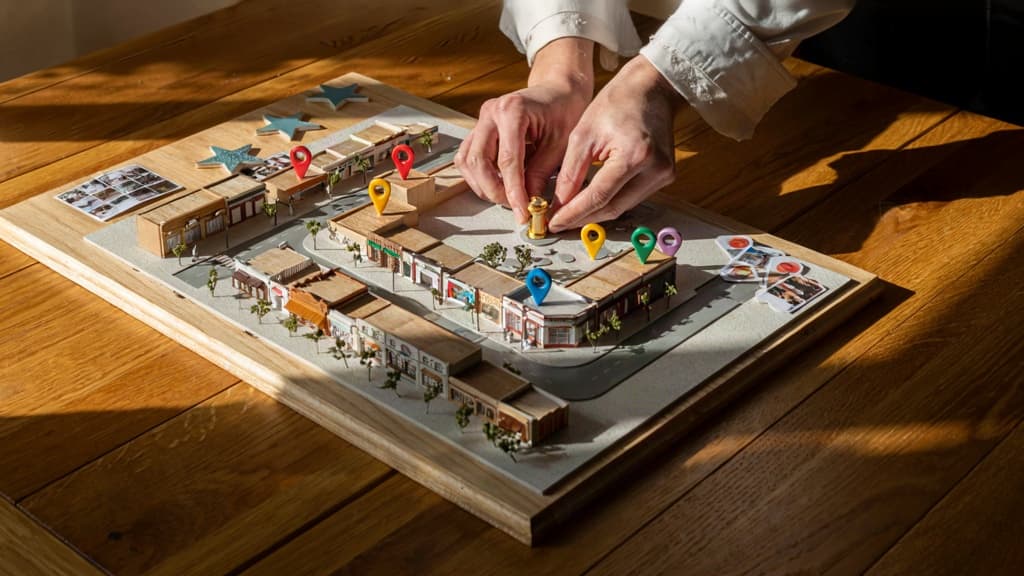
A strong Google Business Profile for local SEO starts with restraint: accurate core data, tight relevance signals, and a repeatable setup process your team can apply across clients without reinventing the work every time.
What information must be accurate on a Google Business Profile?
Before optimizing anything, lock the business facts. Google uses these details to understand whether the profile is legitimate, local, and relevant to searchers nearby.
Prioritize accuracy on:
- Business name: Use the real-world name only. No keyword stuffing, city add-ons, or service descriptors unless they are part of the legal/public brand name.
- Address: Match signage, website, citations, and client documentation. For service-area businesses, only show an address if customers are actually served there.
- Phone number: Use a local number when possible, and make sure call tracking does not create inconsistent public data.
- Website URL: Send users to the most relevant live page, usually the homepage or a location-specific page for multi-location clients.
- Primary category: Choose the closest description of what the business is, not every service it provides.
- Business hours: Keep regular hours, holiday hours, and temporary closures accurate.
- Opening date: Add it when available; it supports legitimacy and can help newer profiles look complete.
- Description: Keep it concise, factual, and aligned with the client’s positioning. Avoid promotional claims that could age quickly.
For agencies, the biggest risk is not missing one field. It is letting every strategist, copywriter, or account manager interpret the same client differently. That is how profiles become inconsistent across locations, campaigns, and AI-assisted content.
How to choose categories, service areas, and hours without diluting relevance
Categories are not a place to list everything the client might sell. They are a relevance signal. The primary category should reflect the client’s main business model and the search intent they most need to win.
Use secondary categories only when they represent real, active parts of the business. If a dental clinic occasionally offers cosmetic consultations, that does not automatically mean it should add every cosmetic-adjacent category. Relevance gets weaker when the profile tries to be too many things.
Service areas need the same discipline. For service-area businesses, list the places the team realistically serves, not every city within a two-hour radius. Overextended service areas can create a mismatch between the client’s actual operations and the local searches they want to appear for.
Hours should reflect when a customer can get a meaningful response or visit. If phones roll to voicemail after 5 p.m., do not list the business as open until 8 p.m. just because the owner checks email at night. For agencies managing multiple profiles, this is where intake quality matters: hours often vary by location, season, staff availability, and appointment type.
Agency workflow: turn intake into a reusable GBP setup checklist
Treat each profile build as a structured intake project, not a one-off admin task. Your checklist should capture the decisions that shape the profile before anyone logs into Google.
Include:
- Verified business identity: Legal name, public brand name, address rules, phone number, website, and location status.
- Category rationale: Primary category, approved secondary categories, and why each was chosen.
- Service-area rules: Cities, regions, exclusions, and operational limits.
- Hours policy: Standard hours, holiday ownership, seasonal changes, and emergency closure process.
- Brand language: Approved short description, prohibited claims, tone guidelines, and location-specific wording rules.
- Access and ownership: Client owner, agency manager access, recovery email, and approval chain.
This turns Google Business Profile for local SEO from “someone set it up once” into a governed asset. For a small agency, that matters: the more standardized the foundation, the easier it is to scale local work across clients without adding senior oversight to every profile update.

Map the Client’s Offers to Local Search Intent
Once the profile structure is clean, the next job is matching what the client sells to the way nearby buyers actually search.
How services and products help Google understand relevance
For a google business profile for local seo campaign, services and products are not filler fields. They are relevance signals.
A med spa does not just offer “treatments.” It offers Botox, lip filler, laser hair removal, microneedling, and skin tightening. A law firm does not just offer “legal services.” It handles estate planning, probate, business formation, and contract review.
For agencies, the opportunity is to turn the client’s offer list into search-aligned language without overstuffing it. Use the phrases customers would use, then support them with short, specific descriptions.
A strong service entry should include:
- The actual service name: “Emergency AC Repair,” not “Comfort Solutions”
- The buyer situation: “same-day repair for units blowing warm air”
- The location fit where natural: “for homeowners in Austin and nearby suburbs”
- A simple next step: “Call to check availability”
For product-led local businesses, use products to clarify inventory, packages, or high-margin offers. A flooring showroom might list “Luxury Vinyl Plank,” “Engineered Hardwood,” and “Carpet Installation Packages.” A bakery might list “Custom Birthday Cakes,” “Wedding Dessert Tables,” and “Corporate Pastry Boxes.”
The goal is not to recreate the whole website inside GBP. It is to give Google and searchers a clear, structured view of what the business is relevant for.
Use attributes and booking links to remove conversion friction
Attributes and booking links help turn local visibility into action. They answer the small but important questions that decide whether someone calls, books, or keeps scrolling.
For example:
Business type | Useful attributes or links | Conversion job |
|---|---|---|
Salon or spa | Online booking, women-owned, wheelchair accessible | Lets searchers book without calling |
Restaurant | Reservations, outdoor seating, delivery, menu link | Removes uncertainty before a visit |
Healthcare clinic | Appointment link, accessibility attributes, insurance-related details where available | Helps patients choose the right next step |
Home services | Quote request or booking link | Captures high-intent buyers quickly |
Agencies should treat these fields as part of conversion strategy, not admin work. If the client already uses Calendly, Mindbody, Toast, Jane, Housecall Pro, or another booking platform, make that path visible from the profile.
The same applies to menu links, appointment URLs, order links, and quote request pages. If a buyer has to leave the profile, search the website, and hunt for the right action, the profile is leaking demand.
Create offer copy that stays on-brand across locations
Multi-location clients create a common agency problem: every location needs locally relevant copy, but every profile still has to sound like the same brand.
The fix is to separate the reusable brand layer from the local variation layer.
Create a simple offer-copy framework:
- Brand voice: premium, friendly, clinical, playful, direct, etc.
- Approved claims: what the business can confidently say
- Service positioning: budget-friendly, specialist-led, fast turnaround, custom work
- Local modifiers: neighborhood, city, nearby landmarks, service area nuance
- CTA style: “Book a consultation,” “Request a quote,” “Call today,” “Order online”
Then adapt, rather than reinvent, each location’s service copy.
For example, a dental group might keep the same core positioning for “Invisalign Consultation” across all locations, while changing only the local phrasing:
- “Invisalign consultations for adults and teens in Scottsdale”
- “Clear aligner consultations near downtown Phoenix”
- “Invisalign appointments for families in Mesa”
This is where agencies can use AI safely as a production accelerator if the brand inputs are already controlled. Instead of prompting from scratch for every location, give the model the client’s approved voice, offer list, claims, and location rules once, then generate consistent variants.
That keeps local pages and profiles from drifting into generic copy — or worse, sounding like five different writers worked on the same account.
Use Photos, Videos, and Posts to Prove the Business Is Active
Once the profile details and offer structure are in place, the next job is showing signs of life. For a small agency managing local SEO across several clients, this is where consistency usually breaks: one client sends polished photos, another sends blurry screenshots, and posts get published only when someone remembers.
Which Google Business Profile photos matter most?
Prioritize photos that reduce uncertainty for the searcher. A local buyer wants to know, “Is this real, current, and relevant to what I need?”
The highest-value photo categories are:
- Exterior photos: Help visitors recognize the location before they arrive. For service-area businesses, use branded vehicles, team arrival shots, or field work instead.
- Interior photos: Show the environment, especially for clinics, salons, studios, gyms, restaurants, showrooms, and hospitality businesses.
- Team photos: Build familiarity before the first call or visit. These do not need to be overly polished; they need to feel current and credible.
- Work-in-progress photos: Useful for trades, home services, events, production teams, and creative businesses because they prove capability without sounding salesy.
- Finished-result photos: Before-and-after images, completed installs, plated dishes, room transformations, branded projects, or client-ready deliverables.
- Product or service-detail photos: Close-ups that match what people are actually searching for, such as “custom signage,” “wedding bouquet,” “commercial cleaning,” or “website redesign consultation.”
Avoid turning the profile into a stock gallery. Reused website hero images can support the brand, but Google Business Profile content should feel location-specific and recent. For agencies, the easiest rule is: every monthly asset batch should include at least one people photo, one proof-of-work photo, and one place or context photo.
Short videos can do the same job faster. A 10–20 second walkthrough, team introduction, jobsite clip, or product demo gives the profile movement without requiring a full production shoot.
How often should a local business publish Google Posts?
A practical baseline is one Google Post per week for active local businesses. That is frequent enough to show the business is engaged without creating an unrealistic workload for the client or agency.
For seasonal or promotion-heavy businesses, increase posting around demand windows:
- Landscapers before spring cleanups
- Accountants before tax deadlines
- Event venues before peak booking periods
- Dental or wellness clinics during campaign pushes
- Restaurants around menu changes or holiday offers
Posts should not be treated like mini blog articles. Keep them short, specific, and action-oriented. A strong post usually includes:
- One clear offer, update, event, or service focus
- One local or situational detail
- One image or short video
- One simple next step
This is especially important when managing google business profile for local seo across multiple clients. The post should sound like the business, not like a generic agency template.
A simple content cadence agencies can manage at scale
Build the cadence around repeatable monthly themes instead of starting from scratch every week.
A manageable four-week rotation:
- Week 1: Service spotlight
Feature one high-priority service with a real photo or short clip.
- Week 2: Proof of work
Share a finished project, transformation, dish, installation, setup, or client-facing result.
- Week 3: Team or behind-the-scenes
Show the people, process, workspace, tools, prep, or daily operations.
- Week 4: Timely update
Promote a seasonal offer, event, availability window, new product, or local announcement.
For agency workflows, collect assets in batches during monthly client check-ins. Ask for 8–12 raw photos, 2–3 short videos, and any upcoming updates. Then turn those into profile-ready posts using each client’s approved tone, phrasing, and offer language.
That keeps the profile active without asking the agency team to invent new ideas every week or chasing clients for last-minute content.

Turn Reviews and Q&A Into Local Trust Signals
Once the profile looks alive, the next credibility layer is what other people say — and how the business answers.
How to ask for reviews without violating Google guidelines
Review generation should be a repeatable client workflow, not a “when we remember” task. The safe version is simple: ask real customers for honest feedback, without incentives, pressure, or filtering.
For agency clients, build a short review request sequence they can use after a completed job, appointment, purchase, or project milestone:
- Thank the customer.
- Mention that reviews help local customers choose the right provider.
- Share the direct Google review link.
- Ask for honest feedback, not a 5-star rating.
- Avoid discounts, gift cards, contests, or “show us your review” rewards.
Do not set up “review gating,” where happy customers are sent to Google and unhappy customers are routed somewhere private. Google’s policy expects businesses to request reviews consistently, not only from people likely to leave praise.
A usable client script might be:
Thanks again for choosing [Business Name]. If you have a minute, we’d appreciate your honest feedback on Google. Reviews help local customers understand what it’s like to work with us: [review link]
For agencies managing google business profile for local seo across multiple clients, the win is templating the workflow while tailoring the language. A dentist, roofer, med spa, and law firm should not sound like they copied the same review request from a spreadsheet.
How to respond to positive and negative reviews on-brand
Responses are public proof of how the business treats people. A generic “Thanks for your review!” wastes that space.
For positive reviews, responses should reinforce the client’s positioning. If a customer mentions speed, care, craftsmanship, transparency, or friendliness, echo that theme naturally:
Thanks, Maya — we’re glad the team made the installation feel straightforward. Clear communication is something we care a lot about, so we appreciate you mentioning it.
For negative reviews, the goal is not to “win” the thread. It is to show future buyers that the business is attentive, calm, and willing to resolve issues. Keep responses short, specific where appropriate, and never defensive.
A strong negative-review response usually includes:
- Acknowledgement of the concern
- A brief apology or expression of regret
- A direct next step
- No private details, arguments, or accusations
Example:
We’re sorry this was your experience, Jordan. That’s not the level of communication we aim for. Please contact our office at [phone/email] so we can look into what happened and help make this right.
For agency teams using AI to draft responses, brand governance matters. Each client should have approved tone rules: formal or conversational, warm or concise, first-person or team voice, and any phrases to avoid.
Use Q&A to answer buyer objections before they call
Google’s Q&A section is often underused, but it can remove friction before a prospect visits the website or picks up the phone.
Agencies should help clients seed useful questions from the business account, then answer them clearly. Focus on high-intent objections:
- “Do you offer emergency appointments?”
- “Is financing available?”
- “Do you serve [nearby area]?”
- “Can I book online?”
- “Do you work with commercial clients?”
- “Is parking available?”
- “Do you offer free consultations?”
Answers should be direct first, then lightly branded:
Yes, we offer same-day appointments when availability allows. Call our front desk before noon and our team will do its best to find the earliest opening.
This turns Q&A into a pre-sales asset, not an afterthought. For small agencies, it is also a scalable way to capture recurring objections once, polish the answer in the client’s voice, and reuse that language across locations without sounding stitched together.
Report, Govern, and Scale GBP Performance Across Clients
Once the profile is active and trust signals are moving, the agency job shifts from “keep posting” to “prove what changed, decide what to improve, and make that repeatable across every client.”
Which Google Business Profile metrics should agencies report?
Owners do not need a data dump. They need to know whether visibility is turning into action. For a client dashboard, keep reporting tight:
Metric | What it tells the client | How agencies should frame it |
|---|---|---|
Profile views | Whether the business is being discovered | Split by Search and Maps when available to show where demand is coming from |
Search queries | Which terms are triggering visibility | Group by service, location, and branded searches rather than listing every phrase |
Calls | High-intent lead activity | Compare against posting, review, and offer updates to spot movement |
Website clicks | Deeper research intent | Tie to landing pages with UTM tracking |
Direction requests | Local visit intent | Useful for clinics, studios, showrooms, restaurants, retail, and appointment-led businesses |
Booking or appointment clicks | Conversion friction removed | Report as a direct action, not just engagement |
Review volume and rating trend | Trust momentum | Show change over time, not just the current star rating |
The key is interpretation. “Calls increased 18%” is useful. “Calls increased 18% after we refreshed service descriptions and added two location-specific posts” is an agency insight clients can buy into.
Connect GBP activity to calls, website visits, and direction requests
For a google business profile for local seo program, reporting should connect profile changes to commercial outcomes as clearly as possible.
Use UTM parameters on the website link, appointment link, menu link, and any campaign-specific URLs. That lets you separate GBP traffic inside analytics instead of burying it under organic or referral traffic. For call tracking, use a tracking number only if it is implemented cleanly and the client’s primary number remains consistent across the wider local ecosystem.
Build the client narrative around three questions:
- What did we change? Posts published, offers updated, new photos added, Q&A expanded, review responses completed.
- What action changed? Calls, clicks, bookings, direction requests, or assisted website conversions.
- What do we do next? Double down, adjust the offer angle, improve the landing page, or refresh stale profile sections.
This keeps reporting from becoming a passive recap. It turns the GBP into an optimization channel.
Create a monthly optimization system that does not add headcount
Small agencies cannot afford a bespoke reporting ritual for every local client. Create one monthly operating loop:
- Week 1: Pull performance. Export GBP metrics, analytics data, call data, and review movement.
- Week 2: Diagnose. Identify one visibility issue, one conversion issue, and one trust issue per client.
- Week 3: Optimize. Update priority fields, links, posts, Q&A, photos, or response templates based on the diagnosis.
- Week 4: Report. Send a concise summary: what changed, what it affected, and what happens next.
Governance matters as client count grows. Standardize naming conventions, UTM structures, reporting language, and approval workflows. This is where agencies often lose margin: every strategist writes updates differently, every account manager interprets results differently, and every client report sounds like it came from a different shop.
Aethera helps agencies keep that system consistent. Ingest the client’s brand once, then generate GBP reports, recommendations, review summaries, and next-step explanations in the right voice every time. The result is scalable local SEO delivery without turning your team into a reporting factory.