
August 15, 2026
Build the Fashion Brand Marketing System Before Producing Assets

Fashion work gets expensive when the team jumps straight into moodboards, captions, lookbooks, paid ads, or launch emails before the brand system is clear. For agencies, the risk is not just revision rounds. It is producing a campaign that looks polished but could belong to any label in the category.
What is fashion brand marketing?
Fashion brand marketing is the system that connects a label’s positioning, product story, cultural relevance, and commercial goals into a consistent market presence.
It is not just “making fashion look good.” It answers:
- Why this brand should exist in a crowded category
- What the customer is really buying beyond the garment
- Which ideas, aesthetics, and messages the brand can credibly own
- How every campaign asset should reinforce recognition over time
For a small agency, this distinction matters. A fashion client may ask for a launch campaign, seasonal content, or paid social creative. But if the underlying brand marketing system is weak, every asset becomes a one-off interpretation. The designer, copywriter, strategist, media buyer, and AI tools all make different assumptions.
That is how brands end up with a luxury email, a playful TikTok, a minimalist landing page, and ad copy that sounds like a discount retailer — all for the same collection.
Positioning inputs agencies must lock before campaigns
Before producing assets, agencies need a tight positioning brief that removes ambiguity. This does not need to become a 60-page strategy deck. It needs to be specific enough that every creative decision has a reference point.
Lock these inputs first:
- Category and subcategory
Is the brand operating in luxury resortwear, sustainable basics, technical outerwear, bridal, streetwear, occasionwear, or contemporary womenswear? The category defines customer expectations before the campaign adds nuance.
- Market position
Clarify whether the brand is premium, accessible, cult, functional, heritage-led, trend-led, or founder-led. This affects everything from offer framing to how much explanation the product needs.
- Point of difference
Identify the defensible reason the brand should win: fabrication, fit, craftsmanship, scarcity, styling versatility, cultural point of view, community, price-value equation, or distribution model.
- Brand tension
Strong fashion brands often live in a tension: polished but rebellious, minimal but sensual, practical but aspirational. Naming that tension gives campaigns creative energy without drifting off-brand.
- Proof points
Capture the facts that support the positioning: materials, production methods, founder story, press, customer testimonials, design process, sell-through, or waitlist demand.
- Non-negotiables
Define what the brand must never imply, imitate, exaggerate, or visually borrow. This is especially important when multiple freelancers, partners, or AI tools touch the work.
How to turn brand strategy into reusable creative rules
Once positioning is clear, translate it into rules your team can reuse across briefs, concepts, and production workflows.
A useful rule is specific enough to guide output, but flexible enough to support multiple campaigns. For example:
- Instead of “feel elevated,” use “lead with restraint, avoid hype language, and let product detail carry the sense of value.”
- Instead of “be sustainable,” use “connect material choices to customer benefit, not moral superiority.”
- Instead of “look premium,” use “prioritize negative space, precise product framing, and minimal promotional clutter.”
For agencies managing several fashion clients, this is where scale becomes possible. Each client should have a compact creative rule set that covers:
- Core brand idea
- Approved message territories
- Claims and proof points
- Product story hierarchy
- Campaign do’s and don’ts
- Example phrases or references to emulate and avoid
This gives your team a shared source of truth before anyone opens Figma, writes copy, builds prompts, or briefs production. It also reduces AI tool sprawl: instead of re-prompting from memory across ChatGPT, image tools, ad platforms, and content calendars, the agency can anchor every output to the same client-specific rules.
That is the operational foundation of fashion brand marketing: not more assets, but repeatable creative decisions that make every asset feel unmistakably connected to the brand.

Translate Fashion Identity Into On-Brand Messaging and Visual Direction
Once the strategic rules are locked, the next job is translation: turning the fashion brand’s positioning into language and visuals a copywriter, designer, art director, or AI tool can actually use.
Define the verbal identity: voice, tone, claims, and vocabulary
For fashion clients, “voice” cannot stop at adjectives like _confident_, _elevated_, or _playful_. Those are too broad to guide production. Agencies need a usable language system that defines what the brand sounds like in real copy.
Start with four layers:
- Voice: the brand’s consistent personality. Is it editorial and refined, rebellious and blunt, warm and intimate, or minimal and architectural?
- Tone: how that voice flexes by context. A luxury outerwear brand may sound poetic in campaign copy, direct in product descriptions, and reassuring in fit guidance.
- Claims: what the brand is allowed to say about quality, materials, sustainability, craftsmanship, fit, price, or exclusivity.
- Vocabulary: preferred and banned words. For example, one brand may say “crafted,” “considered,” and “wardrobe foundation,” while avoiding “trendy,” “must-have,” and “affordable.”
This protects the client from the most common agency scaling problem: every asset technically says the right thing, but in a slightly different brand voice.
For AI-assisted production, these rules should be captured as reusable instructions, not buried in a PDF. A prompt like “write in a premium tone” will produce generic brand marketing copy. A better instruction set says: “Use short, editorial sentences. Avoid hype. Reference material, silhouette, and seasonality. Do not use discount-led language or urgency phrases.”
Define the visual identity: mood, styling, color, and composition
Fashion identity is carried as much by visual restraint as by visual expression. Two brands can use similar product categories and still feel completely different because of styling, framing, model direction, lighting, and space.
Document visual direction in practical terms:
- Mood: sensual, utilitarian, nostalgic, polished, subversive, athletic, romantic, restrained.
- Styling: layered or minimal; tailored or relaxed; aspirational or everyday; accessory-heavy or stripped back.
- Color: core palette, seasonal accents, background colors, contrast rules, color combinations to avoid.
- Composition: close crop or full body; studio or location; negative space; symmetry; movement; product-first versus lifestyle-first framing.
The goal is to give creative teams enough specificity to make fast decisions without flattening the brand. “Use warm neutrals, natural texture, and relaxed posture” is more useful than “make it elegant.”
For small agencies juggling multiple fashion clients, this is where brand drift often enters: one client’s clean editorial look bleeds into another’s campaign, or an AI image tool defaults to the same glossy fashion aesthetic for everyone. Clear visual rules stop that sameness.
Create guardrails that prevent off-brand AI-generated output
AI makes it easy to produce more options. It also makes it easy to produce more almost-right work.
Guardrails should define what AI can generate, what it must preserve, and what it should never introduce. For fashion clients, useful guardrails include:
- Required voice traits and banned phrases
- Approved product and material language
- Styling rules for models, poses, settings, and accessories
- Visual references that are in-brand, plus anti-references that show what to avoid
- Rules for luxury cues, price sensitivity, sustainability claims, and promotional language
- Format-specific instructions for headlines, product copy, campaign concepts, and art direction prompts
The more clients an agency serves, the more important it becomes to centralize these rules. If every strategist, designer, and account lead keeps separate prompts, the brand becomes fragmented again.
A better workflow is to ingest the client’s brand once, then use that source of truth across copy, concepts, image prompts, and campaign variations. That way, AI helps the agency scale output without making every fashion client sound and look interchangeable.
Segment Fashion Audiences by Desire, Occasion, and Buying Behavior
Once the brand’s strategic inputs and identity are locked, segmentation decides who each campaign should move — and why they would care now.
Move beyond demographics to fashion-specific motivations
For fashion clients, “women 25–34” is too broad to brief meaningful work. Two customers can share the same age, income, and city but buy for completely different reasons: one wants a capsule wardrobe for work travel; another wants standout pieces for nightlife; another wants sustainable basics that signal taste without trend-chasing.
Agencies should segment around purchase motivation, not just profile data. Useful fashion-specific lenses include:
- Desire: status, self-expression, comfort, confidence, belonging, novelty, restraint, sustainability.
- Occasion: workwear, weddings, holidays, festivals, date nights, vacation, fitness, gifting, seasonal wardrobe refreshes.
- Buying behavior: trend-led impulse buyers, considered investment buyers, discount-driven shoppers, loyal repeat customers, drop-driven collectors.
This gives creative teams sharper briefs. A campaign for “quiet luxury workwear for ambitious consultants” should feel different from “statement dresses for wedding guests who want compliments without outshining the bride.” Both may target the same demographic, but the emotional job is not the same.
For small agencies, this also prevents generic creative sprawl. Instead of producing endless versions for vague personas, you can build a smaller set of high-intent audience segments that directly shape messaging angles, offer framing, and creative hooks.
Map audience segments to funnel-stage messaging
Audience segments become more useful when paired with funnel stage. The same customer motivation needs different messaging depending on whether someone is discovering the brand, comparing options, or deciding to buy.
Funnel stage | Audience question | Messaging focus | Fashion example |
|---|---|---|---|
Awareness | “Is this my style?” | Identity, aspiration, category fit | “Minimal tailoring for women who move between client meetings, airports, and dinners.” |
Consideration | “Why this brand over another?” | Quality, fit, styling versatility, proof | “Three ways to wear the same blazer across work, weekend, and travel.” |
Conversion | “Why buy now?” | Availability, urgency, offer, occasion timing | “The wedding guest edit before peak season sizes sell out.” |
Retention | “What should I buy next?” | Wardrobe building, complementary pieces, loyalty | “Complete the set: the trousers that match your best-selling jacket.” |
This keeps campaigns from saying everything at once. Awareness creative should not be overloaded with product details; conversion messaging should not rely only on vague lifestyle aspiration. Each segment gets a job, and each funnel stage gets a clear reason to exist.
Prioritize segments agencies can profitably serve with campaigns
Not every segment deserves a campaign. Agencies should help fashion clients choose segments where demand, margin, creative efficiency, and repeat purchase potential line up.
A practical prioritization filter:
- Commercial value: Does this segment buy at a meaningful average order value or frequency?
- Campaign clarity: Is there a specific desire, occasion, or buying trigger to build around?
- Asset leverage: Can the agency reuse shoot concepts, copy angles, and product groupings across multiple executions?
- Seasonal timing: Is there a near-term moment that makes the campaign relevant?
- Brand fit: Will serving this segment strengthen the brand’s market position rather than dilute it?
For agency owners, this is where segmentation becomes operational, not theoretical. The goal is not to create more personas for a deck. It is to identify the audience pockets where brand marketing can drive sharper creative decisions, cleaner production, and more profitable campaigns without adding headcount.
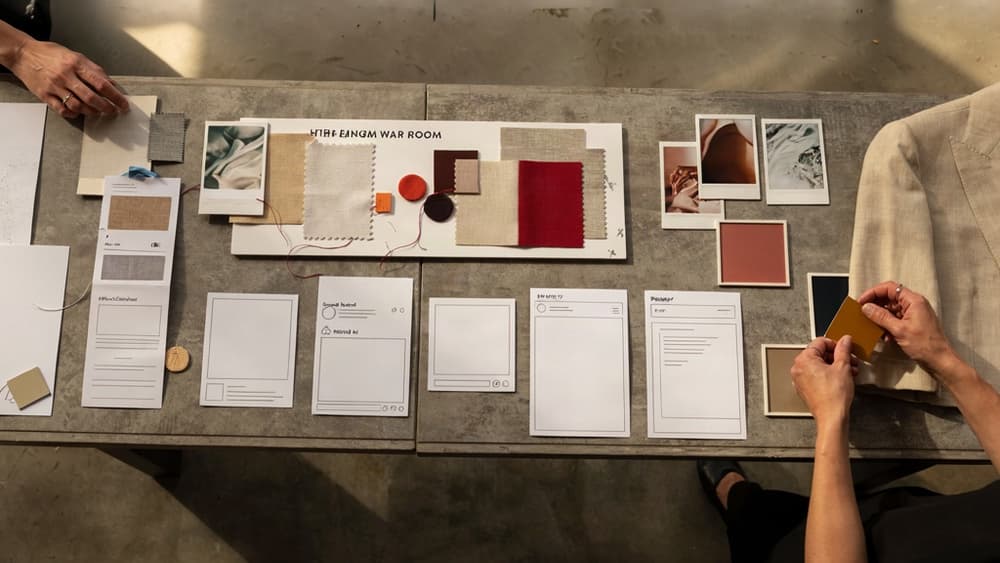
Plan Channel-Specific Campaigns Without Fragmenting the Brand
With the brand rules and audience priorities already locked, the next risk is execution drift: one team writes emails, another cuts paid ads, a freelancer drafts TikToks, and the fashion brand starts sounding like three different labels. Channel planning should prevent that before production starts.
Match campaign objectives to owned, paid, and social channels
Start each campaign with one primary objective, then assign channels based on the job they are best suited to do. For agencies, this keeps scope clean and stops every asset from trying to drive awareness, consideration, conversion, and loyalty at once.
Campaign objective | Best-fit channels | Agency execution focus |
|---|---|---|
Launch a new collection | Email, landing page, Instagram, TikTok, paid social | Build anticipation, reveal the collection story, drive first traffic bursts |
Sell through seasonal inventory | Paid social, email, SMS, retargeting | Match product benefits to urgency without cheapening the brand |
Grow brand awareness | TikTok, Instagram Reels, creator content, PR-led social | Lead with mood, styling, aspiration, and repeatable visual cues |
Increase repeat purchase | Email, SMS, loyalty flows, post-purchase content | Reinforce styling ideas, care tips, cross-sells, and next-drop interest |
Support retail or pop-up activity | Local paid social, organic social, email, event landing page | Connect the physical experience to the brand narrative |
The practical agency move: create one campaign master brief, then channel-specific briefs underneath it. The master brief protects the brand idea; the channel briefs adapt format, length, CTA, and creative treatment.
For example, a “summer tailoring” campaign might become a lookbook email, a paid carousel around linen suiting, a TikTok styling sequence, and a landing page organized by occasion. Same brand idea, different channel jobs.
Build social content pillars for fashion brands
Social is where fashion brands can gain momentum quickly, but it is also where inconsistency shows up fastest. Content pillars give your team repeatable lanes so the feed does not become a random mix of product shots, memes, founder posts, and sale graphics.
Useful fashion-specific pillars include:
- Styling education: how to wear key pieces, outfit formulas, day-to-night transitions, layering ideas.
- Collection storytelling: design inspiration, fabric choices, campaign concepts, behind-the-scenes details.
- Product proof: fit checks, movement tests, customer try-ons, close-ups of construction and texture.
- Occasion-led content: wedding guest, workwear, travel, resort, festival, gifting, weekend dressing.
- Community and culture: customer features, local scenes, collaborators, events, creator interpretations.
For small agencies, pillars also make production easier to scale. Instead of starting from a blank page each week, your team can brief AI tools, designers, editors, and creators from the same content structure while keeping the brand marketing system intact.
Use influencer partnerships as controlled brand extensions
Influencers should not be treated as a separate creative universe. For fashion clients, they are extensions of the brand experience, especially when their content becomes ads, website assets, email creative, or launch material.
Before outreach, define the role each creator plays:
- Aspirational creators to elevate perception and introduce the brand to a desired audience.
- Styling-led creators to show versatility, fit, and outfit combinations.
- Niche community creators to build credibility within a specific aesthetic, subculture, or location.
- Conversion-focused creators to support offers, drops, or product education.
Give creators enough direction to stay aligned without scripting away their value. A strong creator brief should include the campaign idea, audience segment, must-show products, styling references, claims to use or avoid, visual do’s and don’ts, CTA, usage rights, and approval workflow.
That structure lets agencies scale influencer output without letting every partnership reinterpret the fashion brand from scratch.
Measure Fashion Brand Marketing by Awareness, Loyalty, and Sales Impact
Once campaigns are live, the agency’s job shifts from “did it perform?” to “what kind of brand value did it create, and what should change next?”
The fashion brand marketing KPI stack
Fashion performance is rarely captured by one metric. A drop may sell quickly because of discounting, while the brand itself becomes less desirable. Or a campaign may build strong demand signals before revenue shows up. Agencies need a KPI stack that separates awareness, loyalty, and commercial impact.
KPI layer | What to measure | Why it matters for fashion clients |
|---|---|---|
Awareness | Reach, impressions, share of voice, branded search lift, profile visits, press/influencer mentions | Shows whether the brand is entering more of the right conversations |
Engagement | Saves, shares, comments quality, email clicks, product page depth, lookbook interactions | Indicates whether the aesthetic and message are resonating beyond passive views |
Consideration | Add-to-cart rate, wishlist activity, size guide views, return visits, collection signups | Captures intent before purchase, especially for higher-price or seasonal products |
Loyalty | Repeat purchase rate, email/SMS retention, loyalty enrollment, UGC volume, referral activity | Shows whether customers are identifying with the brand, not just buying once |
Sales impact | Revenue, ROAS, CAC, AOV, conversion rate, sell-through, margin by campaign | Connects brand activity to commercial outcomes the client can defend internally |
For small agencies, this stack prevents reporting from becoming a paid-media recap. It gives strategy, creative, and performance teams a shared view of what the campaign actually changed.
How agencies should report brand consistency alongside performance
Fashion clients care about growth, but they also care about not looking generic. Your reporting should show whether performance was achieved while staying within the brand system.
Add a brand consistency layer to every campaign report:
- Message adherence: Were core claims, vocabulary, and value propositions used correctly across channels?
- Visual adherence: Did campaign assets preserve the intended styling, composition, color mood, and product presentation?
- Audience fit: Did the winning content attract the intended segment, or just the cheapest clicks?
- Channel consistency: Did social, email, landing pages, and ads feel like one brand experience?
- Creative drift: Which outputs started to move away from the approved direction?
This is where agencies can differentiate. Instead of saying, “Carousel 2 had the best CTR,” say, “Carousel 2 performed best while preserving the brand’s elevated styling and occasion-led messaging, so we recommend scaling that creative route.”
Tools like Aethera can make this easier by keeping approved brand inputs attached to AI-assisted content production, so reporting is not just about what shipped, but whether it stayed on-brand.
Use results to refine the next campaign cycle
Measurement should feed the next brief, not sit in a PDF. After each campaign, agencies should translate results into updated creative rules and planning decisions.
For example:
- If saves and wishlists outpace purchases, sharpen consideration-stage content with styling guidance, fit information, or occasion-based edits.
- If awareness grows but branded search does not, the campaign may need stronger naming, signature language, or more memorable visual codes.
- If paid ads convert but retention is weak, revisit whether the campaign attracted the right customer or over-relied on price.
- If UGC increases around one product category, build the next content cycle around that behavior instead of forcing a new theme.
The strongest fashion brand marketing programs compound. Each campaign improves the next set of prompts, briefs, asset rules, and reporting benchmarks—helping agencies scale output without letting every new campaign feel like a new brand.