June 10, 2025
Your Gateway to Advanced AI
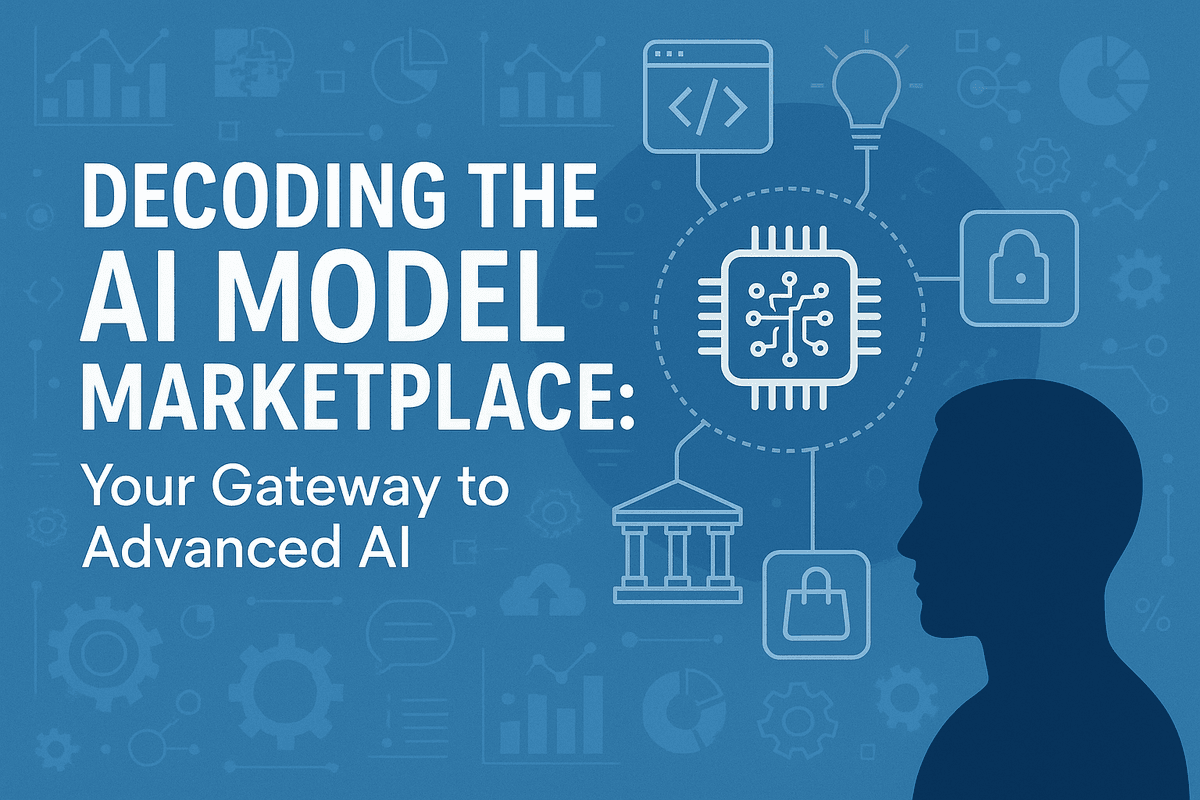
Decoding the AI Model Marketplace: Your Gateway to Advanced AI
An AI model marketplace is rapidly becoming an indispensable cornerstone of the artificial intelligence landscape. But what exactly is it, and how is it revolutionizing the way we approach AI development and deployment? This section breaks down the essentials, exploring how these platforms are fueling innovation and offering unprecedented opportunities for both developers and businesses eager to leverage the power of AI.
What is an AI Model Marketplace, and Why is it a Game-Changer?
Imagine a bustling digital hub where the building blocks of artificial intelligence – pre-trained AI models – are readily discoverable, accessible, and often transactable. That's precisely what an AI model marketplace offers. It's a specialized platform designed for discovering, acquiring, sharing, or even selling AI models, ranging from natural language processing algorithms to complex computer vision systems.
So, why is this concept a game-changer? Primarily, an AI model marketplace democratizes access to sophisticated AI. Historically, developing cutting-edge AI models required substantial resources, deep expertise, and significant time investment, often limiting such advancements to large corporations. These marketplaces shatter those barriers. They empower businesses of all sizes, independent researchers, and individual developers to tap into powerful, pre-built AI capabilities. This dramatically reduces the cost and complexity of AI adoption, fostering a more inclusive and dynamic AI ecosystem. By providing readily available solutions, an AI model marketplace significantly shortens development cycles, allowing for quicker implementation of AI-driven innovations.
Fueling Rapid Innovation: The Role of the AI Model Marketplace
The current surge in AI adoption and capability isn't happening in a vacuum; it's being significantly amplified by platforms like the AI model marketplace. As AI becomes more integral across diverse industries – from healthcare and finance to retail and entertainment – the demand for readily deployable, high-quality models has skyrocketed.
An AI model marketplace acts as a crucial catalyst in this environment, fueling rapid innovation in several key ways:
- Preventing Redundancy: Developers no longer need to build every AI model from scratch. By accessing existing, proven solutions on an AI model marketplace, they can avoid "reinventing the wheel," saving invaluable time and resources.
- Accelerating Experimentation: These platforms allow users to quickly find, test, and compare various models for their specific needs. This rapid iteration cycle encourages experimentation, leading to faster discovery of optimal solutions and novel applications.
- Fostering Collaboration: Many marketplaces also incorporate community features, enabling knowledge sharing, feedback loops, and even collaborative model development, further pushing the boundaries of AI. This collective intelligence and shared resource pool, facilitated by an AI model marketplace, means innovation can occur at a much faster pace than ever before.
Empowering AI Developers: Sharing Work and Connecting with Users
For AI developers and data scientists, an AI model marketplace is more than just a repository; it's a vibrant ecosystem offering tangible benefits and opportunities to share their work and connect directly with users. It provides a direct avenue to showcase their expertise and distribute their creations to a global audience, transforming how they contribute to and benefit from the AI revolution.
Key advantages for developers participating in an AI model marketplace include:
- Monetization Opportunities: Developers can often license or sell their proprietary models, generating revenue from their intellectual property and hard work.
- Increased Visibility and Recognition: An AI model marketplace acts as a dynamic portfolio, enhancing a developer's reputation, attracting potential collaborators, and opening doors to new career opportunities.
- Direct User Feedback: Engaging with users who implement their models provides invaluable, real-world insights, enabling developers to refine their creations and tailor future work to market needs.
- Community Contribution: Sharing models contributes to the broader AI community, helping others solve complex problems and fostering a collaborative spirit. By leveraging an AI model marketplace, developers can amplify their impact, gain recognition, and play a more active role in the evolving AI landscape.
Business Advantages: Accessing Cutting-Edge AI Solutions Instantly
For businesses aiming to integrate artificial intelligence and maintain a competitive edge, the AI model marketplace presents a transformative opportunity, offering a shortcut to advanced capabilities. Gone are the days when implementing AI necessarily required massive upfront investment in bespoke research, specialized talent acquisition, and extensive infrastructure development. Today, an AI model marketplace allows businesses to instantly access a diverse array of pre-built, cutting-edge AI solutions.
This streamlined access translates into several compelling advantages:
- Accelerated Time-to-Market: Businesses can deploy AI-powered features, products, and services much faster by leveraging existing, validated models from an AI model marketplace, rather than starting from zero.
- Significant Cost-Effectiveness: Accessing pre-trained models drastically reduces the research and development costs typically associated with building custom AI solutions from the ground up.
- Access to Specialized Expertise: Companies can tap into highly specialized models developed by leading AI researchers and organizations, even if they lack a large in-house AI team.
- Reduced Implementation Risk: An AI model marketplace often allows businesses to test and validate various models with lower initial commitment, ensuring a better fit before making significant investments.
- Enhanced Competitiveness: By quickly adopting the latest AI advancements, businesses can improve operational efficiency, personalize customer experiences, and unlock new revenue streams, solidifying their market position. Ultimately, an AI model marketplace empowers businesses of all sizes to become more agile, innovative, and data-driven by making advanced AI more accessible and affordable.
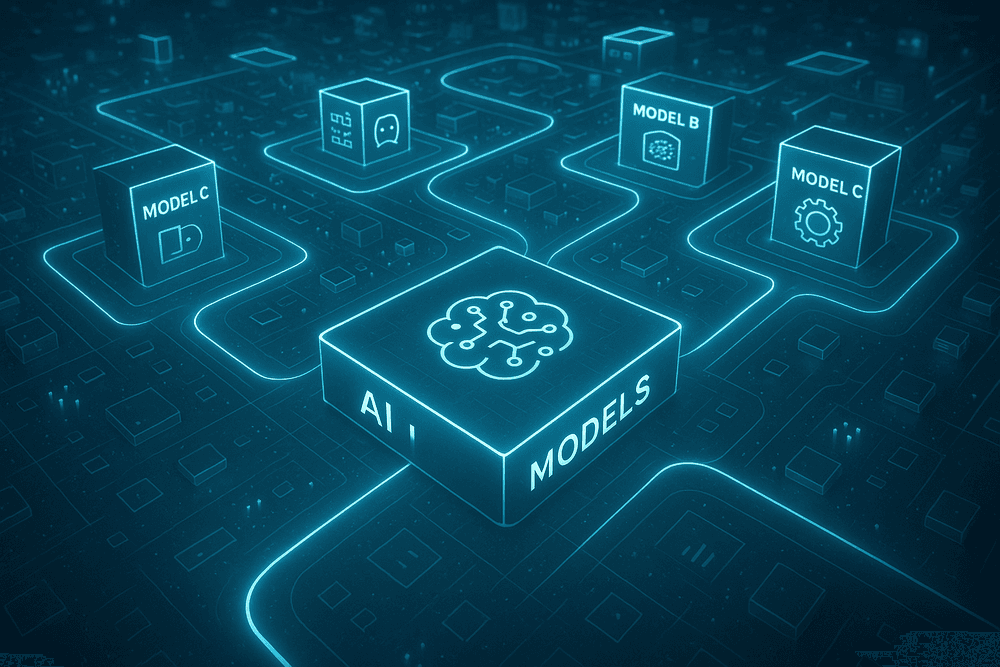
Comparing Top AI Model Marketplace Platforms: Where to Find Your Next AI Solution
Navigating the landscape of AI model marketplaces can be daunting, but understanding the key players and what they offer is crucial for leveraging AI effectively. Each platform has its strengths, catering to different needs, from open-source exploration to enterprise-grade solutions. Let's explore some of the leading options and the criteria to consider.
Deep Dive: Evaluating Hugging Face as an AI Model Marketplace
Hugging Face has rapidly emerged as a dominant force in the AI community, particularly for Natural Language Processing (NLP). More than just an AI model marketplace, it's a comprehensive ecosystem. Its primary strength lies in the sheer volume and diversity of open-source models available, especially Transformers. Developers flock to Hugging Face for its user-friendly transformers library, which simplifies downloading and using pre-trained models with just a few lines of code. Beyond models, it hosts datasets, interactive demo spaces, and fosters a vibrant community. If your project involves cutting-edge NLP or you value open collaboration and extensive model choice, the Hugging Face AI model marketplace is an indispensable resource. Its focus on accessibility and community-driven content makes it a go-to platform for both research and application development.
Exploring TensorFlow Hub and Other Specialized AI Model Marketplace Options
While Hugging Face excels in breadth, other platforms offer specialized advantages. TensorFlow Hub (TF Hub), for instance, is an excellent AI model marketplace for developers invested in the TensorFlow ecosystem. It provides a curated collection of pre-trained model components, including embeddings and full models, optimized for TensorFlow. TF Hub focuses on reusable pieces that can be easily integrated into larger TensorFlow models, making it ideal for tasks in image, text, audio, and video processing.
Beyond these well-known hubs, several other specialized AI model marketplace options exist:
- PyTorch Hub: Similar to TF Hub, it serves the PyTorch community with easily accessible pre-trained models.
- Cloud Provider Marketplaces: AWS SageMaker Marketplace, Google Cloud AI Platform's Model Garden, and Azure Machine Learning's model catalog offer a mix of open-source and commercial models, often tightly integrated with their respective cloud services for streamlined deployment and MLOps. These are strong contenders if you're already embedded in a specific cloud ecosystem.
- Industry-Specific Marketplaces: Niche platforms are emerging that cater to particular industries like healthcare or finance, offering models tailored to specific domain challenges and datasets.
Key Criteria for Choosing the Right AI Model Marketplace for Your Project
Selecting the most suitable AI model marketplace requires careful consideration of your project's specific needs. Here are key criteria to guide your decision:
- Model Variety and Quality: Does the marketplace offer models relevant to your problem domain (e.g., NLP, computer vision, speech recognition)? Assess the documentation, performance metrics, and community feedback on model quality.
- Ease of Use and Integration: How straightforward is it to find, download, and integrate models into your existing workflows and tech stack? Look for clear APIs, SDKs, and code examples.
- Community and Support: An active community can provide invaluable support, share best practices, and contribute to model improvements. Check for forums, documentation quality, and official support channels.
- Licensing and Compliance: Understand the licensing terms of models. Are they compatible with your intended use (research, internal, commercial)? This is critical and discussed further below.
- Cost Structure: Evaluate whether the models are free, require one-time payment, or involve subscription fees. Consider any associated platform costs if applicable, especially in cloud-based marketplaces.
- Tools and Ecosystem: Does the AI model marketplace provide ancillary tools for model evaluation, fine-tuning, deployment, or monitoring? A rich ecosystem can significantly accelerate your development cycle.
Open Source vs. Commercial Models: Navigating Licensing in an AI Model Marketplace
A critical aspect of using any AI model marketplace is understanding the distinction between open-source and commercial models, particularly their licensing implications.
Open-Source Models:
- Pros: Generally free to use, modify, and distribute (depending on the specific license). They benefit from community scrutiny and contributions, fostering transparency and rapid innovation.
- Cons: Licenses (e.g., MIT, Apache 2.0, GPL) vary significantly in their permissions and obligations. Some, like GPL, may require derivative works to also be open-sourced. Support is often community-based.
- Navigation: Always meticulously check the license associated with an open-source model. Ensure it aligns with your project's commercial or distribution plans.
Commercial Models:
- Pros: Often come with dedicated support, guaranteed performance levels, and clear terms for commercial use. They might offer highly specialized or state-of-the-art capabilities not readily available in open-source.
- Cons: Incur costs, potentially leading to vendor lock-in. The inner workings of the model might be less transparent.
- Navigation: Review the commercial license agreement carefully, paying attention to usage restrictions, subscription terms, and intellectual property rights.
Effectively navigating licensing within an AI model marketplace is paramount to avoid legal complications and ensure your project adheres to all requirements. Whether choosing open-source flexibility or commercial robustness, clarity on licensing is non-negotiable.
Essential Features of a High-Caliber AI Model Marketplace
Navigating the burgeoning landscape of artificial intelligence requires more than just access to models; it demands a platform that empowers users at every step. A high-caliber AI model marketplace isn't merely a repository; it's a dynamic ecosystem designed for efficiency, transparency, and robust support. Understanding the essential features can help you select a marketplace that truly accelerates your AI initiatives.
Seamless Model Discovery: Your Compass in the AI Model Marketplace
Imagine searching for a needle in a haystack, but the haystack is an ever-expanding universe of AI models. Without powerful discovery tools, finding the right model for your specific needs can be a daunting task. A top-tier AI model marketplace prioritizes seamless model discovery through:
- Advanced Search Capabilities: Go beyond simple keyword searches. Look for marketplaces offering faceted search, allowing you to filter models by task (e.g., image classification, text generation, anomaly detection), industry, data type, framework (TensorFlow, PyTorch), and even performance metrics.
- Intuitive Categorization and Tagging: Well-organized categories and relevant tags make browsing and identifying suitable models significantly easier.
- Use Case Examples and Demonstrations: Seeing a model in action or understanding its application through clear use cases can be invaluable for quick assessment.
- Comparison Tools: The ability to compare multiple models side-by-side based on their specifications, performance, and pricing is a significant advantage.
Efficient discovery within an AI model marketplace saves precious time and resources, ensuring you can quickly pinpoint models that align with your project goals.
Clarity is King: Understanding Model Documentation, Pricing, and Usage Rights
Once you've shortlisted potential models, clarity becomes paramount. A trustworthy AI model marketplace ensures you have all the information needed to make an informed decision.
- Comprehensive Model Documentation: This is non-negotiable. Look for detailed descriptions covering:
- Purpose and Intended Use: What problem does the model solve?
- Architecture and Training Data: Insights into how the model was built (though specifics of proprietary data may be summarized or anonymized).
- Performance Metrics: Accuracy, precision, recall, F1-score, inference speed, etc., on benchmark datasets.
- Input/Output Specifications: Clear guidance on data format requirements and expected outputs.
- Limitations and Potential Biases: Transparency about the model's known limitations and any inherent biases is crucial for responsible AI deployment.
- Transparent Pricing Structures: Whether it's pay-per-API-call, subscription-based, or a one-time purchase, pricing should be straightforward and easy to understand. Hidden fees or convoluted pricing tiers can quickly erode trust. A good AI model marketplace provides clear cost breakdowns.
- Unambiguous Usage Rights and Licensing: Understanding what you can and cannot do with a model is critical. The marketplace must clearly state the licensing terms (e.g., MIT, Apache 2.0, proprietary), specifying rights for commercial use, modification, and redistribution. This protects both the model provider and the user.
From Marketplace to Machine: API Access and Smooth Deployment
Finding the perfect model is only half the battle; integrating it into your existing workflows and applications is where the real value is unlocked. A leading AI model marketplace facilitates this through:
- Well-Documented APIs: Robust and easy-to-use APIs (often RESTful) are essential for programmatic access to models. Clear documentation, code samples in multiple languages (Python, Java, JavaScript, etc.), and SDKs significantly reduce integration effort.
- Flexible Deployment Options: The marketplace should support various deployment scenarios, from simple cloud-hosted API endpoints to options for deploying models within your own environment (e.g., via containers like Docker, or for edge devices).
- Scalability and Reliability: Ensure the platform offers scalable infrastructure to handle your workload demands and provides high uptime for model inference.
Effortless integration capabilities mean you can rapidly prototype, test, and deploy AI solutions, accelerating your time-to-market.
Beyond the Bits and Bytes: Community, Support, and Version Control
A truly valuable AI model marketplace extends beyond the transactional, fostering a supportive ecosystem.
- Vibrant Community and Robust Support:
- Community Forums & Reviews: User reviews, ratings, and active forums provide real-world insights, help troubleshoot common issues, and allow for knowledge sharing.
- Developer Support: Access to technical support (FAQs, ticketing systems, direct support channels) is vital when you encounter challenges or have specific queries.
- Reliable Version Control: AI models are not static; they evolve with new data, architectural improvements, and bug fixes. A robust version control system is crucial. It allows you to:
- Track changes between model versions.
- Understand the impact of updates.
- Roll back to previous versions if necessary.
- Manage dependencies effectively. Clear communication about model updates, deprecations, and end-of-life policies is a hallmark of a mature AI model marketplace.
These features collectively contribute to a productive, secure, and collaborative environment, enabling developers and businesses to confidently leverage the power of AI.
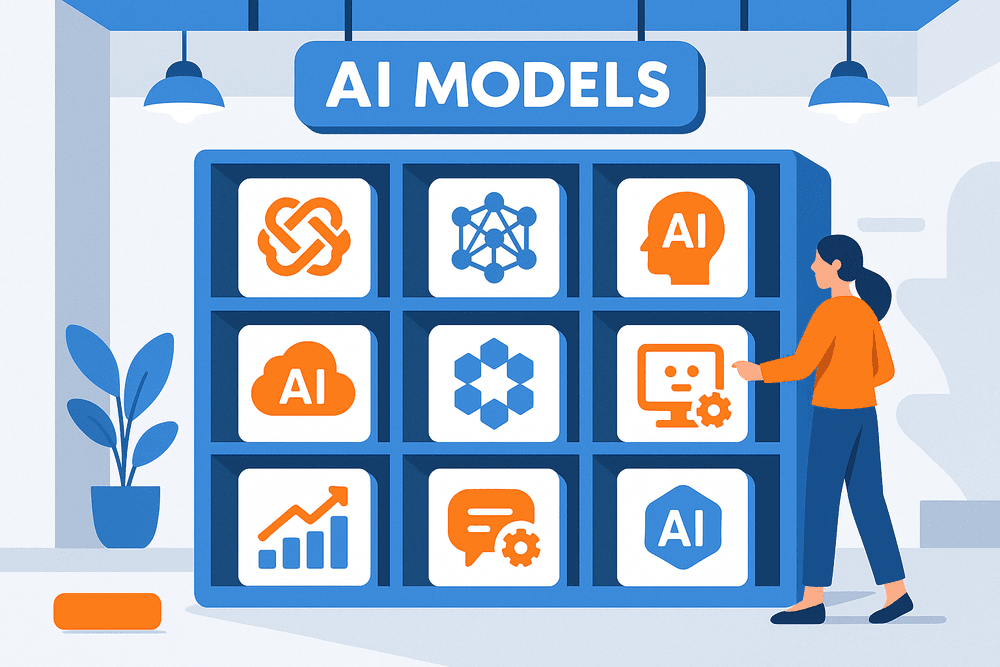
Best Practices for Leveraging an AI Model Marketplace Effectively
Unlocking the full potential of an ai model marketplace requires a strategic approach. Whether you're a business looking to integrate AI, a developer seeking pre-trained models, or an AI creator aiming to monetize your innovations, adopting best practices is key to success.
For Businesses & Developers: Mastering Model Selection, Testing, and Validation in an AI Model Marketplace
Finding the right AI model in an ai model marketplace requires a structured approach:
- Strategic Selection: Define clear needs (problem, data, metrics, budget). Vet marketplace reputation and model creators. Scrutinize documentation for architecture, training data insights, limitations, and I/O specs. Leverage community reviews for real-world insights.
- Rigorous Testing: Test models with your own representative datasets, ideally in a marketplace-provided sandbox, for an accurate performance preview. Evaluate against key metrics: accuracy, latency, precision, recall, and resource use.
- Thorough Validation: Compare the model against baselines. Confirm tech stack compatibility and scalability. Review long-term support and update policies from the ai model marketplace.
For AI Creators: Successfully Listing and Marketing Your Models on an AI Model Marketplace
For AI creators, an ai model marketplace is key to showcasing and monetizing work. Maximize your impact:
- Compelling Listings: Provide clear documentation: purpose, capabilities, use cases, I/O formats, dependencies, and training data overview. Transparently present verifiable performance metrics and how they were derived. Offer user-friendly guides, code snippets, and consider a demo. Choose a fair and competitive pricing model for the ai model marketplace.
- Effective Marketing: Clearly articulate your model's Unique Selling Propositions (USPs)—accuracy, speed, or niche application. Optimize your listing with relevant keywords for better ai model marketplace search visibility. Engage with users, solicit feedback, and build a responsive reputation.
Critical Considerations: Security, Bias, and Ethical AI in an AI Model Marketplace
Navigating an ai model marketplace demands prioritizing security, mitigating bias, and upholding ethical AI:
- Security Vigilance: Verify the ai model marketplace's security protocols for model submissions, data handling (especially sensitive data), and transactions. Look for vulnerability scanning or certifications. Understand model data access.
- Bias Awareness and Mitigation: Creators: be transparent on biases, training data, and mitigation. Consumers: test for bias with diverse data; check fairness metrics on the ai model marketplace.
- Upholding Ethical AI: Adhere to responsible AI principles. Models from an ai model marketplace must not be used maliciously or unethically. Creators: state intended uses and limitations. The marketplace should champion ethics.
Streamlining Development: Integrating AI Model Marketplace Solutions into Your Pipeline
Integrating models from an ai model marketplace can accelerate innovation. Streamline the process:
- Seamless API Integration: Prioritize models with well-documented, robust, and versioned APIs. Implement secure API key management and comprehensive error handling with retry logic.
- Vigilant Version Control & Monitoring: Diligently track model versions from the ai model marketplace, as they can be updated or deprecated. Continuously monitor performance, cost, and latency in production, setting up alerts for issues.
- Plan for Scalability & Feedback: Ensure your infrastructure handles the model's inference demands. Understand scaling options offered by the ai model marketplace. Establish a feedback loop for improvements or to inform the creator.
Real-World Impact: Success Stories Powered by an AI Model Marketplace
The true value of an ai model marketplace isn't just theoretical; it's demonstrated daily through tangible successes across various sectors. These platforms are becoming catalysts for innovation, efficiency, and positive change. Let's explore some inspiring real-world examples of how businesses and organizations are leveraging the power of readily available AI models.
Startup Spotlight: Accelerating Innovation with an AI Model Marketplace
For startups, speed and resourcefulness are paramount. An ai model marketplace acts as a powerful accelerator, allowing nimble companies to punch above their weight. Imagine "InnovateTech," a small software startup aiming to integrate advanced image recognition into their new app. Instead of investing heavily in a dedicated AI research team and spending months developing a model from scratch, InnovateTech accesses a diverse ai model marketplace. They quickly find and implement a state-of-the-art computer vision model, drastically reducing their development time and costs. This allows them to launch their AI-powered feature months ahead of schedule, giving them a crucial competitive edge. By leveraging pre-built and customizable models, startups can rapidly prototype, test, and deploy AI solutions, turning ambitious ideas into market-ready products with unprecedented agility.
Enterprise Transformation: How Large Companies Utilize AI Model Marketplace Efficiencies
Large enterprises, while possessing more resources, often face challenges with agility and scaling AI initiatives across vast operations. An ai model marketplace offers a streamlined path to efficiency and transformation. Consider "GlobalCorp Manufacturing," a multinational company looking to enhance its supply chain forecasting and quality control. By tapping into an ai model marketplace, GlobalCorp can access a curated selection of sophisticated predictive analytics and defect detection models. They can then pilot these models quickly, integrate the most effective ones into their existing workflows, and scale them across multiple facilities. This not only improves operational efficiency, reducing waste and predicting demand more accurately but also empowers various departments to adopt AI without relying solely on a centralized data science team. The ai model marketplace thus becomes an enabler for democratizing AI, fostering widespread innovation and driving significant cost savings across the enterprise.
AI for Good: Examples of Marketplace Models Driving Social Impact
Beyond commercial applications, the ai model marketplace is a potent force for social good, enabling organizations to tackle some of the world's most pressing challenges. "EcoSavers," a non-profit environmental group, utilizes computer vision models sourced from an ai model marketplace to monitor deforestation in remote areas using satellite imagery. This allows them to track changes, identify illegal logging activities, and provide crucial data to local authorities with limited resources. Similarly, healthcare initiatives are using AI models from these marketplaces for tasks like early disease detection from medical scans in underserved communities, or educational platforms are deploying Natural Language Processing models to create personalized learning tools for students with disabilities. An ai model marketplace provides access to powerful AI capabilities that can amplify the impact of social initiatives, making advanced technology accessible for creating positive societal change.
Diverse Applications: From Natural Language Processing to Computer Vision in an AI Model Marketplace
The versatility of an ai model marketplace is showcased by the sheer breadth of applications it supports, cutting across numerous industries and AI disciplines. Whether it's sophisticated Natural Language Processing (NLP) or cutting-edge Computer Vision (CV), these platforms offer a wealth of solutions. For example, a financial services firm might deploy NLP models from an ai model marketplace for sentiment analysis of market news and automated compliance checks. In parallel, a retail company could utilize computer vision models for in-store analytics, tracking customer flow and optimizing product placement. Other diverse applications include using predictive maintenance models in the energy sector to prevent equipment failure, employing recommendation engines in e-commerce for personalized shopping experiences, or leveraging anomaly detection models for enhanced cybersecurity. The availability of specialized models within an ai model marketplace means organizations can find targeted solutions to improve processes, create new products, and gain deeper insights, regardless of their industry.

Conclusion: Embark on Your AI Journey with an AI Model Marketplace
The artificial intelligence revolution is well underway, and an ai model marketplace serves as your practical launchpad into this transformative era. These platforms are democratizing access to powerful AI tools, enabling businesses and developers alike to innovate faster, operate more efficiently, and unlock new frontiers. As we conclude our exploration, let's solidify your next steps and look towards the exciting future of AI accessibility.
Final Checklist: Selecting the Optimal AI Model Marketplace for Your Needs
The path to AI-driven innovation is clearer than ever, thanks to the burgeoning world of the ai model marketplace. As you prepare to dive in, choosing the right platform is paramount. Use this final checklist to ensure you select the optimal ai model marketplace for your specific requirements:
- Relevance & Quality: Does the marketplace offer a diverse range of high-quality models suited to your specific industry or use case? Scrutinize documentation and performance benchmarks.
- Transparent Terms: Are pricing models clear and licensing options compatible with your intended usage and budget?
- Robust Security: What security, data privacy, and compliance measures does the ai model marketplace employ to protect both models and data?
- Support Ecosystem: Is there an active community for peer-to-peer assistance, or does the platform offer dedicated technical support?
- Seamless Integration & Usability: How easily can models be integrated into your existing workflows and systems? Is the platform intuitive for browsing, testing, and deployment?
- Platform Credibility & Specialization: Does the ai model marketplace have a strong reputation? For sellers, does it offer good visibility? For buyers, are providers vetted, and does the platform specialize in areas relevant to you?
Carefully considering these factors will guide you to an ai model marketplace that truly empowers your AI ambitions and accelerates your journey.
Getting Started: Your First Steps with an AI Model Marketplace
Ready to take the plunge? Whether you're looking to acquire powerful AI capabilities or share your innovative models, getting started on an ai model marketplace is straightforward.
Acquiring AI Models
- Sign Up & Explore: Create an account on your chosen ai model marketplace. Browse or search using filters for categories, industries, or specific AI functionalities.
- Evaluate Carefully: Review model descriptions, comprehensive documentation, performance metrics, and user reviews. Many platforms offer API access for trial runs or sandbox environments to test suitability.
- Understand Licensing & Pricing: Clarify the terms of use, data handling policies, and the cost structure (e.g., pay-per-use, subscription, one-time purchase) before proceeding.
- Integrate & Deploy: Once satisfied, acquire the model and follow the platform’s guidelines and provided code snippets to integrate it into your applications or workflows.
Listing Your AI Models
- Prepare Your Model: Ensure your AI model is well-documented, including its architecture, training data (if appropriate to disclose), performance benchmarks, and clear usage instructions. Package it according to the ai model marketplace specifications.
- Choose Your Marketplace: Select an ai model marketplace that aligns with your target audience and model type. Review their seller terms, commission structures, and any quality control processes.
- Set Clear Terms: Define your pricing strategy, licensing options (e.g., commercial use, research-only, open-source), and the level of support you will provide to users.
- Submit & Promote: Follow the marketplace’s submission process. Once your model is live, consider promoting your listing through your own professional networks and channels to maximize visibility on the ai model marketplace.
The Future of AI Accessibility: Emerging Trends in the AI Model Marketplace Ecosystem
The ai model marketplace ecosystem is dynamic and rapidly evolving, promising even greater accessibility and innovation. Keep an eye on these emerging trends that are shaping its future:
- Hyper-Specialization: Expect to see more ai model marketplaces catering to niche industries (e.g., healthcare AI, financial risk modeling, manufacturing quality control) or specific AI tasks, offering highly tailored and validated solutions.
- Enhanced Trust & Verification: Platforms will likely invest more in robust model verification processes, explainability features (XAI), and built-in ethical AI frameworks to build greater trust. This includes tackling bias and ensuring responsible AI development and deployment.
- Integrated MLOps Tooling: Tighter integration with MLOps (Machine Learning Operations) tools will streamline the entire AI model lifecycle, from discovery and deployment to continuous monitoring, retraining, and governance, often directly within or seamlessly connected to the ai model marketplace.
- Rise of Composable AI: Marketplaces may increasingly facilitate the discovery and combination of smaller, specialized, and interoperable AI models (or "AI components") to create more complex and customized AI solutions, promoting flexibility and innovation.
- Focus on Edge AI Models: With the proliferation of IoT and the need for real-time processing, there will be an increasing demand and supply of AI models optimized for deployment on edge devices, featured prominently in relevant ai model marketplaces.
- Democratization through No-Code/Low-Code: More platforms will offer sophisticated no-code or low-code interfaces, enabling non-technical users and citizen developers to discover, customize, and deploy AI models, further democratizing access to AI capabilities through an ai model marketplace.
These trends signify a future where an ai model marketplace becomes an even more indispensable, intelligent, and integrated hub for AI innovation and adoption across all sectors.
Take Action: Explore an AI Model Marketplace Today and Unleash AI Potential
The age of accessible AI is here, and the ai model marketplace is your direct gateway. Don't let the transformative potential of artificial intelligence remain an abstract concept or a distant goal. Whether you're a developer seeking to monetize your creations, a startup aiming to innovate rapidly, or an established enterprise looking to optimize operations and gain a competitive edge, an ai model marketplace offers tangible solutions and immediate opportunities.
The journey to AI-powered productivity and groundbreaking innovation begins with a single, decisive step. We encourage you to explore an ai model marketplace today. Discover the pre-trained models that can transform your business processes, or share your own unique contributions with a global audience eager for solutions. The tools are available, the community is growing, and the future is waiting to be built with AI. Take action now and unleash the full potential of artificial intelligence for your endeavors.