
August 28, 2025
An Introduction to AI Contract Review
Beyond the Red Pen: An Introduction to AI Contract Review
For decades, the contract review process was synonymous with long hours, meticulous manual checks, and the ubiquitous red pen. Legal teams would spend countless hours poring over dense documents, searching for non-standard clauses, potential risks, and critical obligations. This process, while essential, was slow, expensive, and susceptible to human error. Today, that paradigm is shifting dramatically thanks to the power of artificial intelligence.
What is AI Contract Review and How Does It Work?
AI contract review is the use of artificial intelligence, primarily Natural Language Processing (NLP) and machine learning, to automate the analysis of legal agreements. It’s far more than a simple keyword search; it’s about teaching a machine to read and understand contractual language like an experienced lawyer.
The process typically unfolds in a few key stages:
- Ingestion & Data Extraction: The AI software ingests contracts in various formats (e.g., PDF, Word) and uses optical character recognition (OCR) and NLP to identify and extract key data points. This includes everything from parties and effective dates to specific clauses like indemnification, limitation of liability, and confidentiality.
- Clause Analysis & Playbook Comparison: The system then analyzes the extracted clauses, comparing them against a pre-defined legal "playbook." This playbook contains your organization's standard positions and acceptable variations. The AI instantly flags any language that deviates from these standards.
- Risk Detection & Scoring: By identifying missing clauses, non-compliant terms, or ambiguous language, the AI assesses the contract's overall risk profile. It can highlight high-risk provisions, allowing legal teams to immediately focus their attention where it's needed most.
The Evolution: From Manual Tedium to Intelligent Automation
The journey to modern AI contract review has been a steady march away from manual inefficiency. It began with the simple "find and replace" function, a rudimentary tool that could locate specific words but lacked any contextual understanding. This was followed by template-based systems, which improved consistency but struggled with third-party paper and non-standard agreements.
The true revolution arrived with AI. Unlike its predecessors, AI-powered platforms don’t just match text; they interpret meaning, context, and intent. This leap from simple automation to intelligent analysis allows the software to handle a vast diversity of contracts with a level of nuance that was previously impossible, transforming a tedious, reactive task into a streamlined, proactive strategy.
Why AI is a Game-Changer for Legal Teams and Businesses
The adoption of AI contract review software provides a powerful competitive advantage, delivering tangible benefits that extend far beyond the legal department.
- Unprecedented Speed: AI can review a complex agreement in minutes, a task that could take a human reviewer hours or even days. This accelerates deal cycles and gets business done faster.
- Enhanced Accuracy: By eliminating the risk of fatigue and human error, AI ensures a higher degree of accuracy and consistency. Every contract is vetted against the exact same standards, every single time.
- Proactive Risk Management: It empowers teams to identify and mitigate risks before a contract is ever signed, protecting the business from unfavorable terms and future liabilities.
- Strategic Focus: By automating the low-value, high-volume review work, AI frees up legal professionals to concentrate on high-stakes negotiation, strategic counsel, and complex legal challenges—the work they were truly trained to do.
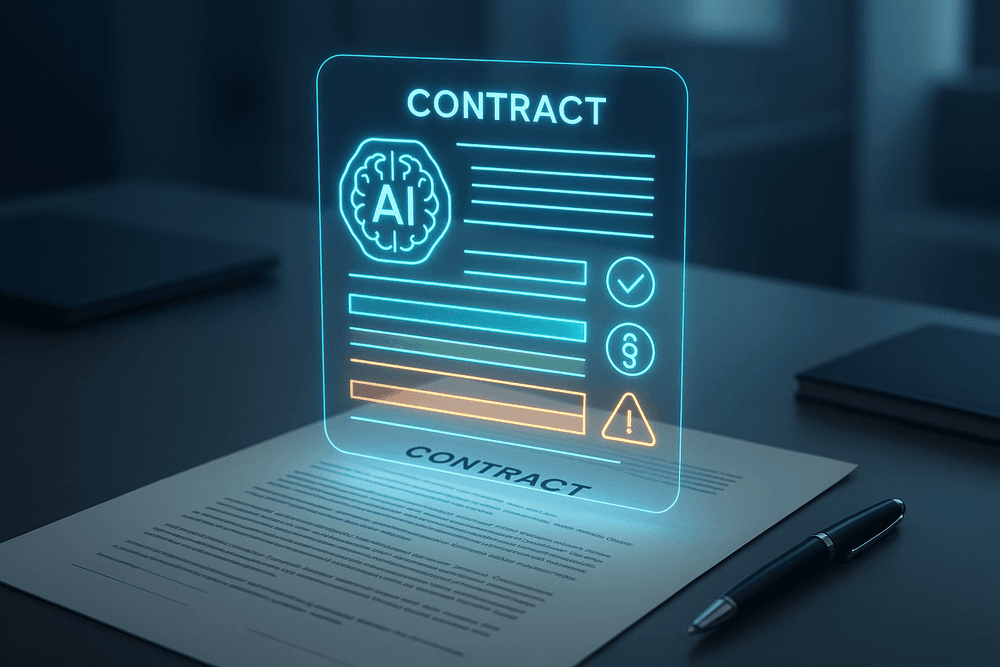
Core Capabilities: What to Expect from an AI Contract Review Platform
Diving into the world of AI contract review reveals a suite of powerful tools designed to augment, not replace, legal expertise. These platforms move beyond simple keyword searches, employing sophisticated machine learning and natural language processing (NLP) to understand the context, nuance, and potential impact of every clause. When evaluating a solution, expect to find these four cornerstone capabilities that deliver transformative efficiency and risk mitigation.
Automated Risk Detection and Anomaly Identification
At its core, an AI contract review platform acts as a tireless first-line defense. It rapidly scans entire documents to pinpoint potential risks, inconsistencies, and deviations from standard legal language. The AI is trained on vast datasets of legal agreements, allowing it to recognize what’s standard and what’s an outlier.
This means the system can instantly flag:
- Missing Clauses: Crucial provisions like Limitation of Liability or Confidentiality that have been omitted.
- Risky Language: Unfavorable or ambiguous terms in indemnity, termination, or intellectual property clauses.
- Anomalies: Unusual phrasing or obligations that don't align with the contract type or industry standards.
By automating this initial pass, legal teams can immediately focus their attention on the highest-risk areas, saving countless hours of manual reading.
Intelligent Clause Analysis and Contract Comparison
Modern AI doesn't just find keywords; it understands legal concepts. This allows for a deep, contextual analysis of individual clauses. The software can identify a "Limitation of Liability" clause regardless of its title or exact wording. Furthermore, one of the most powerful features is contract comparison. The platform can instantly compare an incoming third-party contract against your company’s own standard templates or a previously executed version. It then generates a clear, redlined report highlighting every deviation, from major conceptual changes to minor wording tweaks, providing immediate leverage for negotiations.
Ensuring Compliance with Pre-defined Playbooks
For any organization striving for consistency, an AI-powered playbook is a game-changer. A digital contract playbook is a set of pre-defined rules, standard clauses, and fallback positions that reflect your company’s risk tolerance and negotiation strategy. The AI contract review platform uses this playbook as its guidepost. As it analyzes a contract, it automatically checks each clause against the playbook’s criteria, categorizing them as acceptable, requiring review, or unacceptable. This ensures every contract, regardless of who is reviewing it, is evaluated against the same high standards, dramatically reducing rogue agreements and enforcing internal policy.
Effortless Data Extraction for Key Terms and Obligations
Contracts are filled with critical data that needs to be tracked. Manually extracting these details is tedious and prone to error. An AI contract review solution automates this entire process. With incredible accuracy, the software can identify and pull out hundreds of key data points, including:
- Effective Dates and Renewal Dates
- Payment Terms and Amounts
- Termination Notice Periods
- Governing Law and Jurisdiction
- Liability Caps and Indemnification Details
This structured data can then be used to create contract summaries, populate a Contract Lifecycle Management (CLM) system, or set up automated alerts for important deadlines, turning static documents into actionable business intelligence.
Comparing the Top AI Contract Review Software of 2024
The market for AI contract review software is crowded, with each platform offering a unique blend of features, strengths, and target audiences. Choosing the right solution requires a clear understanding of your specific needs, from M&A due diligence to routine contract management. Let's break down the landscape, comparing established leaders with dynamic rising stars to help you make an informed decision.
Established Leaders: An In-Depth Look at Kira Systems and LawGeex
The pioneers in the AI contract review space set a high bar for accuracy and reliability, earning the trust of top-tier law firms and global corporations.
- Kira Systems: A powerhouse in M&A and due diligence, Kira is renowned for its powerful machine learning model and its patented "Quick Study" feature. This allows legal teams to train the AI to find virtually any clause or provision specific to their needs, offering unparalleled customization. While it excels at analyzing vast document sets for critical risks and opportunities, its strength lies in post-signature analysis rather than pre-signature negotiation workflows. It remains a top choice for large law firms and corporations handling complex transactions.
- LawGeex: Where Kira focuses on analysis, LawGeex shines in automation. Positioned as an AI-powered contract negotiation platform, it excels at the pre-signature stage. LawGeex automatically reviews and redlines incoming contracts against a company’s pre-approved legal playbook, often turning around first-pass reviews in minutes. This makes it a perfect fit for busy in-house legal teams looking to accelerate sales cycles and standardize compliance by offloading high-volume, low-complexity agreements like NDAs and MSAs.
Rising Stars: Evaluating Luminance and Evisort
Newer entrants are pushing the boundaries of what AI contract review can do, expanding beyond pure legal analysis into broader business intelligence.
- Luminance: Luminance distinguishes itself with its proprietary "Legal Inference Transformation Engine" (LITE), which uses a unique blend of supervised and unsupervised machine learning. This enables the platform to surface "unknown unknowns"—anomalies and risks that legal teams might not even know to look for—without extensive setup or training. Its intuitive interface and rapid document ingestion make it a compelling option for firms and businesses wanting immediate insights from their contract repositories.
- Evisort: Billing itself as a "Contract Intelligence Platform," Evisort aims to be the central nervous system for all contract-related data. It excels at connecting contract information to other enterprise systems like Salesforce, SAP, and Coupa. By extracting and structuring key data points, Evisort empowers not just legal, but also finance, sales, and procurement teams to make data-driven decisions. It’s an ideal choice for organizations looking to leverage contract data for strategic advantage across the entire business.
Key Differentiators: How to Choose the Right Platform for Your Needs
Selecting the best AI contract review tool depends on your primary use case. Ask these key questions:
- What is your core objective? Are you focused on M&A due diligence (Kira), accelerating pre-signature negotiations (LawGeex), discovering hidden risks (Luminance), or unlocking business intelligence from contracts (Evisort)?
- Who are the primary users? A large law firm has different needs than a lean corporate legal department.
- What integrations are essential? Ensure the platform connects seamlessly with your existing Document Management System (DMS), CLM, or CRM.
- How much customization do you need? Consider whether you need the ability to train the AI on bespoke clauses or prefer a system that works effectively out of the box.
Pricing Models: From Per-Document to Subscription Services
Pricing for AI contract review software varies significantly. The most common models include:
- Subscription (SaaS): A recurring annual or monthly fee, often tiered by the number of users, document volume, or feature set. This is the standard for ongoing, enterprise-wide use.
- Per-Project/Per-Document: Some vendors offer pricing tailored to specific, time-bound projects like a single M&A deal. This provides cost certainty for one-off needs.
- Custom Enterprise Packages: For large-scale deployments, vendors typically create a bespoke package that includes implementation, dedicated support, and training.
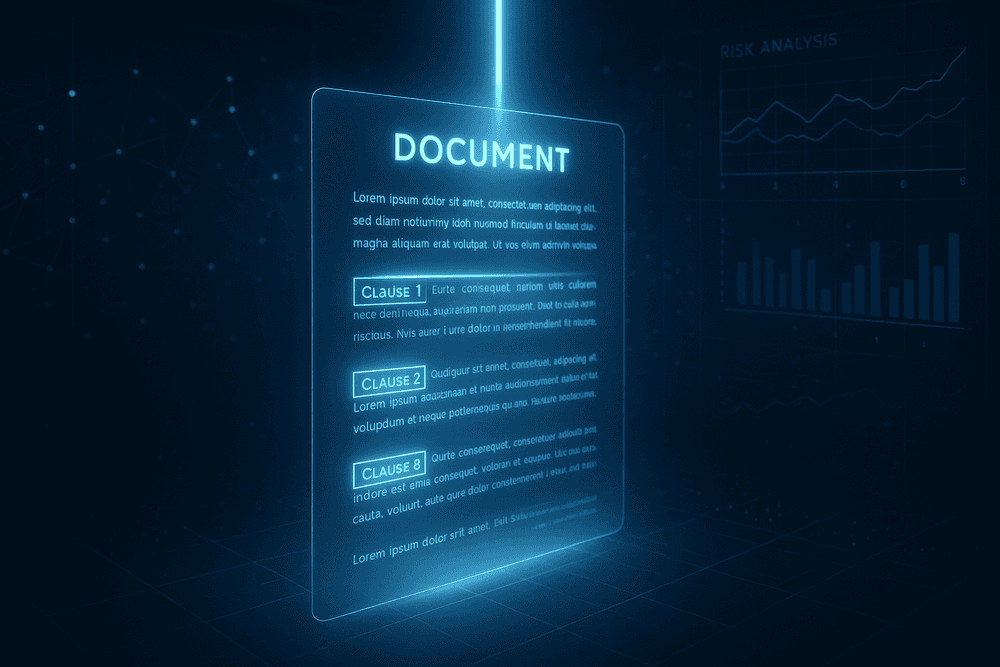
Putting AI to Work: Real-World Use Cases for AI Contract Review
The theoretical benefits of AI in legal tech are compelling, but its true value shines in its practical, day-to-day applications. Across industries, organizations are leveraging AI contract review to solve specific, high-stakes challenges, turning a traditionally manual process into a strategic advantage. Let's explore some of the most impactful real-world use cases where this technology is making a significant difference.
Accelerating Due Diligence in M&A Transactions
Mergers and acquisitions live and die by the due diligence process. Traditionally, this involves armies of lawyers manually sifting through thousands of contracts to identify risks and liabilities—a process that is both time-consuming and prone to human error.
This is where AI contract review platforms fundamentally change the game. By ingesting the entire data room, the software can analyze thousands of documents in hours, not weeks. It automatically identifies and flags critical provisions such as change of control clauses, assignment restrictions, indemnification obligations, and unusual liabilities. This allows legal teams to bypass the tedious initial review and focus their expertise on analyzing the flagged risks and advising on the strategic implications for the deal. The result is a drastically accelerated M&A timeline, reduced costs, and a more accurate risk assessment.
Streamlining High-Volume Sales and Procurement Agreements
For businesses that process a high volume of standard agreements—like Master Service Agreements (MSAs), Non-Disclosure Agreements (NDAs), or sales contracts—the legal department can quickly become a bottleneck. Reviewing every third-party paper individually slows down the sales cycle and strains resources.
AI contract review tools automate this workflow by instantly comparing incoming contracts against a company’s pre-approved legal playbook. The software can redline non-compliant clauses, flag missing provisions, and even suggest approved alternative language. This empowers sales and procurement teams to handle routine agreements more independently, escalating only the truly exceptional or high-risk contracts to the legal team. This streamlines operations, accelerates revenue generation, and ensures contractual consistency across the organization.
Enhancing Regulatory Compliance for Financial Services
In heavily regulated industries like financial services, compliance isn't just a best practice—it's a requirement with severe penalties for failure. Contracts must adhere to a complex web of regulations like GDPR, CCPA, and Dodd-Frank.
An AI contract review system can be trained to act as a tireless compliance officer. It scans every agreement for specific clauses related to data privacy, confidentiality, and industry-specific regulations. It can verify that required language is present and that prohibited terms are absent, creating a clear and defensible audit trail. This proactive approach helps financial institutions mitigate regulatory risk, avoid hefty fines, and adapt quickly to changes in the legal landscape.
Managing and Analyzing Real Estate Lease Portfolios
Large corporations and real estate investment trusts often manage vast portfolios of commercial leases, each with unique terms, dates, and obligations. Manually tracking critical data like renewal deadlines, rent escalation clauses, and maintenance responsibilities is a monumental task.
AI-powered tools can ingest an entire lease portfolio and automatically extract these key data points into a structured, searchable database. This provides portfolio managers with an at-a-glance dashboard of their obligations and opportunities. They can easily identify upcoming renewal dates, analyze co-tenancy clauses, or forecast future expenses. This transforms a static collection of documents into a dynamic strategic asset, enabling better financial planning and operational management.
Best Practices for Implementing AI Contract Review Technology
Adopting an AI contract review solution is more than just purchasing software; it’s about strategic implementation. To unlock its full potential and achieve a significant return on investment, your organization must lay the proper groundwork. Following these best practices will ensure a smooth transition and maximize the technology's impact on your legal and business operations.
Preparing Your Data: The Foundation for AI Success
The old adage "garbage in, garbage out" has never been more relevant. An AI model is only as smart as the data it learns from. Before you even flip the switch on your new software, focus on preparing a high-quality data set. This is the single most critical step for ensuring the accuracy of your AI-powered analysis.
Start by gathering a comprehensive and diverse repository of your historical contracts. Include fully executed agreements, templates, and even third-party paper. The goal is to provide the AI with a wide range of examples, including your standard positions, negotiated fallbacks, and clauses you typically reject. Ensure these documents are in a machine-readable format (like DOCX or searchable PDFs) and organized logically. This initial effort in data curation will pay massive dividends, enabling the AI to understand your company’s unique contractual landscape from day one.
Setting Up Custom Playbooks and Risk Thresholds
An out-of-the-box AI contract review tool provides general insights, but its true power is unleashed through customization. This is where your legal playbook comes in. A digital playbook is a set of rules, preferred clause language, and negotiation positions that you program directly into the AI. It transforms the software from a generic legal tech tool into a digital extension of your legal team.
Work with your team to define your risk thresholds for key provisions like indemnification, limitation of liability, and data privacy. For each clause, determine what is acceptable, what requires escalation, and what is a non-starter. By codifying this institutional knowledge, the AI can automatically flag deviations from your standard positions, assigning a risk score based on your specific appetite. This ensures consistency across all reviews and empowers junior team members to handle initial drafts with confidence.
Training Your Team: Fostering Adoption and Trust in AI
The most sophisticated technology is useless if your team doesn't use it. Successful implementation hinges on user adoption, which is built on a foundation of training and trust. Address potential concerns head-on by framing the AI not as a replacement for legal professionals, but as a powerful assistant designed to eliminate tedious, low-value work.
Conduct comprehensive, hands-on training sessions that go beyond basic features. Show your team how the AI contract review software fits into their daily workflow and helps them focus on more strategic tasks like complex negotiation and client counseling. Consider launching a pilot program with a small group of enthusiastic users or for a specific contract type. Their success stories and positive feedback will become powerful internal testimonials, encouraging wider adoption and building confidence in the AI’s capabilities.
Integrating AI with Your Existing Contract Lifecycle Management (CLM) System
To maximize efficiency, your AI contract review tool shouldn't operate in a silo. It should integrate seamlessly with your existing technology stack, most importantly, your Contract Lifecycle Management (CLM) platform. A strong integration creates a unified, end-to-end ecosystem where contracts flow effortlessly from one stage to the next.
When the systems are connected, a new contract uploaded to your CLM can automatically trigger an AI-powered review. The AI’s analysis, redlines, and risk scores can then be pushed back into the CLM record, creating a single source of truth for the entire contract history. This eliminates the need for manual downloads and uploads, reduces the risk of version control errors, and provides a holistic view of your contractual risk profile. When evaluating vendors, prioritize those with pre-built integrations or robust APIs to ensure a connected and automated workflow.

The Future of Legal Tech: Your Next Steps in AI Contract Review
The integration of artificial intelligence into legal practice isn't a distant future—it's the current competitive edge. As we've explored, AI is fundamentally reshaping the high-stakes, time-intensive process of contract review. For law firms and corporate legal departments, the question is no longer if they should adopt this technology, but how to do so effectively. Moving forward requires a clear verdict, a strategic selection process, and a decisive first step.
Final Verdict: Is AI Contract Review Worth the Investment?
The verdict is clear: for any organization handling a significant volume of contracts, investing in an AI contract review platform is not just worthwhile—it's essential for future-proofing your operations. The return on investment extends far beyond saved hours. It manifests in:
- Accelerated Deal Cycles: By reducing review bottlenecks from weeks to days or even hours, you close deals faster.
- Enhanced Risk Mitigation: AI catches what the human eye might miss, flagging non-standard clauses, obligations, and potential risks with unparalleled consistency.
- Strategic Focus: Freeing your legal professionals from tedious, line-by-line reviews allows them to concentrate on high-value strategic counsel, negotiation, and complex legal challenges.
- Institutional Knowledge: An AI system trained on your playbook ensures every contract is reviewed against your specific standards, creating a consistent and enforceable portfolio.
The cost of manual review—measured in billable hours, missed opportunities, and overlooked risks—far outweighs the investment in a robust AI contract review solution.
A Checklist for Choosing Your AI Vendor
The market for AI legal tech is growing. Navigating it requires a methodical approach. Use this checklist to evaluate potential partners and find the right fit for your unique needs.
- Core Functionality: Does the AI effectively handle your most common contract types (e.g., NDAs, MSAs, DPAs)? Evaluate the depth of its clause analysis and its ability to redline documents and suggest playbook-compliant language.
- Integration Capabilities: How seamlessly does the platform integrate with your existing workflow? Look for integrations with your CLM, CRM, and document repositories like SharePoint, Google Drive, and Dropbox.
- Ease of Use & Onboarding: A powerful tool is only effective if your team uses it. Prioritize an intuitive user interface. Ask about the vendor’s onboarding process, training resources, and ongoing customer support.
- Customization and AI Training: The best AI contract review software allows you to train the model on your organization's specific legal playbook and risk tolerance. Can you easily upload your own templates and define your own "red flags"?
- Security and Compliance: Your contracts contain sensitive data. Verify the vendor's security credentials, data encryption standards, and compliance with regulations like GDPR and CCPA.
Take the Next Step: Request a Demo or Free Trial
Reading about the benefits of AI is one thing; seeing it transform your own contract in minutes is another. The single most important step you can take is to move from consideration to action. A personalized demo or a free trial is the ultimate litmus test, allowing you to:
- Test with Real Documents: Upload one of your standard agreements and see the AI analyze it in real-time.
- Ask Specific Questions: Address your team's unique pain points and workflow challenges directly with an expert.
- Assess the User Experience: Get a firsthand feel for the software to determine if it’s a good fit for your team’s technical comfort level.
The revolution in legal work is already underway. Don't just read about the future of AI contract review—experience it. Reach out to a leading vendor today to schedule your personalized demo and take the first step toward a more efficient, accurate, and strategic legal function.