
November 19, 2025
An Introduction to AI Trend Forecasting
Beyond the Crystal Ball: An Introduction to AI Trend Forecasting
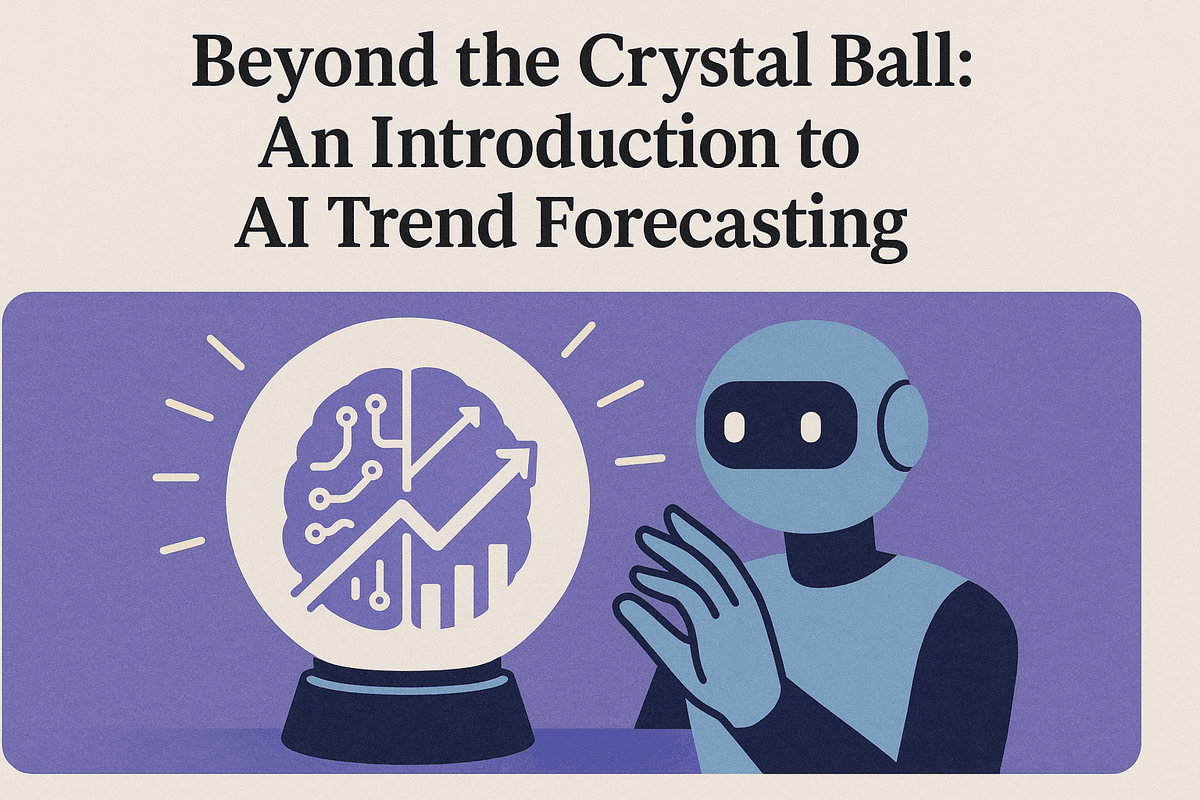
For decades, businesses have tried to predict the future. They’ve relied on a mix of historical data, expert intuition, and costly market research—a process often more art than science, akin to gazing into a cloudy crystal ball. But what if you could replace guesswork with data-driven certainty? This is the promise of AI trend forecasting, a revolutionary approach that transforms how we anticipate what’s next.
What is AI Trend Forecasting?
At its core, AI trend forecasting is the use of artificial intelligence, particularly machine learning and natural language processing (NLP), to analyze massive datasets and identify emerging patterns and consumer behaviors before they become mainstream. It’s a sophisticated system that goes far beyond tracking past sales.
Instead, it sifts through a constant, real-time firehose of information from countless sources, including:
- Social media conversations and sentiment
- Online search queries and web traffic
- Product reviews and e-commerce data
- News articles, blogs, and academic papers
- Even visual data from platforms like Instagram and Pinterest
By connecting seemingly unrelated dots across this digital landscape, AI can detect the faint signals of a budding trend, quantify its potential momentum, and predict its trajectory with a remarkable degree of accuracy.
How AI Surpasses Traditional Forecasting
While traditional methods have their place, AI trend forecasting operates on a completely different level of speed, scale, and sophistication.
- From Reactive to Proactive: Traditional forecasting often identifies a trend only after it has already gained significant traction. It’s a reactive stance. AI, however, detects the earliest whispers of change, allowing businesses to act proactively and become trendsetters rather than followers.
- Scale and Speed: A human analyst can only process so much information. AI algorithms can analyze petabytes of global data in seconds, providing a comprehensive, up-to-the-minute view of the market that is impossible to achieve manually.
- Objectivity Over Intuition: Human analysis is susceptible to cognitive biases and personal experience. AI relies purely on data, uncovering counter-intuitive patterns and correlations that a human expert might overlook. This data-driven objectivity leads to more reliable and defensible predictions.
The Business Impact: Seeing What's Next
The ability to accurately see what’s coming is more than a novelty; it’s a powerful strategic advantage. Implementing a robust AI trend forecasting strategy empowers businesses to make smarter, faster decisions across the board.
Imagine being able to optimize your supply chain for a product that’s about to go viral, launch a marketing campaign that perfectly captures an emerging cultural mood, or design a new service that meets a customer need before they’ve even articulated it. This is the tangible impact. From minimizing the risk of costly inventory write-offs in fashion to identifying the next breakout ingredient in the food industry, AI-powered foresight drives efficiency, innovation, and a significant competitive edge in an increasingly volatile marketplace.
The Core Technologies Driving AI Trend Forecasting
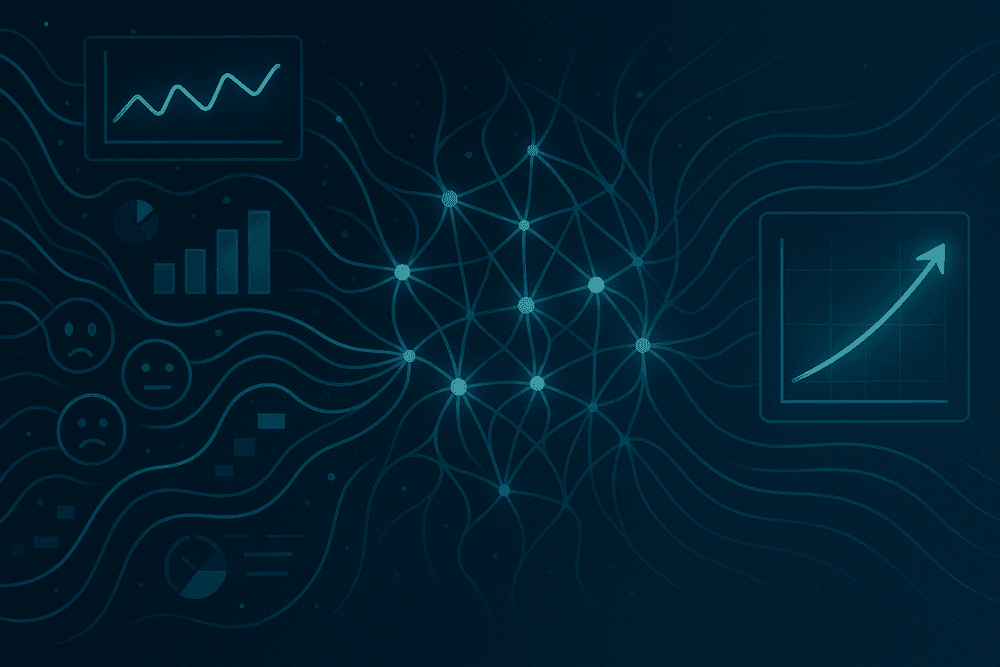
At its heart, AI trend forecasting isn't magic; it's the sophisticated interplay of powerful technologies designed to process and interpret data at a scale far beyond human capability. These systems don't just guess what's next—they build a data-driven case for it. Understanding the core components reveals how AI transforms raw information into a strategic crystal ball for your business. Three technologies form the essential pillars of this revolutionary approach: Machine Learning, Natural Language Processing (NLP), and Predictive Analytics.
Machine Learning: Finding Patterns in Massive Datasets
Machine Learning (ML) is the engine of AI trend forecasting. Its primary function is to sift through colossal datasets—from years of sales figures and website traffic logs to supply chain data and competitor pricing—to identify hidden patterns, subtle correlations, and emerging anomalies. Unlike a human analyst who might spot an obvious seasonal spike, ML algorithms can uncover complex, multi-dimensional relationships that are invisible to the naked eye.
For instance, an ML model might discover that a slight increase in social media mentions of a specific color, combined with a particular weather pattern in a key region, consistently precedes a 15% jump in sales for a certain product category. By continuously learning and adapting as new data flows in, these algorithms refine their understanding, making the entire ai trend forecasting process smarter and more accurate over time. They are the tireless digital detectives finding clues that everyone else has missed.
Natural Language Processing (NLP): Tapping into Social Sentiment
While ML excels at analyzing structured numerical data, a vast amount of trend information exists as unstructured human language. This is where Natural Language Processing (NLP) comes in. NLP is a branch of AI that gives computers the ability to read, understand, and interpret human language from sources like social media posts, news articles, customer reviews, and forum discussions.
Using techniques like sentiment analysis, NLP can gauge public feeling—positive, negative, or neutral—toward a brand, product, or emerging idea in real-time. It can also perform topic modeling to identify the key themes and concepts people are discussing. This technology is crucial for understanding the why behind the data. It decodes the cultural context and consumer emotions that drive trends, transforming the chaotic "voice of the customer" into structured, quantifiable insights that fuel a more nuanced ai trend forecasting model.
Predictive Analytics: From Historical Data to Future Outcomes
If ML finds the patterns and NLP understands the sentiment, Predictive Analytics is the component that projects these insights into the future. This is where historical data and identified trends are used to build statistical models that forecast what is likely to happen next. It's the final, crucial step that transforms analysis into actionable strategy.
Using techniques like time-series analysis and regression modeling, predictive analytics answers critical business questions: "Based on current trajectories, what will our sales be next quarter?" or "Which emerging consumer interest is most likely to become a mainstream trend in the next six months?" This forward-looking capability is the ultimate goal of ai trend forecasting, allowing businesses to move from a reactive to a proactive stance. Instead of merely responding to market shifts, companies can anticipate them, enabling them to optimize inventory, plan marketing campaigns, and develop products that meet future demand before it even peaks.
Key Business Benefits of AI Trend Forecasting
In today's hyper-competitive market, waiting for a trend to prove itself is a surefire way to fall behind. The real value lies in anticipating what's next. This is where AI trend forecasting transitions from a technological marvel to a critical business asset. By harnessing the power of machine learning and big data, companies can unlock tangible benefits that drive growth, efficiency, and customer loyalty. It’s about replacing intuition with data-driven foresight and turning faint market signals into decisive strategic action.
Gain a Competitive Edge with Proactive Strategies
The traditional business model is often reactive, responding to market shifts after they’ve already gained momentum. AI trend forecasting flips this script entirely, enabling a proactive and offensive strategy. Instead of chasing competitors, you can set the pace. AI algorithms relentlessly sift through vast, unstructured datasets—from social media chatter and search engine queries to economic indicators and patent filings—to identify nascent trends and micro-movements before they hit the mainstream.
Imagine a fashion retailer's AI identifying a surge in online mentions of "gorpcore aesthetics" combined with a specific color palette in a key demographic. This foresight allows them to design a capsule collection, adjust their supply chain, and launch a targeted marketing campaign to capture the market just as demand peaks. This first-mover advantage doesn't just translate to a spike in sales; it builds brand authority and positions your company as an innovative leader that truly understands the pulse of the consumer.
Optimize Inventory and Reduce Waste
The warehouse is where profits are often won or lost. Overstocking leads to costly markdowns and dead inventory, while understocking results in missed sales and customer frustration. Accurate demand prediction is the holy grail of supply chain management, and AI trend forecasting delivers it with unprecedented precision.
By analyzing historical sales data alongside external factors like upcoming cultural events, weather patterns, and even influencer activity, AI models can forecast demand with remarkable accuracy. A consumer packaged goods company, for instance, can use this technology to predict the popularity of a new beverage flavor in different regions, ensuring optimal stock levels at every distribution center. This not only maximizes revenue and protects profit margins but also directly supports sustainability goals. By minimizing excess production and logistical waste, businesses can operate more efficiently and appeal to an increasingly eco-conscious consumer base.
Personalize Marketing and Product Development
The one-size-fits-all approach is a relic. Modern consumers expect personalization, and AI trend forecasting provides the key to unlocking it at scale. The technology moves beyond broad demographic data to understand the nuanced interests and evolving desires of specific customer segments. By analyzing online conversations, product reviews, and browsing behavior, AI can pinpoint exactly what your audience is becoming passionate about right now.
This deep insight fuels two critical business functions. For marketers, it enables the creation of hyper-relevant campaigns that resonate on a deeper level. For product development, it closes the gap between R&D and real-world desire. Instead of relying on slow-moving focus groups, companies can use real-time trend data to innovate and create products they know people are already starting to look for, drastically reducing the risk of a failed launch and ensuring new offerings land with maximum impact.

AI Trend Forecasting in Action: Real-World Use Cases
The theory behind AI-driven prediction is powerful, but its true value shines in its real-world application. Across diverse industries, AI trend forecasting is no longer a futuristic concept but a practical tool for gaining a competitive edge. By analyzing vast, unstructured datasets in real-time, these systems uncover patterns and opportunities that are invisible to the human eye. Let's explore how this technology is reshaping decision-making in fashion, finance, and marketing.
How the Fashion Industry Predicts the Next 'It' Item
The fashion world, once ruled by the intuition of seasoned editors and designers, is now embracing data science. Instead of waiting for runway shows to dictate future styles, companies use AI trend forecasting to get ahead of the curve. AI platforms continuously scan social media, e-commerce sites, and street-style blogs to identify micro-trends as they emerge.
These algorithms analyze millions of images and text posts to detect rising patterns in:
- Silhouettes and Styles: Is the oversized blazer being replaced by fitted moto jackets?
- Colors and Textures: Is "millennial pink" giving way to "Gen-Z green"?
- Keywords and Sentiment: How are influencers and consumers talking about specific items like cargo pants or ballet flats?
By quantifying this data, brands can predict which items will become commercial hits with remarkable accuracy. This allows them to optimize inventory, reduce waste from overproduction, and ensure they have the next "it" item in stock just as demand peaks.
Using AI to Spot Market Opportunities in Finance
In the fast-paced world of finance, milliseconds and early signals can translate into millions of dollars. AI trend forecasting provides a crucial advantage by moving beyond traditional financial reports and stock charts. Sophisticated AI models ingest a torrent of alternative data, including:
- Global news articles and press releases
- Social media sentiment and forum discussions
- Satellite imagery (e.g., tracking activity at ports or retail parking lots)
- Regulatory filings and patent applications
By applying natural language processing (NLP) and machine learning, these systems can spot early indicators of market shifts. For instance, an AI might detect a sudden surge in conversations about a specific biotech innovation across scientific journals and investor forums, signaling a potential breakout sector long before it hits mainstream financial news. This enables investment firms to identify nascent opportunities, manage risk by anticipating market downturns, and make more informed, data-driven trading decisions.
Refining Campaign Messaging with Predictive Marketing Insights
Effective marketing is about delivering the right message to the right person at the right time. AI trend forecasting makes this possible on an unprecedented scale. Before launching a major campaign, marketers can use AI to analyze online conversations, search query data, and competitor activities to understand the current cultural zeitgeist.
This isn't just about identifying popular topics; it's about understanding nuance. An AI can determine the specific language, tone, and imagery that resonates most powerfully with a target audience. For example, it might find that consumers are responding better to messages of sustainability and durability rather than luxury and status. These predictive insights allow marketing teams to A/B test creative concepts, refine campaign messaging for maximum impact, and allocate their budget to the channels and strategies most likely to yield a high return on investment.
How to Implement AI Trend Forecasting in Your Business
Adopting AI trend forecasting is more than just buying software; it's about strategically weaving predictive intelligence into the fabric of your operations. Moving from theory to practice requires a clear plan. Here’s a roadmap to help you select the right tools, integrate them seamlessly, and navigate the inevitable challenges.
Choosing the Right AI Forecasting Tools and Platforms
Not all AI solutions are created equal. The right choice depends on your specific needs, resources, and technical expertise. Consider these factors before you commit:
- Off-the-Shelf vs. Custom-Built: SaaS (Software-as-a-Service) platforms offer a quick and user-friendly entry point into AI trend forecasting. They are ideal for businesses without a dedicated data science team. Custom-built models, on the other hand, provide a tailored solution for unique challenges but require significant investment in time, talent, and resources.
- Industry Specificity: Look for platforms that specialize in your industry, whether it's retail, finance, or marketing. An AI tool trained on fashion data will be far more effective at predicting apparel trends than a generic forecasting model.
- Data Integration Capabilities: Your chosen tool must be able to connect with your existing data sources, such as your CRM, ERP, and social media analytics platforms. Look for robust API support and easy integration to create a unified data ecosystem.
- Scalability and Usability: Start with a tool that can grow with your business. It should handle increasing data volumes and user demands without a drop in performance. Equally important is a clean, intuitive interface that empowers your team to extract insights without needing a Ph.D. in data science.
A Step-by-Step Integration Plan
Integrating AI trend forecasting into your workflow is a process, not a one-time event. Follow these steps for a smoother transition.
- Define Clear Objectives: What do you want to achieve? Are you looking to optimize inventory, predict market shifts, or anticipate consumer behavior? Defining specific, measurable goals will guide your entire implementation strategy.
- Conduct a Data Audit: AI is fueled by data. Assess the quality, accessibility, and completeness of your internal and external data. Identify gaps and create a plan for data cleansing and collection before you begin.
- Launch a Pilot Project: Don’t attempt a company-wide rollout from day one. Start with a small, focused pilot project. This allows you to test the technology, measure ROI, and gather learnings in a low-risk environment.
- Train Your Team: Technology is only as good as the people who use it. Invest in training to ensure your team understands how to operate the new tools and, more importantly, how to interpret the AI-generated forecasts to make informed decisions.
- Integrate, Measure, and Iterate: Once the pilot proves successful, begin a phased integration into wider workflows. Continuously monitor performance against your initial objectives and use feedback to refine your AI trend forecasting processes.
Overcoming Common Implementation Challenges
Anticipating roadblocks is key to a successful implementation. Here are common hurdles and how to clear them:
- Poor Data Quality: The "garbage in, garbage out" principle is paramount in AI. Implement strong data governance policies and use data cleansing tools to ensure your forecasting models are fed accurate, reliable information.
- Integration with Legacy Systems: Connecting a modern AI platform with older, existing systems can be complex. Prioritize solutions with flexible APIs and dedicated technical support to bridge the gap.
- Skill Gaps and Resistance to Change: Some team members may be hesitant to trust or adopt new AI systems. Address this through transparent communication, comprehensive training, and by highlighting how the technology empowers them in their roles rather than replaces them. Demonstrating early wins from your pilot project is a powerful way to build trust and encourage buy-in.

The Future of AI Trend Forecasting and Your Next Steps
The journey into AI trend forecasting is just beginning. As the technology evolves, it's moving beyond simply predicting what's next to actively shaping and creating it. We are on the cusp of an era where AI doesn’t just provide a report on the future; it helps build the blueprint. For businesses willing to adapt, this transition offers an unprecedented competitive edge. But capitalizing on this future requires more than just a software subscription—it demands a strategic vision and a cultural shift.
The Horizon: Emerging Capabilities in Predictive AI
The future of AI trend forecasting is dynamic and intelligent. The tools of tomorrow will be more integrated, intuitive, and powerful, offering capabilities that seem like science fiction today.
- From Predictive to Generative: The next wave of AI won't just tell you that "vintage-inspired floral patterns" are trending. Generative AI will create hundreds of unique, market-ready floral designs based on the predicted trend parameters, drastically shortening the creative lifecycle from concept to production.
- Explainable AI (XAI): The "black box" problem, where AI provides answers without explanations, is fading. Future platforms will incorporate XAI, detailing why a certain trend is emerging by highlighting the specific data points, social conversations, and market shifts driving it. This transparency builds trust and allows for more nuanced strategic planning.
- Hyper-Personalized Micro-Trends: Forget forecasting broad market movements. AI will soon identify and predict micro-trends within niche consumer segments in real-time. Imagine an e-commerce platform that automatically adjusts its homepage to feature products aligned with a trend that is just starting to bubble up among 18-24 year-olds in a specific city.
Beyond the Tech: Building a Data-Driven Culture
The most sophisticated AI trend forecasting model is only as effective as the organization that uses it. To truly unlock its potential, you must cultivate a culture that is agile, collaborative, and data-literate.
Success hinges on democratizing data insights. When the marketing, product development, and supply chain teams all have access to the same trend forecasts, they can operate in sync. Marketing can craft campaigns that resonate with emerging desires, product teams can develop relevant goods, and the supply chain can anticipate demand to avoid stockouts or over-production. This requires breaking down departmental silos and fostering an environment where data-backed decisions are the norm, not the exception. It's about empowering your teams to ask the right questions and trust the insights the AI provides, allowing them to pivot quickly and confidently.
Your Checklist to Get Started with AI Forecasting Today
Ready to move from theory to practice? Taking the first step into AI trend forecasting doesn't have to be overwhelming. Use this checklist to build momentum and lay a solid foundation for success.
- Define Your Core Objective: What business question do you need to answer? Are you trying to predict next season's top-selling product, anticipate a shift in consumer sentiment, or stay ahead of competitor movements? A clear goal focuses your efforts.
- Audit Your Data Infrastructure: Take stock of your current data sources. Do you have access to clean, reliable data from sales, social media, customer service interactions, and web analytics? Identify gaps and create a plan to close them.
- Launch a Pilot Program: Start small to win big. Choose a single product line, brand, or market segment for a pilot project. Use this controlled experiment to demonstrate the value of AI forecasting and build a business case for wider implementation.
- Evaluate Tools and Partners: Research the landscape of AI forecasting platforms. Consider whether an off-the-shelf SaaS tool meets your needs or if a custom solution is required. Look for partners who understand your industry and can guide your strategy.
- Foster Internal Champions: Identify individuals within your team who are passionate about data and innovation. Empower them to lead the pilot project, share learnings, and advocate for a more data-driven approach across the organization.