
July 7, 2025
What is a Storyteller AI and How Can It Transform Your
Beyond the Buzzword: What is a Storyteller AI and How Can It Transform Your Brand?
The term "AI" is everywhere, but when we talk about a storyteller AI, we’re moving beyond simple text generation. This isn't just about auto-completing sentences or churning out generic blog posts. A true storyteller AI is a sophisticated system designed to understand and execute the fundamental principles of narrative craft. It’s a strategic partner that comprehends plot, character development, emotional arcs, and brand voice, then fuses them with data-driven insights to create resonant and persuasive brand stories.
Think of it as the difference between a dictionary and a novelist. A basic content generator knows the words, but a storyteller AI knows how to weave them together to make an audience feel something. It analyzes your brand’s core values, target audience sentiment, and market positioning to build narratives that are not just coherent, but compelling and authentic.
The Core Problem: Why Traditional Brand Storytelling Struggles to Scale
For decades, brand storytelling has been a highly manual, resource-intensive art form. The process is fraught with challenges that limit its impact in today's hyper-fast, multi-channel environment:
- The Scalability Bottleneck: A great brand story requires time, deep thought, and skilled human talent. Crafting a single powerful campaign can take weeks or months. Replicating that quality and nuance across countless social media posts, email campaigns, ad variations, and website pages is a monumental task that most teams can't sustain.
- Brand Voice Inconsistency: As teams grow and content demands multiply, maintaining a consistent brand voice becomes nearly impossible. The story told on Instagram can feel disconnected from the one in a sales deck, diluting the brand’s identity and confusing the audience.
- Data Disconnect: Marketers have access to vast amounts of customer data, but manually translating those analytics into emotionally resonant story angles is slow and often based on guesswork. Opportunities to connect are missed because the insights aren't effectively bridged with the creative process.
First Look: The Immediate Impact of AI on Narrative Creation
This is where a storyteller AI fundamentally changes the game. It doesn’t replace the human creative, but rather empowers them by tackling the core issues of scale, consistency, and data integration head-on. The initial impact is immediate and transformative.
By leveraging a storyteller AI, your brand can instantly accelerate its creative output, generating dozens of on-brand story ideas, headlines, and narrative frameworks in minutes. It acts as a guardian of your brand voice, ensuring every piece of micro-content aligns perfectly with your core message. Most powerfully, it turns raw data into narrative fuel. A storyteller AI can analyze customer feedback to identify common pain points and desires, then automatically weave those emotional truths into personalized stories that make each customer feel seen and understood. The result is a brand that can finally tell a powerful, unified story at a scale that meets the demands of the modern digital landscape.
Meet Your Co-Author: A Review of the Top Storyteller AI Platforms
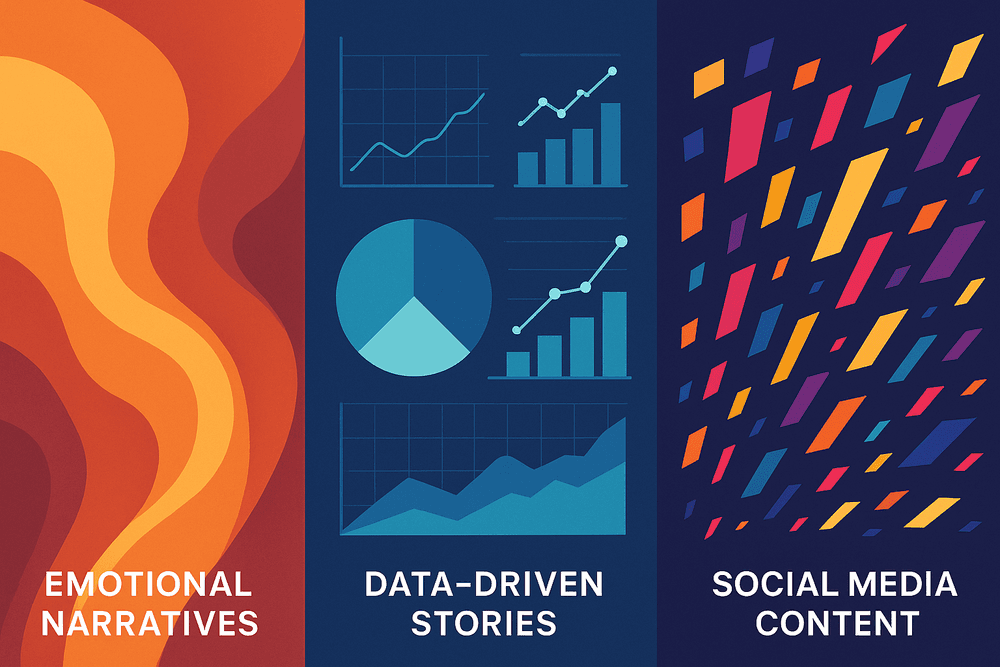
Choosing the right creative partner is crucial, and the world of AI is no different. The best storyteller ai for your brand depends entirely on your goals, your audience, and the type of narrative you want to build. Are you aiming for emotional depth, data-backed authority, or viral social media buzz? Let’s explore three leading platforms, each with a unique specialty, to help you find your perfect AI co-author.
Tool A: Best for Generating Emotional Arcs and Character Profiles
If your brand’s power lies in connection and relatability, Tool A is your go-to creative engine. This platform excels at the human side of storytelling. It moves beyond simple plot generation to help you craft rich, multi-dimensional character profiles for your brand personas or customer archetypes. Imagine feeding it your core values and target audience demographics, and in return, receiving a detailed "hero" profile that embodies your ideal customer.
Tool A is masterful at structuring emotional arcs. It can outline a classic hero’s journey for a case study, create a compelling "underdog" narrative for your startup story, or generate dialogue that captures a specific emotional tone. This makes it invaluable for campaigns that need to build empathy and foster genuine brand affinity. Use it to write brand manifestos, scripts for heartfelt video testimonials, and long-form content that feels deeply human.
Tool B: The Ultimate Platform for Data-Driven Narratives
For brands that need to prove their value with cold, hard facts, Tool B is the ultimate analytical storyteller. This platform specializes in transforming complex datasets, market research, and performance metrics into clear, persuasive, and impactful narratives. It bridges the gap between your analytics team and your marketing department, ensuring your stories are not only compelling but also undeniably credible.
Feed Tool B your quarterly sales figures, and it can generate a report that highlights growth trends through a story of strategic success. Provide it with customer usage data, and it will craft a case study demonstrating tangible ROI. This storyteller ai is ideal for creating white papers, investor pitch decks, and B2B marketing content where authority and evidence are paramount. It ensures your brand’s story isn’t just told—it’s proven.
Tool C: Ideal for Short-Form Video and Social Media Storytelling
In the fast-scrolling world of social media, you have seconds to make an impact. Tool C is engineered for this high-speed environment. Its strength lies in generating concise, punchy, and trend-aware content optimized for platforms like TikTok, Instagram Reels, and YouTube Shorts. It understands what makes a hook catchy, a caption shareable, and a 15-second video script engaging.
Tool C can brainstorm viral-worthy concepts, generate multiple script variations for A/B testing, and even suggest relevant hashtags and trending audio. It helps you adapt your core brand message into dozens of bite-sized content pieces, ensuring your narrative remains consistent yet fresh across all social channels. If your strategy revolves around audience engagement, community building, and staying culturally relevant, Tool C is your agile content creation partner.
Feature Comparison: Which AI Storyteller Aligns with Your Brand Voice?
The right storyteller ai acts as an extension of your brand’s unique voice.
- If your brand is empathetic and community-focused, seeking to build deep emotional bonds with its audience, Tool A’s focus on character and emotional arcs will serve you best. It helps you tell stories that people feel.
- If your brand is authoritative and results-oriented, needing to establish credibility and communicate complex value propositions, Tool B’s data-driven approach is unmatched. It helps you tell stories that convince.
- If your brand is dynamic and trend-savvy, thriving on fast-paced engagement and cultural relevance, Tool C’s specialization in short-form content will give you a competitive edge. It helps you tell stories that spread.
Unlocking Narrative Potential: Must-Have Features of a Modern Storyteller AI
Not all AI is created equal, especially when the goal is to weave compelling brand narratives. A generic text generator might produce words, but a true storyteller ai is a strategic partner equipped with specialized features designed to build worlds, evoke emotion, and drive connection. When evaluating platforms, moving beyond basic content creation is key. The real power lies in an AI that understands the intricate art of storytelling. To truly elevate your brand's voice, look for a storyteller ai that offers these four non-negotiable capabilities.
Consistent Character and Voice Generation Across Campaigns
Brand trust is built on consistency. Your audience needs to recognize you, whether they encounter your brand on TikTok, in an email newsletter, or through a long-form blog post. A cutting-edge storyteller ai excels at this by creating and maintaining a consistent brand voice and character. You can define your brand’s personality—be it witty and irreverent, wise and authoritative, or warm and empathetic—and the AI will lock in that persona. It ensures that every piece of content sounds like it came from the same source, preventing brand dilution and fostering a reliable, recognizable identity that resonates with your audience over time. This feature is the bedrock of building a memorable brand character that can evolve without losing its core essence.
Audience Persona Analysis for Hyper-Relevant Stories
The most powerful stories are the ones that feel personal. A sophisticated storyteller ai moves beyond one-size-fits-all narratives by deeply analyzing your target audience. By processing data on demographics, engagement patterns, and psychographics, these tools can build detailed, dynamic audience personas. This allows the AI to understand what truly motivates, inspires, or challenges your customers. Armed with this insight, the storyteller ai can craft hyper-relevant stories that speak directly to the needs and values of specific segments. Instead of shouting into the void, your brand can whisper the perfect message to the right person at the right time, forging a much deeper and more meaningful connection.
Plot Generation and Narrative Structure Suggestions
Every great story needs a solid structure. From the inciting incident to the climactic resolution, the narrative arc is what keeps an audience hooked. However, staring at a blank page can be daunting. This is where a storyteller ai becomes an invaluable creative collaborator. It can suggest proven narrative frameworks, such as the Hero's Journey, Freytag's Pyramid, or the classic three-act structure. Furthermore, it can generate multiple plot points, potential conflicts, and satisfying resolutions tailored to your brand’s message. This feature doesn’t replace the human creative; it empowers them by providing a robust scaffold, overcoming writer's block and allowing your team to focus on refining the emotional and strategic nuances of the story.
Integrating Brand Guidelines and Messaging Pillars
Your brand is more than just a voice; it's a set of rules, values, and strategic messages. The most advanced storyteller ai platforms allow you to upload your entire brand bible. This includes style guides, approved terminology, do-not-use lists, and core messaging pillars. The AI then uses these documents as foundational constraints, ensuring every narrative it generates is 100% on-brand. This seamless integration means you can scale content production without sacrificing compliance or strategic alignment. Every tagline, character arc, and call-to-action will reinforce your brand’s identity and business objectives, making the AI a true guardian of your brand's narrative integrity.

From Prompt to Protagonist: A Strategic Guide to Using a Storyteller AI
Using a storyteller ai is less like pressing a button and more like directing a talented, lightning-fast creative partner. Your success hinges not on the AI’s power alone, but on your strategy as its guide. The magic happens when human insight collaborates with machine intelligence. This guide will walk you through the essential steps, from briefing your AI to measuring the impact of your co-created narratives.
Crafting the Perfect Prompt: How to Brief Your AI for Success
The quality of your output is a direct reflection of your input. A vague prompt yields a generic story. A detailed, strategic prompt unlocks the full potential of your storyteller ai. Think of your prompt as a creative brief for a human writer.
- Provide Rich Context: Don't just ask for "a story about our brand." Instead, feed the AI the core ingredients. Include your target audience (e.g., "tech-savvy Gen Z entrepreneurs"), brand voice ("inspirational, witty, and slightly rebellious"), and the central theme (e.g., "overcoming the fear of failure").
- Define the Narrative Arc: Outline the story structure. For example: "Start with the protagonist (a small business owner) facing a common challenge (data overload). Introduce our product as the mentor/guide that provides a solution (simplified analytics). Conclude with the protagonist's transformation (making confident, data-driven decisions)."
- Set Clear Constraints: Specify the format (blog post, 60-second video script, a series of five tweets), desired word count, and any negative constraints (e.g., "avoid corporate jargon," "do not mention our competitors by name"). The more specific your instructions, the more tailored the result.
The Human-in-the-Loop: Editing and Refining AI-Generated Narratives
The most powerful storyteller ai is one paired with a discerning human editor. Your role is to transform a well-structured draft into a resonant, authentic piece of brand communication. The AI does the heavy lifting, but you provide the soul.
- Fact-Check and Verify: AI models can sometimes "hallucinate" or invent facts and statistics. Always verify any data points or specific claims the AI generates to maintain your brand’s credibility.
- Inject Emotional Nuance: While an AI can mimic tone, it can't replicate genuine human experience. Refine the language to add subtle emotional layers. Tweak a phrase, reorder a sentence, or add a specific, sensory detail that makes the story feel personal and lived-in.
- Strengthen Brand Voice: Read the entire piece aloud. Does it sound exactly like your brand? This is where you infuse your unique personality, ensuring every word aligns with your established style guide and brand identity.
Measuring Success: KPIs for Your AI-Powered Brand Stories
To justify the use of a storyteller ai, you must connect its output to tangible business outcomes. Track these Key Performance Indicators (KPIs) to measure the ROI of your AI-assisted content.
- Engagement Metrics: Monitor likes, comments, shares, and save rates. For video, track average view duration. High engagement signals that your story is resonating with your audience.
- Conversion Metrics: Measure click-through rates (CTRs) on links within your stories, lead-generation form completions, and, ultimately, sales attributed to the content campaign.
- Efficiency Gains: Calculate the reduction in time and resources required to produce content. How much faster can you go from idea to published story? This time-to-market improvement is a significant benefit.
- Brand Sentiment: Use social listening tools to analyze conversations around your brand before and after a story campaign. Is the sentiment becoming more positive?
Avoiding Common Pitfalls: Ensuring Authenticity and Avoiding Generic Content
The biggest risk in using a storyteller ai is producing content that feels robotic, generic, or detached from your brand’s core. Here’s how to avoid that trap:
- The Pitfall of Uniformity: Relying on the same simple prompts will produce similar-sounding content.
- Solution: Constantly feed the AI new, specific details. Use your latest customer testimonials, internal data, and team stories as fresh source material for your prompts.
- The Pitfall of Inauthenticity: Accepting the first draft without human refinement.
- Solution: Commit to the "human-in-the-loop" model. Your brand’s unique perspective and authentic voice are your greatest assets; ensure they are layered on top of the AI's foundation.
- The Pitfall of Forgetting Your "Why": Focusing on what the AI can create, not what your brand needs to say.
- Solution: Before you even write a prompt, revisit your brand's mission and the story’s objective. Every narrative you create should be a clear expression of your purpose. The AI is the "how," but you must always provide the "why."
Real-World Wins: How Brands Are Using Storyteller AI to Captivate Audiences
The true power of any technology lies in its application. While the theory of AI-driven narratives is compelling, the real magic happens when brands put it into practice. From simplifying the complex to personalizing at scale, a storyteller AI is becoming the secret weapon for marketing teams across industries. Let's explore three distinct examples of how organizations are achieving measurable success.
Case Study: A B2B Tech Firm Simplifies Complex Products
The Challenge: "InnovateNext," a B2B firm specializing in quantum-resistant encryption, faced a significant hurdle: their target audience of C-suite executives often lacked the deep technical background to grasp the product's urgency and value. Their marketing materials were dense, filled with jargon, and failed to connect on an emotional level.
The Solution: The marketing team adopted a sophisticated storyteller AI trained on crafting analogies and simplifying complex topics. They fed the AI their technical whitepapers, product specs, and target audience personas. The AI then generated a series of relatable narratives. Instead of explaining cryptographic protocols, it told stories about a "digital fortress with an unbreachable gate" or a "secret messenger who can't be intercepted." These AI-generated narratives became the foundation for their new website copy, explainer videos, and sales decks.
The Result: InnovateNext saw a 40% increase in qualified leads within three months. Sales cycles shortened as executives could quickly understand the business implications rather than getting lost in technical details. The storyteller AI didn't just translate jargon; it transformed it into compelling stories that resonated with decision-makers.
Case Study: A CPG Brand Creates Personalized Email Campaigns That Convert
The Challenge: "Nourish & Bloom," a direct-to-consumer brand for organic snacks, struggled to cut through the noise of a crowded market. Their generic, one-size-fits-all email campaigns yielded low open rates and even lower conversion rates. They had the customer data but lacked the resources to manually craft personalized messages at scale.
The Solution: They integrated a storyteller AI with their CRM and e-commerce platform. The AI analyzed customer data—past purchases, browsing history, and time of year—to generate hyper-personalized email narratives. A customer who previously bought gluten-free granola received an email with a short story about a "morning hike powered by the perfect crunchy snack." Someone who browsed their new vegan protein bars got a story about "beating the 3 PM slump with a clean energy boost."
The Result: Nourish & Bloom achieved a 25% lift in email open rates and an 18% increase in click-through-to-purchase conversions. Customers felt seen and understood, transforming a transactional relationship into a brand connection. The storyteller AI enabled true one-to-one marketing, making each customer the hero of their own snack-time story.
Case Study: A Non-Profit Amplifies Its Mission with Founder Stories
The Challenge: "Paws & Hope," an animal rescue non-profit, was run by a small, passionate team that was perpetually overstretched. They had countless heartwarming stories of rescued animals and dedicated volunteers but no time to write and polish them for their website, social media, and donor outreach.
The Solution: The founder began using a storyteller AI as a content partner. She would record a few minutes of audio, speaking conversationally about a recent rescue or a volunteer's impact. She then uploaded the audio transcript to the AI, which transformed her raw notes into a structured, emotionally resonant story formatted for a blog post or social media caption.
The Result: With a consistent stream of high-quality, emotionally charged content, Paws & Hope saw a 50% increase in online donations over six months. Their volunteer application rate doubled. The storyteller AI acted as a force multiplier, allowing the small team to amplify their mission and connect with a wider audience of supporters by consistently sharing the powerful stories at the heart of their work.

The Next Chapter: Is a Storyteller AI Right for Your Brand?
We've journeyed through the landscape of AI-powered brand narratives, exploring the tools, strategies, and transformative potential of this technology. Now, we arrive at the most important question: how does this new chapter of storytelling fit into your brand's future? The decision to integrate a storyteller AI is not just about adopting new tech; it's about fundamentally enhancing your ability to connect with your audience.
Recap: Key Takeaways for Your AI Storytelling Strategy
Before looking ahead, let’s distill the core principles for success. A powerful AI storytelling strategy isn't about replacing human creativity but augmenting it. Remember these key takeaways:
- Define Your Voice: The most effective storyteller AI acts as an extension of your brand. Before you write a single prompt, you must have a clearly defined brand voice, tone, and set of core messages.
- Balance Speed with Soul: AI offers unparalleled speed and scale for content creation. Use it to overcome writer's block, generate variations, and maintain a consistent content pipeline. However, always have a human editor refine the final output to ensure it has the authentic, emotional core your audience craves.
- Leverage Data for Resonance: AI tools can analyze vast amounts of data to identify what resonates with your target audience. Use these insights to craft narratives that are not just creative but also strategically effective.
- Start Small, Scale Smart: You don't need to overhaul your entire content strategy overnight. Begin with a single use case—like social media posts or email subject lines—to learn the capabilities of your chosen storyteller AI before expanding its role.
Future Trends: What's Next for AI in Brand Narrative?
The evolution of AI is rapid, and its application in storytelling is becoming more sophisticated by the day. The storyteller AI of tomorrow will move beyond text generation into fully immersive experiences. Here’s a glimpse of what’s on the horizon:
- Hyper-Personalized Narratives: Imagine an AI that doesn't just personalize a marketing email, but crafts a unique brand story for each individual user based on their past interactions, preferences, and real-time behavior.
- Dynamic & Interactive Content: Future AI will enable brands to create "choose-your-own-adventure" style narratives. Consumers will no longer be passive recipients of a story but active participants, shaping the plot and deepening their engagement with the brand.
- Multimodal Storytelling: The next-generation storyteller AI will be a true multimedia producer, seamlessly generating not only text but also the accompanying images, music, and even short video clips, ensuring a cohesive and immersive brand experience across all platforms.
Your Call to Action: Start Your AI Storytelling Journey Today
So, is a storyteller AI right for your brand? If your goal is to create more compelling content, connect with your audience on a deeper level, and operate with greater efficiency, the answer is a resounding yes. The question isn't if you should start, but how.
Don't wait for the future to arrive—begin building your AI-augmented creative engine now. Here’s your simple, four-step plan to get started:
- Define Your Pilot Project: Choose one specific, low-risk area to test. This could be generating blog post ideas, drafting social media captions, or personalizing customer support responses.
- Select Your Tool: Revisit the AI tools we discussed earlier in this guide. Pick one that aligns with your pilot project's goals and your team's budget.
- Experiment and Learn: Dedicate time to mastering the art of the prompt. Test different inputs, tones, and formats to understand how to get the best results from your AI partner.
- Measure and Refine: Track key metrics. Did the AI-assisted content drive more engagement? Did it save your team valuable time? Use this data to refine your approach and justify wider adoption.
Your brand has a unique story to tell. By embracing a storyteller AI as your creative co-pilot, you can tell it more powerfully, more consistently, and to more people than ever before. Your next chapter starts now.