
August 15, 2025
An Introduction to AI Legal Document Analysis
Beyond the Billable Hour: An Introduction to AI Legal Document Analysis
For generations, the foundation of legal work has been the meticulous, manual review of documents. Hours turned into days, and days into weeks, as legal professionals sifted through mountains of paper, searching for critical clauses, potential risks, and key pieces of evidence. This time-consuming process, while necessary, was often inefficient and prone to human error. Today, a paradigm shift is underway, driven by the power of artificial intelligence.
What is AI Legal Document Analysis, and How Does It Work?
At its core, AI legal document analysis is the application of artificial intelligence technologies—primarily Natural Language Processing (NLP) and Machine Learning (ML)—to read, understand, interpret, and extract information from legal texts automatically. It’s not just about searching for keywords; it’s about understanding context, semantics, and legal nuance at a massive scale.
Here’s a simplified breakdown of the process:
- Ingestion: The system takes in vast quantities of documents, from contracts and depositions to internal emails and regulatory filings.
- Processing: Using NLP, the AI deconstructs sentences to understand grammatical structure, identifies legal terminology, and recognizes concepts, not just words. For instance, it can distinguish between "termination for cause" and "termination for convenience" without being explicitly told to search for those exact phrases.
- Analysis & Learning: Machine learning models, trained on millions of existing legal documents, identify patterns, classify clauses (e.g., liability, confidentiality, governing law), and flag anomalies or deviations from standard language.
- Extraction & Output: The platform then presents the findings in a structured, usable format. This can be a summary of key obligations, a risk-scored report of non-standard clauses, or a categorized list of relevant documents for e-discovery.
The Evolution from Manual Review to Automated Intelligence
The journey from manual review to AI-powered analysis has been a gradual evolution. The first step was basic digitization and keyword searching—a significant improvement, but one with clear limitations. A simple keyword search can’t grasp intent; it can find the word "terminate" but miss a conceptually similar clause written without that specific term.
The true revolution is AI legal document analysis, which represents a leap from simple search to genuine comprehension. It moves legal professionals from being document sifters to strategic analysts. Instead of spending 80% of their time reading and 20% analyzing, AI flips the ratio, freeing up invaluable expertise for higher-value tasks like negotiation, strategy development, and client advisory.
Why Law Firms and Legal Departments Are Making the Switch
The adoption of AI legal document analysis is accelerating because its benefits are tangible, immediate, and transformative. Forward-thinking firms and corporate legal departments are making the switch for several compelling reasons:
- Unprecedented Speed and Efficiency: AI can review thousands of documents in the time it takes a human to review a handful. This drastically shortens timelines for due diligence, contract review, and e-discovery, enabling teams to close deals faster and respond to litigation more quickly.
- Enhanced Accuracy and Risk Mitigation: AI systems don't suffer from fatigue or overlook a critical detail buried in page 500 of an agreement. By systematically analyzing every document against predefined criteria, they reduce the risk of costly human error and uncover potential liabilities that might otherwise go unnoticed.
- Significant Cost Savings: By automating repetitive, labor-intensive tasks, firms reduce the number of billable hours spent on low-level review. This translates to more predictable budgets, better value for clients, and improved profitability for the firm.
- Empowering Strategic Focus: When lawyers and paralegals are freed from the drudgery of manual review, they can dedicate their intellect and experience to what matters most: interpreting complex legal issues, advising clients, and shaping case strategy.
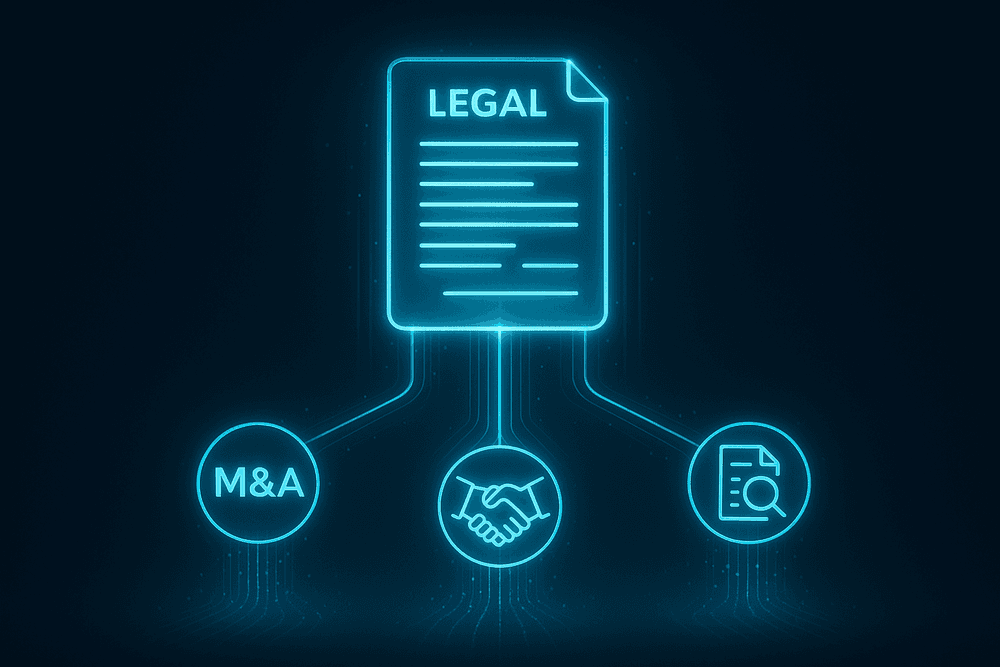
Comparing the Top Platforms for AI Legal Document Analysis
The market for AI legal document analysis is no longer a monolith. Today, leading platforms are highly specialized, designed to excel at specific legal tasks. Choosing the right software depends entirely on your primary use case, whether it's accelerating due diligence, streamlining contract negotiation, or navigating the complexities of e-discovery. Here’s a breakdown of the top contenders and what sets them apart.
Kira Systems: The M&A Due Diligence Powerhouse
Acquired by Litera, Kira Systems has carved out a reputation as the go-to tool for M&A due diligence and other transactional work. Its core strength lies in its patented, pre-trained machine learning models that can instantly identify and extract hundreds of common clauses and data points from legal documents. This is invaluable in a due diligence room where lawyers need to quickly find specific provisions like change of control, assignment, or indemnification clauses across thousands of contracts.
Kira’s Quick Study feature allows firms to train the AI to find unique provisions specific to a deal, enhancing its out-of-the-box capabilities. For law firms and corporate legal departments focused on transactional efficiency and risk mitigation, Kira provides a powerful, targeted solution for high-stakes document review.
Luminance: AI for Contract Review and Negotiation
Luminance takes a broader approach, positioning itself as an AI platform for the entire contract lifecycle. It uses a unique blend of supervised and unsupervised machine learning to read and form an understanding of a document set. Its standout feature is its ability to create a visual "map" of the documents, highlighting anomalies and key differences between a contract and a firm’s standard precedents.
This "traffic light" system helps lawyers instantly spot non-standard or risky clauses. Luminance is not just for review; it extends into negotiation with features that integrate with Microsoft Word, allowing lawyers to leverage AI insights directly while redlining. This makes it a versatile choice for in-house teams managing a high volume of commercial contracts and law firms looking to standardize their review process.
Relativity: A Leader in E-Discovery and Litigation Support
When it comes to litigation and investigations, Relativity is the undisputed industry leader. While its scope is broader than just document analysis, its AI legal document analysis capabilities are central to its e-discovery platform. RelativityOne, its cloud-based solution, leverages advanced AI and active learning—often called Technology Assisted Review (TAR)—to help legal teams sift through millions of documents efficiently.
Instead of manually reviewing every file, lawyers train the system by coding a small sample of documents as "relevant" or "not relevant." The AI then intelligently prioritizes the most likely relevant documents for human review, dramatically reducing costs and review time in litigation. For any organization facing complex disputes, Relativity provides an essential, scalable, and court-accepted toolkit.
Evaluating Emerging Players and Open-Source Alternatives
Beyond these established leaders, the landscape is rich with innovation. Emerging platforms like Evisort and ContractPodAi are pushing the boundaries of what AI legal document analysis can do, focusing on enterprise-wide contract intelligence and connecting legal data to business outcomes.
For organizations with deep technical expertise, open-source alternatives present another path. Libraries like spaCy and pre-trained models from hubs like Hugging Face can be used to build custom analysis tools. While this approach offers maximum flexibility and cost control, it requires significant investment in data science talent for development, maintenance, and ensuring the models are trained accurately on specific legal language.
Core Features to Demand in Your AI Legal Document Analysis Software
As AI technology floods the legal market, it can be challenging to distinguish between genuinely transformative tools and those with limited capabilities. To ensure you’re investing in a solution that delivers a true competitive advantage, your chosen AI legal document analysis software must include a specific set of non-negotiable, core features. These functionalities are the bedrock of modern legal work, turning overwhelming data into actionable intelligence.
Automated Contract Abstraction and Clause Identification
At its most fundamental level, an effective AI tool must excel at understanding the anatomy of a legal document. Automated contract abstraction is the process of using Natural Language Processing (NLP) to instantly identify, extract, and organize critical information—such as key dates, parties, obligations, renewal terms, and liability caps.
Gone are the days of manually combing through hundreds of pages. This feature empowers your team to:
- Accelerate Due Diligence: Instantly analyze entire data rooms during M&A, identifying critical clauses and potential red flags in a fraction of the time.
- Standardize Review: Ensure consistency by automatically identifying specific clauses (e.g., Force Majeure, Indemnification) across a portfolio of contracts.
- Build a Clause Library: Effortlessly extract and categorize preferred clauses from existing agreements to streamline future drafting.
AI-Powered E-Discovery and Relevance Ranking
In litigation and internal investigations, the sheer volume of electronically stored information (ESI) can be paralyzing. An AI-powered e-discovery feature is essential for navigating this data deluge. Using advanced machine learning and technology-assisted review (TAR), the software can sift through millions of documents—from emails to internal memos—and intelligently rank them based on their relevance to the case. This moves beyond simple keyword searching, understanding context and concepts to prioritize the most crucial evidence, drastically reducing review time and associated costs. It helps legal teams find the "smoking gun" faster and build a stronger case strategy from the outset.
Proactive Risk Analysis and Compliance Checking
The best AI legal document analysis tools don't just review documents; they protect your organization. A proactive risk analysis feature acts as a vigilant digital paralegal, automatically flagging potential issues before they become costly problems. The system can be trained on your internal playbooks and external regulatory requirements (like GDPR, CCPA, or HIPAA).
When reviewing a new contract or analyzing an existing portfolio, the AI will:
- Identify Deviations: Highlight clauses that don't conform to your company’s standard positions.
- Flag Missing Clauses: Alert you if a required data privacy or confidentiality clause is absent.
- Assess Risk Levels: Score contracts based on the presence of unfavorable or high-risk language.
This shifts the legal function from a reactive to a proactive, strategic partner in the business.
Seamless Integration with Existing Legal Tech Stacks
An AI tool, no matter how powerful, cannot exist in a vacuum. To maximize efficiency, it must integrate seamlessly with the software your team already uses every day. This is a critical feature, not a "nice-to-have." Look for robust APIs and pre-built connectors for your Document Management System (DMS), Contract Lifecycle Management (CLM) platform, and even your billing or practice management software. Proper integration eliminates data silos, prevents time-wasting manual data entry, and creates a unified workflow where insights from the AI tool are immediately available in the systems where your legal team lives and works.

Real-World Use Cases: How AI Legal Document Analysis Delivers Results
The theoretical benefits of artificial intelligence are compelling, but its true value is proven in its application. Across the legal landscape, firms and corporate departments are leveraging AI legal document analysis to achieve tangible, game-changing results. These platforms are not just automating tasks; they are fundamentally reshaping high-stakes legal processes, delivering unprecedented speed, accuracy, and strategic advantage. Below are three powerful examples of AI in action.
Case Study: Accelerating M&A Due Diligence by 90%
In a typical merger and acquisition deal, the due diligence phase is a notorious bottleneck. Teams of associates can spend thousands of billable hours manually sifting through a target company’s contracts, searching for critical clauses related to change of control, indemnification, liability caps, and intellectual property rights. The process is slow, expensive, and prone to human error.
Enter AI legal document analysis. In a recent multi-billion dollar acquisition, a global law firm deployed an AI platform to review over 25,000 complex agreements. The system was trained to identify and flag more than 50 specific risk provisions. Instead of months, the initial review was completed in under a week. The AI instantly surfaced the most critical documents, allowing senior attorneys to focus their expertise on strategic negotiation rather than tedious review. The result was a 90% reduction in review time, millions saved in legal fees, and a significantly accelerated path to closing the deal with greater confidence.
Streamlining Litigation Prep with Intelligent Document Discovery
Preparing for litigation involves navigating a mountain of evidence in a process known as e-discovery. A keyword search alone is often insufficient, as it can miss context, sarcasm, and coded language. Reviewing these documents manually is a monumental task that drives up litigation costs and can delay case preparation.
An intelligent approach using AI legal document analysis transforms this workflow. For a complex commercial dispute, a corporate legal team used an AI-powered e-discovery tool to analyze over five terabytes of data, including emails, internal memos, and presentations. The AI used Natural Language Processing (NLP) and concept clustering to identify relevant documents, flag privileged communications, and even map out timelines of key conversations between individuals. This allowed the legal team to quickly grasp the core facts of the case, identify crucial evidence, and build a stronger, more informed legal strategy from the outset, all while drastically reducing the time and cost associated with manual document review.
Ensuring Regulatory Compliance Across Thousands of Agreements
When new regulations like GDPR or the California Consumer Privacy Act (CCPA) are introduced, businesses face the daunting task of assessing their entire portfolio of contracts for compliance. Manually reviewing thousands of customer agreements, vendor contracts, and partnership agreements is practically impossible and fraught with risk.
A leading financial services company faced this exact challenge. By implementing an AI legal document analysis solution, they were able to ingest and analyze their entire repository of over 50,000 active contracts. The AI was configured to scan for specific data processing clauses, consent language, and liability terms impacted by the new regulations. Within days, the system generated a comprehensive report identifying all non-compliant agreements and categorizing them by risk level. This allowed the compliance team to prioritize their remediation efforts efficiently, ensure regulatory adherence, and avoid potentially massive fines.
Best Practices for Implementing AI Legal Document Analysis in Your Firm
Adopting new technology is more than just a purchase; it's a strategic shift. A successful rollout of AI legal document analysis requires careful planning, team-wide buy-in, and a steadfast commitment to security and ethics. Follow these best practices to ensure your firm harnesses the full potential of AI while mitigating risks and maximizing your return on investment.
Define Your Objectives and Start with a Pilot Project
Before you even demo a tool, ask: "What specific problem are we trying to solve?" Are you aiming to accelerate M&A due diligence, streamline contract lifecycle management, or reduce the cost of e-discovery? Clear, measurable objectives are the foundation of a successful implementation. Vague goals like "improving efficiency" are not enough. Instead, aim for specifics like "reduce initial contract review time by 40%."
Once you have your objective, avoid a firm-wide, "big bang" rollout. Start small with a pilot project focused on a single, high-impact use case. For example, begin by using an AI legal document analysis tool to review a specific type of contract, like Non-Disclosure Agreements (NDAs) or lease agreements. This controlled approach allows you to:
- Measure ROI: Track key metrics like time saved per document and error reduction rates.
- Gather Feedback: Collect valuable insights from a small group of users to refine your process.
- Build Momentum: A successful pilot project creates internal champions and makes a compelling case for a broader implementation.
Train Your Team: From Data Input to Interpreting AI Outputs
Your team is your most valuable asset, and their proficiency will determine the success of your AI initiative. Training should go beyond a simple "how-to" session and cover the entire workflow, fostering a new way of thinking about document review.
Mastering Data Input
The old adage "garbage in, garbage out" is especially true for AI. Your team needs to understand how to properly prepare and upload documents to ensure the AI can process them accurately. This includes using clear, machine-readable files (not blurry scans) and providing the right context for the analysis. Proper data hygiene is the first step toward reliable results.
Interpreting the Results
Crucially, train your legal professionals to view the AI as an expert assistant, not an infallible oracle. They must learn how to critically evaluate the AI's outputs, verify its findings, and apply their own legal judgment and nuanced understanding. The goal of AI legal document analysis is to augment human expertise, not replace it. The final legal opinion and professional responsibility always rest with your attorneys.
Navigate Data Security and Ethical Considerations
In the legal field, trust and confidentiality are non-negotiable. Addressing security and ethics from day one is essential to protect your clients and your firm's reputation.
- Data Security and Confidentiality: Scrutinize any potential AI vendor’s security credentials. Ensure they offer end-to-end encryption, robust access controls, and compliance with data privacy regulations like GDPR. Clarify data ownership in the terms of service—your client's sensitive information must never be used to train models for other customers. Attorney-client privilege must be preserved at all costs.
- Bias and Accountability: Be aware that AI can inherit biases from its training data. Encourage your team to remain vigilant for any skewed or unfair outputs. Establish clear internal policies on who is accountable for the final work product. While the AI provides the initial analysis, the supervising attorney is ultimately responsible for the advice given to the client.

The Verdict: Your Next Steps in Adopting AI Legal Document Analysis
We’ve journeyed through the transformative power of AI in the legal sector, and the conclusion is clear: the question is no longer if you should adopt AI legal document analysis, but how and when. The return on investment is undeniable. By automating the painstaking process of sifting through dense legal documents, you reclaim countless hours, drastically reduce the risk of costly human error, and empower your legal team to focus on high-value strategic work—the kind that wins cases and builds lasting client relationships. This fundamental shift from manual drudgery to strategic oversight represents a powerful competitive advantage in today's fast-paced legal landscape.
How to Choose the Right AI Solution for Your Practice
Navigating the market for AI legal document analysis tools can feel overwhelming. However, the right choice becomes clear when you focus on your firm's unique operational needs. Use these key criteria as your guide to selecting a partner, not just a product.
1. Start with a Needs Assessment
What is your primary pain point? Are you buried in contracts during M&A due diligence? Drowning in documents for e-discovery? Or looking to standardize your firm's contract review process for greater consistency? Pinpoint your most time-consuming, document-intensive tasks to identify the features that will deliver the most immediate and significant impact on your bottom line.
2. Prioritize Core Features and Integration
Look for a solution with robust, specialized capabilities in areas critical to your practice, such as intelligent clause detection, risk scoring, advanced PII (Personally Identifiable Information) identification, and sentiment analysis. Crucially, consider how the platform integrates with your existing technology stack, including your document management system (DMS) and case management software. Seamless integration is essential for preventing data silos and ensuring a smooth, efficient workflow.
3. Demand Uncompromising Security and Usability
Your clients' data is your most sacred asset. The AI platform you choose must feature enterprise-grade security protocols, end-to-end data encryption, and a clear, transparent policy on data confidentiality and compliance. Furthermore, the tool must be intuitive. A steep learning curve can kill adoption before it even begins. Prioritize platforms with a user-friendly interface and comprehensive training and support from the vendor.
Schedule Your Personalized Assessment
The theory is compelling, but the real value is in the application. Seeing firsthand how an AI legal document analysis platform can directly address your firm’s specific challenges is the most critical step toward transformation. Don't let uncertainty be a barrier to innovation.
We invite you to schedule a complimentary, no-obligation consultation with our AI specialists. We will help you assess your current workflows, identify key areas for efficiency gains, and demonstrate how a tailored solution can unlock new levels of productivity and accuracy for your practice. Take the definitive step toward a more efficient, accurate, and profitable future.