
July 12, 2026
What an AI Spanish Translation Tool Should Do for a Small Agency

For a small agency, Spanish localization is rarely “just translate this page.” It usually means turning a client’s English campaign, landing page, email sequence, ad set, or help content into Spanish that still feels like the same brand—and doing it fast enough to protect margin.
The featured-snippet answer: what is a Spanish translation tool?
A Spanish translation tool is software that converts content from another language into Spanish, or from Spanish into another language. AI-powered tools go further by using large language models and translation engines to produce more natural phrasing, rewrite content for different contexts, and adapt copy for specific audiences or formats.
For agencies, the practical job is bigger than word-for-word conversion. The tool should help your team:
- Create usable first drafts for Spanish-language content
- Handle different content types, from ads to web pages to support docs
- Reduce repetitive translation work across recurring client campaigns
- Keep output organized by client, project, and language variant
- Support faster delivery without turning every request into a custom manual process
The right choice depends on whether you need quick translation, creative adaptation, or repeatable client-specific localization.
Core tool types: machine translation, AI writing assistants, and brand-aware localization platforms
Most agency teams end up comparing three categories. They overlap, but they solve different problems.
Tool type | Best for | Where it falls short for agencies |
|---|---|---|
Machine translation | Fast, low-cost translation of straightforward copy such as internal notes, basic pages, or simple documentation | Often struggles with campaign nuance, brand voice, and client-specific language preferences |
AI writing assistants | Rewriting, expanding, shortening, and adapting translated copy for different formats | Requires more prompting and manual setup to keep each client’s Spanish content consistent |
Brand-aware localization platforms | Producing Spanish content that reflects stored client context, positioning, terminology, and campaign style | More strategic than a simple translate box; best when Spanish output is a recurring service line |
A basic machine translation tool can be enough for one-off, low-risk tasks. But if your agency is localizing client-facing content every week, the real bottleneck becomes context: which offer is being promoted, how the client speaks, what claims they avoid, and what kind of Spanish audience the asset is for.
That is where brand-aware localization becomes valuable. Instead of re-explaining the client in every prompt, your team works from a reusable source of brand context so Spanish drafts start closer to client-ready.
How to match the tool to marketing, product, and support content
Different content types need different levels of control.
For marketing content, prioritize tools that can handle persuasion, format, and intent. A homepage hero, paid social ad, or launch email needs more than accurate Spanish—it needs to preserve the campaign angle and make the CTA feel natural.
For product content, choose a workflow that supports consistency across feature pages, onboarding screens, release notes, and sales enablement. Product language repeats often, so your tool should help avoid five different Spanish versions of the same feature name or value prop.
For support content, speed and clarity matter most. Help articles, FAQs, and chatbot responses should be direct, easy to scan, and aligned with the client’s service style. This is where a spanish translation tool can protect delivery time while keeping your team from rebuilding the same answers from scratch.
A simple rule: the closer the content is to revenue, reputation, or customer experience, the more your agency needs localization that understands the client—not just the language.
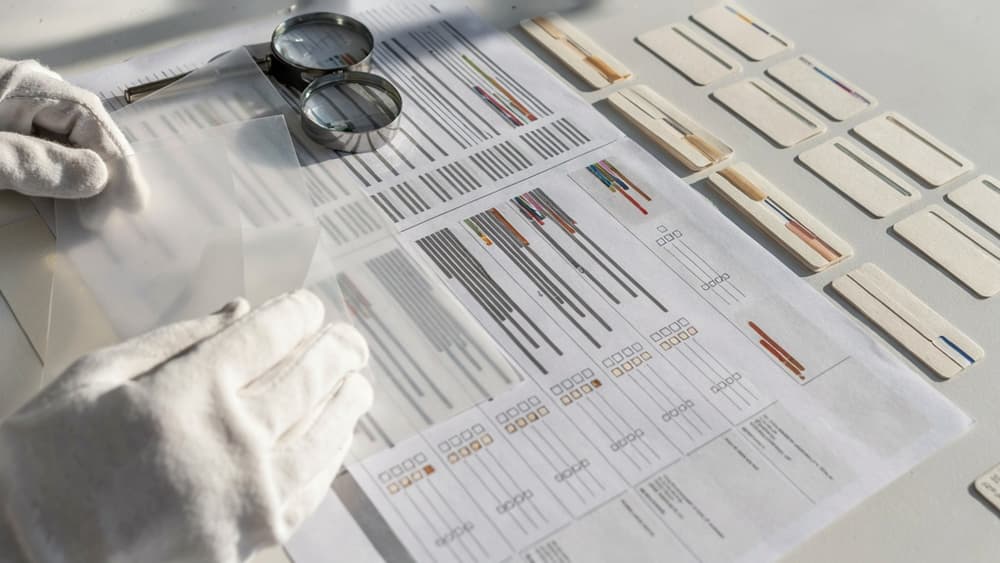
Accuracy: Build a Translation Quality System, Not Just a Fast Draft
Once you know which Spanish translation tool fits the job, the next risk is quieter: a draft that reads fluent but gets the client’s meaning, offer, or product language wrong. For agencies, accuracy needs a system—not a last-minute proofread.
Use glossaries and term bases for product names, offers, and industry vocabulary
Start every localization project with a client-specific glossary. This is where you lock down the words that should not be improvised by AI, including:
- Product and feature names
- Plan names, offers, and discount language
- Industry terms and acronyms
- Legal, financial, healthcare, or technical vocabulary
- Words that should stay in English
- Preferred translations for recurring phrases
For example, if a SaaS client uses “workspace,” “seat,” and “admin console” across its site, those terms need approved Spanish equivalents before the first page is translated. Otherwise, one landing page may say “espacio de trabajo,” another “área de trabajo,” and a support article “entorno,” creating confusion for users and extra cleanup for your team.
Term bases are especially useful when multiple strategists, writers, or freelancers touch the same account. Instead of relying on memory or Slack threads, the spanish translation tool should reference the same approved terminology every time.
Set QA checks for meaning, completeness, and formatting
A good QA process catches the errors that fluent Spanish can hide. Don’t just ask, “Does this sound right?” Check whether the translation preserves the business intent and production requirements.
QA area | What to check | Agency risk if missed |
|---|---|---|
Meaning | Claims, benefits, instructions, pricing, dates, and conditions match the source | Misleading campaign copy or incorrect product information |
Completeness | No missing headlines, CTAs, disclaimers, form labels, metadata, or alt text | Broken user journeys and incomplete deliverables |
Formatting | Character limits, line breaks, capitalization, punctuation, variables, and links are preserved | CMS rework, layout issues, or broken dynamic content |
Terminology | Approved glossary terms are used consistently | Client feedback loops and account-level inconsistency |
For recurring work, turn this into a checklist inside the project—not a separate doc nobody opens. Before delivery, the reviewer should be able to confirm: all source content is accounted for, all protected terms are correct, and the final Spanish can move into design, CMS, or client review without manual reconstruction.
Know when human review is mandatory
AI can accelerate the first pass, but some content needs a qualified human reviewer before it goes anywhere near a client’s audience. Make that decision upfront, not after the draft is done.
Human review should be mandatory for:
- Paid media with tight claims, offers, or compliance language
- Legal, medical, financial, or regulated content
- Product onboarding, setup instructions, and safety-related guidance
- High-traffic landing pages or launch campaigns
- Executive thought leadership, investor content, or PR statements
- Any copy where a mistranslation could create liability, churn, or reputational damage
For lower-risk assets—internal drafts, early concepts, social variations, or SEO briefs—AI plus glossary-driven QA may be enough. The point is to tier the workflow by risk. That keeps your agency from over-reviewing every small asset while still protecting the work that clients will scrutinize most.
Tone and Brand Consistency: Keep Every Spanish Output Client-Ready
Once the words are accurate, the real agency test begins: does the Spanish version still sound unmistakably like the client?
For small teams juggling multiple accounts, this is where a generic spanish translation tool starts to show its limits. The copy may be technically correct, but the tone can flatten, CTAs can drift, and every new campaign can feel like it was written by a different person.
Turn the client’s brand voice into reusable AI instructions
Do not rely on one-off prompts like “make this sound friendly” or “translate in the client’s tone.” Those instructions are too vague to scale across writers, freelancers, and account managers.
Instead, convert each client’s brand voice into a reusable AI brief that includes:
- Voice traits: e.g. confident but not corporate, playful but not childish, expert without sounding academic.
- Sentence rhythm: short and punchy, editorial and polished, warm and conversational.
- Point of view: whether the brand uses “we,” speaks directly to “you,” or keeps a more neutral product-led voice.
- Do/don’t examples: actual phrases the client likes, plus phrases that feel off-brand.
- Spanish-specific tone notes: whether the brand should sound polished, casual, premium, energetic, reassuring, or direct in Spanish.
A strong brand instruction might say:
“Translate and adapt this into Mexican Spanish for a B2B SaaS audience. Keep the tone practical, clear, and founder-friendly. Avoid overly formal phrasing, hype, and corporate buzzwords. Preserve the brand’s direct CTA style.”
That becomes much easier to reuse than rewriting tone guidance every time a landing page, ad set, or email sequence needs localization.
Control voice, formality, CTAs, and approved phrasing across campaigns
Spanish gives you more room to accidentally change the relationship between brand and audience. A campaign can feel more formal, more casual, more aggressive, or more distant simply because the wrong phrasing pattern gets repeated.
For agency teams, the biggest consistency points to lock down are:
- Formality: whether the client uses “tú,” “usted,” or avoids direct address where possible.
- CTA style: whether calls to action should be direct, soft, benefit-led, or urgency-driven.
- Offer language: how the client talks about trials, demos, consultations, pricing, guarantees, or sign-ups.
- Recurring campaign phrases: taglines, product descriptors, value propositions, and footer language.
- Words to avoid: phrases that feel too salesy, too literal, too regional, or unlike the client.
This matters most when several people touch the same account. One strategist may localize a paid ad, a copywriter may adapt the landing page, and a VA may handle email variations. Without shared brand controls, the Spanish output starts to fragment.
The goal is not just “good Spanish.” It is Spanish copy that feels like the same campaign, from first impression to conversion.
Separate each client’s brand context to avoid cross-account drift
Small agencies often run into a hidden AI problem: the more clients you serve, the easier it becomes for brand context to blur.
A premium interior design studio should not inherit the punchy tone of a DTC fitness brand. A cybersecurity consultant should not sound like the wellness client you worked on yesterday. Yet when teams reuse prompts, paste old examples, or work inside generic AI threads, cross-account drift becomes hard to spot until the client says, “This doesn’t sound like us.”
Keep each client’s Spanish localization context isolated:
- Maintain separate brand voice instructions per client.
- Store approved Spanish phrases inside the correct client workspace.
- Keep rejected phrasing visible so the same mistakes do not return.
- Avoid using one client’s examples to guide another client’s output.
- Create account-specific prompt templates for ads, emails, landing pages, and social posts.
This is where brand-aware AI becomes especially valuable for agencies. When each client’s voice, preferences, and approved language live in their own environment, your team can move faster without turning every Spanish deliverable into a brand consistency risk.

Cultural Nuance: Localize for the Market, Not Just the Language
Once the Spanish reads cleanly and sounds like the client, the next question is: *Spanish for whom?* A campaign that feels natural in Mexico can sound distant in Spain, too generic across LATAM, or slightly off for a U.S. Hispanic audience.
Choose the right Spanish-market context: Spain, Mexico, LATAM, or U.S. Hispanic
Before using any spanish translation tool on client-facing content, define the target market at the brief level. “Spanish” is not enough direction for landing pages, paid social, email nurture, or sales enablement.
Market context | What changes most | Agency example |
|---|---|---|
Spain | Vocabulary, formality, regulatory phrasing, everyday references | A SaaS “free trial” campaign may use Spain-specific terms and a more direct style than LATAM copy. |
Mexico | Local expressions, buying triggers, examples, payment references | Ecommerce copy may need Mexico-specific shipping, installment, or seasonal cues. |
LATAM | Broader neutral Spanish, fewer hyper-local idioms, flexible vocabulary | Regional B2B campaigns often need clear, widely understood Spanish without sounding bland. |
U.S. Hispanic | Code-switching sensitivity, cultural identity, English influence, media habits | A healthcare or finance campaign may need Spanish that respects bilingual audiences without assuming one country of origin. |
For agencies, this is where a “quick translation” can quietly become a client problem. If the brief says “LATAM” but the output uses Spain-specific wording, the copy may be technically correct and still feel wrong to the audience.
Adapt idioms, references, examples, and persuasion style
Cultural nuance shows up in the small details clients notice after launch: a headline that feels too literal, a joke that does not land, an example that assumes the wrong buying behavior.
Start with the content elements most likely to carry cultural meaning:
- Idioms and metaphors: Replace English expressions with natural Spanish equivalents, not word-for-word translations.
- Examples: Swap local businesses, holidays, currencies, sports references, or customer scenarios where needed.
- Proof points: A testimonial style that works in one market may feel exaggerated or underpowered in another.
- Persuasion style: Some audiences respond better to direct urgency; others need more context, reassurance, or relationship-building before the CTA.
- Offers and incentives: Discounts, demos, consultations, WhatsApp follow-ups, and financing language may need market-specific framing.
For example, “Crush your Q4 goals” might become a confident performance message for a B2B campaign, not a literal phrase about “aplastar” anything. The goal is to preserve intent: momentum, ambition, and commercial urgency.
Flag content that needs transcreation instead of direct translation
Some assets should not be treated as translation jobs at all. They need transcreation: rebuilding the message so it creates the same emotional and commercial effect in the target market.
Flag transcreation when the asset depends on:
- Wordplay, humor, rhyme, or campaign taglines
- Emotional storytelling or founder narratives
- High-stakes paid media hooks
- Brand manifestos or launch campaigns
- Culturally loaded visuals, references, or social moments
A product feature page may only need localization. A campaign headline, video script, or hero section may need a fresh concept in Spanish.
This distinction protects margin as much as quality. Agencies can scope straightforward localization efficiently while pricing culturally sensitive creative work as strategy-led adaptation—not “just translation.”
Agency Workflow: Scale Spanish Localization Without Adding Headcount
Once quality, voice, and market fit are defined, the operational question is simple: how do you make Spanish localization repeatable enough that it doesn’t become a custom fire drill every time a client asks for “one more version”?
Create a repeatable workflow from intake to draft, review, and publish
Treat Spanish localization like a production lane, not an ad hoc task inside someone’s ChatGPT history.
A lean agency workflow can look like this:
- Intake: Capture the source asset, target market, channel, deadline, stakeholder, and any campaign-specific notes in one request form.
- Asset prep: Confirm what needs translating: headline, body copy, metadata, CTAs, image text, disclaimers, captions, email subject lines, or landing page modules.
- AI draft: Generate the first Spanish version using the approved client workspace, not a blank prompt.
- Internal review: Assign one owner to check the draft against the brief, channel requirements, and client-specific preferences.
- Client approval: Route only the polished version for feedback, with questions consolidated instead of scattered across docs, Slack, and email.
- Publish handoff: Deliver the final copy in the format the production team needs: CMS fields, ad variants, email blocks, social captions, or web page sections.
- Update the system: Feed approved edits back into the client’s AI instructions, glossary, or examples so the next round improves.
The key is that the workflow should not depend on “who knows Spanish best” or “who remembers how this client likes to say things.” It should live in a documented process that a strategist, PM, or content lead can run consistently.
Connect translation work to CMS, project management, and approval processes
The fastest spanish translation tool still creates drag if the output has to be copied through five disconnected systems.
For agencies, the win is reducing handoff friction. Spanish localization should connect to the places your team already works:
Workflow area | What to connect | Why it matters |
|---|---|---|
Project management | Asana, ClickUp, Monday, Trello, or Notion tasks | Keeps translation requests visible alongside the original campaign work |
Content production | Google Docs, Figma copy decks, Webflow, WordPress, HubSpot, Shopify, or headless CMS fields | Prevents copy-paste errors and missing modules |
Approval | Client portals, comment threads, or structured review links | Keeps feedback tied to the exact Spanish asset being approved |
Knowledge base | Client brand workspaces, approved examples, reusable instructions | Turns each completed project into better future output |
For a small agency, this matters because localization often happens after the “main” creative is finished. If the Spanish version sits outside the normal production flow, it gets rushed, reviewed late, or forgotten until launch week.
A better model is to create a localization task automatically when the English asset moves into final copy, design lock, or pre-launch QA. That way Spanish content is part of delivery, not an emergency add-on.
Measure turnaround time, revision rates, and brand consistency
You can’t improve what you only experience as team stress. Track a few simple metrics to see whether localization is actually scaling.
Start with:
- Turnaround time: How long from request to client-ready Spanish copy?
- Revision rate: How many rounds are needed before approval?
- Rework source: Are edits coming from missed context, unclear intake, formatting issues, or client preference?
- Throughput: How many localized assets can the team deliver per week without pulling in extra freelancers?
- Brand consistency: How often does the copy require corrections for phrasing, CTA style, terminology, or campaign alignment?
Review these monthly across clients. If one account always needs heavy revisions, the issue may be the intake form, missing examples, or outdated client instructions. If all accounts slow down at approval, the bottleneck is probably process—not translation quality.
The goal is not just faster Spanish output. It’s a localization engine your agency can sell confidently: same team, more multilingual deliverables, fewer last-minute scrambles, and client-ready work that doesn’t dilute the brand on the way to market.