
November 14, 2025
How AI Market Research is Redefining Insight
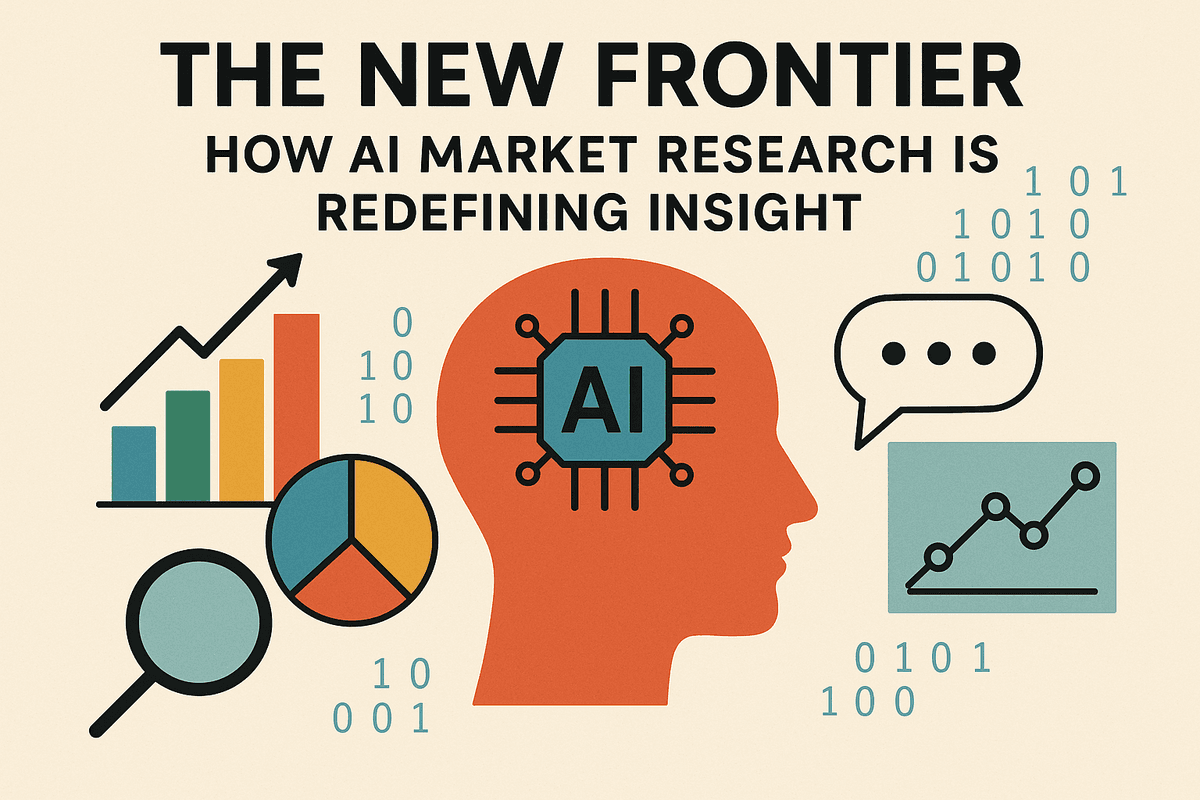
The New Frontier: How AI Market Research is Redefining Insight
In today's digital-first world, businesses are no longer starved for data; they're drowning in it. Every click, comment, review, and transaction creates a new data point. The challenge has shifted from gathering information to interpreting it at scale and speed. This is where the next evolution of market intelligence begins, powered by artificial intelligence. It’s a seismic shift from asking "what happened?" to predicting "what will happen next?"
What is AI Market Research, Exactly?
At its core, AI market research is the application of artificial intelligence, machine learning (ML), and natural language processing (NLP) to the process of gathering, analyzing, and interpreting market data. It’s not simply about automating old processes. Instead, it’s about unlocking a new level of understanding that was previously impossible.
Think of it as moving from a 2D map to a 3D, interactive globe. While traditional research provides a static snapshot, AI-powered systems analyze vast, unstructured datasets—like social media conversations, customer reviews, and video transcripts—in real-time. This allows businesses to understand the nuanced "why" behind consumer behavior, not just the "what." By identifying patterns, sentiment, and emerging trends from millions of sources simultaneously, AI market research delivers dynamic, multidimensional insights.
Why Traditional Methods Are No Longer Enough
For decades, surveys, focus groups, and manual data analysis were the gold standard. While still valuable for certain applications, they struggle to keep pace with the modern consumer and the sheer velocity of data. The limitations have become increasingly apparent:
- Speed: Traditional research projects can take weeks or months to complete, by which time market dynamics may have already changed.
- Scale: Sample sizes are often small and may not accurately represent the broader market, leading to potential biases and incomplete conclusions.
- Scope: These methods are ill-equipped to analyze the torrent of unstructured data from online sources where authentic consumer opinions are shared daily.
- Cost: Conducting large-scale qualitative and quantitative research is resource-intensive, making it prohibitive for many businesses to do frequently.
In a world where trends can emerge and vanish in a matter of days, relying solely on these reactive methods is like trying to navigate a highway by only looking in the rearview mirror.
The Core Benefits of Integrating AI into Your Strategy
Integrating AI into your market research strategy isn't just an upgrade; it’s a competitive necessity. The benefits transform how businesses understand their customers and make decisions.
- Unmatched Speed and Efficiency: AI algorithms can process and analyze millions of data points—from survey responses to social media posts—in a fraction of the time it would take a human team. This accelerates the entire insight-to-action cycle.
- Deeper, Unbiased Insights: By analyzing data at a granular level, AI can uncover subtle patterns, hidden correlations, and consumer segments that are invisible to the human eye. It minimizes human bias in interpretation, leading to more objective and accurate findings.
- Powerful Predictive Capabilities: This is the game-changer. AI market research moves beyond historical data to forecast future outcomes. By leveraging predictive analytics, you can anticipate market shifts, identify emerging trends before they peak, and proactively address potential customer churn.
- Enhanced Cost-Effectiveness: Automating the heavy lifting of data collection and analysis frees up your team to focus on strategic thinking and implementation. This allows you to conduct more comprehensive research more frequently without a proportional increase in budget.
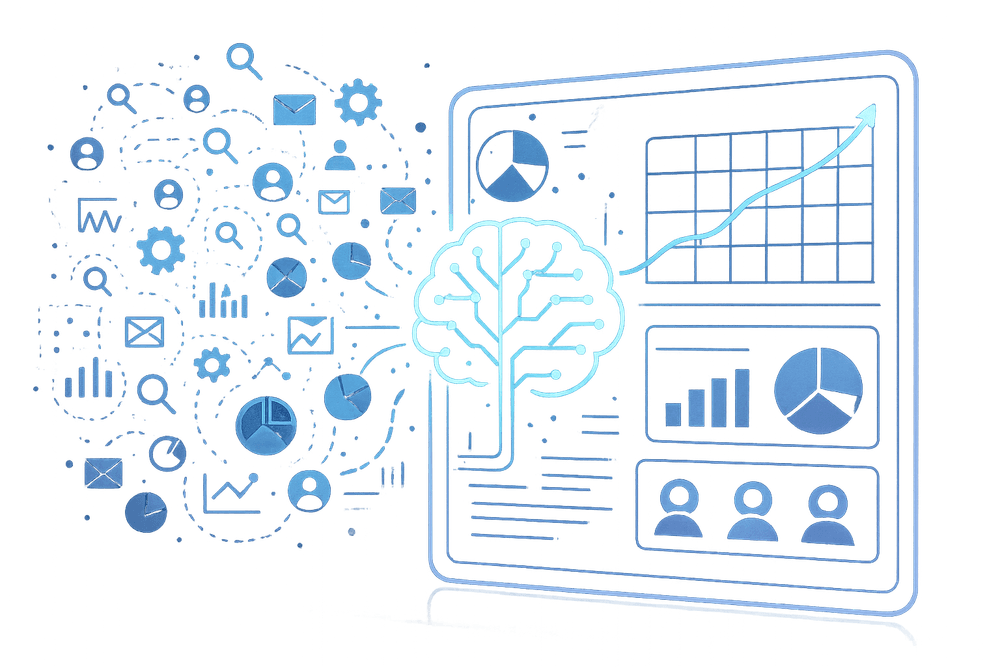
Core Applications: Where AI Market Research Shines Brightest
Artificial intelligence is more than a futuristic concept; it’s a powerful engine transforming how businesses understand their markets. Instead of replacing human insight, AI acts as a force multiplier, handling the heavy lifting of data processing so strategists can focus on what truly matters. The real magic of AI market research lies in its specific, high-impact applications that turn raw data into a competitive advantage. Let's explore the core areas where this technology is making the biggest waves.
Automating Data Analysis at Scale
Traditional market research is often bottlenecked by the sheer volume of data. Manually sorting through thousands of survey responses, interview transcripts, and sales figures is a monumental task—slow, costly, and susceptible to human error. AI obliterates this barrier. Machine learning algorithms can process and categorize immense datasets, both structured (like sales numbers) and unstructured (like open-ended feedback), in a fraction of the time. This automation doesn't just speed things up; it enables a more comprehensive analysis than was ever possible, allowing researchers to draw conclusions from the entire data universe, not just a manageable sample.
Uncovering Hidden Patterns with AI-Powered Sentiment Analysis
What are customers really saying about your brand? Beyond star ratings and simple survey scores lies a goldmine of sentiment hidden in reviews, social media comments, and support tickets. AI-powered sentiment analysis tools use Natural Language Processing (NLP) to read and interpret the emotional tone of this text at scale. This application of AI market research moves beyond simple positive/negative classifications. It can identify nuanced emotions like frustration, confusion, or delight, and even link those feelings to specific product features or service interactions. This provides a real-time, authentic pulse of the market’s voice, flagging potential PR crises or highlighting what customers love most.
Predicting Consumer Behavior with Predictive Modeling
Imagine knowing what your customers will want before they do. This is the promise of predictive modeling. By training AI algorithms on historical data—including past purchases, browsing behavior, and demographic information—businesses can forecast future outcomes with stunning accuracy. Predictive analytics can identify which customers are most likely to churn, which sales leads are most likely to convert, and which products are poised to trend in the next quarter. This proactive capability allows companies to move from reacting to the market to anticipating it, enabling them to intervene with targeted offers, retain at-risk customers, and optimize inventory before demand even peaks.
Personalizing Customer Experiences Through AI Segmentation
Old-school market segmentation based on broad demographics like age and location is becoming obsolete. Today’s consumers expect personalized experiences. AI market research delivers this through dynamic, behavior-based segmentation. AI can analyze thousands of data points to identify subtle micro-segments that human analysts would miss—for example, "eco-conscious weekend shoppers who respond to video ads" or "price-sensitive users who abandon carts on mobile." By understanding these granular groupings, companies can tailor messaging, product recommendations, and promotions with surgical precision, dramatically boosting engagement, loyalty, and conversion rates.
The Modern Toolkit: Top AI Market Research Platforms
Choosing the right platform is the difference between drowning in data and surfing the waves of consumer insight. The modern ai market research toolkit isn't a single hammer; it’s a collection of sophisticated instruments, from sprawling suites that monitor the entire digital ecosystem to precision tools designed for a specific task. Understanding the landscape is key to selecting the technology that will best serve your strategic goals. Let's explore the leading platforms putting AI to work.
All-in-One Suites: Brandwatch vs. Talkwalker
These platforms are the command centers of consumer intelligence, using AI to listen, analyze, and report on millions of online conversations in real time. They provide a holistic view of your brand, competitors, and industry trends.
- Brandwatch: A giant in the social listening space, Brandwatch offers unparalleled depth, combining real-time monitoring with an extensive historical data archive. Its AI assistant, Iris™, automatically surfaces unexpected spikes in conversation, helping you spot emerging trends before they go mainstream. Brandwatch excels at highly accurate sentiment analysis, sophisticated topic categorization, and advanced image recognition, allowing you to understand not just what people are saying, but how and where they're visually representing your brand.
- Talkwalker: Known for its incredible speed and breadth of data coverage, Talkwalker scans social media, news sites, blogs, forums, and even TV/radio broadcasts. Its proprietary Blue Silk™ AI powers predictive analytics, forecasting a trend’s potential reach and engagement. Talkwalker’s strength in visual analytics is a game-changer for ai market research, enabling it to detect logos, objects, and scenes within images and videos, providing a complete picture of brand presence even without a textual mention.
AI-Powered Survey Tools: SurveyMonkey Genius & Qualtrics XM
Surveys remain a cornerstone of market research, and AI is making them smarter, faster, and more insightful, transforming how we collect and interpret direct feedback.
- SurveyMonkey Genius: Integrated directly into the familiar SurveyMonkey platform, Genius acts as your AI co-pilot for survey creation and analysis. It helps you build better, less biased surveys by suggesting optimized questions and formats. Once responses are in, it provides instant analysis of open-ended text, automatically categorizing answers and assigning sentiment scores. This democratizes ai market research, making sophisticated text analysis accessible to teams of all sizes.
- Qualtrics XM: Positioned for the enterprise, Qualtrics uses its powerful AI engine, XM Discover, to analyze unstructured feedback from any source—surveys, call center transcripts, chatbot logs, and online reviews. It goes beyond simple sentiment to identify specific themes, emotions, and effort levels expressed in customer feedback. This allows businesses to connect disparate data points to uncover the root causes of consumer behavior and satisfaction.
Niche Platforms for In-Depth Analysis
For projects requiring deep, specialized analysis of a particular data type, niche tools provide unparalleled focus and granularity.
- In-Depth Text Analysis: Platforms specializing in Natural Language Processing (NLP), such as MonkeyLearn or Lexalytics, allow you to train custom AI models to understand industry-specific jargon. You can use them to analyze thousands of open-ended survey responses or product reviews in minutes, automatically tagging text with granular themes like "battery life," "user interface," or "customer support quality," turning qualitative feedback into hard, quantifiable data.
- Advanced Image Analysis: While the big suites have this built-in, specialized computer vision platforms like Clarifai take visual intelligence a step further. They can identify subtle visual cues, consumer demographics, and specific brand usage contexts within user-generated images. This allows a brand to conduct ai market research visually, discovering how products are used in the wild without relying on explicit mentions or hashtags, unlocking a new level of authentic consumer insight.

Success Stories: AI Market Research in Action
The theoretical benefits of AI are compelling, but its true value is proven in real-world application. Across industries, companies are leveraging AI to gain unprecedented insights and a powerful competitive edge. These success stories demonstrate how AI market research is not just a concept for the future—it's driving tangible results today.
How a Retail Giant Optimized Pricing with AI Analytics
A leading multinational retail corporation faced a monumental challenge: pricing hundreds of thousands of products dynamically across thousands of stores. Manual analysis was too slow to react to competitor price changes, local demand fluctuations, and supply chain shifts, leading to lost revenue and excess inventory.
By integrating an AI market research platform, the company automated this complex process. The AI engine continuously ingested and analyzed real-time data, including competitor pricing, historical sales figures, local event schedules, and even weather forecasts. Using sophisticated algorithms, it modeled demand elasticity and predicted the impact of price adjustments on both sales volume and overall profit margins. This allowed the retailer to implement optimized, location-specific pricing strategies automatically. The result was a 7% increase in overall profit margin and a significant reduction in overstock situations, showcasing a direct and substantial return on their AI investment.
A SaaS Company Discovers a New Market with Sentiment Analysis
A successful B2B SaaS company specializing in productivity software believed its core market was exclusively in the tech and finance sectors. As growth began to level off, they turned to AI-powered sentiment analysis to better understand the broader conversation around their product and niche.
Their AI market research tool scanned millions of data points from social media, industry forums, and support tickets. Instead of just tracking brand mentions, the AI was trained to identify user pain points and unmet needs discussed in open online conversations. It uncovered a surprising and vocal segment: freelance creatives and small agencies. These users were struggling with existing tools and were actively seeking solutions with more flexible collaboration features. Armed with this data, the company launched a targeted marketing campaign and a new, more affordable subscription tier for this demographic. This unlocked a previously invisible market, creating a new and robust revenue stream.
CPG Brand Forecasts Viral Trends Using Predictive AI
In the fast-paced consumer-packaged goods (CPG) industry, staying ahead of flavor and ingredient trends is critical. A popular snack brand was tired of being reactive, often launching products after a trend had already peaked. They needed a way to see what was coming next.
The company implemented a predictive AI market research solution designed for trend forecasting. The platform analyzed a massive and diverse dataset, including social media hashtags, food blog content, online recipe searches, and even menu additions at influential restaurants. The machine learning model identified subtle, emerging patterns and correlated data points to forecast which flavor profiles were on the cusp of going viral. The AI predicted a surge in demand for a specific international spice blend. The brand fast-tracked development and launched a new product line featuring the flavor six months ahead of any major competitor. The product exceeded sales projections by over 150%, cementing the brand’s reputation as an industry innovator.
Best Practices for Implementing AI Market Research
Adopting AI into your market research strategy is more than just flipping a switch; it requires a thoughtful, strategic approach to unlock its full potential. By following established best practices, you can ensure your initiatives are effective, ethical, and drive real business value.
Start with a Clear Business Objective
Before you deploy a single algorithm, you must answer a fundamental question: "What business problem are we trying to solve?" AI is a powerful tool, not a magic wand. Without a clear objective, your ai market research efforts can become unfocused and yield interesting but ultimately unactionable data.
Define a specific, measurable goal. Are you trying to reduce customer churn, identify untapped market segments, predict the success of a new product feature, or understand the sentiment surrounding a recent marketing campaign? A precise objective like "Identify the top three drivers of negative customer sentiment on social media in Q3" will guide your entire process, from data selection to model training, ensuring the insights you generate are directly tied to strategic business outcomes.
Ensure High-Quality Data to Fuel the AI Engine
The old adage "garbage in, garbage out" is amplified in the world of AI. The performance and accuracy of any AI model are fundamentally dependent on the quality of the data it's trained on. For successful ai market research, you must prioritize a robust data strategy.
This means ensuring your data is:
- Clean: Free from errors, duplicates, and inconsistencies.
- Relevant: Directly related to the business objective you defined.
- Comprehensive: Sourced from diverse channels (e.g., CRM, social media, surveys, web analytics) to provide a holistic view.
- Unbiased: Representative of your entire target audience to avoid skewed or discriminatory conclusions.
Invest time in data preparation, cleaning, and governance. A well-curated dataset is the single most important asset for generating reliable and trustworthy insights from your AI systems.
Combine AI Insights with Human Expertise for Best Results
The most powerful approach to ai market research is not about replacing human analysts but augmenting their capabilities. Think of it as a symbiotic relationship: AI provides the scale, and humans provide the context.
AI excels at processing petabytes of data, identifying subtle patterns, and running complex predictive models at a speed no human team could match. It can tell you what is happening. However, it's the human expert who understands the why. A seasoned market researcher can interpret the AI's findings within the broader business context, apply domain knowledge, question anomalies, and translate raw data into a compelling strategic narrative. This collaborative "human-in-the-loop" model ensures that insights are not only statistically significant but also strategically sound and actionable.
Navigating the Ethical Considerations of AI Data Collection
With the immense power of AI comes a profound responsibility to use it ethically. Neglecting the ethical dimension of ai market research can lead to flawed results, regulatory penalties, and irreparable damage to customer trust.
Focus on three key areas:
- Data Privacy and Consent: Be transparent with consumers about what data you are collecting and how it will be used. Ensure full compliance with regulations like GDPR and CCPA, and always prioritize the user's right to privacy.
- Algorithmic Bias: AI models can unintentionally perpetuate and even amplify existing biases present in their training data. This can lead to unfair or inaccurate conclusions about certain demographic groups. Regularly audit your algorithms and data sources for bias to ensure equitable outcomes.
- Transparency: While the inner workings of some AI models are complex, strive for transparency in your methodology. Being able to explain how an insight was derived is crucial for building credibility and trust with stakeholders.

Conclusion: The Future is Now for AI Market Research
The landscape of market research has fundamentally shifted. We've moved beyond the era where data analysis was a time-consuming, manual process limited by human capacity. The integration of artificial intelligence is no longer a futuristic concept—it's a present-day reality creating a clear divide between businesses that lead and those that lag. The adoption of AI market research isn't just about gaining an edge; it's about staying relevant in an increasingly complex and fast-paced marketplace. Companies harnessing AI are not only understanding their customers better but are also anticipating their future needs with astonishing accuracy, transforming raw data into a strategic, predictive asset.
Key Takeaways: Why You Can't Afford to Ignore AI
If the journey through the applications of AI in market research has shown us anything, it's that the benefits are too significant to overlook. Ignoring this evolution is a direct risk to your competitive standing. Here’s a summary of why:
- Unparalleled Speed and Scale: AI algorithms can analyze millions of data points—from survey responses to social media comments and sales figures—in a fraction of the time it would take a human team. This accelerates the entire research cycle, enabling real-time decision-making.
- Deeper, Unbiased Insights: AI moves beyond surface-level observations. Through advanced sentiment analysis and pattern recognition, it uncovers subtle consumer emotions, hidden correlations, and emerging trends that are invisible to the naked eye, free from human cognitive biases.
- Powerful Predictive Capabilities: The true power of AI market research lies in its ability to forecast the future. By building predictive models based on historical data, AI can anticipate market shifts, forecast demand, and identify at-risk customers, allowing you to act proactively instead of reactively.
- Enhanced ROI: By automating repetitive tasks, optimizing ad spend, and improving the accuracy of strategic decisions, AI delivers a tangible return on investment, making your market research budget work harder and smarter.
Choosing the Right First Step for Your Business
Embracing AI doesn't require a complete, overnight overhaul of your operations. The key is to start strategically. Begin by identifying your most significant market research challenge. Are you drowning in unstructured data from open-ended survey questions? Is your team struggling to keep up with the speed of online conversations about your brand?
Consider a focused, high-impact first step:
- Automate Sentiment Analysis: Implement a tool to monitor and analyze social media mentions or customer reviews, giving you an instant, ongoing pulse on brand perception.
- Enrich Qualitative Analysis: Use an AI platform to code and identify key themes from focus group transcripts or in-depth interviews, saving hundreds of hours of manual work.
- Launch a Predictive Pilot: Start with a contained project, like forecasting sales for a single product line or identifying the key drivers of customer churn in one segment.
Success in one area will build momentum and provide a clear business case for broader adoption.
Ready to Transform Your Strategy? Let's Talk.
The evidence is clear: AI market research is the new standard for building a resilient, forward-thinking business strategy. It equips you with the speed, depth, and foresight necessary to not just compete, but to lead.
If you're ready to move from theory to action and unlock what AI can do for your specific business challenges, we're here to help. Let's start a conversation about your goals and map out the first step in your AI transformation.