
November 17, 2025
An Introduction to AI Legal Document Analysis
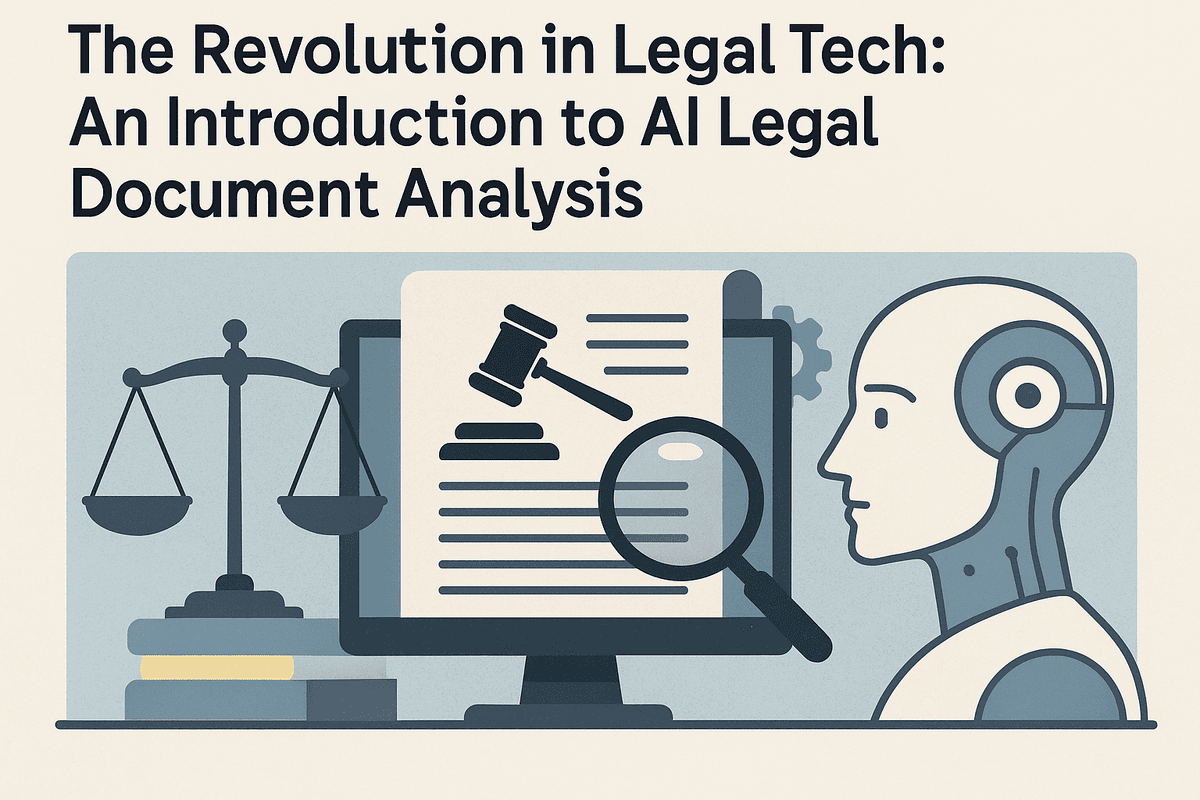
The Revolution in Legal Tech: An Introduction to AI Legal Document Analysis
The legal profession has always been built on a foundation of paper—mountains of contracts, endless pages of discovery, and volumes of case law. For centuries, the primary tool for navigating this landscape was the meticulous, yet fallible, human eye. But the digital age has ushered in a data explosion, pushing manual review processes to their breaking point. This is where the true revolution begins, powered by a technology poised to redefine legal work itself: AI legal document analysis. It’s not just a futuristic concept; it’s a practical solution that is already delivering a powerful competitive edge to firms willing to embrace it.
What is AI Legal Document Analysis?
At its core, AI legal document analysis is the application of artificial intelligence technologies—primarily Natural Language Processing (NLP) and machine learning—to interpret, categorize, and extract critical information from legal texts. Think of it as a brilliant paralegal who can read thousands of pages in seconds, never gets tired, and can instantly flag every instance of a specific clause, identify potential risks, or summarize complex arguments.
This technology goes far beyond simple keyword searching. It understands context, recognizes legal concepts, and learns from the documents it processes. Whether you’re sifting through contracts for non-standard terms, performing due diligence for a merger, or analyzing judicial opinions for precedent, AI legal document analysis tools act as a powerful force multiplier, augmenting the expertise of legal professionals, not replacing it.
Beyond Manual Review: The Bottlenecks AI Solves for Law Firms
The traditional document review process is fraught with inefficiencies that directly impact a firm's bottom line and client satisfaction. AI-powered analysis directly targets and resolves these critical bottlenecks.
- The Time & Cost Drain: Manual review is painstakingly slow and expensive. Associates can spend hundreds of billable hours on tedious, repetitive tasks. An AI legal document analysis platform can slash review times by up to 90%, freeing up your team to focus on high-value strategic work like negotiation, client counseling, and case strategy.
- The Inevitability of Human Error: Fatigue and oversight are an inherent risk in manual review. A single missed clause or misinterpreted date can lead to significant financial loss and legal liability. AI operates with unwavering consistency, dramatically reducing the risk of costly human error and ensuring a higher standard of accuracy.
- The Challenge of Scale: In large-scale litigation (e-discovery) or complex M&A deals, the sheer volume of documents can be overwhelming. AI excels at scale, rapidly processing vast datasets to identify relevant documents, pinpoint critical information, and uncover patterns that would be virtually impossible for a human team to detect.
How This Guide Will Transform Your Legal Workflow
Understanding the "what" and "why" is the first step. This guide is designed to take you further, providing a clear roadmap to the "how." We will move beyond theory and into practical application, showing you exactly how to leverage this transformative technology.
Throughout this guide, we will:
- Explore the top AI legal document analysis tools available today, comparing their strengths for different use cases.
- Dive deep into key features for essential tasks like automated contract review, advanced case law research, and compliance monitoring.
- Provide an actionable framework for integrating these solutions into your firm’s existing workflow, ensuring a smooth transition and maximizing your return on investment.
Prepare to discover how to unlock new levels of efficiency, mitigate risk, and deliver superior value to your clients. The future of legal analysis is here.
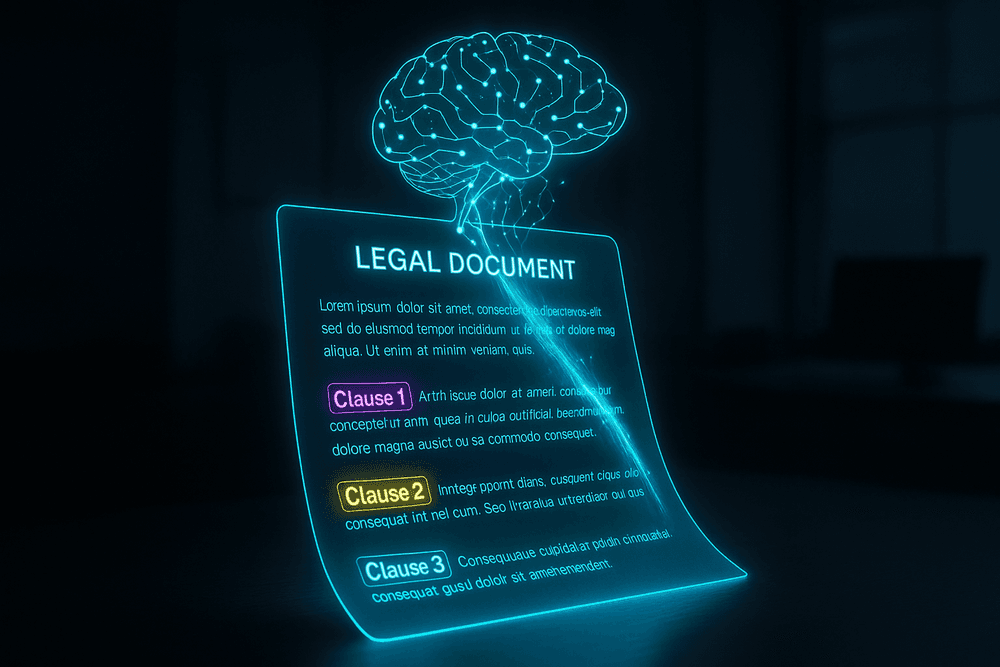
Decoding the Tech: Core Features of AI Legal Document Analysis Platforms
Beneath the surface of any powerful AI legal document analysis platform lies a suite of sophisticated features designed to tackle the most time-consuming and high-stakes tasks in the legal profession. These are not simple search functions; they are intelligent engines that understand context, identify patterns, and deliver actionable insights. By leveraging machine learning and natural language processing, these core capabilities transform mountains of text into a strategic advantage, allowing legal teams to operate with unprecedented speed and accuracy. Let’s break down the essential features that are redefining modern legal work.
Automated Contract Review: Instantly Flag Risks and Clauses
Manually reviewing contracts is a meticulous but often tedious process, prone to human error. AI-driven automated contract review revolutionizes this workflow. Instead of just searching for keywords, these systems comprehend the legal meaning and context of clauses. An advanced AI legal document analysis tool can instantly scan an agreement and flag non-standard language, identify missing critical clauses (like indemnification or limitation of liability), and highlight potentially risky terms that deviate from your firm’s established playbooks. This allows lawyers to focus their expertise on negotiation and strategy rather than line-by-line proofreading, dramatically reducing review time while enhancing risk mitigation.
Intelligent Due Diligence: Accelerate M&A with AI Data Analysis
In the high-pressure world of mergers and acquisitions, the due diligence process can make or break a deal. Sifting through thousands of documents in a virtual data room is a monumental task. This is where AI for legal excels. Intelligent due diligence tools can rapidly ingest, categorize, and analyze vast volumes of documents. The software automatically identifies and extracts key provisions, such as change-of-control clauses, intellectual property assignments, and outstanding liabilities. By presenting this critical information in organized, searchable dashboards, AI accelerates the entire process, enabling deal teams to spot red flags faster, make more informed decisions, and close transactions with greater confidence.
AI-Powered Case Law Research: Uncover Precedents in Minutes, Not Days
Finding the perfect precedent used to mean spending days buried in legal databases. AI-powered research tools have turned this marathon into a sprint. Using sophisticated semantic search, these platforms go beyond keywords to understand the concepts and legal issues at the heart of your query. You can ask a question in plain English and receive a curated list of the most relevant cases, statutes, and secondary sources. Some tools even provide visual maps of case connections or analyze a judge’s ruling history to help you build a more compelling argument. This application of AI legal document analysis doesn't just find information; it uncovers insights, allowing you to craft stronger legal strategies in a fraction of the time.
eDiscovery: Sifting Through Digital Evidence with Precision
Modern litigation involves an avalanche of digital evidence—emails, text messages, documents, and more. Manually reviewing this data is prohibitively expensive and slow. AI transforms eDiscovery with Technology-Assisted Review (TAR), also known as predictive coding. The system learns from a senior attorney’s decisions on a small sample of documents, then applies that logic to classify the rest of the dataset as relevant or non-relevant. This intelligent sorting process drastically reduces the volume of documents requiring human review, saving immense time and cost. Furthermore, AI can identify key concepts, timelines, and communication patterns, providing a clear overview of the digital evidence with unparalleled precision.
Top AI Legal Document Analysis Tools on the Market
The market for AI-powered legal technology is expanding rapidly, with several platforms emerging as leaders. Choosing the right tool depends entirely on your firm’s specific needs, from high-volume M&A due diligence to intricate case law research. Here’s a breakdown of three top contenders in the ai legal document analysis space.
Luminance: A Deep Dive into its Strengths and Weaknesses
Luminance positions itself as a market leader for understanding entire datasets of documents. Powered by its proprietary Legal Inference Transformation Engine (LITE), it excels at rapidly reading and forming an understanding of contracts and other legal documents, regardless of language.
Strengths:
- Unmatched Speed for Due Diligence: Luminance can analyze thousands of documents in minutes, automatically surfacing key clauses, anomalies, and risks. This makes it a powerhouse for M&A transactions, real estate portfolio reviews, and internal investigations where time is critical.
- Advanced Anomaly Detection: The platform’s core strength is its ability to learn what’s "standard" within a document set and flag deviations. This is invaluable for identifying non-compliant clauses or unusual contractual terms that a manual review might miss.
Weaknesses:
- Steeper Learning Curve: While powerful, its comprehensive feature set can require a more significant training investment to master compared to more task-specific tools.
- Cost: As an enterprise-grade solution, Luminance can represent a substantial financial commitment, making it better suited for larger firms or those with consistent high-volume review needs.
Casetext (now part of Thomson Reuters): AI-Assisted Research and Drafting Features
Casetext, with its CoCounsel AI assistant, has revolutionized how legal professionals approach research and drafting. Rather than focusing solely on document review, it acts as a comprehensive legal assistant, deeply integrated into the litigation and research workflow.
Strengths:
- Sophisticated Legal Research: CoCounsel allows users to ask complex legal questions in plain English and receive detailed answers with direct citations to controlling case law. This dramatically accelerates the research process.
- Workflow Integration: Beyond research, the platform can draft legal memos, summarize depositions, and even analyze briefs to identify weaknesses in an opponent's arguments. This makes its ai legal document analysis capabilities incredibly practical for litigators.
Weaknesses:
- Litigation-Focused: While expanding, its primary strengths are still rooted in litigation support and legal research, making it less specialized for transactional work like contract abstraction compared to other tools.
Kira Systems (by Litera): Best-in-Class for Contract Intelligence
Kira Systems is a specialist, renowned for its precision in contract analysis and provision extraction. It uses machine learning models pre-trained by subject matter experts to identify and extract hundreds of common clauses from contracts and other legal documents with a high degree of accuracy.
Strengths:
- High Accuracy and Specialization: Kira’s Quick Study feature allows firms to train the AI to find custom provisions unique to their needs, augmenting its already robust library of pre-built models. This makes it a top-tier tool for detailed contract abstraction.
- Ideal for Transactional Law: For practices heavily involved in M&A, finance, and real estate, Kira provides the granular intelligence needed to build accurate deal abstracts and risk profiles.
Weaknesses:
- Niche Focus: Kira is built for clause extraction and analysis. It is not a legal research tool or a broad due diligence platform in the same way as Casetext or Luminance.
How to Choose the Right Platform for Your Firm’s Needs
Selecting the best ai legal document analysis tool requires introspection. Consider these key factors:
- Primary Use Case: Are you conducting high-volume due diligence (Luminance), performing in-depth legal research and drafting (Casetext), or executing precise contract abstraction (Kira)?
- Integration: How will the software fit into your existing technology stack, including your document management system and other legal tech?
- Scalability and ROI: Evaluate the pricing model and ensure the platform can scale with your firm’s growth. Define the key metrics you’ll use to measure its return on investment, whether it’s hours saved or risks mitigated.
- User Experience: Always request a demo and, if possible, a trial period. The most powerful tool is useless if your team finds it difficult to adopt and use effectively.

From Theory to Practice: Integrating AI Legal Document Analysis Into Your Firm
Understanding the potential of AI is one thing; successfully weaving it into the fabric of your law firm's daily operations is another. A strategic, phased approach is key to unlocking its full potential without disrupting workflows or compromising standards. Follow these four essential steps to transition from theory to practice and effectively implement AI legal document analysis in your firm.
Step 1: Starting with a Pilot Project for Maximum Impact
Before committing to a firm-wide rollout, launch a focused pilot project. This allows you to test the technology in a controlled environment, build a business case, and generate early wins that build momentum.
- Identify the Right Use Case: Don't try to solve every problem at once. Target a high-volume, repetitive, and time-consuming task. Prime candidates include reviewing non-disclosure agreements (NDAs), initial document categorization in eDiscovery, or extracting key clauses during due diligence.
- Assemble a Pilot Team: Select a small group of tech-forward attorneys and paralegals who are open to innovation. Their enthusiasm and feedback will be invaluable.
- Define Success Metrics: Set clear, measurable goals from the outset. Aim to achieve outcomes like a 30% reduction in first-pass review time or a 50% increase in the number of contracts reviewed per day. Demonstrating this tangible value is crucial for gaining firm-wide buy-in.
Step 2: Training Your Legal Team for Seamless Adoption
The most advanced software is useless if your team doesn’t know how—or why—to use it. Overcoming skepticism and building confidence requires a thoughtful training strategy that goes beyond a simple software demonstration.
- Focus on the "Why": Frame the training around solving your team's biggest pain points. Show them how the AI legal document analysis tool directly alleviates tedious work, reduces the risk of human error on low-level tasks, and frees them up for high-value strategic counsel.
- Develop "AI Champions": Identify power users from your pilot team and empower them to act as internal champions. Peer-to-peer support is often more effective than top-down mandates for encouraging adoption.
- Emphasize Augmentation, Not Replacement: Reassure your legal professionals that AI is a tool to enhance their expertise, not replace it. The final legal judgment and client advice will always rest with the human expert.
Step 3: Ensuring Data Security and Client Confidentiality
In the legal profession, data security is paramount. Attorney-client privilege and the duty of confidentiality are non-negotiable, so vetting your AI vendor’s security posture is a critical step in the integration process.
- Conduct Rigorous Vendor Due Diligence: Go beyond the marketing claims. Ask for security certifications like SOC 2 Type II or ISO 27001. Inquire about their data encryption protocols, both at rest and in transit.
- Clarify Data Usage Policies: Understand exactly how the provider will handle your data. Ensure that your confidential client information will not be used to train models for other customers. Ideally, your data should be firewalled within a private, secure instance.
- Integrate with Existing Protocols: The AI platform should seamlessly integrate with your firm's existing access controls, multi-factor authentication, and security policies to maintain a consistent and robust defense.
Step 4: Measuring the ROI of Your AI Investment
To justify the investment and scale the use of AI legal document analysis across the firm, you must track its return on investment (ROI). This requires looking at both quantitative and qualitative benefits.
- Quantitative Metrics:
- Efficiency Gains: Measure the reduction in billable hours spent on specific tasks.
- Cost Savings: Calculate the money saved on outsourcing document review or hiring temporary staff.
- Increased Capacity: Track the volume of work (e.g., cases, contracts) the team can handle without increasing headcount.
- Qualitative Metrics:
- Risk Reduction: Note improvements in accuracy and consistency in document review.
- Employee Satisfaction: Survey your team to gauge their satisfaction with offloading tedious work.
- Client Value: Faster turnaround times and more comprehensive analysis directly translate to improved client service and outcomes.
AI in the Courtroom: Real-World Use Cases for AI Legal Document Analysis
The theoretical benefits of AI are compelling, but its true value is revealed in its practical application. Across the legal landscape, from global firms to solo practitioners, AI is no longer a futuristic concept but a powerful tool delivering measurable results today. These real-world examples demonstrate how AI legal document analysis is fundamentally reshaping legal workflows, enhancing efficiency, and driving better outcomes.
Case Study: How a Global Law Firm Reduced Document Review Time by 70%
During a multi-billion dollar merger, a leading international law firm faced a monumental due diligence task: reviewing over 500,000 documents under an aggressive deadline. The traditional approach would have required dozens of associates working around the clock for weeks, incurring significant costs and carrying a high risk of human error.
Instead, the firm deployed an advanced AI legal document analysis platform. The software was trained to identify specific clauses related to change of control, intellectual property rights, and liability limitations. Within 48 hours, the AI had ingested, categorized, and analyzed the entire data set. It automatically flagged high-risk documents and surfaced non-standard language, presenting a prioritized queue for human review. The result was a 70% reduction in manual review time. This not only accelerated the deal timeline and reduced client costs but also freed up senior attorneys to focus on strategic negotiation and high-value advisory work rather than sifting through boilerplate text.
In-House Legal Teams: Managing High-Volume Contracts with AI
Corporate legal departments are often buried under a high volume of routine agreements like NDAs, vendor contracts, and sales agreements. This administrative burden creates bottlenecks that slow down the entire business. An in-house team at a fast-growing tech company turned to an AI-powered contract lifecycle management (CLM) system to solve this challenge.
Their AI tool automatically reviews incoming contracts against the company’s pre-approved legal playbook. It instantly identifies and redlines clauses that deviate from standard positions, forwarding only these exceptions to the legal team for focused review. For standard agreements, the system can approve them automatically. This application of AI legal document analysis dramatically accelerated the sales and procurement cycles. Furthermore, the AI extracts key metadata—such as renewal dates, liability caps, and termination clauses—creating a searchable, data-rich contract repository that provides the General Counsel with unprecedented visibility into the company's contractual risks and obligations.
Solo Practitioners: Competing with Larger Firms Using AI Research Tools
For solo and small-firm attorneys, competing with the vast resources of larger firms is a constant challenge. Comprehensive legal research, in particular, can be prohibitively time-consuming. AI-powered research tools are leveling this playing field.
A solo practitioner defending a client in a complex product liability case used an AI research platform to build her argument. Instead of spending days on keyword searches, she uploaded the opposing counsel's motion for summary judgment. The AI analyzed the motion's text and legal arguments, and within minutes, returned a list of the most relevant and persuasive case law to counter it—including several obscure but highly pertinent cases that traditional search methods might have missed. This allowed her to craft a more robust, well-supported response in a fraction of the time, enabling her to deliver a level of service and strategic depth that directly rivals her big-firm counterparts.

The Verdict: Your Next Steps in Adopting AI Legal Document Analysis
A Final Summary: The Undeniable Competitive Advantage
The evidence is clear: the era of purely manual document review is drawing to a close. Integrating AI legal document analysis into your workflow is no longer a futuristic concept—it's a critical strategic move for survival and growth in today's competitive landscape. Throughout this guide, we've seen how AI transforms laborious tasks into swift, data-driven processes.
The competitive advantage is not theoretical; it's tangible and immediate. Firms leveraging these tools are:
- Accelerating Timelines: Slashing review times from weeks to hours, enabling faster deal closures and case preparations.
- Enhancing Accuracy: Mitigating the risk of human error by systematically identifying critical clauses, deviations from standard language, and potential liabilities that the naked eye might miss.
- Unlocking Deeper Insights: Moving beyond simple keyword searches to understand context, sentiment, and legal precedent on a massive scale, providing a strategic edge in litigation and negotiation.
- Optimizing Resources: Freeing your most valuable asset—your legal experts—from monotonous review to focus on high-level strategy, client counsel, and business development.
Ultimately, adopting AI legal document analysis allows your firm to deliver superior work, faster and more cost-effectively, cementing your reputation as a modern, efficient, and client-focused practice.
The Future Outlook: What’s Next for AI in the Legal Sector?
The current capabilities of AI are just the beginning. The trajectory of legal technology is pointing toward even more sophisticated and integrated solutions. Staying on the sidelines means risking being left behind as the pace of innovation accelerates.
Here’s a glimpse of what’s on the horizon:
- Predictive Analytics: AI will increasingly be used to forecast litigation outcomes, predict judicial behavior, and assess regulatory risk with greater accuracy, based on vast datasets of case law and legal filings.
- Advanced Generative AI: Beyond just analyzing text, future tools will proficiently draft initial contracts, generate concise case summaries, and even suggest negotiation points, acting as a true co-pilot for legal professionals.
- Hyper-Automation: Expect deeper, seamless integration across your entire tech stack. An AI-identified risk in a contract could automatically trigger a task in your case management system or flag a clause for partner review without any manual intervention.
Embracing AI legal document analysis today is your firm's entry point into this evolving ecosystem. It’s about building the foundational skills and workflows necessary to capitalize on these future advancements.
Take Action: Experience the Future of Legal Work Today
Understanding the power of AI is one thing; witnessing it transform your own documents and workflows is another. The time for deliberation is over. The next logical step is to see this technology in action and quantify its impact on your practice.
Don’t let your firm fall behind the curve. The path forward is simple and risk-free.
- Schedule a Personalized Demo: See exactly how an AI legal document analysis platform can be tailored to your specific needs, whether it's for M&A due diligence, contract lifecycle management, or complex litigation research.
- Start a Free Trial: Get hands-on experience. Upload your own documents and discover firsthand the speed, accuracy, and invaluable insights that AI can provide.
Contact us today to take the definitive step toward a more efficient, intelligent, and competitive future. Your clients, your team, and your bottom line will thank you.