
August 18, 2025
An Introduction to AI in Identity and Access Management
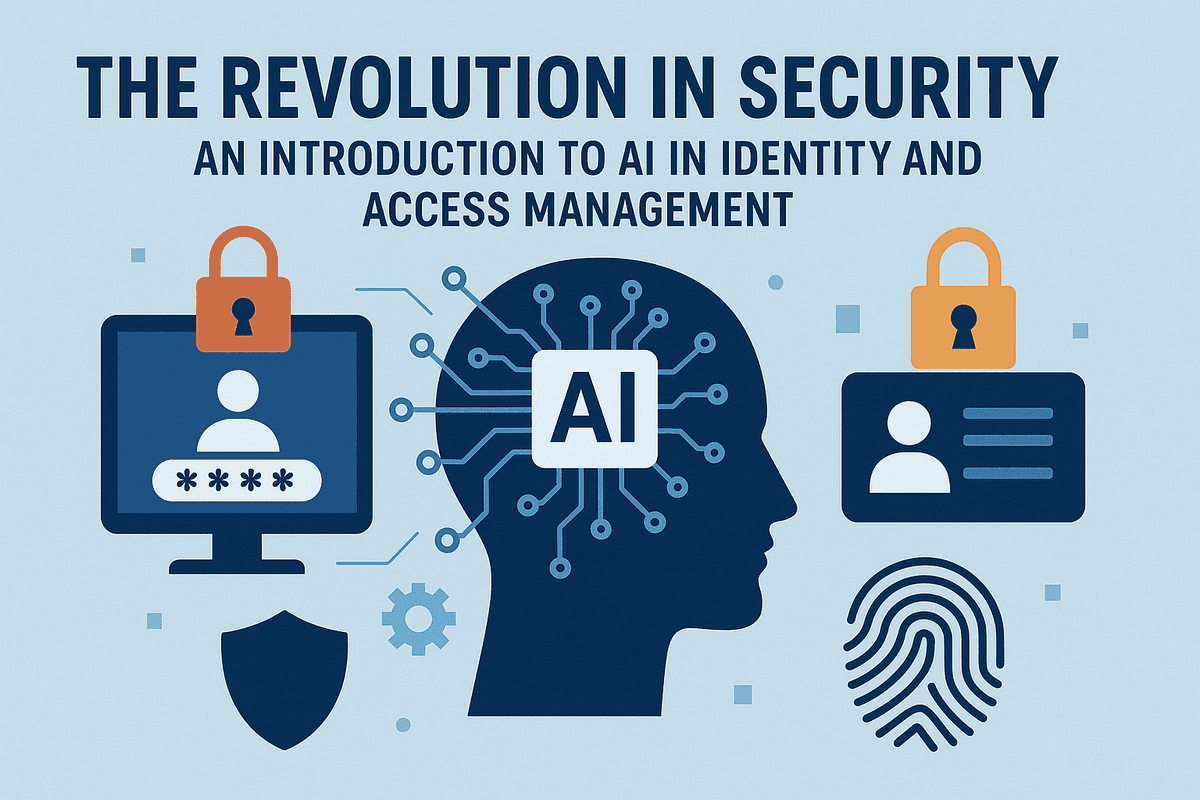
The Revolution in Security: An Introduction to AI in Identity and Access Management
In today's hyper-connected digital landscape, the question is no longer if you'll face a security threat, but when. The gatekeeper of your organization's most sensitive data is its Identity and Access Management (IAM) system. But as threats evolve with lightning speed, the traditional locks and keys are no longer enough. A new, intelligent guard is needed—and it’s powered by artificial intelligence.
What is Traditional Identity and Access Management (IAM)?
At its core, traditional Identity and Access Management (IAM) is a foundational cybersecurity framework that ensures the right individuals have the right access to the right resources at the right time. Think of it as the digital bouncer for your corporate assets. It manages a user's entire digital lifecycle, from onboarding to offboarding, using a set of established rules and policies.
Key functions of a legacy IAM system include:
- Authentication: Verifying a user is who they claim to be, often through passwords, multi-factor authentication (MFA), or single sign-on (SSO).
- Authorization: Granting specific permissions once a user is authenticated, such as "read-only" access to a document or administrative rights to an application.
- User Provisioning: Creating, modifying, and deleting user accounts and access privileges across various systems.
- Access Governance: Conducting reviews and audits to ensure access policies are being enforced correctly and align with compliance standards.
For years, this rule-based approach provided a reliable, if rigid, line of defense.
Why Legacy IAM Systems Are No Longer Enough
The digital workplace has exploded. The clearly defined network perimeter has dissolved, replaced by a complex ecosystem of cloud applications, remote workers, IoT devices, and third-party contractors. This new reality presents challenges that static, rule-based IAM systems were never designed to handle.
Legacy systems struggle because they are:
- Reactive, Not Proactive: They act based on pre-defined rules. They can’t identify a novel threat or a sophisticated attack that bends—but doesn’t break—those rules.
- Prone to Alert Fatigue: Security teams are inundated with thousands of low-context security alerts, making it nearly impossible to distinguish real threats from false positives.
- Slow to Adapt: Manually updating access rules for every user and application is a cumbersome, error-prone process that can’t keep pace with a dynamic business environment.
- Vulnerable to Insider Threats: A compromised account behaving abnormally might go unnoticed if its actions technically fall within its assigned permissions.
The sheer volume and velocity of access requests and security data have overwhelmed human capacity. A more intelligent, adaptive approach is essential.
The Core Promise: How AI Elevates IAM Capabilities
This is where AI in identity and access management transforms the game. Instead of relying solely on static rules, AI-powered IAM introduces a layer of dynamic intelligence that learns, adapts, and predicts. It shifts the paradigm from a reactive stance to a proactive, risk-aware security posture.
The core promise of AI in identity and access management is to automate and enhance security by understanding context and behavior. It achieves this through capabilities like:
- Behavioral Analytics: AI establishes a baseline of "normal" behavior for each user—typical login times, locations, devices used, and resources accessed. It can then instantly flag deviations that signal a potential compromise.
- Advanced Anomaly Detection: By analyzing vast datasets in real-time, AI can spot subtle, suspicious patterns that would be invisible to a human analyst, such as an impossible-travel scenario or unusual data download volumes.
- Risk-Based Authentication: AI can assess the risk of each login attempt in real-time and apply adaptive authentication. A low-risk login from a known device might be seamless, while a high-risk attempt from an unrecognized location could trigger a mandatory step-up authentication.
By integrating these capabilities, AI doesn’t just enforce rules; it makes intelligent decisions, dramatically improving security, streamlining operations, and creating a frictionless experience for legitimate users.
Core Features of AI-Powered Identity and Access Management Systems
Traditional Identity and Access Management (IAM) systems operate on a set of static, pre-defined rules. While effective, they often lack the agility to respond to the dynamic and sophisticated threats of the modern digital landscape. The integration of AI in identity and access management transforms these systems from passive gatekeepers into proactive, intelligent security hubs. By leveraging machine learning, AI-powered IAM can analyze vast datasets, learn user behaviors, and make real-time, risk-based decisions. This evolution introduces a new tier of capabilities that significantly enhance both security posture and operational efficiency. Let's explore the core features that define this next-generation approach.
Real-Time Threat Detection with Behavioral Analytics
At its heart, AI excels at pattern recognition. In an IAM context, it continuously analyzes streams of user activity—login times, geographic locations, device types, network origins, and data access patterns—to build a unique behavioral baseline for every single user. This "digital fingerprint" represents normal, day-to-day activity.
The system then monitors for any deviation from this established norm. An employee who typically logs in from London during business hours suddenly attempting access from an unrecognized IP address in another country at 3 AM is a classic anomaly. AI flags this "impossible travel" scenario instantly, automatically escalating the risk level and potentially blocking the attempt before a breach can occur. This shifts security from a reactive, forensic-based model to a proactive, predictive one.
Automated Provisioning and Deprovisioning for Efficiency
The employee lifecycle—joiners, movers, and leavers (JML)—is a constant source of administrative overhead and potential security risk. AI-driven IAM automates this entire process with precision. When a new employee joins, the system analyzes their role, department, and seniority, often by learning from the access patterns of similar employees, to automatically grant the appropriate permissions based on the Principle of Least Privilege.
Even more critically, AI handles deprovisioning with ruthless efficiency. The moment an employee's status changes to "terminated" in the HR system, the AI can trigger an immediate, system-wide revocation of all their access credentials. This eliminates the dangerous vulnerability of "orphaned accounts," which are a common entry point for attackers, ensuring that security gaps are closed the instant a user's tenure ends.
Adaptive Multi-Factor Authentication (MFA) Powered by AI
While MFA is a security cornerstone, traditional implementations can be cumbersome, frustrating users with constant verification prompts. AI introduces adaptive or risk-based MFA, which intelligently balances security with user experience. Instead of a one-size-fits-all approach, the AI engine calculates a real-time risk score for each authentication request.
A login from a trusted device on the corporate network during work hours might be deemed low-risk, allowing seamless access without a second factor. However, an attempt from a new device on a public Wi-Fi network would receive a high-risk score, triggering a more stringent challenge, such as a biometric scan or a hardware key verification. This dynamic approach ensures robust security is applied precisely when and where it's needed most, without creating unnecessary friction for legitimate users.
Intelligent Access Reviews and Compliance Reporting
Proving compliance with regulations like GDPR, SOX, and HIPAA requires regular, thorough access reviews—a notoriously tedious and error-prone manual task. This is another area where the power of AI in identity and access management shines. AI automates the access certification process by continuously scanning user permissions and activity logs.
It can intelligently flag potential issues like "privilege creep" (where users accumulate excessive permissions over time), identify dormant accounts that still hold critical access, and detect toxic combinations of permissions that violate Segregation of Duties (SoD) policies. The system can then generate concise, actionable reports for managers to review and auditors to inspect, drastically reducing the time and effort required to maintain and demonstrate compliance.
AI in Identity and Access Management: Real-World Use Cases
The theoretical benefits of AI-powered security are compelling, but its true value shines in practical, everyday scenarios. By integrating intelligent algorithms into access protocols, organizations are transforming their security posture from reactive to predictive. The application of AI in identity and access management is not a future concept; it's actively solving complex challenges today. Let's explore three powerful use cases where AI is making a tangible difference.
Use Case 1: Preventing Insider Threats in Financial Services
In the high-stakes world of finance, the greatest threat can often come from within. A malicious employee or a compromised user account can lead to catastrophic data breaches and financial loss. Traditional IAM systems struggle to distinguish between legitimate and malicious activity from a credentialed user. This is where AI in identity and access management provides a critical advantage.
AI-powered systems establish a dynamic baseline of normal behavior for every user by continuously analyzing activity logs, access times, data queries, and endpoint devices. This behavioral analytics model understands what "normal" looks like for a specific trader, analyst, or administrator. When an employee's account suddenly deviates from this pattern—for instance, by attempting to download a large volume of client data at 3 a.m. or accessing files far outside their job function—the AI’s anomaly detection engine flags it in real time. The system can then automatically trigger a response, such as requiring step-up authentication or temporarily suspending access, neutralizing the threat before a breach occurs.
Use Case 2: Securing a Global Remote Workforce
The dissolution of the traditional office perimeter has created a new, complex security landscape. With employees logging in from countless locations, networks, and personal devices, verifying identity has become a significant challenge. A static password and MFA approach is no longer sufficient.
AI-driven IAM addresses this with adaptive, risk-based authentication. Instead of a one-size-fits-all policy, the system assesses the risk context of every single login attempt. It analyzes dozens of signals, including the user's geographic location, IP reputation, device posture, and the time of the request. A login from a recognized, company-managed device on a secure home network may proceed seamlessly. However, an attempt from an unfamiliar device on a public Wi-Fi network in a different country would be flagged as high-risk. The AI system would then dynamically enforce stricter security measures, like a biometric verification challenge, ensuring that access remains secure without burdening low-risk users with unnecessary friction.
Use Case 3: Managing Patient Data Access in Healthcare
Healthcare organizations operate under strict regulatory frameworks like HIPAA, which mandate stringent controls over Protected Health Information (PHI). Manually managing access rights for thousands of clinicians, administrators, and support staff is not only inefficient but also prone to error, leading to compliance violations. The principle of least privilege—granting users only the access necessary to perform their jobs—is essential.
Implementing AI in identity and access management automates and refines this process. AI algorithms can analyze a user’s role, department, and even their current patient caseload to intelligently provision and de-provision access rights. For example, when a nurse transfers from the emergency department to the oncology wing, the AI-IAM system automatically revokes their access to ER patient data and grants permissions relevant to their new role. Furthermore, AI-powered behavioral analytics can monitor for inappropriate access, such as a staff member viewing the records of a celebrity patient or a doctor accessing files unrelated to their specialty, flagging potential privacy breaches for immediate review.

Best Practices for Implementing AI in Identity and Access Management
Integrating artificial intelligence into your security framework is more than a technical upgrade; it's a strategic evolution. A successful deployment of AI in identity and access management hinges on careful planning, thoughtful execution, and a commitment to continuous improvement. Follow these best practices to ensure a smooth, secure, and impactful transition.
Assessing Your Current IAM Maturity Level
Before you can build your future, you must understand your present. The first step is to perform a thorough assessment of your organization's current IAM maturity. You can't leverage AI effectively if your foundational processes are fragmented.
Analyze your existing identity lifecycle management, from onboarding to offboarding. Evaluate the strength of your access policies, the efficiency of your provisioning workflows, and your current ability to detect and respond to threats. Are your processes manual and reactive, or are they already automated and streamlined? Understanding these strengths and weaknesses will reveal precisely where AI can deliver the most value, whether it's through automating access requests, detecting sophisticated insider threats, or providing predictive risk analytics. This assessment creates a clear, data-driven roadmap for your AI implementation.
Choosing the Right AI-Powered IAM Vendor
The market is filled with vendors claiming to offer revolutionary AI capabilities. To cut through the noise, you need a rigorous selection process. Look beyond the marketing hype and focus on vendors that align with your specific needs and long-term goals.
Key criteria for evaluation should include:
- Integration Capabilities: The solution must seamlessly integrate with your existing technology stack, including cloud platforms (AWS, Azure, GCP), SaaS applications, and on-premises systems.
- AI Model Transparency: Ask for details on their machine learning models. How do they handle behavioral analytics and anomaly detection? A trustworthy partner will be transparent about how their algorithms work.
- Scalability and Performance: Can the platform handle your current user base and scale to accommodate future growth without compromising performance?
- Support and Expertise: Choose a vendor with a proven track record and dedicated support. A strong partner is crucial for a successful deployment of AI in identity and access management.
Ensuring Ethical AI and Data Privacy Compliance
Introducing AI into your IAM system means entrusting it with vast amounts of sensitive user data. This responsibility requires an unwavering commitment to ethical principles and data privacy. Your chosen solution must provide explainability—the ability to understand why the AI made a specific decision, such as flagging a login as high-risk. This transparency is vital for auditing and troubleshooting.
Furthermore, ensure the platform is designed for compliance with global data protection regulations like GDPR, CCPA, and others. The vendor should be able to demonstrate how they secure data, prevent unauthorized access, and mitigate algorithmic bias to ensure fair and equitable treatment for all users.
Training Your Team for a Successful Transition
Technology is only as effective as the people who use it. A successful transition to an AI-powered IAM system requires comprehensive training for your entire team. Your IT and security administrators will need to learn how to manage the new platform, interpret its insights, and respond effectively to AI-generated alerts. They must understand the nuances of the system to fine-tune policies and maximize its protective capabilities.
Equally important is educating your end-users. They may encounter new security measures, like adaptive multi-factor authentication (MFA) prompts that appear based on risk levels. Communicating the "why" behind these changes fosters adoption and reinforces a culture of security awareness. When your team views the AI as a powerful ally in protecting the organization, you’ve laid the groundwork for success.
The Future of Secure Access: What's Next for AI in IAM?
As artificial intelligence continues to mature, its role in cybersecurity is shifting from reactive detection to proactive defense. The evolution of AI in identity and access management is not just about making existing processes faster; it’s about fundamentally reshaping how we conceptualize and enforce digital trust. The horizon is filled with intelligent systems that can anticipate needs, prescribe security actions, and seamlessly integrate with next-generation security frameworks.
The Rise of Predictive and Prescriptive Access Controls
For years, IAM has focused on reacting to access requests or detecting anomalies after they occur. The future lies in getting ahead of the curve with predictive and prescriptive controls.
- Predictive Access: Imagine an IAM system that knows what a user needs before they do. By analyzing data from project management tools, HR systems, and collaborative platforms, AI models can predict future access requirements. When a developer is assigned to a new project, the system can proactively provision access to the necessary code repositories and testing environments, eliminating manual requests and reducing downtime. This predictive capability turns IAM from a gatekeeper into a business enabler.
- Prescriptive Controls: Going a step further, prescriptive analytics will recommend and automate the optimal security response to a predicted risk. Instead of just flagging a user's behavior as "high-risk," a prescriptive AI might suggest specific actions, such as enforcing multi-factor authentication for their next login, temporarily revoking access to sensitive data, or initiating an automated identity verification challenge. This transforms AI in identity and access management from a passive observer into an active security partner.
Integrating AI with Zero Trust Architecture
The Zero Trust model, which operates on the principle of "never trust, always verify," is the gold standard for modern security. However, its implementation can be complex, as it requires continuous verification for every access request. This is where AI becomes indispensable.
AI is the engine that makes Zero Trust viable at scale. It can process thousands of real-time signals—such as user location, device health, time of day, and typical resource access patterns—to generate a dynamic trust score for every user and device. This score is not static; it’s constantly re-evaluated. If an employee tries to access a sensitive database from an unrecognized network on a personal device, the AI-powered IAM system can instantly block the request or trigger step-up authentication, perfectly enforcing the principles of least privilege and continuous verification without overwhelming security teams.
Potential Challenges: Overcoming AI Bias and Complexity
The path to an AI-driven IAM future is not without its obstacles. Two significant challenges that organizations must address are bias and complexity.
- AI Bias: An AI model is only as good as the data it’s trained on. If the historical data used to build a behavioral baseline contains inherent biases, the AI may unfairly flag legitimate activities performed by certain groups—for instance, developers who work late hours or employees in different geographic regions. Mitigating this requires a commitment to using diverse, representative training data and implementing continuous monitoring to identify and correct biased outcomes.
- Complexity and Explainability: As AI models become more sophisticated, they can also become "black boxes," making it difficult for human administrators to understand why a particular access decision was made. For AI in identity and access management to be truly trustworthy, it must be explainable. The industry is moving toward Explainable AI (XAI), which provides clear, human-readable justifications for its actions, enabling teams to audit decisions, troubleshoot issues, and maintain ultimate control over their security posture.
Conclusion: Securing Your Future with AI-Powered IAM
The digital landscape is evolving at a breakneck pace, and traditional, rule-based security measures are struggling to keep up. As we've explored, the integration of AI in identity and access management isn't just an upgrade—it's a fundamental transformation. It shifts IAM from a reactive, manual gatekeeper to a proactive, intelligent defense system that learns, adapts, and anticipates threats before they materialize.
The Undeniable Benefits: A Smarter, Stronger Defense
Let's recap the powerful advantages of embracing an AI-driven approach. By leveraging sophisticated algorithms for behavioral analytics and anomaly detection, organizations can instantly identify and neutralize suspicious activities that would otherwise go unnoticed. This means moving beyond static credentials to a world of dynamic, risk-based access control.
Furthermore, AI-powered IAM eradicates the bottlenecks and human error associated with manual processes. Automated user provisioning and de-provisioning ensure that access rights are granted and revoked with precision and speed, drastically improving both operational efficiency and your security posture. The result is a seamless, secure user experience that strengthens your defenses without hindering productivity. This strategic application of AI in identity and access management delivers a powerful trifecta: enhanced security, streamlined operations, and a fortified compliance framework.
How to Start Your Journey Towards Intelligent IAM
Transitioning to an intelligent IAM framework may seem daunting, but it can be approached as a strategic, phased journey. Here’s a clear path to get started:
- Assess Your Current Infrastructure: Begin by evaluating your existing IAM solution. Identify key pain points, security vulnerabilities, and areas burdened by manual intervention. Where are your teams spending the most time? Where are your biggest risks?
- Define Your Objectives: Determine what you want to achieve. Are you aiming to reduce alert fatigue for your security team, accelerate employee onboarding, or gain deeper visibility into privileged account activity? Clear goals will guide your implementation.
- Launch a Pilot Project: You don't need to overhaul everything at once. Start small with a high-impact use case. For example, implement AI-driven anomaly detection for a critical application or a group of high-privilege users to demonstrate value and build momentum.
- Choose an Expert Partner: Select a vendor with a proven track record. The right partner will not only provide cutting-edge technology but also offer the expertise to ensure a smooth integration and help you maximize your return on investment.
Experience the Future of Security: Request a Demo
Reading about the potential of AI is one thing; seeing it in action is another. Don’t let your organization fall behind the security curve. Take the next step to protect your critical assets, empower your workforce, and build a resilient security foundation for the future.
We invite you to witness firsthand how our AI-powered solutions can transform your identity and access management strategy. In a personalized demo, we’ll show you how to:
- Detect and respond to threats in real-time with advanced behavioral analytics.
- Automate the entire user access lifecycle, from onboarding to offboarding.
- Enforce the principle of least privilege with intelligent, adaptive controls.
- Simplify audit and compliance reporting with comprehensive insights.
[Request Your Personalized Demo Today]