May 19, 2025
An Introduction to AI Image Generation Tools
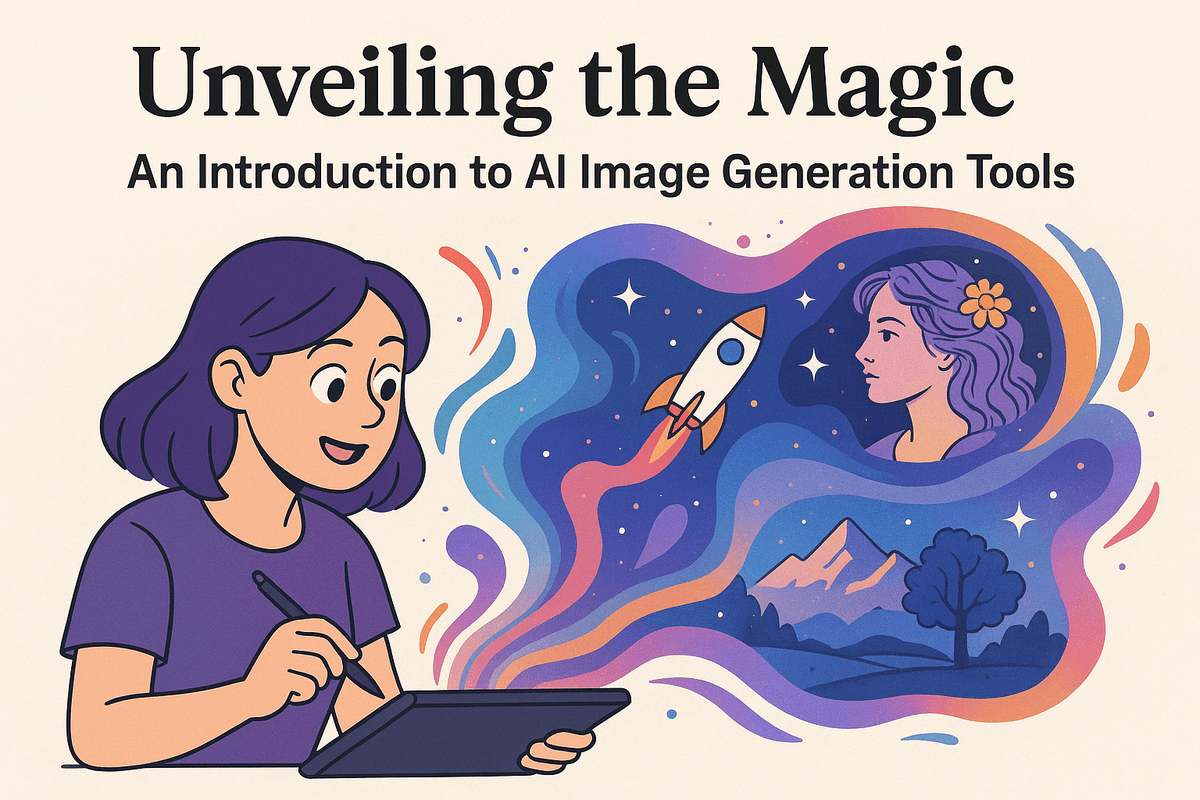
Unveiling the Magic: An Introduction to AI Image Generation Tools
The world of artificial intelligence is constantly evolving, and one of its most fascinating applications is in the realm of image creation. While you might primarily be exploring the power of AI Chat Assistants to streamline your workflows and boost productivity, it's worth taking a detour to understand the incredible advancements happening in AI image generation. This section serves as your introduction to this captivating technology.
What Exactly Are AI Image Generation Tools and How Do They Work?
Imagine instructing a computer to paint a specific scene or conjure a unique visual from thin air. That's essentially what AI image generation tools do. These tools leverage sophisticated algorithms, primarily based on deep learning models like Generative Adversarial Networks (GANs) and diffusion models, to translate text descriptions into realistic or stylized images.
The process typically involves:
- Text Input: You provide a detailed description, also known as a "prompt," outlining the image you desire. This could include elements like objects, settings, artistic styles, and even emotions.
- AI Interpretation: The AI model analyzes your prompt, breaking it down into its core components and understanding the relationships between them.
- Image Synthesis: The model then uses its vast knowledge base, gained from training on millions of images, to generate a brand new image that aligns with your description.
- Refinement (Optional): Many tools allow for iterative refinement, where you can provide further feedback or adjust parameters to fine-tune the generated image to your exact specifications.
While completely distinct from an AI Chat Assistant, the underlying principles of understanding natural language and generating creative content are related, highlighting the versatility of AI.
The Evolution of AI in Image Creation: Why Now is the Time to Explore These Tools.
AI image generation isn't a new concept, but its recent progress has been nothing short of revolutionary. Early iterations produced blurry and often nonsensical results. However, advancements in algorithms, computing power, and the availability of massive datasets have led to a dramatic leap in quality and realism.
The key drivers of this evolution include:
- Increased Computational Power: More powerful GPUs and cloud computing resources enable the training and execution of complex AI models.
- Larger Datasets: AI models learn by analyzing vast amounts of data. The availability of massive image datasets has significantly improved their understanding of visual concepts.
- Sophisticated Algorithms: Innovations in GANs, diffusion models, and other deep learning techniques have enabled the creation of more realistic and nuanced images.
The convergence of these factors means that AI image generation tools are now readily accessible and capable of producing stunning results. Just as AI Chat Assistants are transforming communication and task management, AI image generation is poised to revolutionize creative workflows. Now is the perfect time to explore these tools and understand their potential.
Understanding the Benefits of Using AI Image Generation Tools for Your Projects.
Why should you consider incorporating AI image generation into your projects, even if you're primarily interested in AI Chat Assistants? The benefits are numerous and can significantly enhance your creative process:
- Unleash Your Creativity: Overcome creative blocks and quickly visualize your ideas by generating multiple variations based on different prompts.
- Cost-Effectiveness: Create custom images without the expense of hiring photographers, illustrators, or purchasing stock photos.
- Time Savings: Generate images in minutes, allowing you to focus on other critical aspects of your projects.
- Customization and Control: Tailor images to your exact specifications through detailed prompts and iterative refinement.
- Unique Visuals: Create truly original images that stand out from the crowd and capture the essence of your brand or vision.
While not directly replacing the need for skilled designers or artists, AI image generation tools offer a powerful complement to existing creative workflows, enabling faster experimentation, cost savings, and access to a virtually limitless library of visual possibilities. Much like an AI Chat Assistant can augment your productivity, AI image generation tools can empower you to create compelling visuals with unprecedented ease.
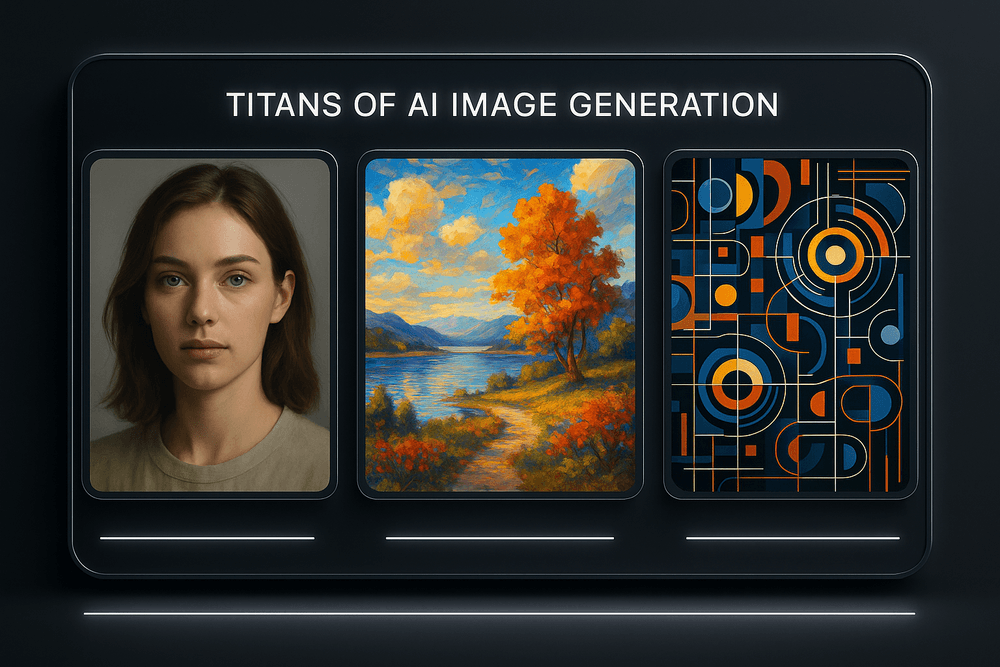
Comparing the Titans: Top AI Image Generation Tools Reviewed
While understanding the power of an AI chat assistant in streamlining communication and automating tasks is crucial, the world of artificial intelligence extends far beyond text. AI image generation is another fascinating frontier, offering creative possibilities previously unimaginable. In this section, we'll explore some of the leading players in the AI image generation arena, comparing their strengths and weaknesses to help you understand how these tools complement and sometimes even integrate with AI chat assistant functionalities.
Midjourney: Artistic Flair and Dreamlike Creations
Midjourney has quickly become synonymous with breathtaking, artistic AI-generated images. Its strength lies in its ability to create visually stunning and often surreal artwork. Think evocative landscapes, otherworldly portraits, and abstract compositions that push the boundaries of imagination.
- Pros: Excellent for creating highly stylized and artistic images; strong community support; relatively easy to use with Discord integration.
- Cons: Requires a paid subscription; limited control over specific details; relies heavily on the user's ability to craft descriptive prompts.
- Integration with AI Chat Assistants: While Midjourney doesn't directly integrate with AI chat assistant platforms in the same way as, say, image editing capabilities within an assistant, the idea generation phase for Midjourney prompts can be dramatically improved by using an AI chat assistant to brainstorm and refine creative concepts. You can ask your assistant to generate variations of a theme, provide alternative wording for prompts, or even analyze existing artwork for inspiration.
DALL·E 3: Versatility and Precise Control
DALL·E 3, the latest iteration from OpenAI, takes a more direct and versatile approach. It excels at understanding and executing complex prompts, allowing for a higher degree of control over the final image. Need a cat wearing a hat sitting on a unicorn eating pizza? DALL·E 3 can likely deliver, with impressive accuracy.
- Pros: Excellent prompt understanding; improved image quality and realism; better at generating specific objects and scenes; integrated within ChatGPT Plus.
- Cons: Can be less "artistic" than Midjourney (depending on the prompt); may require more iterative prompting to achieve desired results.
- Integration with AI Chat Assistants: DALL·E 3's integration within ChatGPT Plus is a game-changer. An AI chat assistant can now not only help you brainstorm and refine your image ideas but also directly generate those images within the same conversation. This streamlines the creative process and allows for seamless iteration based on feedback from the AI chat assistant. This powerful combination allows you to generate content, create marketing materials, and visualize concepts all within a single platform.
Stable Diffusion: Open-Source Power and Customization
Stable Diffusion stands out as an open-source option, granting users unparalleled customization and control. This flexibility allows for fine-tuning the model with specific datasets, leading to unique and tailored results. However, this power comes with a steeper learning curve.
- Pros: Highly customizable; free to use (with sufficient hardware); vast community of developers and artists contributing to extensions and improvements.
- Cons: Requires technical expertise to set up and optimize; can be resource-intensive; results can vary significantly depending on the configuration.
- Integration with AI Chat Assistants: While not directly integrated, AI chat assistants can be invaluable in helping users navigate the complex world of Stable Diffusion. You can use an AI chat assistant to research different models, understand the parameters, troubleshoot issues, and even generate Python code for automating tasks within Stable Diffusion.
Discovering Niche AI Image Generation Tools: Adobe Firefly and Canva's AI
Beyond the big three, several other players are making waves in the AI image generation space.
- Adobe Firefly: Integrated within the Adobe Creative Suite, Firefly offers powerful AI tools directly within familiar software like Photoshop and Illustrator. This makes it incredibly convenient for professional designers and creatives.
- Canva's AI Tools: Canva's AI-powered image generation tools make it easy for anyone to create visually appealing graphics, even without prior design experience. It's perfect for social media content, presentations, and other marketing materials.
Both Adobe Firefly and Canva's AI tools are leveraging AI chat assistant technology in their platforms to assist users with brainstorming, generating alternative designs, and offering suggestions for improvements. This highlights the increasing convergence of AI chat assistant functionalities with other AI-powered creative tools.
Ultimately, the "best" AI image generation tool depends on your specific needs and goals. Whether you prioritize artistic expression, precise control, or open-source flexibility, there's an AI image generator out there to unlock your creative potential, often enhanced by the brainstorming and organizational capabilities of an AI chat assistant.
Unlocking Creativity: Key Features of Modern AI Image Generation Tools
While AI chat assistants are revolutionizing communication and productivity, the AI revolution doesn't stop there. The rapid advancement of AI image generation tools is unlocking unprecedented creative possibilities for individuals and businesses alike. But to truly leverage these tools, you need to understand their key features and how to wield them effectively.
Here's a breakdown of how to master the artistic landscape offered by modern AI image generation:
Mastering Text-to-Image Prompts: How to Get the Results You Want
At the heart of AI image generation lies the power of text prompts. Simply typing a few words transforms into a visual representation. However, achieving truly remarkable results requires a more nuanced approach. Consider these tips:
- Be Specific: Avoid vague descriptions. Instead of "a beautiful landscape," try "a breathtaking mountain landscape at sunset, golden hour, snow-capped peaks, vibrant orange and pink sky reflecting in a still lake, photorealistic."
- Use Modifiers: Experiment with stylistic modifiers such as "photorealistic," "impressionistic," "cyberpunk," "watercolor," or "digital art" to guide the AI's artistic direction.
- Include Keywords Related to Composition: Terms like "close-up," "wide shot," "aerial view," "portrait," or "landscape" help define the image's framing.
- Specify Lighting and Color: Words like "natural light," "soft lighting," "dramatic lighting," "vibrant colors," "muted tones," or "monochrome" profoundly impact the image's mood and aesthetic.
- Iterate and Refine: Don't be afraid to experiment with different prompts and refine your requests based on the initial results. Iterative refinement is key to unlocking the perfect image. Think of it like a conversation with an artist – provide feedback to guide their creation. And remember, the best prompts often include negative prompts, explicitly telling the AI what not to include.
Beyond Basic Generation: Exploring Inpainting, Outpainting, and Image Editing with AI
Modern AI image generators offer capabilities far beyond simply creating images from scratch. Here's a glimpse into more advanced techniques:
- Inpainting: Select a specific area within an existing image and instruct the AI to fill it in based on a prompt. This allows you to seamlessly remove unwanted objects, add new elements, or repair damaged images. It's like having a super-powered Photoshop brush at your fingertips.
- Outpainting: Expand the boundaries of an existing image by instructing the AI to generate content beyond its original borders. Imagine taking a portrait and using outpainting to create a grand, sweeping landscape surrounding the subject.
- AI-Powered Image Editing: Many platforms integrate AI-driven editing tools, enabling you to adjust brightness, contrast, saturation, and other parameters with remarkable precision. Some even offer features like automatic background removal or style transfer, allowing you to apply the artistic style of one image to another. This is particularly useful alongside AI chat assistants when creating marketing materials that require on-the-fly adjustments.
Understanding Image Resolution, Aspect Ratios, and Style Controls
To truly master AI image generation, it's crucial to understand the technical controls that influence the final output:
- Image Resolution: The resolution determines the image's detail and size. Higher resolutions (measured in pixels, e.g., 1024x1024) are ideal for printing or displaying on large screens, while lower resolutions are suitable for web use.
- Aspect Ratios: The aspect ratio defines the image's proportions (e.g., 16:9 for widescreen, 1:1 for square). Selecting the appropriate aspect ratio is crucial for different applications, such as social media posts, website banners, or presentations.
- Style Controls (Seeds, CFG Scale, etc.): Many advanced tools offer deeper controls. 'Seeds' can be used to recreate identical or similar images based on the same prompt. 'CFG Scale' (Classifier-Free Guidance Scale) determines how strongly the AI adheres to the prompt - higher values mean stronger adherence. Experimenting with these advanced controls can lead to nuanced and highly personalized results.
By understanding these key features and techniques, you can unlock the full potential of AI image generation and harness its power to enhance your creativity, marketing efforts, and overall visual communication. And, when used in conjunction with your AI chat assistant for brainstorming and prompt refinement, the possibilities are truly limitless.
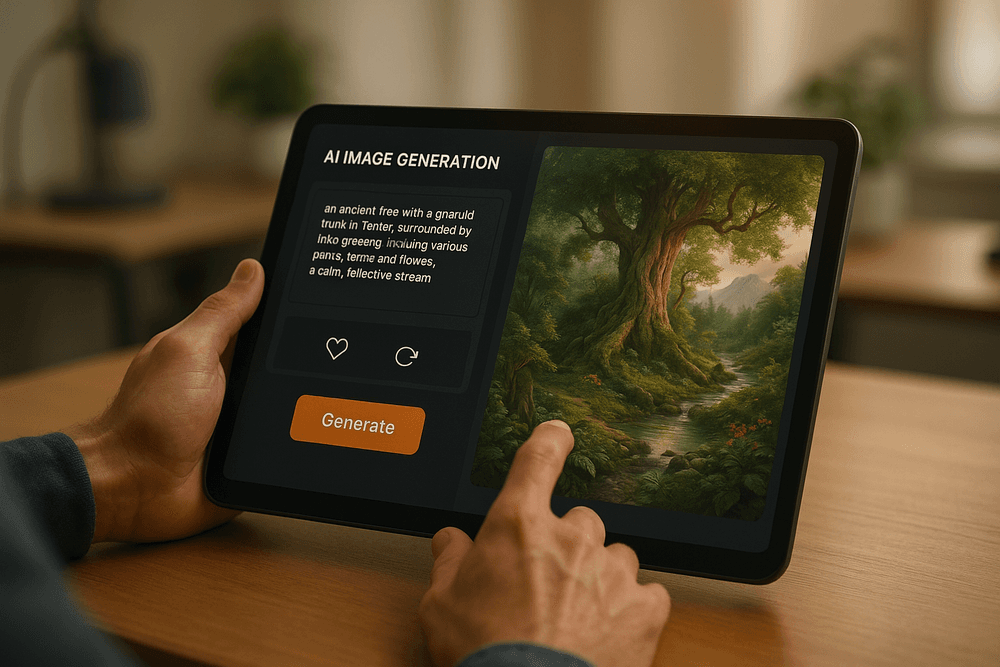
Best Practices: Getting the Most Out of Your AI Image Generation Tools
While this article focuses on AI chat assistants and how they can revolutionize your productivity, it's impossible to ignore the rise of another powerful AI tool: AI image generation. These tools, while distinct from AI chat assistants, can complement your workflow and unlock incredible creative possibilities. To ensure you're leveraging these image generation tools effectively and ethically, here's a breakdown of best practices:
Crafting Effective Prompts: The Art and Science of Communicating with AI Image Generation Tools
The magic of AI image generation lies in the prompts you provide. Think of it as a conversation with the AI, but instead of text responses, you receive visual creations. Mastering prompt engineering is crucial for achieving the desired results. Here's how to approach it:
- Be Specific: Avoid vague terms. Instead of "a dog," try "a golden retriever puppy playing fetch in a sunny park." The more detail you provide, the better the AI can understand your vision.
- Use Descriptive Language: Employ adjectives and adverbs to paint a vivid picture. Consider specifying the style (e.g., "photorealistic," "impressionistic," "cartoonish"), artist (e.g., "in the style of Van Gogh"), and lighting (e.g., "soft, natural light," "dramatic shadows").
- Specify Details and Composition: Think about the scene's elements, their arrangement, and the overall composition. For example, "a futuristic cityscape at sunset, with flying cars and neon signs, panoramic view."
- Experiment with Keywords: Try different combinations of keywords and phrases to see what resonates with the AI. Don't be afraid to get creative and explore unexpected directions.
- Utilize Negative Prompts (if available): Many AI image generators allow you to specify elements you don't want in the image. This can be a powerful tool for refining your results and avoiding unwanted artifacts.
- Consider Aspect Ratio: Before you start, decide on the desired aspect ratio (e.g., 16:9, 1:1, 9:16) to ensure the image is properly framed.
Ultimately, crafting effective prompts is a process of trial and error. Document your successes and failures to learn what works best for the specific AI image generation tool you're using. Remember, clear and descriptive prompts are the key to unlocking stunning and personalized visuals. While an AI chat assistant helps with text, image generation is all about visual communication.
Ethical Considerations and Copyright: Navigating the Responsible Use of AI-Generated Images
The rapid advancement of AI image generation raises important ethical and legal considerations. It's crucial to use these tools responsibly and be aware of the potential implications:
- Copyright and Ownership: Copyright laws surrounding AI-generated images are still evolving. It's essential to research the terms of service of the specific AI image generator you're using and understand who owns the rights to the generated images.
- Bias and Representation: AI models are trained on vast datasets, which may contain biases that can be reflected in the generated images. Be mindful of potential biases and strive to use the tools in a way that promotes inclusivity and avoids perpetuating stereotypes.
- Misinformation and Deepfakes: AI-generated images can be used to create realistic but fabricated content, which can be used for malicious purposes, such as spreading misinformation or creating deepfakes. Be aware of this potential and use your judgment responsibly.
- Attribution and Transparency: If you use AI-generated images in your work, consider disclosing that they were created using AI. This promotes transparency and avoids misleading your audience.
- Respect for Existing Artists: Avoid using AI to simply replicate the work of existing artists without their permission. Instead, use it as a tool for inspiration and to create your own unique and original content.
Just as you'd consider the ethical implications of using information gleaned from an AI chat assistant, you must also consider the ethics of AI image generation.
Iterative Prompting and Refining Your Creations for Perfection with AI Tools
Achieving the perfect AI-generated image rarely happens on the first try. Iterative prompting – refining your prompts based on the initial results – is a crucial step in the creative process.
- Analyze the Results: Carefully examine the generated images and identify what you like and dislike.
- Adjust Your Prompts: Based on your analysis, modify your prompts to address any issues and further refine the image.
- Experiment with Different Parameters: Explore the various parameters offered by the AI image generator, such as the level of detail, the number of iterations, and the creative style.
- Combine and Edit: Don't be afraid to combine elements from different generated images or use image editing software to further refine your creations.
- Persistence is Key: Keep experimenting and refining your prompts until you achieve the desired result. With patience and persistence, you can unlock the full potential of AI image generation and create truly stunning and unique visuals.
While an AI chat assistant can help you brainstorm prompt ideas, the iterative process is where you hone your artistic vision. By understanding the principles of prompt engineering, ethical considerations, and iterative refinement, you can harness the power of AI image generation to enhance your creativity and productivity. Just as understanding how to leverage your AI chat assistant is crucial for your work, understanding how to use AI image generators can open up entirely new possibilities.
Okay, here's the section content, crafted to be SEO-optimized for "AI chat assistant" (while also fitting within the context of AI image generation) and engaging for readers interested in AI productivity tools.
AI Image Generation Tools in Action: Inspiring Real-World Use Cases
AI image generation has exploded, offering exciting possibilities for businesses and individuals alike. While AI chat assistants are revolutionizing communication and productivity, another facet of AI – image generation – is transforming how we create and consume visual content. Let’s explore some compelling real-world applications that are demonstrating the power of AI-driven visuals.
Transforming Marketing and Advertising with Unique AI-Generated Visuals
Imagine crafting ad campaigns that are truly unique and tailored to specific demographics. AI image generators empower marketers to do just that. Instead of relying on stock photos that have been seen a million times, businesses can use AI to create:
- Personalized ad creatives: Generate images that resonate with individual customer segments, boosting engagement and conversion rates. Think of dynamically altering the product color based on user preferences, powered by insights gleaned from your AI chat assistant's customer interaction data.
- Concept visualization: Quickly bring abstract ideas to life, allowing for rapid prototyping and testing of marketing concepts before investing in expensive photography or video shoots.
- Social media content creation: Generate eye-catching visuals for social media posts, ensuring consistent branding and a steady stream of fresh content. Consider using your AI chat assistant to brainstorm these image ideas!
Empowering Content Creators: Blogging, Social Media, and Video Production with AI Images
For bloggers, social media influencers, and video creators, AI image generation is a game-changer. It overcomes common hurdles like budget constraints and access to professional photographers. Here's how they're leveraging this technology:
- Visual storytelling in blogs: Enhance blog posts with unique illustrations, diagrams, and graphics, making content more engaging and easier to understand. Complementary to the informative text, these images, perhaps suggested by an AI chat assistant prompt, enhance the reading experience.
- Engaging social media feeds: Create visually compelling content for platforms like Instagram and TikTok, attracting followers and boosting brand awareness.
- Cost-effective video production: Use AI-generated images as placeholders for real footage during the pre-production phase, or even as final assets in certain types of videos. This allows creators to create better storyboards, potentially even informed by information gleaned from customer interactions using an AI chat assistant.
Case Studies: How Businesses are Leveraging AI Image Generation Tools for Innovation and Efficiency
Let's delve into some specific examples to illustrate the impact of AI image generation:
- E-commerce Retailer: Enhancing Product Listings: An online clothing retailer uses AI to generate variations of product images, showcasing clothing on diverse body types and in different settings. This increased click-through rates and conversions by 15%. Integrating with data from their AI chat assistant also enabled them to personalize the products based on individual user data, and further increase the results.
- Real Estate Agency: Virtual Staging: A real estate agency uses AI to virtually stage empty homes, making them more appealing to potential buyers. This resulted in faster sales and higher selling prices.
- Content Marketing Agency: Scaling Visual Content Creation: A content marketing agency uses AI to generate images for blog posts, social media campaigns, and email newsletters. This significantly reduced content creation costs and increased output.
AI image generation tools are revolutionizing the creative landscape, offering unprecedented opportunities for businesses and individuals. As AI continues to evolve, we can expect to see even more innovative and impactful use cases emerge, often working in concert with the capabilities offered by the best AI chat assistant tools on the market. These technologies offer a future that is more creative, efficient, and personalized.
The Future is Visual: Your Next Steps with AI Image Generation Tools
While understanding AI Chat Assistants is crucial for communication and automation, let's not forget the power of visuals in capturing attention and conveying messages. The intersection of AI extends beyond text and into the realm of stunning imagery. Fortunately, the world of AI image generation is rapidly evolving, offering incredible possibilities for creators and businesses alike. But how do you harness this power?
Choosing the Right AI Image Generation Tool for Your Specific Needs and Budget:
The market is brimming with AI image generation tools, each boasting unique features and pricing structures. Before diving in, consider what you need the tool for. Are you looking for:
- Realistic photo generation? Some models excel at creating hyper-realistic images from text prompts.
- Stylized art creation? Others are perfect for producing unique artwork in various styles, from impressionism to digital painting.
- Marketing and advertising assets? Certain tools offer features specifically tailored for creating eye-catching marketing visuals.
Once you've identified your needs, research the available options. Look at factors such as:
- Pricing: Some tools offer free trials or tiered subscription plans, while others charge per image generated.
- Ease of use: Consider your technical expertise. Some tools are more user-friendly than others, with intuitive interfaces and comprehensive tutorials.
- Customization options: How much control do you have over the final image? Look for tools that allow you to adjust parameters like style, composition, and subject matter.
- Image rights: Understand the terms of use and who owns the rights to the images you create.
Don’t be afraid to experiment with free trials of different AI image generators. This is the best way to find the perfect fit for your workflow and creative vision. Remember, just as AI Chat Assistants enhance communication, AI image generation tools amplify visual storytelling.
Stay Ahead: Resources for Learning and Mastering Advanced AI Image Generation Techniques:
The field of AI image generation is constantly evolving. To truly master these tools and stay ahead of the curve, continuous learning is essential. Here are some resources to explore:
- Online courses and tutorials: Platforms like Coursera, Udemy, and Skillshare offer courses on AI image generation, covering topics like prompt engineering, advanced techniques, and the latest advancements in the field.
- AI communities and forums: Join online communities and forums dedicated to AI image generation. These platforms are a great place to share your creations, ask questions, and learn from other users.
- Research papers and publications: Stay up-to-date on the latest research in AI image generation by reading academic papers and industry publications. This will give you a deeper understanding of the underlying technology and potential future developments.
- Experimentation and practice: The best way to learn is by doing! Experiment with different prompts, settings, and techniques to discover what works best for you. Don't be afraid to push the boundaries and explore the creative possibilities of AI image generation.
Just as understanding the nuances of prompting is vital for effective use of an AI Chat Assistant, mastering prompt engineering is crucial for achieving your desired results with AI image generators.
The future of visual content creation is here, and it's powered by AI. Don't get left behind. Take the first step today and explore the exciting world of AI image generation. Whether you're a marketer, designer, artist, or simply someone who wants to bring their creative visions to life, AI image generation tools can empower you to create stunning visuals that capture attention and inspire imagination.
Ready to unlock your visual potential? Start creating stunning visuals today with AI image generation tools! Just as an AI Chat Assistant can revolutionize your communication, AI-generated imagery can transform your visual content.