
May 19, 2025
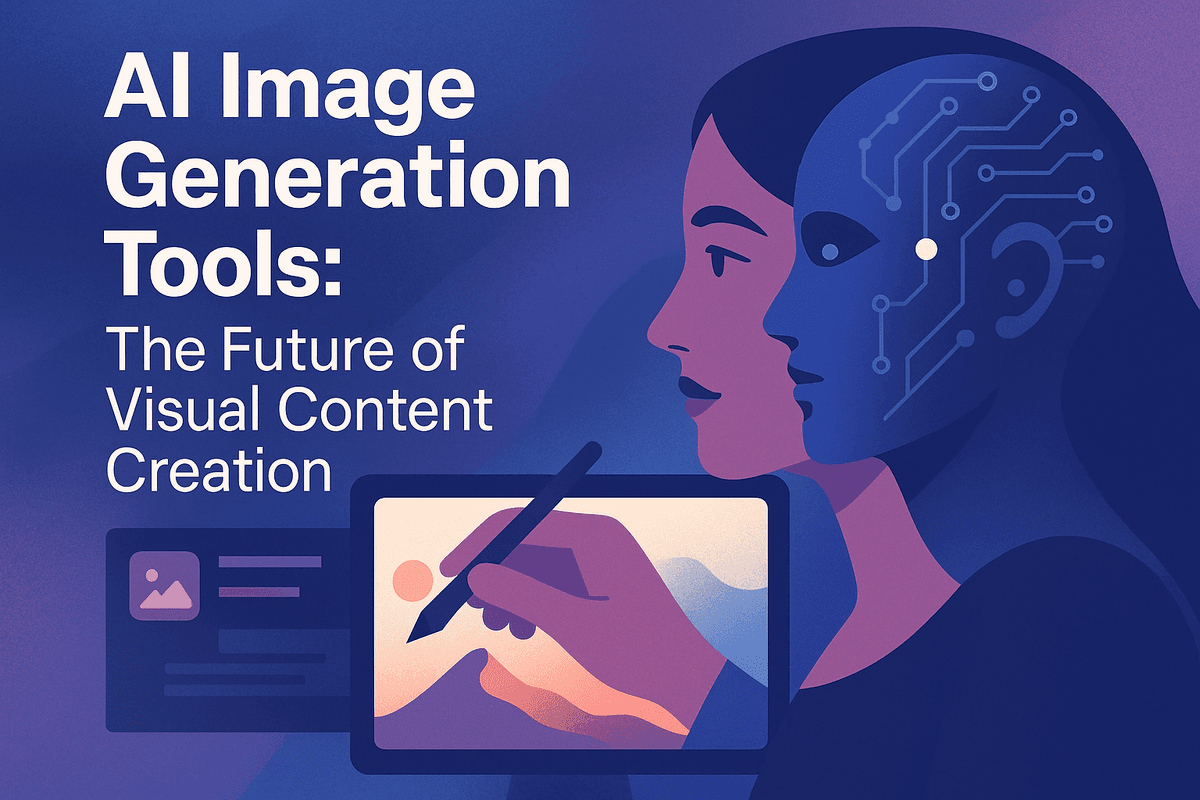
The Future of Visual Content Creation
Introduction: The Dawn of Effortless Creation with AI Image Generation Tools
The world of visual content is changing, and it's changing fast. Forget tedious stock photo searches and expensive photoshoots. We're entering an era where stunning, original images are just a text prompt away, thanks to the revolutionary power of AI image generation tools.
What Exactly Are AI Image Generation Tools and How Do They Work?
At their core, AI image generation tools are sophisticated software programs that leverage artificial intelligence, specifically deep learning models, to conjure up images based on textual descriptions. Think of it as having a digital artist on demand, ready to bring your wildest visual ideas to life.
These tools are trained on massive datasets of images and their corresponding text descriptions. By analyzing these datasets, the AI learns the relationship between words and visuals. When you input a prompt like "a cat wearing a space helmet on Mars," the AI uses its learned knowledge to construct an image that matches that description, pixel by pixel. The underlying technology often involves diffusion models, which start with random noise and progressively refine it into a coherent image based on your prompt. It's a truly remarkable feat of engineering!
The Creative Revolution: Why Everyone's Talking About AI-Generated Images
The buzz around AI image generation tools is palpable, and for good reason. They democratize the creative process, making high-quality visual content accessible to everyone, regardless of their artistic skill or budget. Suddenly, small businesses can create compelling marketing materials, bloggers can illustrate their posts with unique visuals, and artists can explore new creative avenues with unprecedented ease.
The speed at which these tools operate is another key factor driving their popularity. Gone are the days of waiting days or weeks for a custom illustration. With AI image generation tools, you can generate multiple variations of an image in seconds, allowing you to quickly iterate and refine your vision.
Beyond Stock Photos: Unleashing Unique Visuals in Seconds
For too long, we've relied on generic stock photos that often lack personality and originality. AI image generation tools offer a powerful alternative. They allow you to create truly unique visuals that perfectly match your brand, message, and creative vision.
Imagine needing an image of "a futuristic cyberpunk city at sunset, with neon lights and flying cars." Instead of endlessly scrolling through stock photo libraries, you can simply type that prompt into an AI image generation tool and watch as your vision comes to life. This ability to create bespoke imagery opens up a world of possibilities for marketers, designers, and anyone looking to stand out in a visually saturated world.
Spotlight on Leading AI Image Generation Tools: Which Platform Reigns Supreme?
The world of AI image generation tools is exploding, offering incredible power to create stunning visuals from simple text prompts. But with so many options available, how do you choose the right one for your needs? In this section, we'll shine a spotlight on three leading contenders: Midjourney, DALL-E 3, and Stable Diffusion. We'll delve into their strengths, weaknesses, and ideal use cases, helping you navigate this exciting landscape.
Midjourney: For Artistic Flair and Detailed Worlds - A Deep Dive
Midjourney stands out for its ability to generate breathtakingly artistic and imaginative images. It excels at creating stylized visuals, dreamy landscapes, and highly detailed character designs. Think fantastical creatures, intricate architecture, and vibrant color palettes.
Key Strengths:
- Artistic Style: Midjourney possesses a unique and recognizable artistic aesthetic, making it ideal for projects that require a distinctive look.
- Detail and Coherence: It's particularly adept at generating complex scenes with intricate details that hold up even under close scrutiny.
- Community Focus: Midjourney operates primarily through Discord, fostering a strong community where users share prompts, techniques, and inspire one another.
Considerations:
- Learning Curve: While relatively easy to start, mastering Midjourney's prompting techniques and parameter controls takes time and experimentation.
- Commercial Use Limitations: Check the licensing terms carefully, as commercial use restrictions may apply depending on your subscription plan.
Ideal For: Artists, designers, game developers, and anyone seeking visually stunning and creatively inspired images.
DALL-E 3: OpenAI's Powerhouse for Photorealism and Text Integration
DALL-E 3, developed by OpenAI, is known for its impressive photorealism and seamless text integration capabilities. It excels at bringing highly specific and detailed text prompts to life, accurately capturing nuances and subtleties.
Key Strengths:
- Photorealistic Output: DALL-E 3 can produce images that are virtually indistinguishable from real photographs, making it perfect for realistic visualizations and marketing materials.
- Text Integration: It's remarkably skilled at incorporating text directly into images, opening up possibilities for creating unique graphics, infographics, and branded content.
- User-Friendly Interface: Integrated within the ChatGPT interface, DALL-E 3 offers a relatively straightforward and intuitive experience, making it accessible to a wider audience.
Considerations:
- Creativity Limitations: While excellent at following instructions precisely, DALL-E 3 may sometimes lack the artistic flair and imaginative spark of Midjourney.
- Pricing Structure: Access to DALL-E 3 is typically bundled with ChatGPT Plus, which may not be the most cost-effective option for users solely interested in image generation.
Ideal For: Marketing professionals, businesses, educators, and anyone needing realistic visuals, product mockups, or images with embedded text.
Stable Diffusion: The Open-Source Champion for Customization and Control
Stable Diffusion distinguishes itself as a powerful open-source AI image generation tool, providing unparalleled flexibility and customization options. Its open nature allows users to modify the underlying code, train their own models, and tailor the image generation process to their specific needs.
Key Strengths:
- Open-Source Flexibility: Stable Diffusion's open-source nature empowers users with complete control over the software, enabling them to fine-tune parameters, add custom features, and integrate it into their own workflows.
- Community-Driven Innovation: A vibrant community of developers continuously contributes to Stable Diffusion, creating new models, tools, and techniques that expand its capabilities.
- Cost-Effective (Potentially): Running Stable Diffusion on your own hardware can potentially eliminate subscription fees, making it a cost-effective option for users with the necessary technical expertise.
Considerations:
- Technical Expertise Required: Setting up and running Stable Diffusion requires a certain level of technical proficiency, as it involves installing software, configuring parameters, and potentially managing hardware.
- Hardware Requirements: Generating high-quality images with Stable Diffusion typically requires a powerful GPU, which can be a significant investment.
Ideal For: Developers, researchers, artists with coding experience, and anyone seeking maximum control and customization over the image generation process.
Comparing Key Contenders: Usability, Output Quality, and Pricing of AI Image Generation Tools
To summarize, here’s a quick comparison of these leading AI image generation tools based on key factors:
| Feature | Midjourney | DALL-E 3 | Stable Diffusion |
|----------------|-----------------------------------|-----------------------------------|-----------------------------------|
| Usability | Moderate (Discord based) | High (ChatGPT Integrated) | Low (Technical expertise required) |
| Output Quality | Artistic, detailed | Photorealistic, text-integrated | Highly Customizable |
| Pricing | Subscription based | ChatGPT Plus subscription | Potentially Free (hardware cost) |
Choosing the right AI image generation tool depends entirely on your specific needs and technical capabilities. Consider the type of images you need to generate, your desired level of control, and your budget when making your decision. The future of creative content is here, and these tools are paving the way.
Unlocking Potential: Must-Have Features in Modern AI Image Generation Tools
The world of AI image generation tools is rapidly evolving. What was once a novelty is now a powerful creative force, capable of transforming simple text prompts into stunning visuals. But not all tools are created equal. To truly unlock the potential of AI image creation, you need access to features that go beyond basic image synthesis. This section dives into the crucial features that separate the exceptional AI image generation tools from the merely adequate.
From Simple Text to Complex Scenes: The Power of Advanced Prompting
At the heart of any good AI image generation tool lies its ability to interpret and execute your prompts. While basic prompts like "a cat on a chair" can yield interesting results, advanced prompting techniques are key to crafting truly unique and compelling imagery. Look for tools that support:
- Negative Prompts: Specify what you don't want to see in the image. This helps refine the AI's focus and eliminate unwanted artifacts or stylistic elements.
- Detailed Modifiers: Incorporate adjectives, adverbs, and specific details to fine-tune the composition, style, and mood. For example, instead of "a forest," try "a misty, enchanted forest at dawn, with towering trees and dappled sunlight."
- Prompt Weighting: Assign different levels of importance to various elements within your prompt. This allows you to emphasize certain aspects of the image while de-emphasizing others.
- Multi-Subject Prompts: Generate images featuring multiple subjects and their interactions. This opens doors to complex narratives and dynamic compositions.
Mastering advanced prompting is crucial for maximizing the output of any AI image generation tool. Experiment with different phrasing, explore new concepts, and refine your prompts iteratively to achieve your desired results.
Image Editing and Inpainting: Refining Your AI-Generated Masterpieces
Even the best AI image generation tools sometimes produce imperfections. That's where built-in image editing and inpainting capabilities come into play. These features allow you to:
- Erase unwanted elements: Remove distracting objects or blemishes from the image.
- Modify existing elements: Change the color, shape, or texture of specific areas within the image.
- Add new elements: Seamlessly introduce new objects or details into the existing scene.
- Inpaint missing details: Fill in gaps or resolve inconsistencies created during the image generation process.
Inpainting, in particular, is a game-changer. Imagine generating a near-perfect image only to find a small, distracting anomaly. With inpainting, you can simply highlight the problematic area and instruct the AI to fill it in logically, preserving the overall aesthetic. These editing features are indispensable for polishing your AI-generated images and ensuring they meet your exact specifications.
Style Transfer and Custom Models: Tailoring Visuals to Your Brand with AI Tools
Beyond basic image generation, many advanced AI image generation tools offer style transfer and custom model capabilities. These features empower you to:
- Apply specific artistic styles: Transform your images into the style of famous painters like Van Gogh or Monet, or mimic the aesthetics of different art movements like Art Deco or Surrealism.
- Create consistent brand visuals: Train custom AI models on your brand assets (logos, color palettes, imagery) to generate images that perfectly align with your brand identity. This ensures a cohesive and recognizable visual presence across all your marketing materials.
- Explore unique visual aesthetics: Experiment with different style combinations and custom models to create entirely new and innovative visual styles.
These features are particularly valuable for businesses and creatives looking to leverage AI image generation tools for branding, marketing, and artistic expression.
Resolution, Aspect Ratios, and Export Options: Technical Considerations for AI Images
Finally, don't overlook the technical aspects of AI image generation tools. Ensure the tool you choose offers:
- High-resolution output: Generate images with sufficient resolution for your intended use, whether it's web display, print materials, or large-format displays.
- Flexible aspect ratios: Choose from a variety of aspect ratios (e.g., 1:1, 16:9, 4:3) to optimize your images for different platforms and applications.
- Versatile export options: Export your images in various formats (e.g., JPG, PNG, TIFF) and compression levels to suit your specific needs.
By carefully considering these technical factors, you can ensure that your AI image generation tool produces high-quality, visually stunning images that are ready for prime time. Choosing a tool with these capabilities will undoubtedly enhance your creative workflow and unlock the true potential of AI-powered image creation.
Prompt Like a Pro: Best Practices for Stunning Results with AI Image Generation Tools
Creating amazing images with AI image generation tools isn't magic; it's a craft. And like any craft, mastering the art of the prompt is key to unlocking its full potential. This section dives deep into the techniques that will transform your vague ideas into visually stunning realities.
The Art of the Perfect Prompt: Clarity, Detail, and Negative Prompting for AI Image Generation Tools
Think of your prompt as a precise set of instructions for the AI. The more clear, detailed, and specific you are, the better the results will be. Here's a breakdown of the key elements:
- Clarity is King (or Queen): Avoid ambiguity. Use simple, direct language that leaves no room for misinterpretation. Instead of "a beautiful landscape," try "a breathtaking sunset over a snow-capped mountain range."
- Embrace the Details: Don't be afraid to over-describe. Include specifics about:
- Subject: What exactly are you trying to generate? (e.g., "a majestic lion," "a cozy cabin in the woods")
- Art Style: Do you want photorealism, painting, cartoon, 3D render, or something else? (e.g., "photorealistic," "impressionist painting," "pixar-style animation")
- Lighting: How is the scene lit? (e.g., "golden hour lighting," "dramatic backlighting," "soft, diffused light")
- Composition: How are the elements arranged in the image? (e.g., "close-up shot," "wide-angle view," "aerial perspective")
- Color Palette: What colors should dominate the image? (e.g., "vibrant and colorful," "muted and earthy," "monochromatic blue")
- Era/Setting: Specify the time period or environment. (e.g., "Victorian era," "cyberpunk cityscape," "futuristic spaceship interior")
- Negative Prompting: Your Secret Weapon: This often-overlooked technique is crucial for refining your results. Negative prompts tell the AI image generation tool what not to include. For example, if you're generating a portrait and want to avoid blurry eyes, add "blurry eyes" to the negative prompt. Common negative prompts include: "blurry," "deformed," "duplicate," "mutated," "ugly," "poorly drawn," "out of frame."
Example:
Bad Prompt: "cat"
Good Prompt: "A fluffy Persian cat sitting on a window sill, bathed in warm sunlight, looking directly at the camera, photorealistic, detailed fur, shallow depth of field, indoor setting"
Even Better Prompt (with negative prompting): "A fluffy Persian cat sitting on a window sill, bathed in warm sunlight, looking directly at the camera, photorealistic, detailed fur, shallow depth of field, indoor setting, warm colors, cozy atmosphere" - negative prompt: blurry, deformed paws, multiple cats
Iterative Refinement: Using Seeds and Variations for Desired Outcomes with AI Generators
Generating the perfect image often requires multiple iterations. Luckily, AI image generation tools offer powerful features to help you refine your results:
- Seeds: The Key to Consistency: A seed is a numerical value that acts as a starting point for the AI's generation process. By using the same seed with slightly different prompts, you can explore variations on a similar theme while maintaining consistency in style and composition. This is especially useful for creating a series of images with a unified look.
- Variations: Explore New Possibilities: Most AI image generation tools allow you to generate variations of an existing image. This is a fantastic way to explore different artistic styles, color palettes, or compositions without starting from scratch. Experiment with small tweaks to the original prompt to see how the variations evolve.
Tip: Keep track of your prompts and seeds in a spreadsheet or document. This will allow you to easily reproduce your favorite results and continue refining them.
Understanding Parameters: Guidance Scale, Steps, and Samplers Explained for AI Image Tools
Beyond the text prompt, you can fine-tune your results by adjusting various parameters within your AI image generation tool. Here's a breakdown of the most important ones:
- Guidance Scale (CFG Scale): This parameter controls how closely the AI adheres to your prompt. A higher guidance scale (e.g., 15-20) will force the AI to follow your instructions more strictly, potentially leading to more accurate but less creative results. A lower guidance scale (e.g., 5-10) allows the AI more freedom, resulting in more artistic and unexpected outputs, but may stray further from your intended vision.
- Steps (Inference Steps/Sampling Steps): This parameter determines the number of iterations the AI performs during the image generation process. More steps generally lead to more detailed and refined images, but also increase processing time. A good starting point is usually between 20-50 steps.
- Samplers: Samplers are algorithms that the AI uses to generate the image. Different samplers can produce subtly different results, even with the same prompt and parameters. Experiment with different samplers to see which one works best for your desired style. Common samplers include Euler, Heun, DPM2, and DPM++ 2S a Karras.
Remember: There's no one-size-fits-all setting for these parameters. Experiment to find what works best for your specific prompts and creative goals.
Ethical Considerations and Avoiding Bias when using AI Image Generation Tools
While AI image generation tools offer incredible creative possibilities, it's crucial to use them responsibly and ethically. Be mindful of the following:
- Copyright and Ownership: Understand the terms of service of the AI image generation tool you're using. Who owns the copyright to the generated images? Can you use them for commercial purposes?
- Bias and Representation: AI image generation tools are trained on massive datasets, which may contain biases that are reflected in the generated images. Be aware of these potential biases and strive to create images that are fair and inclusive. Avoid generating content that promotes harmful stereotypes or reinforces discriminatory practices.
- Misinformation and Deepfakes: Be cautious about using AI image generation tools to create misleading or deceptive content. Avoid generating images that could be used to spread misinformation or harm individuals or organizations.
- Transparency and Disclosure: If you're using AI image generation tools to create images for commercial purposes, be transparent about it. Disclose that the images were generated by AI, especially if they are being used in contexts where authenticity is important.
By following these best practices, you can harness the power of AI image generation tools to create stunning and impactful visuals while remaining ethical and responsible. Now go forth and create!
AI Image Generation Tools in Action: Inspiring Real-World Use Cases
The potential of AI image generation tools extends far beyond simple novelty. These powerful platforms are rapidly transforming industries, offering unprecedented creative opportunities and streamlining workflows. From revolutionizing marketing campaigns to facilitating rapid prototyping, let's explore some inspiring real-world use cases demonstrating the magic of AI image generation.
Marketing Magic: Creating Unique Ad Creatives and Social Media Content with AI
Tired of stock photos that everyone else is using? AI image generation tools offer a revolutionary way to create unique and eye-catching visuals for your marketing efforts. Imagine crafting hyper-targeted ads showcasing a product in a specific, imaginative setting – all based on a simple text prompt. No more expensive photoshoots or searching through endless libraries.
- Stand out from the crowd: Generate visuals that perfectly match your brand's voice and target audience, ensuring your ads capture attention and drive conversions.
- A/B Testing on Steroids: Rapidly create variations of ad creatives with different visuals, allowing for data-driven optimization based on what resonates best with your audience.
- Social Media Content on Demand: Need engaging visuals for your social media feeds? AI image generation tools can create compelling content to boost engagement and grow your following. Think captivating illustrations for blog posts, eye-catching quote graphics, and vibrant imagery for promotional campaigns.
Design & Prototyping: Visualizing Ideas from Product Concepts to Architectural Renders using AI Image Tools
Designers and architects are leveraging AI image generation to bring their visions to life more quickly and efficiently. These tools enable the rapid visualization of concepts, allowing for faster iteration and exploration of design possibilities.
- Product Concept Visualization: Imagine sketching a rough product idea and then using an AI image generation tool to instantly create photorealistic renderings. This allows for early feedback and helps refine the design before committing to expensive physical prototypes.
- Architectural Renders Made Easy: Architects can use text prompts to generate stunning visualizations of building designs, exploring different materials, lighting conditions, and environmental settings. This can significantly speed up the design process and facilitate client presentations.
- Streamlined User Interface (UI) and User Experience (UX) Design: Quickly prototype UI elements and layouts, experimenting with different visual styles and user flows. AI image generation tools can generate mockups and wireframes based on textual descriptions, accelerating the design and testing phase.
Content Creation Reimagined: Blog Illustrations, Storyboarding, and Presentations via AI Image Generation Tools
Content creators are finding AI image generation tools invaluable for enhancing their work with compelling visuals. Forget generic stock photos – now you can generate custom illustrations and graphics tailored to your specific needs.
- Engaging Blog Illustrations: Transform dull blog posts into captivating experiences with custom-generated illustrations that perfectly complement your text.
- Dynamic Storyboarding: Filmmakers and animators can use AI image generation to rapidly create storyboards, visualizing scenes and camera angles before shooting or animating.
- Impactful Presentations: Elevate your presentations with custom-generated visuals that reinforce your message and keep your audience engaged. Say goodbye to boring stock photos and hello to unique, relevant imagery.
Personal Projects: From Custom Avatars to Unique Digital Art with AI Generators
The creative possibilities of AI image generation tools aren't limited to professional applications. Individuals are using these platforms to explore their artistic passions and create unique personal projects.
- Custom Avatars and Profile Pictures: Generate unique avatars that perfectly represent your personality and style. Stand out on social media with a truly one-of-a-kind profile picture.
- Personalized Digital Art: Create stunning digital art pieces based on your own ideas and inspirations. Experiment with different styles, techniques, and subjects to unleash your inner artist.
- Novelty Gifts and Personalized Creations: Design personalized greeting cards, phone cases, or even unique patterns for fabrics. The possibilities are endless when you harness the power of AI image generation for personal expression.
The power of AI image generation tools is only just beginning to be realized. As these technologies continue to evolve, we can expect even more innovative and transformative applications across various industries and creative pursuits. The future of visual content is here, and it's powered by AI.
Conclusion: Your Next Creative Frontier with AI Image Generation Tools
We've explored the captivating world of AI image generation tools, uncovering their power to transform simple text descriptions into stunning visuals. From crafting photorealistic landscapes to conjuring fantastical creatures, these platforms are revolutionizing how we create and interact with imagery.
Recap: Choosing the Best AI Image Generation Tool for Your Needs
Remember, selecting the right AI image generation tool depends on your specific needs and goals. Consider factors like pricing, ease of use, artistic styles offered, the level of control you require, and the desired output quality. Whether you're a seasoned artist looking to augment your workflow, a marketer seeking unique visuals for campaigns, or simply curious about the possibilities, there's an AI image generation tool out there perfectly suited for you. Consider trying out free trials and comparing different platforms to find your ideal creative partner.
The Future is Bright (and Artistically Generated): What's Next for AI Image Generation Tools?
The journey of AI image generation tools is far from over. We can expect to see even more sophisticated algorithms, improved accuracy in interpreting prompts, and greater control over the creative process. Imagine seamless integration with design software, the ability to generate entire animated sequences, or even collaborative AI art experiences. The possibilities are truly limitless! These advancements will further democratize creativity, empowering anyone to bring their visions to life, regardless of artistic skill. The future of art and design is being rewritten by AI image generation tools, and it's an exciting time to be part of it.
Take the Plunge: Start Creating with AI Image Generation Tools Today and Unleash Your Vision
The future of creativity is here, and it's waiting for you to explore! Don't be intimidated by the technology. With a little experimentation and a willingness to learn, you can unlock a world of artistic potential with AI image generation tools. Whether you're looking to generate captivating visuals for your social media, create prototypes for your next big idea, or simply express your imagination in a new and exciting way, these tools are your gateway.
So, take the plunge! Sign up for a free trial, start crafting your prompts, and witness the magic of AI image generation tools firsthand. Unleash your vision and discover the artist within. The next creative frontier awaits!