
July 3, 2025
A New Era of AI Idea Generation
Beyond the Blank Page: A New Era of AI Idea Generation
The blank page. The empty whiteboard. That silent, expectant cursor blinking on a new document. For creators, entrepreneurs, and innovators, this is the first and often most daunting hurdle. The pressure to conjure something brilliant from nothing can lead to creative paralysis. But what if you never had to start from zero again? Welcome to the new era of AI idea generation, a revolutionary approach that transforms the creative process from a solitary struggle into a dynamic collaboration.
This isn't about handing over your creativity to a machine. It's about partnering with a tireless, infinitely knowledgeable assistant to push past your mental limits and discover possibilities you never knew existed.
What Exactly Is AI Idea Generation?
At its core, AI idea generation is the practice of using artificial intelligence systems, particularly large language models (LLMs), to brainstorm, develop, and expand upon new concepts. These models have been trained on staggering amounts of data—from books and scientific papers to marketing copy and code. By processing this information, they learn to recognize patterns, understand context, and make novel connections between disparate topics.
Think of it as the ultimate brainstorming partner. When you provide a prompt, the AI doesn't just pull a pre-written answer from a database. It synthesizes its vast knowledge to generate unique outputs tailored to your request. It can:
- Brainstorm dozens of business names in seconds.
- Outline a complete content marketing strategy.
- Suggest innovative features for a new software application.
- Propose unexpected plot twists for a novel.
This process transforms ideation from a purely internal cognitive effort into an interactive dialogue, making AI idea generation a powerful tool for anyone looking to innovate.
Shattering Creative Blocks with Intelligent Assistance
Creative blocks often happen when our thinking becomes too rigid or we get stuck in a repetitive loop. AI is the perfect tool to break these cycles. It acts as an external catalyst, injecting fresh perspectives and unexpected angles that can instantly reignite your creative spark.
AI accomplishes this in several key ways:
- Providing Raw Material: Instead of staring at a blank canvas, you can ask the AI for ten podcast episode ideas, five taglines for a new product, or three different approaches to solving a business problem. This gives you immediate material to react to, critique, and build upon.
- Connecting the Unrelated: AI excels at "conceptual blending," where it combines two or more seemingly unrelated ideas to create something entirely new. A prompt like, "Combine the concept of a subscription box with urban gardening," can yield dozens of fascinating business models you wouldn't have considered.
- Forcing a New Perspective: You can instruct the AI to reframe your challenge. For example: "Describe my target customer's problem from their point of view," or "Explain this complex technical concept as if you were speaking to a 10-year-old." This shift in perspective is a classic creativity technique, now available on demand.
The Evolution from Brainstorming to AI-Powered Creativity
The journey of ideation has been a long one. We’ve moved from solitary contemplation to group brainstorming sessions with sticky notes and whiteboards. Then came digital tools like mind-mapping software, which helped us organize our thoughts more efficiently.
Each step was an improvement, but AI idea generation represents a true paradigm shift. Previous tools were passive; they were containers for our ideas. AI, however, is an active participant. It’s a co-creator that doesn't just store your ideas but actively contributes its own. The traditional brainstorming session is evolving into a human-AI dialogue, where human intuition, experience, and strategic direction guide the AI’s immense computational creativity. This synergy allows for a faster, more diverse, and ultimately more powerful ideation process than ever before.
Top Platforms & Tools for AI Idea Generation in 2024
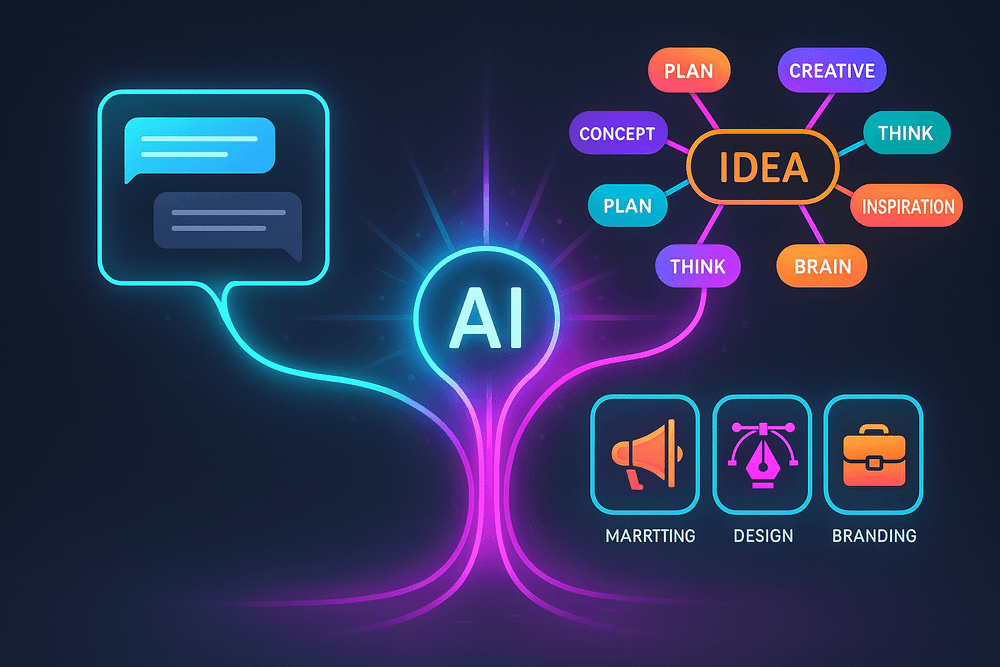
The right tool can transform your brainstorming sessions from a blank page to a flood of possibilities. The landscape of AI idea generation tools is rapidly evolving, but they generally fall into three categories. Understanding these will help you pick the perfect AI partner for your specific needs, whether you're brainstorming a new business, a marketing campaign, or a creative project.
General-Purpose AI Powerhouses: Your Creative Sparring Partner
Think of these tools as the Swiss Army knives of AI. They are large language models (LLMs) designed for a vast range of text-based tasks, making them incredibly versatile for open-ended ideation.
- ChatGPT (OpenAI): The undisputed champion of conversational AI, ChatGPT excels at fluid, back-and-forth brainstorming. You can ask it for lists, have it role-play as a target customer or an industry expert, or use it to expand on a single seed of an idea. Its key strength is its creative and often surprisingly human-like ability to connect disparate concepts. The paid GPT-4 version offers more advanced reasoning and is a worthwhile upgrade for serious ideators.
- Gemini (Google): Gemini's superpower is its native integration with Google's massive index of real-time information. This makes it an exceptional tool for AI idea generation that needs to be grounded in current trends, market data, and competitor analysis. Use it to brainstorm ideas for blog posts based on trending keywords or to develop product features that address gaps in the current market. It often provides more structured, data-driven output compared to ChatGPT's free-flowing creativity.
Specialized Mind-Mapping & Ideation Software: Visualizing Your Ideas
Sometimes, a wall of text isn't enough. If you’re a visual thinker, dedicated ideation platforms that integrate AI are game-changers. They help you structure your thoughts and see connections you might otherwise miss.
- Miro AI: Miro is a collaborative online whiteboard, and its AI features are built directly into that visual workflow. You can feed it a simple prompt, and it will automatically generate a complete mind map. It can also take a chaotic collection of digital sticky notes and instantly cluster them by theme, suggest questions to deepen the discussion, or even generate user personas from a brief description.
- Whimsical AI: Similar to Miro, Whimsical focuses on turning text prompts into structured diagrams. It shines when you need to create flowcharts, sequence maps, and wireframes. Describe a user journey, and it can map it out visually. This is perfect for moving from the "what if" stage of ideation to the "how-to" stage of planning.
Niche AI Tools for Specific Industries: The Specialist's Toolkit
As the AI field matures, specialized tools are emerging that are trained on data specific to a particular industry or task. These platforms often provide more relevant and immediately actionable ideas than general-purpose models.
- For Marketers (e.g., Jasper, Copy.ai): While primarily known as AI copywriters, these tools have powerful brainstorming features. They are pre-loaded with marketing frameworks like AIDA and PAS, making them perfect for generating ad campaign angles, social media content pillars, and email marketing sequences.
- For Product Designers (e.g., Uizard): Tools like Uizard take AI idea generation into the tangible world of design. You can describe an app interface in plain English, and it will generate a visual mockup. This dramatically accelerates the early design process, allowing for rapid prototyping of new ideas.
- For Naming & Branding (e.g., Namelix): Stuck on a name for your new business or product? Tools like Namelix use AI to generate short, catchy, and brandable names based on your keywords and preferences, solving a classic and often frustrating ideation bottleneck.
Mastering Prompts: Techniques for Powerful AI Idea Generation
The quality of your AI-generated ideas is a direct reflection of the quality of your prompts. Think of yourself as a film director and the AI as your star actor; your instructions must be clear, detailed, and inspiring to get a brilliant performance. Vague directions lead to generic outputs. This is the core of effective prompt engineering, and mastering it is what separates frustrating attempts from groundbreaking AI idea generation.
The Art of the 'Seed' Prompt: Setting the Stage for Success
Your first prompt, or the 'seed' prompt, lays the foundation for the entire ideation session. It provides the AI with the essential context, constraints, and goals it needs to produce relevant and creative results. A weak seed prompt is the fastest way to get useless information.
- Weak Prompt:
Give me some app ideas. - Powerful Seed Prompt:
Act as a product strategist for a health tech startup. Generate five innovative mobile app ideas that help remote workers combat burnout. For each idea, specify the core feature, the target user, and a unique monetization strategy. The ideas should not rely on simple meditation timers.
Notice the difference? The powerful prompt assigns a role (product strategist), defines a target audience (remote workers), specifies a problem (burnout), sets constraints (no simple timers), and asks for specific deliverables (core feature, user, monetization). This detailed setup is crucial for successful AI idea generation.
Supercharge Your Creativity: Using Frameworks with AI
To truly unlock structured creativity, you can integrate proven ideation frameworks directly into your prompts. This forces the AI to think along specific creative pathways, often leading to more unexpected and valuable concepts.
SCAMPER for AI Brainstorming
The SCAMPER method is a creative checklist that encourages you to think about a product or idea from seven different angles: Substitute, Combine, Adapt, Modify, Put to another use, Eliminate, and Reverse.
- Prompt Example:
Take the concept of a standard gym membership. Apply the SCAMPER framework to generate new fitness business models. For 'Combine', what could you combine with a gym? For 'Eliminate', what core part of the traditional gym experience could you remove to create a new offering?
First Principles Thinking with AI
This technique involves breaking a problem down to its most fundamental truths and building solutions up from there. It’s perfect for true innovation.
- Prompt Example:
I want to reinvent the daily commute to work. Using First Principles Thinking, break down the core problem: moving a person from home to an office. What are the fundamental needs? (e.g., safety, speed, comfort, low cost). From these basic principles, generate five novel solutions that don't involve a personal car or traditional public transport.
Iterating and Refining: Guiding the AI Toward Brilliant Ideas
The first output is a starting point, not the final answer. The real magic of the AI idea generation process happens in the follow-up. Treat it as a conversation. Analyze the AI's response and guide it with specific, refining prompts.
- Initial AI Output: "An idea for remote workers is a 'Digital Detox' app that locks their phone."
- Your Iterative Prompt:
"I like the 'Digital Detox' concept, but it's been done. How could we pivot this idea to focus on proactive joy instead of reactive restriction? Refine idea #1 to incorporate principles of positive psychology and gamification to encourage mindful breaks."
By iterating, you're not just asking for more ideas; you're co-creating. You're shaping, molding, and steering the AI's vast knowledge base toward a truly brilliant and unique concept. This collaborative dance is the key to unlocking the full potential of AI for ideation.
Real-World Use Cases: AI Idea Generation in Action
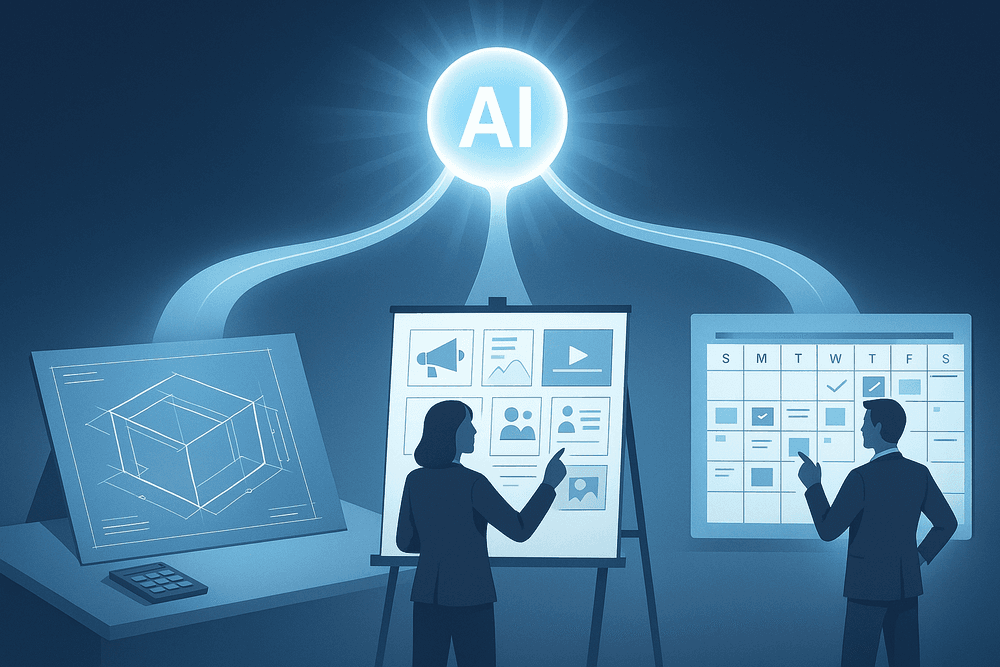
Theory is one thing, but the true power of AI idea generation is revealed when it’s applied to real-world business challenges. This technology is no longer a futuristic concept; it’s a practical tool that teams are using right now to gain a competitive edge, innovate faster, and connect more effectively with their audiences. Let's explore how AI is transforming ideation across key business functions.
Developing Innovative Product Features and Business Models
In a saturated market, innovation is survival. AI acts as a powerful R&D partner, capable of analyzing vast datasets to uncover opportunities that human teams might miss. Instead of relying solely on intuition, product managers can leverage AI to make data-driven decisions.
Imagine a SaaS company wanting to reduce customer churn. They can feed an AI tool thousands of support tickets, user reviews, and in-app behavior data. The AI can identify patterns and pinpoint the most common friction points. From this analysis, the AI idea generation process can propose specific, targeted feature ideas, such as a simplified user interface for a complex tool, an automated onboarding sequence, or a new integration that users have been implicitly requesting.
Beyond features, AI can brainstorm entirely new business models. By analyzing market trends, competitor pricing, and consumer spending habits, an AI can suggest innovative revenue streams. It might propose a freemium model with specific premium-tier features, a usage-based pricing structure, or a strategic partnership model that opens up an entirely new customer segment.
Brainstorming Viral Marketing Campaigns and Ad Copy
The quest for a viral marketing campaign is relentless. AI can significantly increase the odds of success by generating a high volume of creative concepts grounded in data about what resonates with specific demographics. A marketing team can provide an AI with a target audience profile, a product description, and a desired emotional tone (e.g., humorous, inspiring, urgent).
In minutes, the AI can produce dozens of campaign angles, social media challenge ideas, influencer collaboration concepts, and video script outlines. For instance, a sustainable fashion brand could use AI idea generation to brainstorm a TikTok campaign. The AI might suggest a "Style, Don't Spoil" challenge, encouraging users to showcase upcycled outfits, and even generate sample scripts and trending audio suggestions.
This extends to the granular level of ad copy. AI tools can create hundreds of variations of headlines, body copy, and calls-to-action for A/B testing. This allows marketers to quickly identify the most effective messaging, optimizing campaigns for higher conversion rates and a better return on ad spend.
Generating Endless Content Ideas for Blogs and Social Media
"What should we post today?" is a question that plagues content creators and social media managers. AI provides a definitive answer, acting as an inexhaustible wellspring of inspiration. It effectively eliminates writer's block and ensures your content calendar is always full of relevant, engaging topics.
By inputting a core theme or a few keywords, a content strategist can use an AI idea generation tool to create a comprehensive content plan. If your topic is "remote work productivity," the AI can generate a list of blog post titles ("5 AI Tools to Automate Your Tedious Tasks"), podcast episode ideas ("Interview with a Four-Day Work Week CEO"), LinkedIn post hooks, and infographic concepts. It can structure these ideas into topic clusters, which is a powerful strategy for boosting SEO authority and creating a rich content ecosystem that keeps your audience coming back for more.
Best Practices for Integrating AI into Your Creative Workflow
Unlocking the full potential of AI for ideation isn't about hitting "generate" and walking away. It's about forging a powerful partnership between machine intelligence and human creativity. The most groundbreaking results emerge when you treat AI as a brilliant, tireless collaborator, not an automated replacement. Adopting a strategic approach ensures your ai idea generation process is not only productive but also responsible and effective.
Combine AI Output with Human Intuition
Think of AI as your infinite-possibility engine. It can produce a staggering volume and variety of concepts, connecting dots you might never have considered. However, this raw output lacks the essential human ingredients: context, emotional intelligence, and intuition. Your role as the creative professional is to act as the curator and sculptor.
- AI Provides the Spark: Use AI to generate a wide array of initial concepts, taglines, or plot points. It’s the perfect tool for breaking through creative blocks and exploring uncharted territory.
- You Provide the Soul: Sift through the AI’s suggestions with a critical eye. Which ideas align with your brand's voice? Which concepts resonate on an emotional level? Your lived experience, gut feelings, and strategic understanding are what transform a generic idea into a compelling, authentic concept. This human touch is the most critical part of successful ai idea generation.
Fact-Check and Validate Every AI-Generated Concept
AI language models are designed to be persuasive, not necessarily truthful. They can generate "hallucinations"—information that sounds plausible but is factually incorrect, outdated, or entirely fabricated. Blindly trusting AI output is a significant risk.
Before you invest time or resources into an AI-generated idea, you must become a diligent validator:
- Verify Data and Claims: If the AI suggests an idea based on a market statistic or a historical event, cross-reference it with multiple reputable sources.
- Assess Market Viability: For business ideas, treat the AI's output as a hypothesis. Conduct preliminary market research, competitor analysis, and customer surveys to see if the concept holds up in the real world.
- Check for Originality: Run a quick search to ensure a creative concept, product name, or tagline isn't already in use or too similar to existing intellectual property. This protects you from potential legal and branding conflicts down the line.
Navigate the Ethical Landscape of AI Idea Generation
Using AI tools responsibly requires an awareness of the ethical considerations involved. Being proactive in these areas ensures your work maintains integrity and fairness.
- Acknowledge and Correct for Bias: AI models learn from vast internet datasets, which reflect existing societal biases. Be mindful that AI-generated ideas may inadvertently reinforce stereotypes. It is your ethical duty to identify and filter out biased content, ensuring your final concepts are inclusive and respectful.
- Clarify Ownership and Originality: The question of who owns an AI-generated idea is still a legal gray area. The best practice is to never use raw AI output verbatim. Always significantly alter, combine, and build upon the AI's suggestions to create a transformative work that is distinctly your own.
- Practice Transparency: When appropriate, be transparent about your use of ai idea generation tools. In client work, academic settings, or team collaborations, acknowledging AI as part of your workflow builds trust and sets clear expectations about the creative process.

Conclusion: The Future is Creative—Start Your AI Idea Generation Journey
We've explored the transformative landscape of AI idea generation, moving beyond the hype to uncover practical strategies that can supercharge your creative process. The journey from a blank page to a brilliant concept is no longer a solitary one. You now have a powerful co-pilot, ready to explore endless possibilities at the speed of thought. By integrating AI into your workflow, you unlock a new dimension of brainstorming, allowing you to build, test, and refine ideas faster than ever before.
Key Takeaways for Effective AI Brainstorming
To make your AI idea generation sessions truly productive, remember these core principles:
- AI as a Collaborator, Not an Oracle: Treat AI as a creative partner. It provides the raw material—the diverse concepts, the unexpected connections—but your human insight, experience, and intuition are what shape that material into something truly valuable.
- The Power of the Prompt: The quality of your output is directly tied to the quality of your input. Be specific, provide context, define constraints, and use persona-based prompts to guide the AI toward the kind of ideas you need.
- Embrace Iteration: Your first round of ideas is just the starting point. The real magic happens when you refine, combine, and challenge the initial output. Use a cyclical process of generating, critiquing, and prompting again to dig deeper and uncover breakthrough concepts.
- Human Curation is Crucial: AI can generate a thousand ideas, but you are the ultimate curator. Your ability to spot the promising seeds within the noise and nurture them is the most critical skill in this new era of creativity.
Your First Step: A Simple Exercise to Try Today
Theory is great, but action is better. Let’s put your new knowledge to the test with a simple, five-minute exercise that demonstrates the core loop of AI idea generation.
- Choose a mundane object: Pick something from your desk or room—a paperclip, a water bottle, a sticky note.
- Craft your first prompt: Open your preferred AI tool and use a prompt like this: > "Act as an innovation expert from IDEO. Generate 10 novel and commercially viable business ideas based on a simple water bottle. For each idea, provide a catchy name and a one-sentence description."
- Iterate and expand: Choose the one idea that intrigues you the most. Now, ask the AI to build on it with a follow-up prompt: > "For idea #[number], '[Idea Name]', elaborate on the target audience, three key features, and a potential marketing slogan."
This simple exercise perfectly simulates the process of effective AI-driven ideation—a broad initial query followed by a focused, iterative refinement.
What's Next in the World of AI-Driven Creativity?
The field of AI idea generation is evolving at a breathtaking pace. Looking ahead, we can anticipate even more powerful and intuitive tools. Expect to see multi-modal AIs that can brainstorm from images, sounds, and data sets, creating richer, more textured ideas. We're moving toward hyper-personalized AI assistants that learn your specific creative style, business goals, and industry nuances, proactively suggesting relevant concepts. The integration of these tools directly into our daily software—from design platforms to project management boards—will make AI an even more seamless part of the creative process.
Ultimately, the future isn't about artificial intelligence replacing human creativity; it's about augmenting it. By mastering the art and science of AI idea generation, you are positioning yourself at the forefront of innovation. The tools are here, the potential is limitless. Your creative journey starts now.