
August 31, 2025
A New Era for Business
The Dawn of AI Cost Optimization: A New Era for Business
In the relentless pursuit of profitability and efficiency, businesses have always sought ways to trim expenses. For decades, this meant manual audits, spreadsheet-heavy analyses, and reactive budget cuts. But we are now standing at the brink of a profound transformation. The conversation is no longer just about saving money; it’s about intelligently investing every dollar for maximum return. This is the new era of AI cost optimization, a strategic shift that moves financial management from the back office to the forefront of competitive advantage. It’s about replacing guesswork with data-driven certainty and manual labor with intelligent automation.
What Exactly is AI-driven Cost Optimization?
At its core, AI cost optimization is the application of artificial intelligence, machine learning, and advanced analytics to identify, predict, and automate cost-saving opportunities across an entire organization. It’s far more than a sophisticated calculator. Think of it as a team of tireless, hyper-intelligent financial analysts working 24/7.
This technology works by:
- Analyzing Vast Datasets: AI algorithms can sift through millions of data points in seconds—from supplier invoices and energy bills to cloud computing usage and employee expense reports—to spot patterns, anomalies, and inefficiencies that are invisible to the human eye.
- Predicting Future Costs: By learning from historical data, AI can forecast future expenses with remarkable accuracy, allowing businesses to anticipate budget overruns and proactively adjust their strategies.
- Automating Repetitive Tasks: AI automates tedious processes like invoice verification, compliance checks, and procurement workflows, reducing human error and freeing up finance teams for higher-value strategic work.
- Providing Prescriptive Insights: The most powerful aspect of AI is its ability to not only identify a problem but also recommend a solution. For example, it might suggest consolidating vendors, renegotiating contracts based on market data, or shifting cloud workloads to off-peak hours to reduce costs.
Why Your Business Can't Afford to Ignore AI
In today's competitive landscape, ignoring the potential of AI for savings is no longer a viable option. It’s the equivalent of insisting on using a paper map while your competitors navigate with real-time GPS. Businesses that delay adoption risk falling behind in several critical areas:
- Operational Inefficiency: Manual processes are inherently slow, expensive, and prone to error. Relying on them means accepting waste as a standard cost of doing business.
- Missed Opportunities: Without AI, you are likely missing out on volume discounts, early payment incentives, and more favorable supplier terms simply because you lack the real-time data to act on them.
- Competitive Disadvantage: Your rivals are already using AI cost optimization to become leaner, more agile, and more profitable. They can offer more competitive pricing and reinvest their savings into innovation, leaving you struggling to keep up.
The Shift from Manual to Intelligent Expense Management
The transition from traditional expense management to an AI-powered approach marks a fundamental evolution. For years, financial control was reactive; a department would overspend, and finance would investigate after the fact. It was a system built on historical reports and manual oversight.
AI flips this model on its head, making cost management proactive and intelligent. Instead of reviewing last month’s spending report, an AI system flags a potential budget overrun in real-time. Instead of manually auditing expense claims for compliance, an algorithm does it instantly. This shift transforms the finance department from a historical record-keeper into a strategic partner that guides the business toward sustained financial health, armed with predictive insights and automated efficiency.
Where AI Cost Optimization Delivers the Biggest Wins
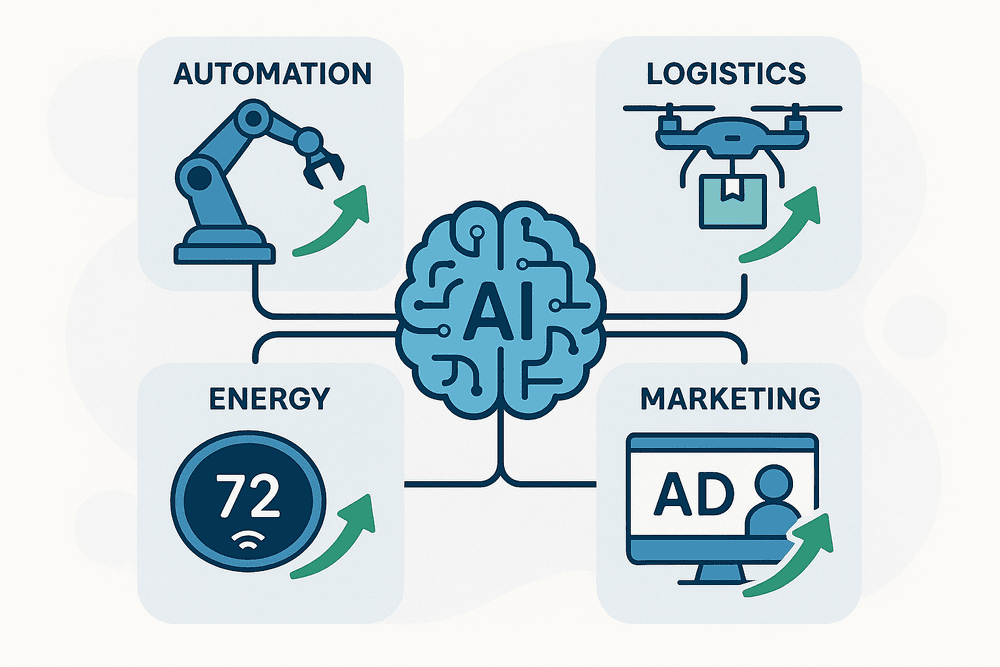
Moving from theory to practice, the real power of AI cost optimization is realized when it’s applied to specific, high-impact business functions. While its potential is vast, focusing on key operational areas where intelligent automation can generate immediate and substantial returns is the smartest strategy. These are the domains where AI isn't just a marginal improvement but a fundamental game-changer for your bottom line.
Slashing Labor Costs by Automating Repetitive Tasks
One of the most direct paths to cost reduction is through the automation of routine, rules-based tasks. This is a core strength of AI. Think of the countless hours your team spends on data entry, invoice processing, generating standard reports, or handling basic customer service inquiries. AI-powered tools, like Robotic Process Automation (RPA) and intelligent chatbots, can execute these tasks 24/7 with near-perfect accuracy and at a fraction of the cost. This strategic application of AI cost optimization does more than just cut payroll expenses; it minimizes costly human errors and frees up your valuable human talent to focus on complex problem-solving, strategic initiatives, and high-touch customer relationships that truly drive business growth.
Optimizing Supply Chains with Predictive Analytics
The supply chain is a complex ecosystem ripe with opportunities for AI-driven savings. Volatile demand, inventory holding costs, and logistical inefficiencies can silently drain profits. AI predictive analytics tackles this head-on. By analyzing historical sales data, market trends, weather patterns, and even social media sentiment, AI algorithms can forecast demand with incredible accuracy. This allows businesses to maintain optimal inventory levels, dramatically reducing the costs of both overstocking (storage, waste) and understocking (lost sales, expedited shipping). Furthermore, AI can optimize transportation routes in real-time by factoring in traffic, fuel prices, and delivery windows, ensuring goods move from point A to point B in the most cost-effective way possible.
Cutting Utility Spending Through Smart Energy Management
For many businesses, particularly in manufacturing, retail, and real estate, energy and utility costs represent a significant operational expense. AI offers a powerful solution through smart energy management systems. In smart buildings, AI algorithms connect to IoT sensors to learn occupancy patterns and analyze environmental conditions. They can then autonomously adjust heating, ventilation, air conditioning (HVAC), and lighting systems to consume energy only when and where it's needed. AI can also perform predictive maintenance on critical equipment, identifying potential failures before they lead to energy-inefficient operation or costly breakdowns. This results in direct, measurable reductions in monthly utility bills and supports sustainability goals.
Maximizing ROI on Marketing Spend
Marketing has traditionally involved a degree of guesswork, leading to wasted ad spend on uninterested audiences. AI transforms marketing from an art into a science, ensuring every dollar is spent with maximum impact. By analyzing vast datasets of customer behavior, AI platforms can identify micro-segments and deliver hyper-personalized ad campaigns to the people most likely to convert. AI also powers dynamic pricing models, churn prediction algorithms that flag at-risk customers for retention efforts, and recommendation engines that increase customer lifetime value. This precise targeting dramatically improves Return on Investment (ROI) and lowers the overall Customer Acquisition Cost (CAC), making your marketing budget a far more efficient and powerful engine for growth.
Implementing Your AI Cost Optimization Strategy: A Step-by-Step Guide
Transitioning from theory to practice requires a clear, structured roadmap. A successful AI cost optimization initiative isn't about deploying technology haphazardly; it's a deliberate process of identifying opportunities, selecting the right tools, and measuring results. By following a methodical approach, you can ensure your AI investments deliver tangible financial returns and drive sustainable efficiency across your organization. This four-step guide will walk you through building and launching an effective AI-powered cost management framework.
Step 1: Identifying Key Areas for AI Intervention
Before a single algorithm is deployed, the most critical step is to pinpoint where AI can make the most significant financial impact. A scattergun approach wastes resources; a targeted one delivers results. Start by conducting a thorough analysis of your operations to identify high-cost, high-volume, or inefficient processes.
- Analyze High-Expenditure Areas: Look at your largest operational costs. Are they in the supply chain, customer service, energy consumption, or inventory management? These are prime candidates for AI-driven improvements. For example, AI can optimize logistics routes to save fuel or predict inventory needs to prevent costly overstocking.
- Identify Repetitive, Manual Tasks: Tasks like data entry, invoice processing, and report generation are not only time-consuming but also prone to human error. Automating these with AI and Robotic Process Automation (RPA) can free up employees for more strategic work, directly cutting labor costs.
- Assess Data Availability: AI thrives on data. Identify business areas where you collect high-quality, structured data. This data is the fuel for any successful AI cost optimization model, whether it's for predictive maintenance or fraud detection.
Step 2: Choosing the Right AI Tools and Platforms
With your target areas identified, the next challenge is selecting the appropriate technology. The AI market is vast, so choosing a solution that aligns with your technical capabilities, budget, and specific goals is crucial.
- Build vs. Buy: For most businesses, purchasing an off-the-shelf AI solution or subscribing to an AI-powered SaaS platform is far more cost-effective than building a custom model from scratch. In-house development requires specialized talent and significant upfront investment.
- Platform Selection Criteria: Evaluate potential tools based on several factors:
- Scalability: Can the tool grow with your business needs?
- Integration: How easily does it connect with your existing software stack?
- Ease of Use: Does it require a team of data scientists, or can your current team manage it?
- Total Cost of Ownership (TCO): Look beyond the subscription fee to include implementation, training, and maintenance costs.
Step 3: Integrating AI with Existing Legacy Systems
Few businesses operate on a clean slate. Your new AI tools must coexist and communicate with your existing CRM, ERP, and other legacy systems. This integration is often the most significant technical hurdle in an AI cost optimization project.
- Leverage APIs: Modern AI platforms are typically built with robust Application Programming Interfaces (APIs) that allow them to "talk" to other software. This is the most common and flexible way to ensure a seamless flow of data between your new AI tool and your established systems.
- Start with a Pilot Program: Don't attempt a company-wide rollout from day one. Begin with a small-scale pilot project to test the integration, work out any bugs, and demonstrate value to stakeholders. This minimizes risk and builds momentum for broader adoption.
Step 4: Measuring Success with Cost-Focused KPIs
To justify the investment and refine your strategy, you must measure the impact of your AI implementation. Focus on clear, quantifiable Key Performance Indicators (KPIs) that are directly tied to cost savings.
- Reduction in Operational Costs: Track direct savings, such as a percentage decrease in energy bills from an AI-optimized HVAC system or reduced overtime hours due to automation.
- Return on Investment (ROI): This is the ultimate metric. Calculate it by comparing the total financial gains (cost savings + revenue uplift) against the total cost of the AI solution.
- Increased Asset Utilization: Measure improvements in the efficiency of machinery, vehicles, or other physical assets. For example, AI-driven predictive maintenance can reduce downtime, increasing an asset's productive hours.
- Reduced Error Rates: Quantify the cost savings from fewer errors in processes like order fulfillment or financial reporting, which reduces rework and improves compliance.
Real-World Success Stories in AI Cost Optimization
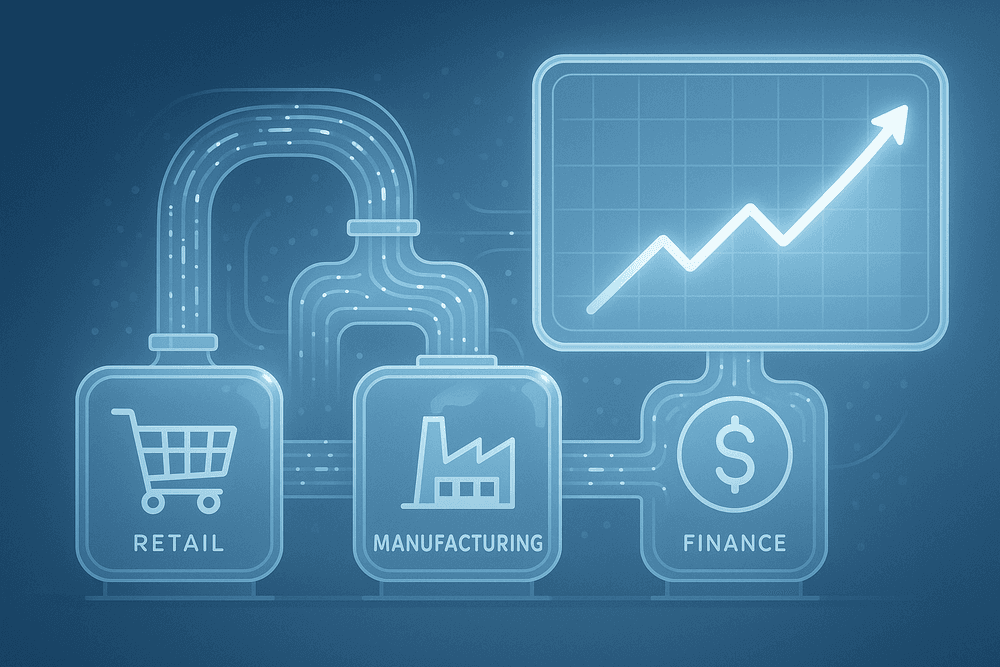
Theory is one thing, but tangible results are what drive business decisions. The true power of ai cost optimization is best illustrated through real-world applications where companies have transformed their operations and unlocked significant savings. These success stories span various industries, showcasing the versatility and impact of leveraging artificial intelligence for financial efficiency.
How a Retail Giant Slashed Inventory Waste by 30%
A leading multinational retailer was grappling with a multi-billion dollar problem: inventory inefficiency. Overstocking perishable goods led to massive spoilage and financial loss, while understocking popular items resulted in missed sales and frustrated customers. Their traditional forecasting methods, based on historical sales alone, could no longer keep up with dynamic market demands.
The Solution: The company deployed a sophisticated AI-powered demand forecasting platform. This system analyzed vast datasets in real-time, going far beyond simple sales history. It incorporated factors like seasonal trends, local weather forecasts, upcoming holidays, promotional activities, and even social media sentiment to predict consumer demand with unprecedented accuracy at a granular, per-store level.
The Result: The impact was immediate and profound. The retailer achieved a 30% reduction in inventory waste, particularly for fresh produce and other perishables. Store shelves were more consistently stocked with the right products at the right time, leading to a significant uplift in sales and customer satisfaction. This strategic application of AI turned a major cost center into a competitive advantage.
A Manufacturer's Journey to Predictive Maintenance Savings
For a large-scale manufacturing firm, unplanned equipment downtime was the single biggest threat to productivity and profitability. Their maintenance strategy was largely reactive, meaning technicians only fixed machines after they broke down, leading to costly emergency repairs and prolonged production halts.
The Solution: The manufacturer embarked on a journey of ai cost optimization by implementing a predictive maintenance system. They retrofitted their critical machinery with IoT sensors that continuously collected data on vibration, temperature, and performance. AI and machine learning algorithms then analyzed this data stream to identify subtle anomalies and patterns that preceded equipment failure.
The Result: The system provided early warnings, allowing the maintenance team to schedule repairs proactively during planned downtime. This shift from a reactive to a predictive model reduced unplanned downtime by over 50%. Furthermore, maintenance costs were cut by 25% by avoiding expensive emergency repairs and unnecessary preventative checks. The extended lifespan of their machinery provided an additional layer of significant long-term savings.
Case Study: Fintech Startup Automates 90% of Financial Reporting
A rapidly growing fintech startup found its finance team buried under a mountain of manual work. Generating monthly financial reports, reconciling thousands of transactions, and ensuring regulatory compliance was an error-prone and time-consuming process that stifled their ability to focus on strategic financial planning.
The Solution: The startup integrated an AI-driven automation platform into its financial workflow. Using Natural Language Processing (NLP) and Optical Character Recognition (OCR), the system could automatically extract data from invoices, receipts, and bank statements. Machine learning algorithms then handled complex reconciliations and generated comprehensive financial reports in a fraction of the time.
The Result: The platform successfully automated over 90% of their routine financial reporting tasks. This freed up the finance team to act as strategic advisors to the business, focusing on analysis, forecasting, and growth initiatives. The startup not only reduced operational costs tied to manual labor but also dramatically improved the speed and accuracy of its financial data, a critical factor for investor confidence and strategic decision-making.
Navigating the Hurdles of AI-Driven Cost Reduction
While the promise of artificial intelligence in reducing operational expenses is immense, the journey is not without its challenges. A successful ai cost optimization strategy involves more than just plugging in new software; it requires a proactive approach to managing investment, security, and talent. By anticipating these hurdles, you can build a resilient framework for sustainable savings.
Managing Initial Investment and Integration Costs
The upfront cost of AI implementation can seem daunting. This includes software licensing, necessary hardware upgrades, and the specialized expertise required for integration. However, viewing this as a capital investment rather than a simple expense is crucial for understanding its long-term value.
To manage these costs effectively, consider a phased approach:
- Start Small with a Pilot Project: Identify one specific, high-impact area within your business—such as supply chain forecasting or customer service chatbots. A successful pilot provides a clear proof-of-concept and demonstrates ROI, making it easier to secure buy-in for broader implementation.
- Explore AI-as-a-Service (AIaaS): Many cloud providers offer powerful AI and machine learning platforms on a pay-as-you-go basis. This model significantly lowers the initial barrier to entry, converting a large capital expenditure into a more manageable operational expense.
- Prioritize Integration: Ensure any new AI tool can integrate smoothly with your existing systems (ERP, CRM, etc.). A disjointed tech stack creates inefficiencies that can quickly erode any potential cost savings.
Overcoming Data Privacy and Security Challenges
AI systems are data-hungry. To function effectively, they often require access to vast amounts of sensitive information, including customer data, financial records, and proprietary business intelligence. This creates significant privacy and security risks that must be managed meticulously. A single data breach could lead to financial penalties and reputational damage far exceeding any savings generated by the AI.
Fortify your defenses by:
- Implementing a Robust Data Governance Framework: Clearly define who can access data, how it can be used, and how it is stored and protected. Ensure your practices comply with regulations like GDPR and CCPA.
- Prioritizing Anonymization: Whenever possible, use anonymized or pseudonymized data to train AI models, reducing the risk if the data is ever compromised.
- Vetting Third-Party Vendors: If you are using an external AI provider, rigorously vet their security protocols, compliance certifications, and data handling policies. Your data's security is ultimately your responsibility.
Addressing the AI Skills Gap Within Your Team
Deploying sophisticated AI tools is only half the battle; you need people with the right skills to manage, interpret, and act on the insights these systems provide. The current talent market for data scientists and machine learning engineers is highly competitive, and many organizations face an internal skills gap.
Bridge this gap with a multi-pronged strategy:
- Upskill and Reskill: Invest in training for your existing employees. Your current team possesses invaluable institutional knowledge, and equipping them with AI literacy can unlock tremendous value.
- Make Strategic Hires: Identify the key technical roles you cannot fill internally and focus on recruiting top talent for those specific positions.
- Leverage User-Friendly Platforms: Many modern AI tools are being designed with low-code or no-code interfaces, empowering business analysts and other non-technical staff to build models and generate insights. Adopting these platforms democratizes the power of ai cost optimization across your organization.

The Future Is Efficient: Your Next Steps in AI Cost Optimization
You’ve seen how artificial intelligence is transforming business operations, moving from a futuristic concept to a practical tool for financial health. The journey to effective ai cost optimization isn't about a single, massive overhaul; it's about strategic, incremental steps that build momentum and deliver tangible returns. The question is no longer if you should use AI, but how you can start integrating it to build a more resilient and profitable future. Here’s your roadmap to take action.
Your AI Cost Optimization Checklist: A Quick Recap
Before diving into your next steps, let’s summarize the core strategies for AI-driven savings. Use this checklist to ensure you’re targeting the most impactful areas:
- ✓ Automate Core Processes: Identify and automate repetitive, high-volume tasks in areas like finance (invoice processing), HR (onboarding paperwork), and customer support (Tier-1 inquiries).
- ✓ Optimize Resource Management: Use AI to predict demand, manage inventory levels, and optimize energy consumption and cloud computing spend, eliminating waste before it occurs.
- ✓ Implement Predictive Analytics: Shift from reactive to proactive maintenance for equipment and IT infrastructure to prevent costly downtime and extend asset life.
- ✓ Refine Supply Chain & Logistics: Leverage AI for dynamic route optimization, intelligent warehouse management, and supplier risk assessment to build a leaner, more resilient supply chain.
- ✓ Enhance Financial Decision-Making: Employ AI tools for advanced fraud detection, smarter budgeting, and identifying hidden cost-saving opportunities buried in your data.
Start Small, Win Big: Launching Your Pilot Project
The most effective way to begin your ai cost optimization journey is with a small-scale pilot project. This "crawl, walk, run" approach minimizes risk, demonstrates tangible value to stakeholders, and provides crucial learnings before a company-wide rollout.
- Identify a "Quick Win": Don't try to solve every problem at once. Choose a single, well-defined pain point where improvement is easily measurable. Is it the time-consuming manual reconciliation of accounts? The high cost-per-acquisition of a specific digital ad campaign? Pick a process where a 10-15% improvement would be significant and noticeable.
- Define Clear Success Metrics: Before you begin, clarify your goals. Success must be quantifiable. Are you aiming to reduce man-hours by 20 hours per week? Cut spending in a specific category by 5%? Increase conversion rates by 2%? These metrics are non-negotiable for proving ROI.
- Select the Right Solution: You don't need a team of data scientists to get started. Explore accessible Software-as-a-Service (SaaS) AI platforms or off-the-shelf tools that address your specific problem. Many modern CRM, ERP, and marketing platforms have built-in AI features ready to be activated.
- Measure, Learn, and Scale: Run the pilot for a defined period, such as one business quarter. Meticulously track your progress against the success metrics. This hard data becomes your internal business case for expanding your ai cost optimization strategy to other departments.
Embrace Continuous Improvement for Long-Term Savings
The greatest financial benefits of AI aren't realized from a one-time project; they come from fostering a culture of continuous, data-driven improvement. AI is not a static tool you simply install—it's a dynamic partner in efficiency that gets smarter over time.
This is the power of the AI feedback loop. As you feed your systems more data, their predictions and automations become more accurate, uncovering deeper savings. The insights from a successful marketing pilot might reveal an opportunity for optimization in your sales process. The efficiencies gained in logistics could highlight a new way to manage inventory.
True, long-term ai cost optimization is about empowering your teams to constantly ask, "How can we do this better with AI?" By regularly reviewing performance, exploring new AI applications, and encouraging cross-departmental learning, you transform cost management from a periodic exercise into an automated, intelligent, and core part of your business DNA. This ongoing refinement is what separates temporary gains from lasting financial transformation.