
January 13, 2026
The Imperative of AI Bias Mitigation Strategies
The Imperative of AI Bias Mitigation Strategies
Artificial intelligence has graduated from experimental labs to the decision-making centers of banking, healthcare, criminal justice, and recruitment. As these systems gain autonomy, the question of fairness is no longer theoretical—it is an operational emergency. Without robust AI bias mitigation strategies, organizations risk deploying models that not only replicate historical prejudices but amplify them at scale.
Defining Algorithmic Bias: From Training to Deployment
Algorithmic bias is often oversimplified as a data problem, summarized by the adage "garbage in, garbage out." While accurate, this view is incomplete. Bias permeates the AI lifecycle through three primary avenues:
- Historical Data Inequities: Machine learning models are mirrors reflecting the past. If a hiring algorithm is trained on ten years of resumes from a male-dominated industry, it will learn that "male" traits correlate with "success," systematically downgrading female candidates.
- Proxy Variables: Even when sensitive attributes like race or gender are stripped from datasets, algorithms often find "proxies." For example, a zip code can function as a proxy for race, leading to redlining in loan approvals despite "blind" algorithms.
- Deployment Context: A model trained in a controlled environment may fail when applied to a real-world demographic it wasn't exposed to during testing. This "domain shift" can turn a neutral tool into a discriminatory one simply by changing the context of its use.
The Business and Ethical Cost of Unchecked AI Bias
The consequences of ignoring fairness frameworks are severe and multifaceted. Ethically, the cost is measured in human impact: qualified candidates rejected, patients denied care due to demographic scoring flaws, or wrongful arrests driven by skewed predictive policing.
From a business perspective, the stakes are equally high. We are entering an era of algorithmic accountability. Regulatory bodies globally—from the EU’s AI Act to New York City’s bias audit laws—are moving to penalize non-compliant organizations. Beyond legal jeopardy, there is the risk of reputational implosion. Trust is the currency of the digital age; once a company is exposed for deploying discriminatory AI, consumer trust evaporates, often taking market share with it.
Overview of the Mitigation Lifecycle: Detect, Remove, Monitor
To combat these risks, leaders must move beyond good intentions and adopt a structured lifecycle approach to AI bias mitigation strategies. This generally follows a three-phased framework:
- Detect (Pre-Processing): Before a single line of code is compiled for the model, the raw data must be audited. This involves statistical tests to identify class imbalances and analyzing data provenance to ensure diverse representation.
- Remove (In-Processing): During the training phase, data scientists can utilize algorithmic interventions. This might involve re-weighting data samples to penalize discriminatory patterns or introducing "fairness constraints" into the loss function of the model.
- Monitor (Post-Processing & Deployment): Mitigation does not end at launch. Continuous monitoring is required to detect "data drift"—where the live data evolves away from the training data, potentially reintroducing bias over time.
By integrating these strategies into the core development pipeline, organizations can transition from reactive damage control to proactive ethical leadership.
Technical AI Bias Mitigation Strategies: Pre, In, and Post-Processing
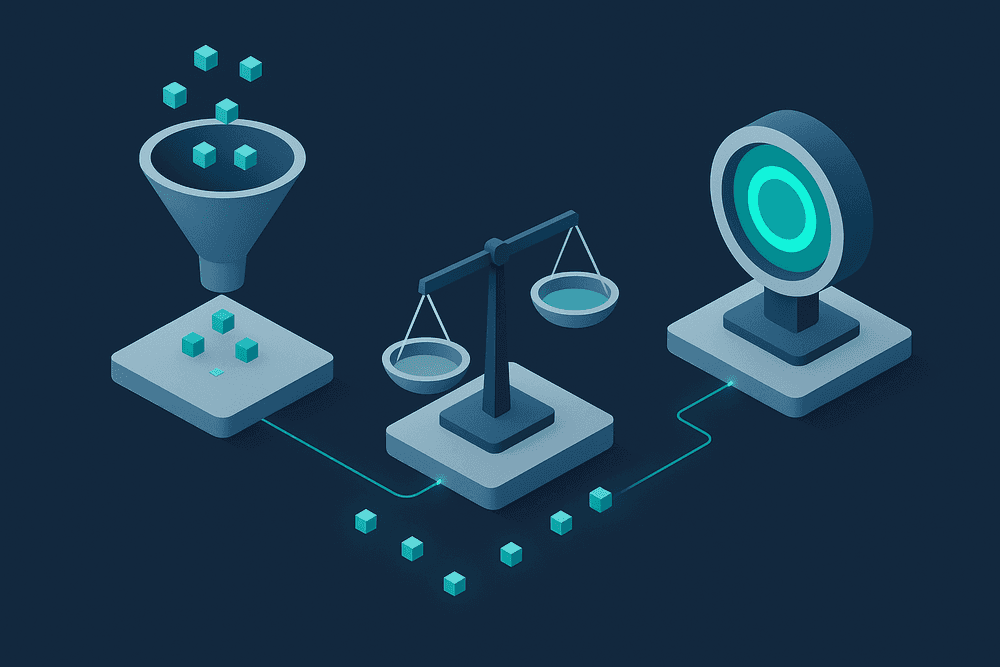
Building ethical artificial intelligence requires moving beyond theoretical frameworks and implementing concrete engineering solutions. When data scientists and engineers approach fairness, they generally classify ai bias mitigation strategies into three distinct stages of the machine learning pipeline: pre-processing (fixing the data), in-processing (fixing the learning algorithm), and post-processing (fixing the decisions).
Selecting the right intervention point depends on the lifecycle of the model and the level of access engineers have to the training data or the algorithm itself.
Pre-Processing: Cleansing the Input
Pre-processing techniques are applied before the training begins. The logic is straightforward: if the input data is biased, the output will inevitably reflect those biases. By modifying the training dataset to be more representative, we aim to remove the underlying prejudices encoded in historical data.
- Re-sampling: This involves altering the composition of the dataset to ensure balanced representation of different groups.
- Oversampling: Increasing the number of instances from underrepresented groups (e.g., using techniques like SMOTE—Synthetic Minority Over-sampling Technique) to give the model more examples to learn from.
- Undersampling: Reducing the number of instances from majority groups to prevent the model from skewing towards the dominant class.
- Re-weighting: Instead of adding or removing data, re-weighting assigns different "importance" values to specific rows in the dataset. If a model consistently misclassifies a minority group, engineers can assign a higher weight to those examples. This forces the algorithm to pay closer attention to these instances during training, penalizing errors on the protected group more heavily than errors on the majority group.
In-Processing: Fairness Constraints During Training
In-processing methods involve modifying the learning algorithm itself. These strategies are particularly useful when changing the dataset isn't sufficient or possible. Here, the goal is to explicitly penalize the model for unfair behavior as it learns.
- Adversarial Debiasing: This is one of the most dynamic ai bias mitigation strategies. It involves training two neural networks simultaneously in a competitive setting. The "predictor" model tries to predict the target outcome (e.g., loan approval), while the "adversary" model tries to guess the sensitive attribute (e.g., gender) based solely on the predictor's output. The system is optimized to maximize the predictor's accuracy while minimizing the adversary's ability to guess the sensitive attribute. This forces the predictor to generate outputs that are statistically independent of protected characteristics.
- Regularization: This technique adds a fairness penalty term to the model’s loss function. During training, the model attempts to minimize error, but the regularization term adds a "cost" if the model relies too heavily on sensitive attributes or violates fairness metrics (such as demographic parity). The algorithm must then find a mathematical middle ground between high accuracy and low bias.
Post-Processing: Calibrating Outcomes
Post-processing techniques are applied after the model has been trained and the parameters are locked. These methods are essential when engineers treat the model as a "black box" or when retraining is too computationally expensive.
- Threshold Adjustment: Most classifiers output a probability score (e.g., 0.75 chance of success). Typically, the decision threshold is set at 0.5. However, bias often manifests in score distributions; a score of 0.6 for Group A might indicate the same risk level as a score of 0.8 for Group B. Post-processing involves shifting these decision thresholds for different groups to ensure Equalized Odds or Equality of Opportunity.
- Calibration: This involves re-mapping the output scores to ensure they reflect true probabilities across all groups. If a model predicts a 40% risk of recidivism for two different demographic groups, the actual recidivism rate for those groups should ideally be 40%. Calibration techniques adjust the raw outputs to align the predicted probabilities with observed reality, ensuring that the confidence of the model is consistent regardless of the demographic being processed.
Essential Tools and Metrics for Measuring AI Fairness
You cannot improve what you cannot measure. In the pursuit of ethical artificial intelligence, relying on intuition or manual spot-checks is a recipe for reputational disaster and social harm. Implementing effective ai bias mitigation strategies requires more than good intentions; it demands rigorous quantification and a robust technological toolkit designed to audit algorithms before they reach production.
Decoding the Numbers: Key Fairness Metrics
Mathematical definitions of fairness can often conflict with one another, making the selection of the right metric a critical strategic decision based on the specific use case of your model. Two of the most common metrics—Disparate Impact and Equal Opportunity—address bias from different angles.
- Disparate Impact: This metric focuses on the ratio of positive outcomes between unprivileged and privileged groups. It is often associated with the "four-fifths rule" in legal contexts. For example, if a hiring algorithm selects 50% of male applicants but only 10% of female applicants, the model demonstrates low disparate impact (0.2), signaling potential bias in the outcome distribution regardless of the candidates' actual qualifications.
- Equal Opportunity: Unlike Disparate Impact, this metric focuses on the True Positive Rate (TPR). It asks: "Of the people who were actually qualified, did the model select them at the same rate across groups?" This is vital in scenarios like fraud detection or loan approval, where you want to ensure that qualified individuals from a minority group are not disproportionately flagged as high-risk compared to qualified individuals from a majority group.
The Toolkit: Open-Source Solutions for Auditing
Once you have selected your metrics, you need the right environment to test them. Two open-source heavyweights currently dominate the landscape, each serving slightly different needs.
IBM AI Fairness 360 (AIF360) is an extensible toolkit that is ideal for data scientists who need a comprehensive library of algorithms. It doesn't just measure bias; it offers mitigation algorithms for all stages of the machine learning pipeline: pre-processing (re-weighting data), in-processing (adversarial debiasing), and post-processing (calibrating predictions). It allows for deep, code-level integration into Python environments.
Google’s What-If Tool (WIT), conversely, shines in visualization and accessibility. It creates an interactive interface where stakeholders—including non-technical ones—can probe model behavior without writing code. Its strongest feature is "counterfactual analysis," which allows users to see how a prediction would change if a single data point (like age or zip code) were flipped. While AIF360 is a toolbox for fixing the engine, WIT is a diagnostic dashboard for understanding the drive.
Automating Ethics: Integrating Fairness into CI/CD
The most sophisticated ai bias mitigation strategies treat fairness as a continuous requirement rather than a one-off audit. Models are dynamic; they drift as data evolves. Therefore, fairness checks must be integrated directly into Continuous Integration/Continuous Deployment (CI/CD) pipelines.
By embedding tools like AIF360 into the CI/CD workflow, teams can establish "fairness gates." Just as a build fails if the code doesn't compile, a deployment should automatically halt if a model’s Disparate Impact score drops below a predefined threshold. This automation ensures that no model version is pushed to production unless it meets the organization's ethical standards, transforming fairness from a theoretical ideal into a verifiable operational constraint.

Beyond Code: Governance and Human-Centric Mitigation
While technical adjustments to datasets and algorithms are foundational, they often fail to address the systemic context in which a model operates. The most robust AI bias mitigation strategies extend far beyond the command line, requiring a shift toward organizational governance and continuous human oversight. To truly ensure fairness, organizations must wrap their code in layers of accountability, transparency, and diverse perspective.
Establishing Diverse AI Ethics Committees
One of the primary failure modes in AI development is the "echo chamber" effect, where a homogeneous team of engineers overlooks potential social impacts of their deployment. To counter this, forward-thinking organizations are establishing AI Ethics Committees and internal review boards.
These boards should not be comprised solely of technical stakeholders. Effective governance requires cognitive diversity. A robust review board includes:
- Subject Matter Experts: To understand the domain-specific nuances (e.g., medical professionals for healthcare AI).
- Legal and Compliance Officers: To ensure alignment with regulations like the EU AI Act or GDPR.
- Sociologists and Ethicists: To identify historical biases and potential societal harms.
- Community Representatives: Individuals from the demographic groups most likely to be affected by the system.
By mandating that high-stakes models pass through this review board before deployment, organizations create a firewall against unintentional harm, ensuring that "fairness" is defined by human values rather than mathematical proxies alone.
Implementing Human-in-the-Loop (HITL) Workflows
Automation should rarely be absolute, especially in sensitive sectors like lending, criminal justice, or hiring. Human-in-the-Loop (HITL) workflows are essential AI bias mitigation strategies that integrate human judgment at critical decision points.
In a HITL framework, the AI system does not execute a final decision but rather provides a recommendation or a confidence score. For example, in a loan approval system, an AI might flag an application as "high risk." Instead of an auto-rejection, this flag triggers a manual review by a loan officer.
However, for HITL to be effective, the humans involved must be properly trained. They must understand the model’s blind spots to avoid "automation bias"—the psychological tendency to trust the machine over one's own judgment. The goal is a symbiotic relationship where the AI processes data at scale, and the human provides the nuanced context and ethical reasoning that an algorithm cannot replicate.
Documentation Standards: Model Cards and Datasheets
Transparency is the bedrock of accountability. If stakeholders do not understand how a model was built or what data it was fed, they cannot effectively audit it for bias. Two industry-standard documentation frameworks have emerged to solve this:
- Datasheets for Datasets: Inspired by electronics components industries, these documents detail the "ingredients" of an AI system. A datasheet answers critical questions: Who created the dataset? How was the data collected? What preprocessing was done? Are specific demographic groups underrepresented? This prevents teams from training models on data that is inherently flawed or incompatible with the intended use case.
- Model Cards: Proposed by Google researchers, Model Cards serve as "nutrition labels" for AI models. A well-constructed Model Card discloses the model's intended use, its limitations, and its performance metrics across different demographic groups (e.g., showing that a facial recognition model has 99% accuracy for lighter skin tones but only 85% for darker skin tones).
By standardizing this documentation, organizations move from opaque "black box" deployments to transparent systems where bias can be identified, tracked, and mitigated throughout the model's lifecycle.
Real-World Applications of AI Bias Mitigation Strategies
Moving beyond theoretical frameworks and academic models, the true test of ethical artificial intelligence lies in its operational deployment. Organizations across high-stakes industries are actively moving from identifying problems to implementing robust ai bias mitigation strategies. These applications are not merely about compliance; they are essential for building trust, ensuring market fairness, and preventing systemic discrimination in automated decision-making.
Financial Services: Ensuring Fair Lending and Credit Scoring
The financial sector has long been scrutinized for historical inequities, such as redlining. As banks and Fintech companies pivot toward AI-driven credit scoring, the risk of encoding these historical prejudices into modern algorithms is high. To combat this, financial institutions are applying mitigation strategies at both the pre-processing and post-processing stages.
One primary application is the removal of proxy variables. While an algorithm might not explicitly see "race" or "gender" (protected attributes), it often latches onto proxies such as zip codes or university attendance which correlate with demographics. Advanced mitigation techniques involve adversarial debiasing, where two models compete: one predicts creditworthiness, while the other attempts to guess the applicant's protected class based on that prediction. If the second model succeeds, the first model is penalized until it generates predictions that are neutral regarding race or gender. Furthermore, the adoption of Explainable AI (XAI) allows loan officers to understand exactly why a decision was made, ensuring that a denial is based on financial history rather than demographic inference.
Healthcare: Reducing Diagnostic Disparities
In healthcare, algorithmic bias is a matter of life and death. A significant focus of current mitigation efforts involves correcting disparities in diagnostic imaging and risk prediction models. For example, dermatological AI tools trained predominantly on light-skinned datasets historically struggled to identify lesions on darker skin tones.
To mitigate this, healthcare developers are implementing data re-weighting and oversampling strategies. By intentionally oversampling underrepresented demographics during the training phase, developers ensure the model learns to recognize symptoms equally across all patient groups. Additionally, hospitals are auditing risk-prediction algorithms to ensure they do not use "healthcare costs" as a proxy for "health needs." Since marginalized communities historically have less access to care (and thus lower costs), algorithms previously deprioritized them. Correcting this involves altering the target variables to reflect actual biological markers rather than economic history, ensuring equitable patient triage.
Recruitment: Auditing Hiring Algorithms
The human resources sector is utilizing AI to screen millions of resumes, yet this efficiency often comes at the cost of diversity. Algorithms trained on past hiring data often learn to prefer candidates who resemble a company’s current workforce—historically white and male in many tech sectors.
To counter this, recruitment platforms are deploying algorithmic auditing tools focused on gender and racial neutrality. This involves Natural Language Processing (NLP) techniques that strip resumes of gendered language and identify bias in job descriptions. For instance, words like "ninja" or "dominate" may skew applicant pools toward men, while "support" or "collaborate" may skew toward women. Mitigation strategies now include "blind" validation, where the algorithm’s ranking is tested against a diverse control group to ensure statistical parity. By monitoring the selection rates (disparate impact analysis) in real-time, HR departments can adjust algorithmic weights dynamically to ensure the digital gatekeepers are judging capability, not identity.

Conclusion: Future-Proofing with Continuous AI Bias Mitigation Strategies
Achieving true fairness in artificial intelligence is not a final destination; it is an ongoing journey that runs parallel to the lifecycle of your models. As algorithms evolve, retrain, and ingest new real-world data, the potential for model drift—and consequently, the re-introduction of prejudice—remains a constant threat. Therefore, treating fairness as a one-time "bug fix" is a strategic error. Instead, forward-thinking organizations must view ai bias mitigation strategies as a continuous process, integral to the very architecture of their machine learning operations (MLOps).
The Evolving Regulatory Landscape: Preparing for the EU AI Act
We are rapidly moving away from the era of self-regulation. Governments worldwide are stepping in to ensure that automated decision-making systems respect fundamental human rights. The most significant shift is the European Union’s AI Act, which serves as a global benchmark much like the GDPR did for data privacy.
Under the EU AI Act, systems categorized as "high-risk"—such as those used in recruitment, credit scoring, law enforcement, and critical infrastructure—face stringent requirements regarding data governance, record-keeping, and human oversight. Failure to comply can result in massive financial penalties. However, this should not be viewed solely through the lens of risk avoidance. Adopting robust ai bias mitigation strategies early helps future-proof your technology stack against regulatory headwinds. By prioritizing compliance-by-design, organizations can deploy models that are not only legal but also trusted by the public and stakeholders.
Summary Checklist for Deploying Ethical AI Systems
To bridge the gap between theoretical frameworks and practical application, organizations should implement a standardized deployment protocol. Before any high-impact model goes into production, run through this essential checklist:
- Data Lineage and Representation: Have you audited training datasets for historical prejudices and underrepresented demographics? Ensure your data reflects the diversity of the user base you intend to serve.
- Metric Selection: Have you defined what "fairness" means for this specific use case (e.g., Demographic Parity vs. Equalized Odds) and optimized the model accordingly?
- Explainability Integration: Can the model’s decisions be interpreted by non-technical stakeholders? Utilizing tools like SHAP or LIME ensures you can justify outcomes to regulators and users.
- Human-in-the-Loop Protocols: For high-stakes decisions, is there a workflow for human review? Automated systems should augment, not replace, human judgment in critical scenarios.
- Continuous Monitoring Loops: Do you have automated alerts set up to detect drift in fairness metrics post-deployment?
Call-to-Action: Conducting Your First AI Fairness Audit Today
Ethical AI is no longer a "nice-to-have" feature; it is a competitive differentiator. Consumers are becoming increasingly aware of algorithmic discrimination, and trust is the currency of the digital economy. Do not wait for a public relations crisis or a regulatory inquiry to examine your algorithms.
Start today by conducting an initial fairness audit on your most critical model. Identify where your blind spots are and begin integrating comprehensive ai bias mitigation strategies into your development pipeline. By committing to equitable technology now, you ensure that your AI systems drive innovation without compromising integrity.